Topic
My Progress
Pug Score
0%
Best Streak
0 in a row
Study Points
+0
Overview
Practice
Watch
Read
Quiz
Next Steps
Overview
Practice
Watch
Read
Quiz
Next Steps
Read
Pick the Best Material for Every Job!
You will learn how to select the best materials for different tasks by thinking about what each material can do and how it will be used.
When you build or make something, you need to pick the right material for the job. Different materials have different properties, and those properties help you decide which one to use. You can learn about Familiar Materials like wood, fabric, plastic, metal, glass, and sand to get started.
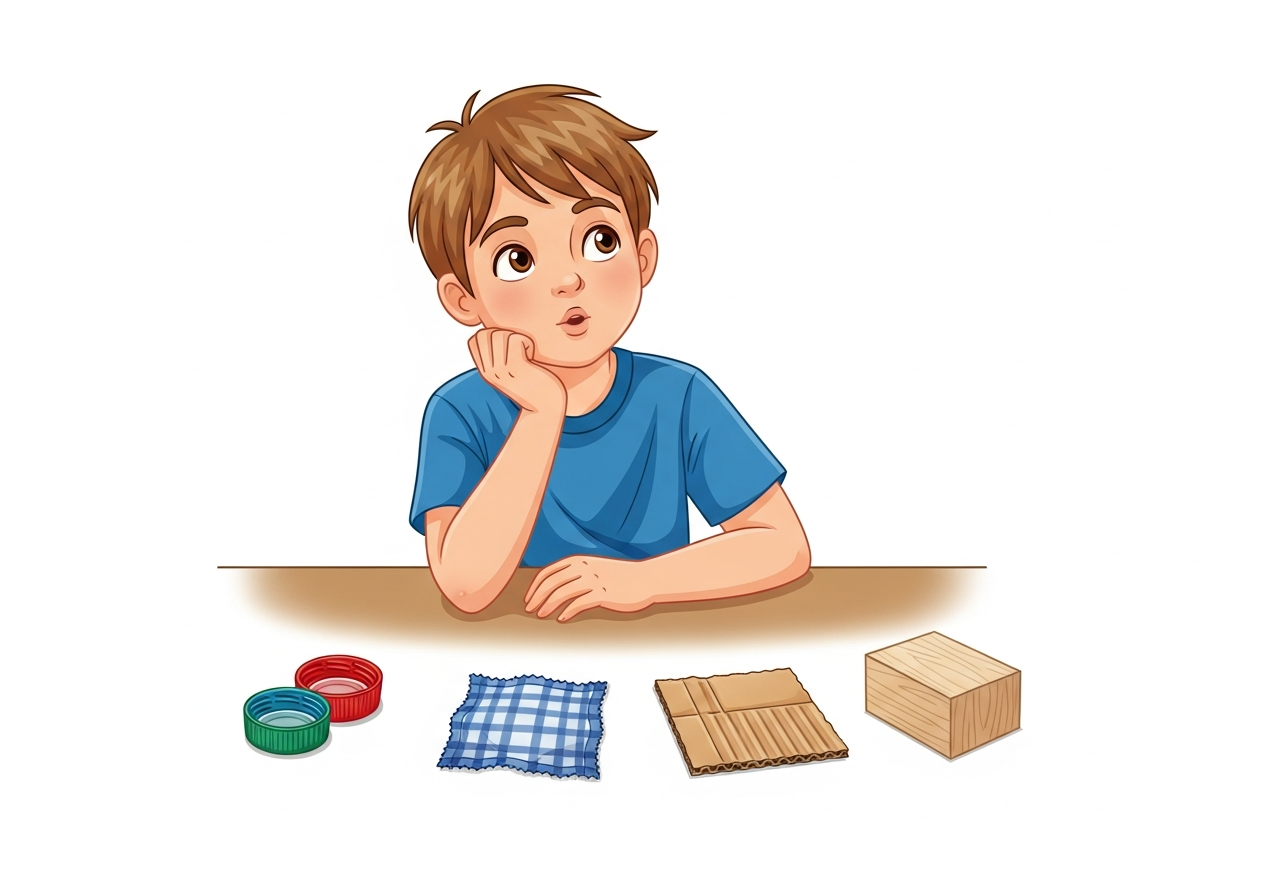
Think about what your project needs to do. Does it need to stay dry? Does it need to be strong? Asking these questions helps you pick the best material.
Why Material Properties Matter
Every material has special properties. A property is something you can observe about a material, like its color, texture, hardness, or flexibility. You can explore Material Properties like color, texture, hardness, and flexibility to understand these ideas better.
Here are some important properties to think about when you choose a material:
- Waterproof: Some materials keep water out. Plastic and wax paper are waterproof.
- Strong: Some materials hold heavy things without bending. Cardboard and wood are strong.
- Flexible: Some materials bend easily. Fabric and tissue paper are flexible.
- Lightweight: Some materials are very light. Tissue paper is lightweight and can float in air.
- Insulating: Some materials trap heat and keep things warm. Fabric and wool are insulating.

Matching Materials to Tasks
When you pick a material, think about the job it needs to do. If you are building a boat, you need a material that will not get soggy in water. Wax paper or plastic work well because they are waterproof.
If you are making a bridge for toy cars, you need a strong material that will not bend. Cardboard or wood blocks are good choices. If you are making mittens, you need a material that traps heat, like felt fabric.
You can also practice Sorting Materials by grouping them by their observable properties to help you compare and choose.
Key Terms and Definitions
Material: A material is what something is made of. Wood, plastic, fabric, and paper are all materials you can use to build and make things.
Property: A property is something you can observe or notice about a material. Color, texture, hardness, and flexibility are all properties.
Waterproof: When a material is waterproof, water cannot soak through it. Plastic and wax paper are waterproof, so they are good for things that get wet.
Strong: A strong material does not bend or break easily. Cardboard and wood are strong, so they are good for building bridges and towers.
Flexible: A flexible material can bend without breaking. Fabric is flexible, which makes it good for curtains and mittens.
Lightweight: A lightweight material does not weigh very much. Tissue paper is lightweight, which makes it good for parachutes that need to float in the air.
Insulating: An insulating material traps heat and keeps things warm. Felt fabric and wool are insulating, so they are good for mittens and birdhouses in winter.
Sturdy: A sturdy material is firm and does not fall apart easily. Plastic and cardboard are sturdy, which makes them good for containers and towers.
Soggy: When a material gets soggy, it becomes soft and weak from getting wet. Paper gets soggy in water, so it is not a good choice for boats or umbrellas.
Engineering Design: Engineering design is the process of thinking about a problem and choosing the best materials and steps to solve it. You use engineering design when you pick materials for a project.
Practice Choosing Materials
You can practice selecting materials by thinking about real projects. Ask yourself: What does this object need to do? Will it get wet? Does it need to be strong? Does it need to keep something warm?
Try using what you know about Tools and Materials and their appropriate use and the Design Process for finding simple solutions to basic problems to plan your projects step by step.
You can also think about Problem Solving by identifying problems and testing solutions to check if your material choice works well.
What You Already Know
You already know about many common materials from studying Familiar Materials like wood, fabric, plastic, metal, glass, and sand. You also know how to observe Material Properties like color, texture, hardness, and flexibility.
You have practiced Sorting Materials by grouping them by observable properties, which helps you compare materials and decide which one fits a task best.
Related Topics and Connections
This topic connects to many other ideas you will explore. Understanding Physical Properties and the observable characteristics of materials helps you describe and compare what you see. You will also learn about Physical Changes and reversible changes in materials to see how materials can change and still be useful.
When you study States of Matter including solids, liquids, and their properties, you will understand even more about how different materials behave. You can also explore Everyday Technology and common technological solutions to see how material choices are used in real tools around you.
You will use Scientific Tools and basic measurement instruments to test and compare materials. The topic of Material Uses and selecting materials for specific purposes builds directly on what you learn here.
As you keep learning, you will explore Properties of Solids including shape, volume, and structure and Material Combinations like mixtures and solutions. You will also study Material Selection and choosing appropriate materials, Testing Solutions and evaluating effectiveness, and the Design Process for identifying and solving problems.