TOPIC
Familiar Materials, Wood, fabric, plastic, metal, glass, sandMY PROGRESS
Pug Score
0%
Getting Started
"Let's build your foundation!"
Best Streak
0 in a row
Study Points
+0
Overview
Practice
Watch
Read
Quiz
Next Steps
Get Started
Get unlimited access to all videos, practice problems, and study tools.
Back to Menu
Topic Progress
Pug Score
0%
Getting Started
"Let's build your foundation!"
Videos Watched
0/0
Best Practice
No score
Read
Not viewed
Best Quiz
No attempts
Best Streak
0 in a row
Study Points
+0
Overview
Practice
Watch
Read
Quiz
Next Steps
Read
Explore Wood, Fabric, Plastic, Metal, Glass & Sand!
You will explore familiar materials like wood, fabric, plastic, metal, glass, and sand, and learn about their special properties.
What Are Familiar Materials?
You see materials every single day! Wood, fabric, plastic, metal, glass, and sand are all around you. Each material has special properties things that tell you what it is like.
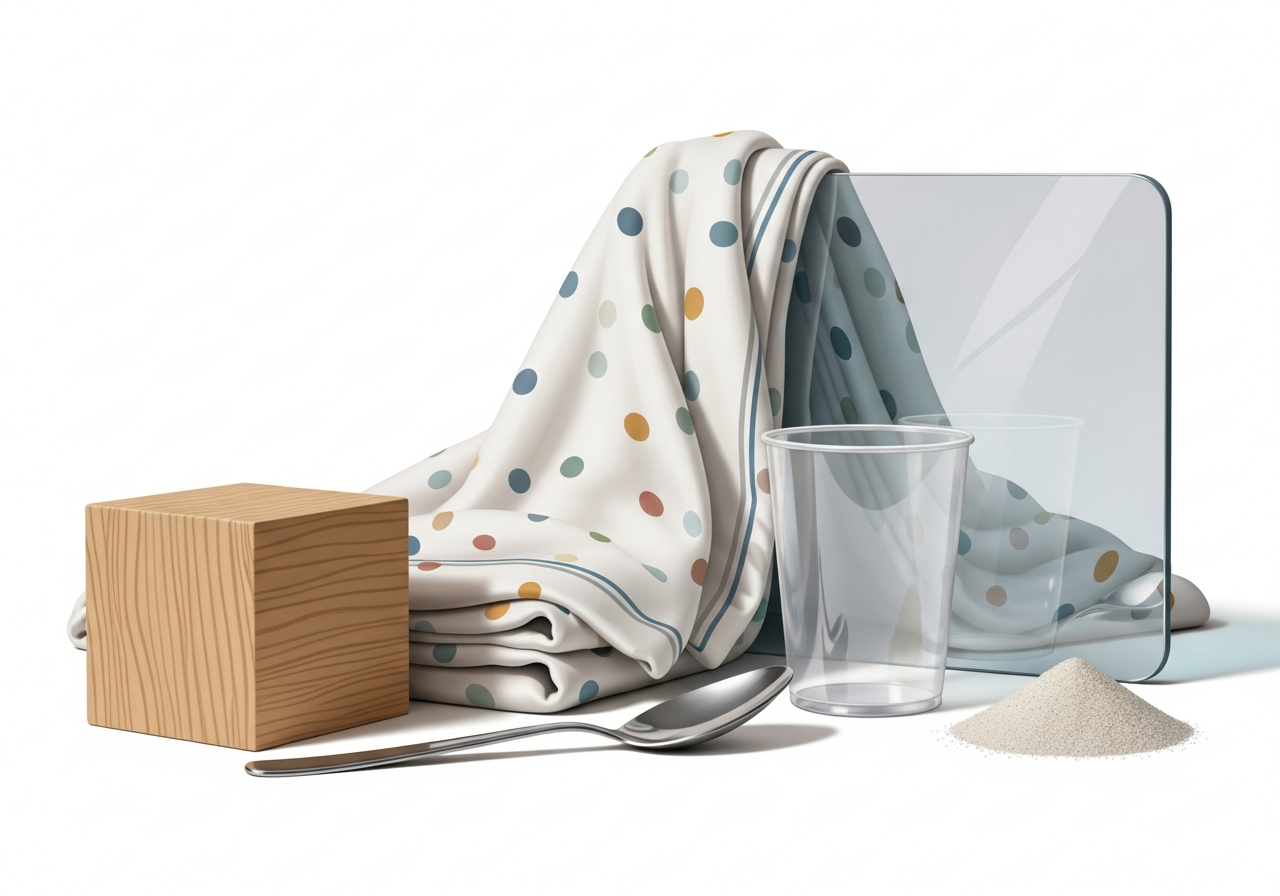
You can touch, look at, and test materials to learn about them. Let's find out what makes each material special!
Wood
Wood comes from trees. You can find wood in chairs, tables, blocks, and floors. Wood feels warm and a little rough when you touch it.
Wood can float on water! If you put a wooden block in water, it stays on top. Wood can also burn in a fireplace.
Fabric
Fabric is soft and flexible. You wear fabric every day your shirt, pants, and socks are all made of fabric! Fabric can bend and fold easily.
Fabric soaks up water. When you use a towel to dry your hands, the fabric absorbs the water. Fabric keeps you warm, like a cozy blanket!
Plastic
Plastic is smooth and can hold water without leaking. Your cup, toys, and slide at the playground may be made of plastic. Plastic blocks can snap together to build things!
Plastic is light and safe to use. It does not break as easily as glass.
Metal
Metal feels smooth and cool when you touch it. Spoons, scissors, and coins are made of metal. Metal is heavier than fabric, paper, and plastic.
Some metals are magnetic! A magnet will stick to metal objects. Metal does not soak up water water just rolls right off.
Glass
Glass is clear and transparent you can see right through it! Windows and some cups are made of glass. Glass lets you see outside because light passes through it.
Glass breaks easily when dropped. You need to be careful with glass objects because they can shatter into sharp pieces.
Sand
Sand feels rough and grainy when you touch it. It is made of many tiny pieces. You can find sand at the beach or in a sandbox.
Sand is not smooth like glass or plastic. It feels bumpy against your skin!
Properties of Materials
A property tells you something about a material. You can learn properties by touching, looking, and testing materials.
Here are some properties you will learn about:
- Rough or Smooth: Sand is rough. Glass and plastic are smooth.
- Hard or Soft: Metal and glass are hard. Fabric is soft.
- Heavy or Light: Metal is heavy. Fabric is light.
- Transparent: Glass is clear you can see through it!
- Flexible: Fabric can bend and fold. Metal and glass cannot.
- Float or Sink: Wood floats. Rocks and metal sink.
- Absorb Water: Fabric soaks up water. Glass and plastic do not.
- Magnetic: Some metals stick to magnets. Plastic and wood do not.
Key Terms & Definitions
Material: A material is what an object is made of. Wood, fabric, plastic, metal, glass, and sand are all materials you use every day.
Property: A property is something that describes a material, like how it feels, looks, or acts. Rough, smooth, hard, and soft are all properties.
Rough: Rough means a surface feels bumpy and uneven. Sand feels rough when you touch it.
Smooth: Smooth means a surface feels flat and even. Glass and plastic feel smooth.
Hard: Hard means a material does not squish when you press it. Metal and glass are hard.
Soft: Soft means a material squishes or gives way when you touch it. Fabric is soft.
Transparent: Transparent means you can see through a material. Glass is transparent you can look right through a window!
Flexible: Flexible means a material can bend without breaking. Fabric is flexible you can fold your jacket!
Absorb: Absorb means to soak up liquid. Fabric absorbs water, like a towel soaking up a spill.
Magnetic: Magnetic means a material sticks to a magnet. Some metals are magnetic. Plastic and wood are not magnetic.
Float: Float means to stay on top of water. Wood floats on water.
Sink: Sink means to go down to the bottom of water. Heavy things like rocks sink.
Heavy: Heavy means a material weighs a lot. Metal is heavy.
Light: Light means a material does not weigh much. Fabric and plastic are light.
Fun Ways to Explore Materials
You can touch different objects at home and ask: Is it rough or smooth? Is it hard or soft? Can I see through it?
Try putting a wooden stick and a rock in water. You will see the wood float and the rock sink! You can also test a magnet near a metal spoon and a plastic toy to see which one sticks.
Look around your classroom. Can you find something made of wood, fabric, plastic, metal, or glass? Learning about materials helps you understand the world around you!
Getting Ready to Learn
You already know how to look at and touch things around you. That is all you need to start learning about materials! Use your senses touch, sight to explore each material.
As you learn more, you will get better at telling materials apart and knowing why each one is used for different things.
Related Topics & Connections
This topic is a great starting point for learning about the world of science! As you explore wood, fabric, plastic, metal, glass, and sand, you are building skills you will use in many future science lessons.
Learning about material properties helps you understand why we choose different materials for different jobs. For example, you now know why windows are made of glass (it is transparent!) and why blankets are made of fabric (it is soft and warm!).
Keep exploring and asking questions about the materials you see every day. Science is all around you!