IB Chemistry Help — Video Lessons & Practice
Get clear, step-by-step explanations for every IB Chemistry topic and build exam-ready confidence.
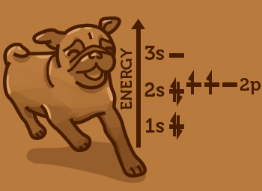
Step-by-Step Video Lessons
Learn once and solve it yourself next time.
Practice Until Perfect
Practice until it truly clicks.
Test Prep Included
Includes real IB exam practice questions.
IB Chemistry Topics
1. Stoichiometry
2. Atomic Structure
3. Periodicity and Elements
4. Chemical Bonding
5. Enthalpy and Thermodynamics
6. Kinetics
8. Acid-Base Theory
9. Redox and Electrochemistry
10 Chapters · 55 Topics · 494 Videos
Discover Our Learning Areas
Explore key subjects and start learning with interactive content.




What Is IB Chemistry?
IB Chemistry is a rigorous two-year science course offered as part of the International Baccalaureate Diploma Programme. It is available at Standard Level (SL) and Higher Level (HL) and is designed for students who want a deep, academically challenging foundation in chemistry before entering university. The course covers core topics from stoichiometry and atomic structure through to organic chemistry and electrochemistry, with HL students studying extended material in each topic. Assessment includes three written exam papers and a 10-hour Internal Assessment investigation.
What Topics Are Covered in IB Chemistry?
IB Chemistry is organised into a broad set of topics that build progressively in complexity. Core topics include stoichiometric relationships, atomic structure, periodicity, chemical bonding and structure, energetics and thermochemistry, chemical kinetics, equilibrium, acids and bases, redox processes, organic chemistry, and measurement and data processing. HL students extend each of these topics and develop additional skills in areas such as spectroscopic identification and more advanced kinetics and equilibrium calculations. Paper 3 also includes a choice of options — often covering biochemistry, energy, medicinal chemistry, or materials — depending on what your school teaches.
Is IB Chemistry Hard?
IB Chemistry has a well-earned reputation as one of the most demanding IB Science subjects. The syllabus is wide, the depth at HL is substantial, and the exams require both conceptual understanding and reliable calculation skills. The topics students struggle with most include stoichiometric mole calculations, equilibrium reasoning, organic mechanism arrow-pushing, electrochemical cells, and data analysis in Paper 3. The good news is that these topics become manageable once you learn the correct method and apply it consistently through practice. Watching a certified teacher explain the reasoning step by step — and then immediately attempting similar problems yourself — is the most effective way to build lasting understanding.
What Are the Prerequisites for IB Chemistry, and Where Does It Lead?
Students typically enter IB Chemistry with a background in Grade 10 or GCSE-level chemistry, covering basic atomic theory, bonding, reactions, and the mole concept. A comfortable level of algebraic skill is essential because calculation work is central to the course. After completing IB Chemistry, students are well positioned to pursue university programmes in chemistry, biochemistry, medicine, dentistry, pharmacy, environmental science, materials science, and chemical engineering. HL graduates in particular often find that their first year of university chemistry is familiar territory, giving them a strong head start.
How Is IB Chemistry Examined?
The IB Chemistry final assessment is structured across three papers. Paper 1 is a multiple-choice paper (30 questions at SL, 40 at HL). Paper 2 contains short-answer and extended-response questions covering core and HL topics. Paper 3 begins with a compulsory data-based question — where you analyse and interpret experimental data — followed by questions on your school's chosen option. These three papers together account for 80% of the final grade. The remaining 20% comes from the Internal Assessment: a 10-hour independent investigation you design and carry out yourself. The IB sets the exams based on real exam-style questions drawn from the official Chemistry guide, so practising with exam-aligned materials is essential preparation.
What Makes Chemical Equilibrium So Difficult in IB Chemistry?
Chemical equilibrium is consistently ranked by IB students as one of the hardest topics. The difficulty comes from having to bridge qualitative reasoning — applying Le Chatelier's principle to predict the direction a system will shift — with quantitative calculation, including ICE tables, equilibrium constant expressions (Kc and Kp), and reaction quotient Q comparisons. Many students can recite the rule but stumble when a question combines a change in concentration with a change in temperature, or when buffers are introduced. The approach that works best is to build a clear mental model of what equilibrium means physically, work through a sequence of ICE table examples from simple to complex, and then tackle past IB exam questions under timed conditions.
Why StudyPug for IB Chemistry?
StudyPug is built around three things that matter most for IB Chemistry students: knowing where to focus, understanding the method, and practising until it sticks.
When you start, a quick diagnostic assessment identifies the specific IB Chemistry topics where you have gaps. Instead of working through everything from the beginning, you go straight to what needs attention. That means no wasted revision time in the weeks before exams.
Every lesson is delivered by a certified teacher in a concept video that teaches you the method, not just the answer. For IB Chemistry, that distinction matters enormously. Paper 2 and Paper 3 questions require you to apply reasoning to unfamiliar contexts — which only works if you understand why each step is taken, not just what the final answer is.
Adaptive practice then adjusts to your performance. As you improve on stoichiometry, the platform serves harder equilibrium problems. If you are still building confidence in organic mechanisms, it keeps the difficulty accessible while you consolidate. All practice is aligned to the IB Chemistry syllabus, covering both SL and HL requirements, including the Internal Assessment data-processing skills you need for Paper 3.
StudyPug also includes free practice content you can access without a subscription, and all paid plans are backed by a 30-day money-back guarantee. There is no free trial of the subscription, but you can start practising immediately and subscribe with confidence knowing there is no long-term risk.
What You Learn: IB Chemistry Curriculum Coverage
StudyPug's IB Chemistry content is aligned to the full IB Chemistry guide at both SL and HL. Topics covered include:
- Stoichiometric relationships — mole calculations, empirical and molecular formulas, limiting reagents, percentage yield
- Atomic structure — electron configuration, quantum numbers, ionisation energy trends
- Periodicity — physical and chemical trends across periods and groups
- Chemical bonding and structure — ionic, covalent, metallic bonding; VSEPR; hybridisation at HL
- Energetics and thermochemistry — enthalpy, Hess's law, Born-Haber cycles at HL, entropy and Gibbs free energy
- Chemical kinetics — rate expressions, Arrhenius equation, reaction mechanisms at HL
- Chemical equilibrium — Le Chatelier's principle, Kc and Kp, acid-base equilibria, buffer calculations
- Acids and bases — pH, pOH, weak acid/base calculations, titration curves, indicators
- Redox and electrochemistry — oxidation states, half-equations, electrochemical cells, electrolysis
- Organic chemistry — functional groups, reaction mechanisms (substitution, addition, elimination, condensation at HL), spectroscopy
- Measurement and data processing — uncertainties, graphical analysis, evaluation of experimental design
Because no validated internal topic-page URLs are available for this course in the current site map, direct topic links have been omitted here. Use the topic list and search on StudyPug to navigate directly to any of the above areas.
How to Use StudyPug for IB Chemistry
The most effective workflow for IB Chemistry students on StudyPug follows three phases.
Phase 1 — Diagnose. Take the diagnostic assessment at the start of a new topic unit or at the beginning of your revision period. The results show you exactly which concepts need the most attention, so your study sessions are targeted from day one.
Phase 2 — Watch and understand. For each flagged topic, watch the certified-teacher concept video. Pause when the teacher works through a calculation. Try the step yourself before watching the solution. Replay any section where the reasoning is unclear. The goal is to internalise the method, not just follow along.
Phase 3 — Practice and adapt. Move into adaptive practice immediately after the video. Start with the core SL problems, then push into HL extension questions if applicable. Use practice tests that mirror the IB Paper 1, 2, and 3 question styles to build exam timing and familiarity with the command terms IB examiners use (define, explain, deduce, evaluate, justify). Return to the diagnostic after each revision block to confirm gaps are closing.
StudyPug is available on any device, so you can watch a concept video on your laptop and practise on your phone during a commute. The platform keeps your progress across sessions, so you always know where you left off and what comes next.
IB Chemistry FAQ
Unsure how StudyPug works? Need help with setting up? Check our frequently asked questions or contact us for help.
What do you learn in IB Chemistry, and what topics does it cover?
IB Chemistry covers stoichiometry, atomic structure, chemical bonding, energetics and thermodynamics, kinetics, chemical equilibrium, acids and bases, redox and electrochemistry, and organic chemistry. HL students also study additional extension material in each topic plus options such as biochemistry or materials. The course develops both conceptual understanding and practical laboratory skills, preparing students for the three written exam papers and an Internal Assessment investigation.
What is the difference between IB Chemistry SL and IB Chemistry HL?
IB Chemistry SL and HL share the same core topics, but HL students study additional depth material in each topic and a greater number of teaching hours overall. HL assessments are also more demanding, with Paper 3 including HL-only questions. Both levels sit Papers 1, 2, and 3, but HL questions require deeper application and more complex problem-solving. If you plan to study chemistry, medicine, or engineering at university, HL is strongly recommended.
Is IB Chemistry hard, and where do students struggle most?
IB Chemistry is widely considered one of the more challenging IB Science subjects. Students most commonly struggle with stoichiometric calculations, equilibrium Le Chatelier reasoning, organic reaction mechanisms, and data analysis in Paper 3. The depth and breadth of the HL syllabus can feel overwhelming. Consistent practice with worked examples and understanding the method behind each calculation — rather than memorising answers — makes the biggest difference in building exam confidence.
What should I take before IB Chemistry, and what comes after it?
A solid foundation from Grade 10 or GCSE-level chemistry is helpful before starting IB Chemistry. Strong algebra skills matter for calculations. IB Chemistry opens doors to university programmes in chemistry, biochemistry, medicine, pharmacy, environmental science, and chemical engineering. Students who complete HL often find first-year university chemistry accessible because the IB syllabus covers many university-level concepts, especially in thermodynamics, kinetics, and organic chemistry.
Is IB Chemistry on the IB Diploma exams, and how is it tested?
Yes. IB Chemistry is assessed through three written exam papers and an Internal Assessment. Paper 1 is multiple choice (SL: 30 questions; HL: 40 questions). Paper 2 is short-answer and extended-response questions. Paper 3 includes data-based questions and options. The Internal Assessment is a 10-hour independent investigation worth 20% of the final grade. Papers are based on real exam-style questions aligned to the IB Chemistry guide. External exams make up 80% of the final mark.
What is one of the hardest concepts in IB Chemistry, and how do you tackle it?
Chemical equilibrium — including Le Chatelier's principle and equilibrium constant calculations — is consistently one of the most challenging IB Chemistry topics. Students struggle to connect the qualitative reasoning with the quantitative K expressions. The best approach is to first understand what equilibrium means conceptually, then work through ICE table problems step by step. Seeing multiple worked examples, including reaction quotient Q comparisons and buffer problems, before attempting practice questions independently, builds the framework needed.





Written by the StudyPug Team
Last updated June 5, 2026
3 M+
students
★★★★★
4.8 average
K–12
all grades