Differential Calculus Help: Video Lessons & Practice
Work through every topic with clear solutions. Start your free practice test now!
Value vs. Private Tutor
Get expert instruction without the high price.

Multi-Subject
One plan covers every subject you need.

Build Mastery
Master differential calculus before test day.
Try It Now
Test your knowledge
Our approach aligns with the evidence
Exam Scores
Better Recall
Less Anxiety
Differential Calculus Topics
1. Limits
2. Differentiation
3 Chapters · 31 Topics · 217 Videos
Discover Our Learning Areas
Explore key subjects and start learning with interactive content.





What is Differential Calculus?
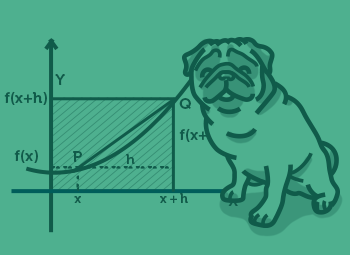
Differential Calculus is the branch of mathematics that studies how quantities change. At its core, it asks a deceptively simple question: given a function, how fast is its output changing at any given input? The answer is the derivative — one of the most powerful tools in all of mathematics and science.
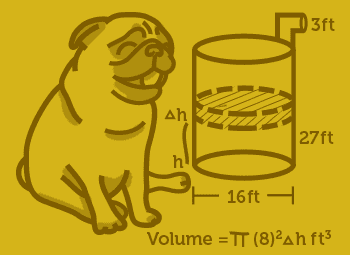
In a university Differential Calculus course (often called Calculus I), you build from the intuitive idea of a limit all the way through systematic rules for differentiating any function you encounter. Those rules then get applied to real-world problems: finding the fastest rate at which a tank drains, the dimensions of a box that uses the least material, or the precise moment a projectile reaches its peak. Every STEM discipline uses these ideas, and the conceptual clarity you build here pays dividends through Calculus II, III, Linear Algebra, Differential Equations, and beyond.
What topics are covered in a university Differential Calculus course?
A standard US university Differential Calculus course moves through five broad areas. First, limits and continuity: the formal definition of a limit, one-sided limits, infinite limits, and the conditions that make a function continuous. Second, the definition of the derivative: the limit definition, differentiability, and the geometric interpretation as a slope of a tangent line. Third, differentiation rules: power rule, product rule, quotient rule, chain rule, implicit differentiation, and derivatives of trigonometric, exponential, and logarithmic functions. Fourth, applications of derivatives: related rates, linear approximation, mean value theorem, curve sketching (increasing/decreasing intervals, concavity, inflection points), and optimization. Fifth, some courses close with an introduction to antiderivatives as a bridge to Calculus II.
How is Differential Calculus different from Precalculus?
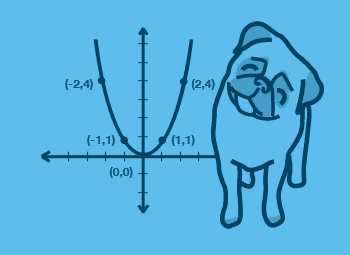
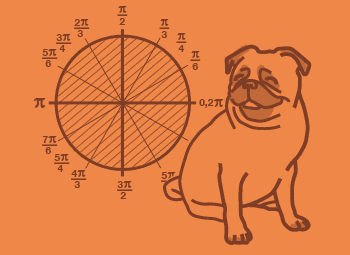
Precalculus builds the algebraic and trigonometric fluency that Differential Calculus assumes. In precalculus you study functions, their graphs, and transformations — but you never ask how fast they are changing. Differential Calculus introduces the limit, which is an entirely new mathematical idea, and uses it to define the derivative. The conceptual leap is significant. Students who feel confident in precalculus sometimes still find the transition challenging because calculus demands a different kind of thinking: local, instantaneous, and process-oriented rather than static and value-oriented.
Why do students find related rates so difficult?
Related rates problems are notoriously hard because they combine three skills at once: geometric or physical modeling, implicit differentiation, and algebraic substitution — all in the right order. Most mistakes happen at the first step, when students try to substitute known numerical values before differentiating. The correct approach is to write the relationship between variables symbolically, differentiate the entire equation with respect to time using the chain rule, and only then substitute the given values. Practicing a wide variety of problem setups — cones, spheres, right triangles, angular rates — builds the pattern recognition that makes these problems feel routine on an exam.
What is the chain rule, and why does it matter so much?
The chain rule governs how to differentiate a composite function — a function built by plugging one function inside another. If y = f(g(x)), then dy/dx = f'(g(x)) · g'(x). It is, by volume, the single most-used differentiation rule in the course, because almost every real-world function is a composition. Exponential decay, trigonometric oscillations, logistic growth — all require the chain rule. Mastering it early makes every subsequent topic easier: implicit differentiation is just the chain rule applied to y as a function of x, and related rates is the chain rule applied to time.
How should I prepare for a Differential Calculus final exam?
The most effective preparation combines concept review with timed practice under exam conditions. Start by identifying which topics carry the most weight — derivatives and their applications typically dominate. Work through past midterms and comprehensive practice tests to find remaining gaps. Then target those gaps with focused video review and additional practice problems. Spaced practice over two to three weeks before the final beats last-minute cramming decisively. Pay particular attention to optimization and curve sketching, which integrate multiple skills and frequently appear as multi-part final exam questions.
Why use StudyPug for Differential Calculus help?
There are a lot of places to find calculus videos online. What makes StudyPug different comes down to three things that matter when the exam is two days away.
The diagnostic finds your gaps immediately. Rather than watching hours of content you already know, you take a short diagnostic assessment and StudyPug tells you exactly which differential calculus topics need attention. That means every study session is efficient — no wasted time.
The videos teach the method, not just the answer. Every lesson is recorded by a certified teacher, not generated by AI. The instructor walks through the reasoning behind each step so you understand why the chain rule works the way it does, not just how to apply it to a single problem type. That depth of understanding is what prepares you for novel exam questions — the ones you have never seen before.
Practice adapts to your level. Adaptive practice adjusts the difficulty of problems based on how you are performing in real time. Struggling with implicit differentiation? You get more of it. Solid on the power rule? The system moves you forward. The result is a practice experience that closes gaps faster than working through a static problem set.
One subscription also covers every other university math course — Calculus I through III, Linear Algebra, Differential Equations, and Statistics — so you are never paying separately as your course load grows.
What you learn in Differential Calculus on StudyPug
StudyPug's Differential Calculus content covers the full scope of a standard university Calculus I course. Topic areas include:
- Limits and continuity — evaluating limits algebraically and graphically, squeeze theorem, continuity conditions
- Definition of the derivative — limit definition, differentiability, tangent and normal lines
- Differentiation rules — power, product, quotient, chain rules; derivatives of trig, exponential, and log functions
- Implicit differentiation — differentiating relations that are not explicit functions of x
- Related rates — setting up and solving rates-of-change word problems
- Applications of derivatives — mean value theorem, curve sketching, optimization, linear approximation
Each topic has dedicated video lessons, worked practice problems, and quiz-style assessments. Because no validated topic-level URLs are available for this page at this time, browse the full topic list directly on the Differential Calculus course page.
How to use StudyPug to improve your Differential Calculus grade
A simple three-step routine works well for most students.
Step 1 — Diagnose. Take the Differential Calculus diagnostic assessment when you first sign up. It takes under ten minutes and produces a personalized list of the topics where your understanding is shakiest. This becomes your study roadmap.
Step 2 — Watch and practice by topic. For each flagged topic, watch the certified-teacher concept video first. The video teaches the method: why the rule works, what the common mistakes are, and how to recognize problem types on sight. Then move straight into adaptive practice. The platform adjusts difficulty as you go, so you are always working at the productive edge of your ability — challenged but not overwhelmed.
Step 3 — Test yourself under exam conditions. One to two weeks before your midterm or final, switch to practice tests and mock exams. These mirror the format and time pressure of a real university exam. Review every question you miss using the step-by-step video solution, and note which topic it belongs to so you can target it in a final focused session.
You can watch any video an unlimited number of times. If related rates makes no sense on a Tuesday, watch the lesson again on Wednesday with fresh eyes — no additional cost, no time limit. That flexibility is especially valuable in a course like Differential Calculus, where a single conceptual block can hold back everything downstream.
StudyPug also includes free daily practice content, so you can start building differential calculus skills before you decide to subscribe. And if you do subscribe, the 30-day money-back guarantee means there is no financial risk in giving the full platform a proper trial.
Differential Calculus FAQ
Unsure how StudyPug works? Need help with setting up? Check our frequently asked questions or contact us for help.
What do you learn in Differential Calculus, and what topics does it cover?
Differential Calculus focuses on the mathematics of rates of change and slopes of curves. Core topics include limits and continuity, the definition of the derivative, differentiation rules (power, product, quotient, and chain rules), implicit differentiation, related rates, linear approximation, and optimization. Most courses also cover mean value theorem and curve sketching. By the end, you can model and analyze how quantities change — skills that underpin physics, engineering, economics, and beyond.
What is the difference between Differential Calculus and Integral Calculus?
Differential Calculus studies how functions change — it is concerned with derivatives, slopes, and rates of change. Integral Calculus studies accumulation — areas under curves, total quantities, and antiderivatives. The two are linked by the Fundamental Theorem of Calculus. Differential Calculus is typically taken first; Integral Calculus follows. Together they form the two pillars of a standard Calculus I–II sequence, and both appear in multivariable and vector calculus later.
What are the prerequisites for Differential Calculus, and what course comes after it?
You should be comfortable with precalculus: algebra, functions, trigonometry, and basic analytic geometry. Limits are introduced in the course itself, but a conceptual familiarity helps. After Differential Calculus (Calculus I), the natural next course is Integral Calculus (Calculus II), followed by Multivariable Calculus (Calculus III), Linear Algebra, and Differential Equations — all of which build directly on the derivative techniques you develop here.
Is Differential Calculus hard, and where do students struggle most?
Differential Calculus has a reputation for difficulty, mainly because it requires a conceptual shift: you move from computing static values to analyzing change. Students most often struggle with the chain rule applied to composite functions, related rates word problems (setting up the equation is the hard part), and implicit differentiation. Weak algebra or trig fundamentals also slow many students down. Consistent practice with worked examples and immediate feedback is the fastest way past these bottlenecks.
How is Differential Calculus assessed — midterms, finals, and assignments?
At most US universities, Differential Calculus is assessed through weekly or biweekly homework (often on platforms like WebAssign or Gradescope), two to three midterm exams, and a cumulative final exam. Midterms typically cover limits through related rates; the final exam is comprehensive. Some instructors add quizzes or a lab component. Grading weight varies, but the final usually counts for 30–40% of the course grade, making exam preparation critical.
What is one of the hardest topics in Differential Calculus, and how do you approach it?
Related rates is consistently one of the hardest topics. The challenge is translating a word problem into a mathematical relationship, differentiating implicitly with respect to time, and then substituting known values — all in sequence. The best approach: draw a diagram, write the geometric or physical relationship as an equation, differentiate both sides with respect to t using the chain rule, then substitute. Practicing a variety of problem types (ladder, water-tank, shadow) builds pattern recognition that makes exam questions far more manageable.





Written by the StudyPug Team
Last updated June 5, 2026
3 M+
students
★★★★★
4.8 average
K–12
all grades