Differential Equations Help: Video Lessons & Practice
Step-by-step solutions that build real understanding — so you're ready for the next course, not just this exam.
Value vs. Private Tutor
Expert teaching without the tutor cost.

Multi-Subject
One subscription unlocks all subjects.
Practice Until Perfect
You practice until it truly clicks first.
Try It Now
Test your knowledge
Our approach aligns with the evidence
Exam Scores
Better Recall
Less Anxiety
Differential Equations Topics
1. Introduction to Differential Equations
2. First Order Differential Equations
3. Second Order Differential Equations
4. Laplace Transforms
4 Chapters · 26 Topics · 151 Videos
Discover Our Learning Areas
Explore key subjects and start learning with interactive content.




What Is Differential Equations?
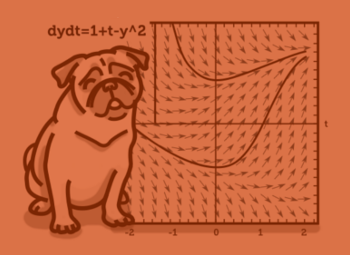
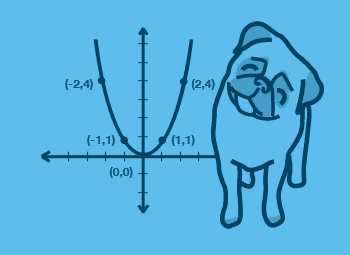
Differential Equations is the university math course that studies equations relating a function to its own derivatives — giving mathematicians, scientists, and engineers the tools to model how systems change. A differential equation might describe how a drug concentration falls in the bloodstream, how a bridge flexes under load, or how current flows through a circuit. If you can describe change with a formula, you can model it with a differential equation.
The course sits at the intersection of calculus and real-world application. Most students take it in their second year, directly after Calculus II, and it is a required or strongly recommended course for engineering, physics, applied mathematics, economics, and many life-science programs across the US.
What Topics Are Covered in a Differential Equations Course?
A standard one-semester course typically moves through four major areas. First-order equations — separable, linear, exact, and those solved by integrating factors — occupy the opening weeks and establish the foundational methods. Second-order equations with constant coefficients (homogeneous and non-homogeneous, including undetermined coefficients and variation of parameters) come next and form the conceptual core of the course.
Systems of ordinary differential equations (ODEs), often solved using eigenvalue and eigenvector methods borrowed from linear algebra, appear in the middle portion. Laplace transforms provide an algebraic pathway to solving initial-value problems and are essential for engineering applications. Many courses conclude with an introduction to series solutions (power series, Frobenius method) and a brief survey of partial differential equations, including the heat and wave equations.
Strong differential equations practice across all these areas — not just the topics covered before each midterm — is what separates students who coast into the final from those who struggle with its comprehensive scope.
Why Is Differential Equations Considered Hard?
The difficulty of differential equations is real, and it comes from two overlapping challenges. First, the course introduces a large number of solution methods quickly — students must not only learn each method but learn to recognize which method a given equation requires. A separable equation and a Bernoulli equation can look superficially similar; choosing the wrong approach wastes time and produces wrong answers on exams.
Second, the course demands fluency in integration. Students who have rusty partial fractions, trigonometric integrals, or integration by parts hit a wall in the middle of a multi-step ODE problem. The algebra involved in solving a second-order non-homogeneous equation or inverting a Laplace transform is genuinely long, and one slip propagates through every subsequent step.
The good news: these are learnable skills. Targeted practice on integration techniques and systematic drilling on equation-type identification — before exam week — solves both problems. Students who struggle most are often those who read solutions without working problems themselves.
How Is a Differential Equations Course Graded at US Universities?
Assessment structure varies by institution, but a common breakdown at US universities weights two midterm exams at roughly 20–25% each, a comprehensive final exam at 35–45%, and weekly homework or online problem sets at 15–20%. Some instructors add short weekly quizzes worth 5–10%.
The final exam covers everything — first-order methods you learned in week two are fair game alongside Laplace transforms from week twelve. This makes early-semester material especially important to retain, and it is why mock exam practice for the full course scope matters more in this class than in most single-semester math courses. Preparing with complete practice tests, not just topic-by-topic review, is the most reliable strategy for strong final-exam performance.
What Comes Before and After Differential Equations?
The firm prerequisite is Calculus II — students must be comfortable with integration techniques (integration by parts, partial fractions, trigonometric substitution) before the first week of ODEs. Calculus III (multivariable calculus) is helpful, particularly for understanding partial derivatives when the course reaches partial differential equations. Many programs have students take Linear Algebra concurrently, since eigenvalue methods appear in the systems-of-ODEs unit.
After completing differential equations, the natural progression leads to Partial Differential Equations (PDEs), Numerical Methods or Numerical Analysis, and upper-division applied courses in your major — control systems and circuit analysis in electrical engineering, structural dynamics in civil engineering, fluid mechanics and heat transfer in mechanical engineering, or mathematical modeling in applied math and physics programs.
What Is the Hardest Topic in Differential Equations?
Student surveys and instructor feedback consistently identify Laplace transforms as the most difficult unit. The technique is powerful precisely because it converts differential equations into algebraic equations — but using it correctly requires three skills working simultaneously: building and reading a transform table, performing partial fraction decomposition on complex rational expressions, and inverting the transform back to the time domain.
Students who struggle with Laplace transforms are almost always struggling with partial fractions, not the transform concept itself. The fix is to practice partial fraction decomposition as a standalone skill until it is automatic, then layer in the transform table, and only then work full problems from start to finish. Differential equations practice problems that walk through each stage separately — rather than jumping straight to mixed problems — accelerate this process significantly.
Why StudyPug for Differential Equations Help?
StudyPug is built specifically for courses at this level. Every video lesson is taught by a certified, experienced math instructor — not AI-generated content — and each lesson is designed to teach the method and the reasoning, not just the procedure. That distinction matters in differential equations: understanding why you choose variation of parameters over undetermined coefficients prepares you for the next exam question, the next course, and the next time the topic appears in your major.
When you start, a quick diagnostic assessment identifies which ODE topics need the most attention. Rather than reviewing everything from scratch, you go straight to the gaps — separable equations if integrating factors are already solid, or Laplace inverses if transforms are the sticking point. That focus compounds over a semester.
Adaptive practice then adjusts to how you perform. If you nail three problems on second-order equations in a row, the platform moves you forward. If Laplace transforms are still shaky, you stay there until the pattern recognition is real. And because one subscription covers Differential Equations alongside Calculus I–III, Linear Algebra, Statistics, and every other course in the library, you never pay more as your curriculum changes from semester to semester.
Free practice content is available with no subscription required — start a practice test now and find out exactly where your differential equations skills stand. A full subscription adds unlimited certified-teacher video lessons, complete mock exams for midterms and finals, and the 30-day money-back guarantee. There is no free trial of the paid plan, and no vague promises about grades — just a clear refund policy and a platform built to help you do better work.
What You Learn: Differential Equations Course Coverage
StudyPug's Differential Equations content covers the full scope of a standard US university course. Topic areas include:
- First-Order Equations: Separable equations, linear first-order equations, exact equations, integrating factors, Bernoulli equations, and modeling applications (population growth, mixing problems, Newton's law of cooling).
- Second-Order Equations: Homogeneous equations with constant coefficients, characteristic equations, repeated and complex roots, undetermined coefficients, variation of parameters, and Cauchy-Euler equations.
- Systems of ODEs: Converting higher-order equations to systems, matrix methods, eigenvalue and eigenvector solutions, phase plane analysis, and stability.
- Laplace Transforms: Transform tables, properties of the Laplace transform, inverse transforms, partial fractions, step functions, convolution, and solving initial-value problems.
- Series Solutions: Power series method, ordinary and singular points, Frobenius method, and Bessel's equation (where covered).
- Introduction to PDEs: Heat equation, wave equation, Fourier series, and separation of variables (where covered in the course).
All topics include step-by-step video lessons and practice problems. Because no validated topic-level URLs are available in the current internal link map for this course, explore the full topic list directly on the StudyPug Differential Equations course page.
How to Use StudyPug for Differential Equations Practice
The most effective pattern is to start the diagnostic before week two of your course — not the week before midterms. The diagnostic identifies weak spots early, when there is still time to fix them before they compound into bigger problems later in the semester.
For day-to-day study, watch the concept video for a topic first, then immediately work the adaptive practice problems for that topic. The video teaches the method; the problems build the fluency. Re-watch if the practice reveals a gap — certified-teacher lessons are available unlimited times, so there is no cost to watching a Laplace transforms video four times if that is what it takes.
In the three to four weeks before midterms and finals, shift to mock exam practice. Work complete practice tests under timed conditions, then use the step-by-step solutions to diagnose exactly which error types are costing you marks — algebra slips, wrong method selection, or incomplete answers. Repeating this cycle two or three times before a high-stakes exam is the single most reliable way to improve differential equations exam performance.
StudyPug works on any device, so whether you study at a library workstation or on your phone between classes, your practice history and video progress carry across sessions. Start your free practice test now — no subscription required to see where you stand.
Differential Equations FAQ
Unsure how StudyPug works? Need help with setting up? Check our frequently asked questions or contact us for help.
What do you learn in Differential Equations, and what topics does it cover?
Differential Equations is a university math course that studies how quantities change over time or space. You learn to solve first-order equations (separable, linear, exact), second-order equations (constant coefficients, variation of parameters), systems of ODEs, Laplace transforms, series solutions, and an introduction to partial differential equations. The course builds directly on Calculus I–III and is essential for engineering, physics, economics, and applied mathematics programs.
What is the difference between Differential Equations and Linear Algebra?
Differential Equations focuses on finding functions that satisfy equations involving derivatives — modeling dynamic systems like heat flow or population growth. Linear Algebra studies vector spaces, matrices, and linear transformations. The two courses often intersect: systems of ODEs are solved using eigenvalues and eigenvectors from linear algebra. Many university programs require both in the same semester, and understanding each reinforces the other.
What are the prerequisites for Differential Equations, and what course comes after it?
The standard prerequisite is Calculus II (integral calculus), and many programs recommend Calculus III (multivariable calculus) for a fuller foundation. Linear Algebra is sometimes taken concurrently. After Differential Equations, students typically move into Partial Differential Equations, Numerical Methods, Real Analysis, or upper-division engineering courses in dynamics, circuits, or control systems — all of which rely heavily on ODE techniques.
Is Differential Equations hard, and where do students struggle most?
Differential Equations is considered one of the harder freshman/sophomore math courses because it requires fluency in integration techniques and introduces many new solution methods rapidly. Students most often struggle with identifying which method to apply (separable vs. exact vs. integrating factor), setting up second-order equations, and computing Laplace transforms correctly. Systematic practice on recognizing equation types — before attempting the algebra — is the single most effective study strategy.
How is Differential Equations assessed — midterms, finals, and assignments?
Most US university Differential Equations courses weight the final exam at 35–45% of the grade, with two midterms covering roughly equal portions of the remaining grade. Weekly homework or online problem sets (often via WebAssign or WileyPLUS) typically account for 15–20%. Some sections include short quizzes. The final exam is comprehensive, so strong performance requires revisiting first-order methods even after advancing to Laplace transforms and systems.
What is one of the hardest topics in Differential Equations, and how do you approach it?
Laplace transforms consistently rank as the most difficult topic. The challenge is that students must simultaneously manage transform tables, partial fractions, and inverse transforms — all in one problem. The most effective approach is to build fluency with the transform table first, then practice partial fraction decomposition as a standalone skill, and only then combine them in full Laplace transform problems. Working through varied practice problems — not just reading solutions — is what builds the pattern recognition needed on exams.





Written by the StudyPug Team
Last updated June 5, 2026
3 M+
students
★★★★★
4.8 average
K–12
all grades