Calculus 2 Help: Video Lessons & Practice
Work through every topic with clear solutions. Start your free practice test now!
Certified-Teacher Concept Videos
Every Calculus 2 lesson is taught by an experienced instructor — not AI — showing you the method behind each step so you truly understand integration and series, not just the answer.

Diagnostic Assessment & Adaptive Practice
A quick diagnostic pinpoints exactly where you need to focus in Calculus 2. Then adaptive practice adjusts to your level so every session builds real skill efficiently.

Calculus 2 Exam Preparation
Practice with mock midterms and finals that mirror real exam formats. Watch solutions as many times as you need until every concept clicks before test day.
Try It Now
Test your knowledge
Our approach aligns with the evidence
Exam Scores
Better Recall
Less Anxiety
Calculus 2 Topics
1. Integrals
2. Integration Techniques
3. Integration Applications
4. Differential Equations
5. Sequence and Series
6. Parametric Equations and Polar Coordinates
6 Chapters · 49 Topics · 346 Videos
Discover Our Learning Areas
Explore key subjects and start learning with interactive content.




What Is Calculus 2?
Calculus 2 is the second semester of the standard university calculus sequence, following Calculus 1. It centers on the theory and application of integration, extending the techniques introduced in Calculus 1 into a full toolkit for solving real-world problems in engineering, physics, economics, and the sciences. The course also introduces infinite series — a foundational concept for advanced mathematics — and the analytic geometry of curves through parametric and polar forms.
If Calculus 1 taught you what an integral is, Calculus 2 teaches you how to actually compute difficult ones and what to do when standard methods fail. It is demanding, but the depth of understanding it builds carries directly into every quantitative course that follows.
What Topics Are Covered in Calculus 2?
Calculus 2 covers a wide range of integration and series topics, typically organized into five major areas:
Integration Techniques. Beyond basic antiderivatives, Calculus 2 introduces integration by parts, trigonometric integrals and substitution, partial fraction decomposition, and improper integrals. Knowing which method to apply — and why — is one of the core skills the course builds.
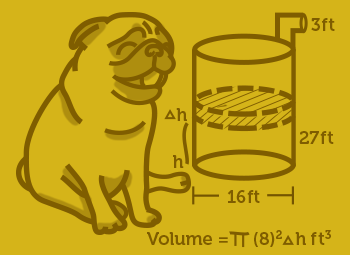
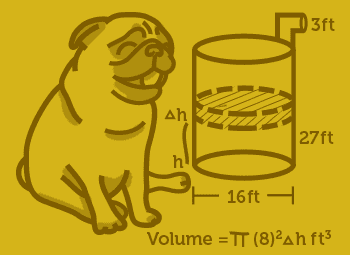
Applications of Integration. Area between curves, volumes of solids of revolution (disk, washer, and shell methods), arc length, and surface area. These problems translate integrals into geometric and physical meaning.
Sequences and Infinite Series. This is often the hardest unit. You learn to determine whether a sequence converges or diverges, then apply a toolkit of convergence tests — the ratio test, comparison test, integral test, alternating series test, and limit comparison test — to infinite series. Choosing the right test is a judgment call that requires practice.
Power Series, Taylor, and Maclaurin Series. Representing functions as infinite polynomials, finding intervals of convergence, and using Taylor series approximations. These ideas underpin numerical methods and differential equations.
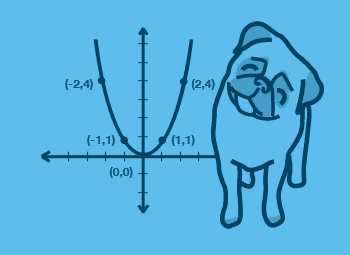
Parametric Equations and Polar Coordinates. Describing curves that cannot be written as y = f(x), computing arc length and area in polar form, and connecting these representations to Cartesian geometry.
Is Calculus 2 Hard? Where Do Students Struggle Most?
Calculus 2 has a reputation as the course with the highest failure and withdrawal rate in the standard math sequence. The difficulty is real, but it is specific — most students do not struggle with everything equally.
Infinite series and convergence tests are consistently the hardest unit. Unlike integration, where you follow a process, series problems require you to look at an expression, recognize its structure, and choose from among several tests. That pattern recognition takes repetition to develop. Students who try to memorize which test to use without understanding what the test is actually checking tend to freeze on exams.
Integration techniques are the second major sticking point. Integration by parts problems that require the technique multiple times, trigonometric integrals with even powers, and partial fractions with irreducible quadratic factors are all areas where students run into trouble. The remedy is working a high volume of varied practice problems — not reading through solutions, but attempting problems first and then checking.
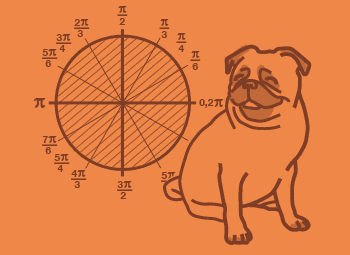
Polar coordinates feel unfamiliar to most students because the geometry is genuinely different from Cartesian thinking. Spending time graphing polar curves by hand before computing integrals in polar form helps significantly.
How Is Calculus 2 Assessed at US Universities?
Most US university Calculus 2 courses use a combination of midterm exams, a cumulative final, and ongoing homework. The midterms — typically two or three across the semester — each cover a major unit (integration techniques, series, parametric/polar). The final exam covers everything and is usually weighted at 30–40% of the overall grade.
Weekly homework is often completed through platforms like WebAssign, MyLab Math, or WeBWorK, and may account for 10–20% of the grade. Some courses run gateway exams — short, timed tests on foundational skills like basic integration that must be passed to proceed.
The exam format is almost entirely free-response: you show full work, and partial credit depends on your reasoning being clear and correct at each step. Practicing with timed, full-problem mock exams — not just drilling individual techniques in isolation — is the closest preparation to the real thing.
What Comes After Calculus 2?
After Calculus 2, most students move into Calculus 3 (Multivariable Calculus) or Differential Equations, depending on their major's requirements. Engineers and physicists typically take both. Pure math and applied math majors often add Linear Algebra.
Calculus 3 extends integration and differentiation into two and three dimensions — partial derivatives, double and triple integrals, line integrals, and the theorems of Green, Stokes, and Gauss. The series intuition and integration fluency from Calculus 2 are directly used throughout. Differential Equations builds heavily on the integration techniques and Taylor series from Calculus 2 from the first week.
A strong Calculus 2 foundation — particularly in series and integration strategies — makes every subsequent quantitative course significantly more approachable. StudyPug's subscription covers Calculus 3, Differential Equations, Linear Algebra, and Statistics alongside Calculus 2, so the same plan carries you through the full sequence.
Why StudyPug for Calculus 2?
StudyPug is built around one core idea: understanding the method, not just following steps. Every Calculus 2 video lesson is taught by a certified, experienced instructor — not generated by AI — who explains the reasoning behind each technique. That distinction matters in Calculus 2 more than in most courses, because so much of the difficulty is in judgment calls: which integration method applies here? Which convergence test fits this series? You cannot make those calls reliably by memorizing a flowchart. You need to understand why each tool works.
The platform starts with a diagnostic assessment that identifies exactly which Calculus 2 topics need your attention. Rather than reviewing everything from the beginning, you work on what actually needs work. Adaptive practice then adjusts to your level in real time — pushing harder when you are ready, revisiting fundamentals when a gap appears.
Mock midterms and finals let you practice under realistic exam conditions. You can watch solution videos as many times as needed until a topic fully clicks. And because one StudyPug subscription covers the full math sequence — Calculus 2, Calculus 3, Differential Equations, Linear Algebra, Statistics — you never need to pay separately for the next course.
Free daily practice content is available with no subscription required, including practice problems across Calculus 2 topics. Paid plans include full video access, adaptive practice, and all mock exams, backed by a 30-day money-back guarantee.
What You Learn in Calculus 2 with StudyPug
StudyPug covers every major Calculus 2 topic taught in US university courses, organized to match how the course progresses through the semester. Coverage includes:
- Integration techniques: integration by parts, trigonometric integrals, trigonometric substitution, partial fractions
- Improper integrals and their convergence
- Applications of integration: area, volume (disk/washer/shell), arc length, surface area
- Sequences: definition, limits, convergence and divergence
- Infinite series: geometric series, p-series, and the full convergence test toolkit
- Power series, radius and interval of convergence
- Taylor and Maclaurin series: derivation, common series, error bounds
- Parametric equations: derivatives, arc length, area
- Polar coordinates: graphing, area, arc length
Because no validated internal topic URLs are currently available in the link map for this page, topic links are not included here — check the StudyPug Calculus 2 course page directly to browse the full topic list and start a free practice session on any unit.
How to Use StudyPug for Calculus 2
The most effective pattern is to combine the diagnostic, video lessons, and practice in a repeating cycle rather than treating them as separate resources.
Start with the diagnostic to get a clear picture of where you stand across all Calculus 2 topics. If the semester is already underway, focus the diagnostic on the current unit. Then, for each topic, watch the certified-teacher concept video before attempting practice problems. The video teaches the method — why integration by parts is set up the way it is, why a particular convergence test is being chosen — so that the practice problems reinforce reasoning, not just procedure.
Use the adaptive practice to build fluency on each technique. When exam time approaches, switch to the mock midterms and finals. Work them timed, under realistic conditions. Review the step-by-step video solutions for every problem you miss, and watch them as many times as needed. The goal is to understand what went wrong in your reasoning, not just to check the answer.
Students who use StudyPug consistently — a few focused sessions per week rather than last-minute cramming — tend to enter their midterms and finals having already worked through problems very similar to what appears on the exam. That familiarity with the question formats, combined with genuine understanding of the methods, is what makes the difference between a student who gets through Calculus 2 and one who does well in it.
Start Now — your diagnostic is ready, your first lesson is waiting, and the 30-day money-back guarantee means there is no risk in finding out how much ground you can cover.
Calculus 2 FAQ
Unsure how StudyPug works? Need help with setting up? Check our frequently asked questions or contact us for help.
What do you learn in Calculus 2, and what topics does it cover?
Calculus 2 builds directly on Calculus 1 by diving deep into integration techniques — substitution, integration by parts, trigonometric integrals, and partial fractions. You also cover improper integrals, sequences and series (including convergence tests), Taylor and Maclaurin series, and parametric equations and polar coordinates. Many programs also include an introduction to differential equations. The course is a gateway to multivariable calculus, physics, and engineering analysis, so a solid grasp of every topic matters beyond the final exam.
What is the difference between Calculus 2 and Calculus 3?
Calculus 2 focuses on single-variable integration, infinite series, and the analytic geometry of curves. Calculus 3 — often called Multivariable Calculus — extends those ideas into multiple dimensions: partial derivatives, multiple integrals, and vector calculus including Green's and Stokes' theorems. Think of Calculus 2 as mastering the depth of one-variable analysis, while Calculus 3 broadens that into two and three dimensions. Strong integration skills and series intuition from Calculus 2 are essential before tackling Calculus 3.
What are the prerequisites for Calculus 2, and what course comes after it?
The standard prerequisite is Calculus 1, covering limits, derivatives, and the basics of integration (the Fundamental Theorem of Calculus). Some programs also expect solid algebra and precalculus skills, particularly trigonometry. After Calculus 2, most students proceed to Calculus 3 (Multivariable Calculus) or Differential Equations, depending on their major. Engineers typically take both. A strong finish in Calculus 2 — especially in series and integration — makes the jump to those courses significantly smoother.
Is Calculus 2 hard, and where do students struggle most?
Calculus 2 is widely considered one of the most challenging undergraduate math courses. The biggest sticking points are infinite series and convergence tests — students must choose the right test (ratio, comparison, integral test, etc.) for a given series, which requires pattern recognition that takes practice to build. Integration techniques are another common struggle, especially knowing when to use which method. Polar coordinates and parametric equations also trip students up because the geometry feels unfamiliar. Consistent practice and understanding the reasoning behind each method — not just the steps — makes the biggest difference.
How is Calculus 2 assessed — midterms, finals, and assignments?
Most US university Calculus 2 courses assess students through two or three midterm exams, a comprehensive final exam, and weekly problem sets or online homework (often through WebAssign or MyLab Math). Quizzes may also count. The final exam typically covers all topics and is heavily weighted — often 30–40% of the final grade. Some courses include a gateway exam on integration basics that must be passed to continue. Preparing with timed practice tests that simulate midterm and final conditions is one of the most effective ways to perform well on exam day.
What is one of the hardest topics in Calculus 2, and how do you approach it?
Infinite series and convergence tests are consistently rated the hardest part of Calculus 2. There is no single algorithm — you must look at the series and decide which of several tests applies, then execute it correctly. The best approach is to practice each test in isolation first (ratio test, comparison test, alternating series test), then work mixed sets so you build the pattern-recognition instinct. Understanding what each test is actually measuring — not just memorizing the steps — is what separates students who get through it from those who freeze on exams.