Physics 11 Help — Video Lessons & Practice
Get clear explanations for any Physics 11 problem and build exam-ready confidence.

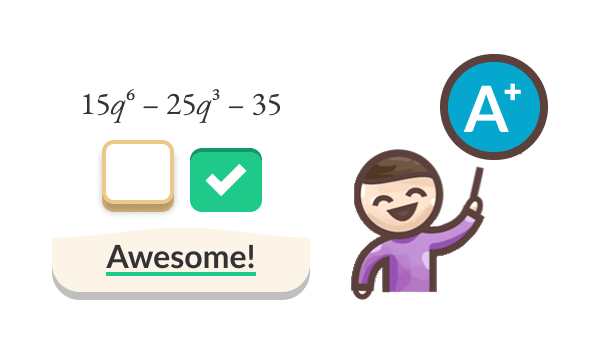
Step-by-Step Videos
Learn the method to solve it yourself.
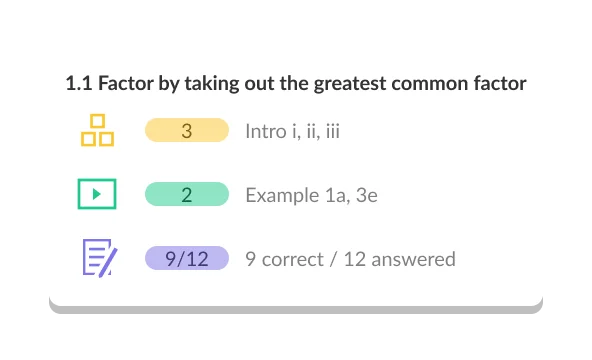
Unlimited Practice
Practice until it truly clicks.
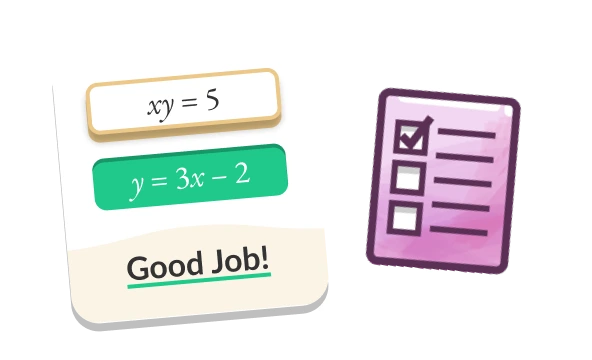
Real Exam Practice
Practice real exam questions from your plan.
Physics 11 Topics
1. Scalars, Vectors and Motion
2. Kinematics
3. Kinematics in Two Dimensions
4. Forces and Newtons Law
5. Equilibrium
6. Light and Optics
7. Electric Circuits
8. Magnetism
9 Chapters · 43 Topics · 348 Videos
Discover Our Learning Areas
Explore key subjects and start learning with interactive content.



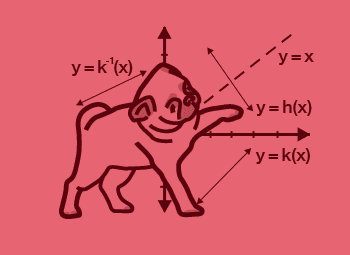



What is Physics 11?
Physics 11 is a foundational high school science course that introduces students to the laws governing the physical world — from how objects move and interact to how waves travel and how electrical circuits operate. It is a required or strongly recommended course for students pursuing post-secondary programs in science, engineering, health sciences, or technology across Canada.
What topics are covered in Physics 11?
Physics 11 is built around five major units, each of which develops both conceptual understanding and mathematical problem-solving skills.
Kinematics covers motion in one and two dimensions — displacement, velocity, acceleration, and the kinematic equations. Students learn to analyse projectile motion and solve problems involving objects moving at angles.
Dynamics focuses on Newton's three laws of motion, free-body diagrams, friction, and the net force equations that connect force, mass, and acceleration.
Energy and Momentum introduces work, kinetic and potential energy, conservation of energy, impulse, and conservation of momentum. These topics frequently appear on provincial assessments and post-secondary entrance requirements.
Waves and Optics covers wave properties (amplitude, frequency, wavelength, speed), sound, and the behaviour of light including reflection, refraction, and basic optics.
Electricity introduces electric charge, electric fields, Ohm's law, series and parallel circuits, and basic circuit analysis. Many students find this the most formula-dense unit.
Some provincial curricula also include an introduction to modern physics or nuclear reactions near the end of the course.
Is Physics 11 hard?
Physics 11 is widely considered one of the more demanding Grade 11 courses because it requires students to combine conceptual understanding with multi-step algebraic and trigonometric problem solving. Unlike earlier science courses, there is rarely one formula that solves an entire problem — you often need to chain several steps together, keep track of signs and directions, and interpret what the numbers mean physically.
The topics that cause the most difficulty are 2D kinematics (resolving vectors into components), applying Newton's second law in systems with friction or multiple forces, and understanding energy conservation across a complete scenario. Circuits and wave interference are also common stumbling blocks.
The good news is that Physics 11 rewards consistent practice far more than memorisation. Students who work through varied problems and focus on understanding the method behind each solution — rather than pattern-matching to a formula — tend to improve steadily throughout the course.
What comes before and after Physics 11?
Before Physics 11 you should have completed Grade 10 Science and have a comfortable grasp of algebra. Trigonometry (SOHCAHTOA and basic angle work) is used throughout the kinematics and dynamics units, so having Pre-Calculus 11 running concurrently is strongly recommended in most provinces.
After Physics 11, the natural continuation is Physics 12, which extends into vectors, circular motion, gravitational and electric fields, electromagnetic induction, and modern physics. Physics 12 is required for many post-secondary programs in science and engineering. Some students also take the AP Physics or IB Physics pathway if their school offers it.
Why StudyPug for Physics 11?
Physics 11 help comes in many forms, but most resources either explain a concept without teaching the method, or they give answers without showing the reasoning. StudyPug is built differently.
Every Physics 11 lesson is taught by a certified teacher in a step-by-step video format. The focus is always on the method — how to set up the problem, which equation to choose and why, how to handle the algebra cleanly, and how to check your answer makes physical sense. Because you understand the process, you can solve unfamiliar questions on a test, not just the ones you've seen before.
Before you start watching lessons, StudyPug's diagnostic assessment identifies exactly which Physics 11 topics are your weak spots. Instead of working through everything from the beginning, you go straight to the content that will move your mark. This is what it means to study smarter, not harder.
As you practice, StudyPug's adaptive practice system adjusts the difficulty of questions to match your current level. You're never stuck repeating problems that are too easy, and you're never thrown into questions beyond your current understanding. The difficulty increases as your skills grow, giving you a steady progression toward exam-ready performance.
StudyPug's Physics 11 content is aligned to Canadian provincial curricula, including BC, Ontario, and Alberta. The topics you study on StudyPug match the units in your actual course, and the exam-style questions are based on real assessment formats used across Canadian provinces.
For students preparing for provincial assessments, AP Physics, or post-secondary entrance requirements, StudyPug includes exam prep practice built into the subscription — no separate purchase needed.
What you learn — Physics 11 curriculum coverage
StudyPug covers every major Physics 11 unit tested in Canadian provincial curricula:
- Kinematics: 1D and 2D motion, projectile motion, vectors
- Dynamics: Newton's laws, free-body diagrams, friction, net force
- Momentum and Impulse: conservation of momentum, collisions
- Energy and Work: kinetic energy, potential energy, conservation of energy, power
- Waves: wave properties, sound, Doppler effect
- Light and Optics: reflection, refraction, lenses, mirrors
- Electricity: electric charge, Ohm's law, series and parallel circuits
- Modern Physics (where included by provincial curriculum)
Each topic has dedicated video lessons, worked examples, and practice problems at varying difficulty levels. Whether you need to catch up on a missed unit or push ahead to prepare for your final exam, the full curriculum is available any time.
Note: No validated internal topic links are available for this page in the current link map. Links will be added once the sitemap feed is confirmed.
How to use StudyPug for Physics 11
The most effective way to use StudyPug for Physics 11 is to start with the diagnostic assessment. It takes a few minutes and tells you exactly which topics to prioritise. From there, watch the certified-teacher video lesson for each weak topic — focus on following the method, not just getting to the right number.
After each lesson, work through the adaptive practice problems. Start at the difficulty level StudyPug recommends based on your diagnostic, and let the system push you up as you improve. When you get a question wrong, go back to the video for that step — the connection between the lesson and the practice problem is where the real learning happens.
In the week before a test or provincial assessment, use StudyPug's practice tests to simulate exam conditions. Work through each question under timed conditions, then review every wrong answer using the step-by-step video solutions. This is how you find the gaps that remain and close them before the real exam.
StudyPug is available on desktop and mobile, so you can keep up with Physics 11 practice between classes, on the bus, or the evening before a big test. One subscription covers all subjects and all grades, so it works across every course you're taking — not just physics.
If you're not sure StudyPug is right for you, start with the free practice problems available without a subscription. When you're ready for full access, every paid plan comes with a 30-day money-back guarantee.
Physics 11 FAQ
Unsure how StudyPug works? Need help with setting up? Check our frequently asked questions or contact us for help.
What do you learn in Physics 11, and what topics does it cover?
Physics 11 covers the core principles of mechanics, waves, electricity, and nuclear physics. You study kinematics (motion in 1D and 2D), Newton's laws and forces, momentum, energy and work, wave behaviour including sound and light, electrostatics, circuits, and an introduction to modern physics. The course builds problem-solving skills using algebra and vectors, preparing you for Physics 12 and post-secondary science programs.
What is the difference between Physics 11 and Chemistry 11?
Physics 11 focuses on motion, forces, energy, waves, and electricity — the principles governing how objects and systems behave physically. Chemistry 11 focuses on the composition and properties of matter, atomic theory, bonding, and chemical reactions. Both courses require strong math skills, but physics is more calculation and vector-based, while chemistry involves more conceptual understanding of molecular behaviour and stoichiometry. Many students take both in Grade 11.
Is Physics 11 hard, and where do students struggle most?
Many students find Physics 11 challenging because it requires combining conceptual understanding with multi-step math. The most common struggles are vector addition in 2D kinematics, applying Newton's second law in complex scenarios, and understanding energy transformations. Circuits and wave interference also trip students up. The key is learning the method — not just memorising formulas — so you can adapt to any problem type you see on an exam.
What should I take before Physics 11, and what comes after it?
You should have completed a Grade 10 Science course and have solid algebra skills, as Physics 11 relies heavily on equation manipulation and basic trigonometry. Pre-Calculus 11 or Foundations of Mathematics 11 running concurrently is very helpful. After Physics 11, you can continue to Physics 12, which goes deeper into vectors, fields, and modern physics. Physics 11 is also a prerequisite for many post-secondary science and engineering programs across Canada.
Is Physics 11 on the provincial exam, and how is it tested?
In British Columbia, Physics 11 has a provincial exam component contributing to the student's final mark. The exam tests all major units — kinematics, dynamics, energy, waves, and electricity — through multiple-choice and written-response questions. In Ontario and Alberta, Physics 11 assessments are school-based, with unit tests and a final exam set by the teacher. Across provinces, exam questions require you to set up problems, apply formulas correctly, and show clear reasoning.
What is one of the hardest concepts in Physics 11, and how do you tackle it?
Two-dimensional kinematics — resolving projectile motion and angled vectors — is consistently the hardest concept for Physics 11 students. The trick is to always separate horizontal and vertical components before applying equations. Draw a clear diagram, label known values, choose the right kinematic equation for each direction independently, then combine results at the end. Practising this method repeatedly on varied problems, rather than just reviewing notes, is what builds genuine exam confidence.




Written by the StudyPug Team
Last updated June 5, 2026
3 M+
students
★★★★★
4.8 average
K–12
all grades