Math 30-1 Prep: Practice Tests & Video Solutions
Full-length diploma practice tests, certified-teacher video solutions, and a diagnostic that pinpoints exactly where to focus.
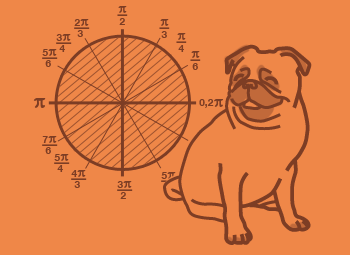
Step-by-Step Video Lessons
Real teaching so you can solve it alone.
Practice Until Perfect
Practice until it truly clicks.
Test Prep Included
Includes real Math 30-1 exam questions.
Try It Now
Test your knowledge
Our approach aligns with the evidence
Exam Scores
Better Recall
Less Anxiety
Math 30-1 Topics
1. Factoring Polynomials
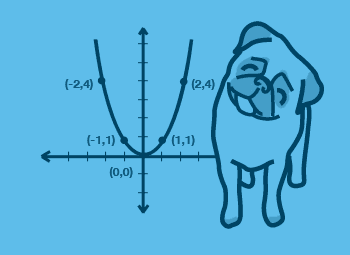
2. Quadratic Functions
3. Functions
4. Transformations of Functions
5. Polynomial Functions
6. Radical Functions
7. Rational Functions
8. Exponential Functions
9. Logarithmic Functions
10. Applications of Exponential and Logarithmic Functions
11. Trigonometric Ratios and Angle Measure
12. Graphing Trigonometric Functions
13. Applications of Trigonometric Functions
14. Trigonometric Identities
15. Solving Trigonometric Equations
16 Chapters · 134 Topics · 719 Videos

Ready to practice Math 30-1?
Try practice questions on every Math 30-1 topic — with instant feedback and step-by-step video solutions when you get stuck.
Discover Our Learning Areas
Explore key subjects and start learning with interactive content.





What Is the Math 30-1 Diploma Exam?
The Math 30-1 Diploma Exam is a province-wide assessment administered by Alberta Education at the end of the Pure Mathematics 30-1 course — one of the most demanding Grade 12 math pathways in Canada. The diploma is written in January, June, and August and counts for 30% of your final course grade. It is a three-hour exam split into two parts: Part A uses multiple-choice questions without a calculator, while Part B allows a graphing calculator and includes both multiple-choice and numerical-response items. Because the diploma covers six interconnected content strands, strong preparation across all areas is essential for a competitive result.
Math 30-1 Diploma Exam Format and Sections
Understanding the exam's structure is the first step toward an efficient study plan.
Part A — Non-Calculator (Multiple Choice): Tests conceptual understanding and mental math fluency across all six strands. Students cannot use any technology, so fluency with the unit circle, identity families, and function behaviour is critical.
Part B — Calculator-Permitted (Multiple Choice + Numerical Response): Allows a graphing calculator. Numerical-response questions require students to enter a calculated value directly — there are no answer options to guess from, making accuracy essential.
The six content strands tested across both parts are: Trigonometry; Relations and Functions; Exponential and Logarithmic Functions; Rational Functions; Permutations, Combinations, and the Binomial Theorem; and Polynomial Functions. Alberta Education publishes a blueprint showing the approximate weighting of each strand, so practising the highest-weighted areas first is a smart time investment.
How Is the Math 30-1 Diploma Scored?
The diploma is marked out of 100 and blended with your school-based mark (70%) for a final course grade. A passing mark is 50%, but post-secondary programs in science, engineering, business, and education typically require a final blended grade of 65–75% or higher. Students who are not satisfied with their diploma result may rewrite in a subsequent session, and the higher of the two diploma marks is used in the blend. Knowing your target blended grade before you start prepping helps you set a realistic diploma score goal.
What Content Areas Are on the Math 30-1 Diploma?
Each of the six strands brings its own demands:
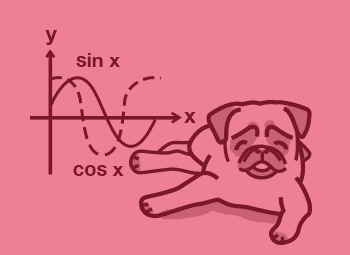
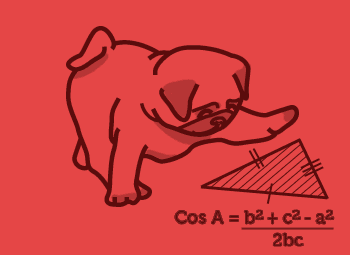
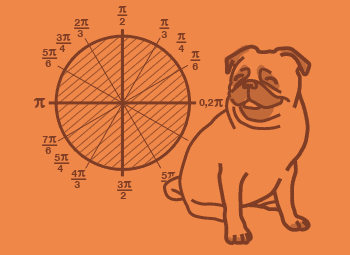
Trigonometry is typically the largest strand. It covers angles in standard position and the unit circle, the six trig ratios, graphing sinusoidal functions, trig identities (reciprocal, quotient, Pythagorean, sum/difference, double-angle), and solving trig equations over specified domains.
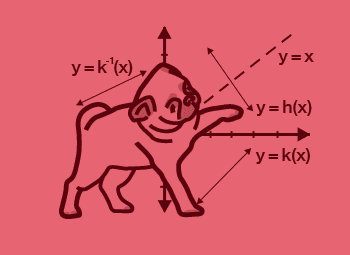
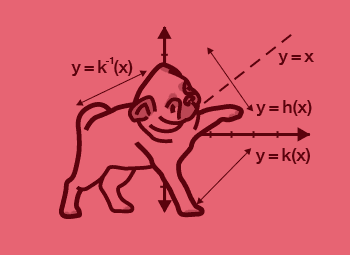
Relations and Functions covers transformations of parent functions (including stretches, reflections, and translations), combining and composing functions, and finding and graphing inverse functions.
Exponential and Logarithmic Functions tests the laws of logarithms, converting between exponential and logarithmic form, graphing both function families, and solving equations that mix both types.
Rational Functions focuses on identifying vertical and horizontal asymptotes, graphing rational expressions, and solving rational equations — including checking for non-permissible values.
Permutations, Combinations, and the Binomial Theorem covers the fundamental counting principle, factorial notation, permutations of sets with and without repeated elements, combinations, and expanding binomials using the binomial theorem or Pascal's triangle.
Polynomial Functions rounds out the course with factoring higher-degree polynomials, the remainder and factor theorems, and graphing polynomial functions including end behaviour and zeros.
What Is the Hardest Part of the Math 30-1 Diploma?
Survey data from Alberta teachers and student forums consistently identify trigonometric identities in Part A and numerical-response questions in Part B as the highest-anxiety areas. Trig identities demand that you manipulate and verify expressions using only identity families — with no calculator and no multiple-choice options to check against, a shaky foundation quickly becomes visible. Numerical-response items have zero guessability: if your setup is wrong, your answer is wrong with no partial credit. The students who do best on these sections are those who have built procedural fluency through repeated timed practice, not just concept review.
Why StudyPug for Math 30-1 Prep?
StudyPug is built around the way diploma prep actually works: you identify gaps, you close them with targeted instruction, and then you prove the learning under timed, exam-like conditions. Here is how each piece fits together.
Diagnostic that pinpoints your weak areas. Before you spend a minute reviewing content you already know, take a short diagnostic to see exactly which strands and sub-topics are pulling your score down. The diagnostic gives you a clear priority list so you study smarter from day one.
Certified-teacher concept videos that teach the method. Every Math 30-1 topic — from verifying trig identities to expanding binomials — is covered by certified teachers in step-by-step video lessons. The focus is on showing you how to think through a problem type, not just arriving at an answer. That distinction matters enormously on diploma day, when the question will never look exactly like the one you practised.
Adaptive practice that keeps pace with your growth. As you work through quizzes, the difficulty adjusts to your performance. Topics you are comfortable with move quickly; topics you are still building get more repetitions at the right challenge level. This keeps preparation efficient even when time is short.
Unlimited diploma-style practice tests, retakeable as many times as needed. Full-length practice tests based on real exam formats let you simulate diploma conditions — Part A timed without a calculator, Part B with one. Each completed test generates a detailed breakdown showing which strands cost you the most marks, turning every practice run into actionable data.
30-day money-back guarantee. Every StudyPug plan is backed by a 30-day money-back guarantee. No risk, no long-term contracts — just focused Math 30-1 preparation when you need it.
Math 30-1 Topics Covered on StudyPug
StudyPug's Math 30-1 prep covers every diploma strand in full. Take a math 30-1 diploma practice test to see where you stand before diving into individual topic lessons. Key coverage areas include:
- Trigonometry: unit circle, graphing sinusoidal functions, trig identities, solving trig equations
- Relations and Functions: transformations, inverse functions, function operations and composition
- Exponential and Logarithmic Functions: laws of logs, solving exponential and logarithmic equations
- Rational Functions: asymptotes, graphing, solving rational equations
- Permutations, Combinations, and the Binomial Theorem: counting methods, binomial expansion
- Polynomial Functions: factor and remainder theorems, graphing, end behaviour
If you are building your Alberta math foundation from an earlier point, the EQAO practice test grade 9 resources provide a useful reference for core skills that underpin the Math 30-1 content strands.
How to Prepare for the Math 30-1 Diploma: A Practical Study Plan
A realistic six-to-ten-week plan works for most students. Here is a framework you can adapt to your own timeline.
Weeks 1–2: Diagnose and prioritise. Take a full-length diploma practice test under timed conditions. Use the strand breakdown to rank topics from weakest to strongest. Block the bulk of your study hours for the bottom two or three strands.
Weeks 3–6: Targeted concept work and adaptive practice. Work through certified-teacher videos for each weak strand, pausing to work problems alongside the instructor. Follow each video section with adaptive quiz sets until your accuracy on that topic is consistently strong. Do not skip the Part A non-calculator strand work — build mental fluency deliberately.
Weeks 7–8: Mixed practice and timed runs. Begin taking full practice tests again — at least two per week, under exam conditions. Review every error immediately after each test using the video solution for that question type. Track which strand still generates the most errors.
Final week: Consolidation and strategy. Focus on numerical-response question strategies: writing out your setup clearly before calculating, checking non-permissible values in rational and logarithmic questions, and confirming units and domain restrictions in trig. Do a light review of trig identity families rather than attempting new content. Rest the night before the exam.
Students who follow a structured plan and prioritise regular practice tests consistently outperform those who rely on passive re-reading alone. The diploma rewards procedural fluency — and fluency comes from doing, not watching.
Math 30-1 FAQ
Unsure how StudyPug works? Need help with setting up? Check our frequently asked questions or contact us for help.
What does the Math 30-1 Diploma Exam cover, and how is it structured?
The Math 30-1 Diploma Exam is a cumulative Alberta Grade 12 assessment covering the full Pure Mathematics 30-1 course. It is divided into two parts: Part A (non-calculator, multiple choice) and Part B (calculator-permitted, a mix of multiple choice and numerical-response questions). The exam tests topics including trigonometry, relations and functions, exponential and logarithmic functions, rational functions, permutations and combinations, and the binomial theorem. It is three hours long and counts for 30% of a student's final course mark.
How is the Math 30-1 Diploma Exam scored, and what counts as a good score?
The Math 30-1 Diploma Exam is marked out of 100 and contributes 30% of your final course grade, with school-based assessments making up the remaining 70%. A score of 50% is required to pass, but most universities and post-secondary programs in Alberta expect a final blended mark of at least 65–75% for admission into math-intensive programs. Aiming for 70% or higher on the diploma itself is a solid goal that gives you a strong buffer when blended with your course grade.
What subjects and content areas are tested on the Math 30-1 exam?
Math 30-1 tests six major content strands: (1) Trigonometry — angles in standard position, unit circle, trig identities, and equations; (2) Relations and Functions — function transformations, inverses, and function operations; (3) Exponential and Logarithmic Functions — laws of logarithms, solving exponential and log equations; (4) Rational Functions — graphing, asymptotes, and equations; (5) Permutations, Combinations, and the Binomial Theorem — counting methods and binomial expansion; and (6) Polynomial Functions — factoring and graphing higher-degree polynomials. Each strand appears on both parts of the diploma.
How should I prepare for the Math 30-1 Diploma, and how long does preparation take?
Most students benefit from six to ten weeks of structured preparation. Start by taking a diagnostic practice test to identify your weakest strands, then work through those topics using step-by-step video lessons before returning to timed practice tests. Aim for at least three to five full-length diploma-style practice tests before exam day. In the final week, focus on numerical-response question strategies and review any topics where errors cluster. StudyPug's adaptive practice adjusts difficulty as you improve, helping you build real diploma readiness efficiently.
When should I take the Math 30-1 Diploma, and how do I register?
The Math 30-1 Diploma Exam is written at the end of the semester in which you complete the course — typically in January (for Semester 1) or June (for Semester 2), with an August session available for rewrites. Registration is handled through your school; you do not register independently. If you plan to rewrite the exam to improve your mark, speak with your school's counsellor about the rewrite registration window, which usually opens several weeks before the session date.
What is the hardest part of the Math 30-1 exam, and how do I tackle it?
Most students find trigonometric identities and the non-calculator Part A the most challenging sections. Trig identities require you to recognize and manipulate expressions using reciprocal, quotient, Pythagorean, and sum/difference identities without a calculator — a skill that demands pattern recognition built through repeated practice, not just formula memorization. To tackle it: first build fluency with the unit circle and identity families using video walkthroughs that teach the method, then drill with timed practice questions based on real exam formats until the manipulation becomes automatic.




Written by the StudyPug Team
Last updated June 5, 2026
3 M+
students
★★★★★
4.8 average
K–12
all grades