Grade 11 Algebra 2 Help — Video Lessons & Practice
Get clear explanations for any Algebra 2 problem and build exam-ready confidence.
Value vs. Private Tutor
Expert help without the tutor price tag.

Multi-Subject
One subscription unlocks all subjects.
Unlimited Practice
Practice until it clicks not the clock.
Try It Now
Test your knowledge
Our approach aligns with the evidence
Exam Scores
Better Recall
Less Anxiety
Algebra 2 Topics
1. Linear Equations
2. Inequalities
3. Functions
4. Systems of Equations
5. Systems of Inequalities
6. Complex Numbers
7. Factoring
8. Quadratic Functions
9. Polynomials
10. Radical Functions and Expressions
11. Rational Exponents
12. Rational Functions and Expressions
13. Reciprocal Functions
14. Function Operations
15. Families of Functions
16. Variation
17. Piecewise Functions
18. Logarithms
19. Exponential and Logarithmic Functions
20. Angle Measures
21. Trigonometry
22. Bearings
23. Graphing Trigonometric Functions
24. Trigonometric Identities
25. Sequences and Series
26. Probability
27. Statistics
28. Parabolas
29. Introduction to Conic Sections
30. Introduction to Matrices
31. Properties of Matrices
32. Determinants and Inverses of Matrices
33. Transformations with Matrices
33 Chapters · 224 Topics · 1380 Videos

Ready to practice Algebra 2?
Try practice questions on every Algebra 2 topic — with instant feedback and step-by-step video solutions when you get stuck.
Discover Our Learning Areas
Explore key subjects and start learning with interactive content.





What Is Algebra 2?
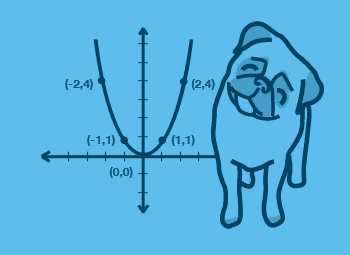
Algebra 2 is the third core math course in the US high school sequence, typically taken in Grade 11. It extends the concepts introduced in Algebra 1 and Geometry into a broader, more abstract study of functions, equations, and mathematical modeling. Algebra 2 is the gateway course to Pre-Calculus and Calculus, and its content appears directly on the SAT, ACT, and AP exams.
What Topics Are Covered in Algebra 2?
Algebra 2 is one of the most content-dense courses in high school math. The major topic areas include:
- Polynomial Functions: factoring higher-degree polynomials, the Remainder and Factor Theorems, graphing polynomial curves, and solving polynomial equations.
- Quadratic Equations and Inequalities: completing the square, the quadratic formula, the discriminant, and solving quadratic inequalities on a number line.
- Rational Expressions and Equations: simplifying complex fractions, solving rational equations, and identifying vertical and horizontal asymptotes.
- Exponential and Logarithmic Functions: properties of exponents, the natural base e, logarithm rules, and solving exponential and logarithmic equations.
- Systems of Equations: linear systems in three variables, matrix methods, and Cramer's Rule.
- Conic Sections: parabolas, circles, ellipses, and hyperbolas — their standard forms, graphing, and real-world applications.
- Sequences and Series: arithmetic and geometric sequences, summation notation, and the Binomial Theorem.
- Complex Numbers: operations with imaginary numbers, the complex plane, and modulus.
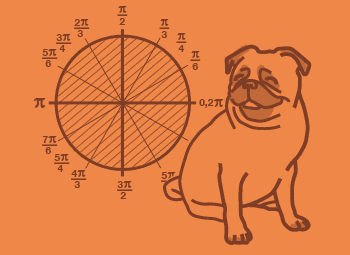
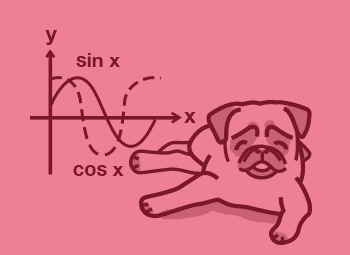
- Introduction to Trigonometry: some Algebra 2 courses close with unit-circle basics and the sine, cosine, and tangent functions as a bridge to Pre-Calculus.
Is Algebra 2 Hard? Where Do Students Struggle Most?
Algebra 2 is consistently ranked among the most challenging required math courses in the US, and for good reason: it introduces multiple new function families in quick succession, each with its own rules and graphing behavior. Students who find it hardest often hit a wall at logarithms, where the inverse relationship with exponentials feels counterintuitive. Rational functions are another common stumbling block — simplifying complex rational expressions requires strong factoring skills, and asymptotes add a graphing layer many students have never encountered before.
Conic sections challenge students because each shape (ellipse, hyperbola, parabola) has its own standard-form equation with different parameters. And systems of three equations in three variables push working-memory limits. The good news: every one of these topics follows a learnable method. The difficulty usually comes from seeing a procedure without understanding why it works — which is precisely the gap that concept-led video instruction is designed to close.
How Does Algebra 2 Connect to the SAT, ACT, and AP Exams?
Algebra 2 is not just a class — it is direct SAT and ACT preparation. The SAT Math sections (both the no-calculator and calculator portions) test polynomial manipulation, exponential functions, systems of equations, and rational expressions heavily. ACT Math adds trigonometry and complex numbers. If you are aiming for a strong SAT math score, strengthening your Algebra 2 fluency is one of the highest-leverage things you can do.
For AP courses, Algebra 2 mastery is assumed from the first day of AP Precalculus, AP Calculus AB, and AP Statistics. Students who enter those courses with gaps in logarithms or polynomial factoring spend the first month catching up instead of moving forward. Closing those gaps in Algebra 2 year pays dividends across your entire high school math career.
Why StudyPug for Algebra 2?
StudyPug is built for exactly the kind of Algebra 2 help that actually moves grades. Here is what makes it different:
Start with a diagnostic, not a guess. Rather than working through topics you already know, StudyPug's diagnostic assessment identifies your specific weak points in Algebra 2 so every study session is targeted. Students spend time on what matters, not on comfortable review.
Learn the method from certified teachers. Every Algebra 2 lesson is a video taught by a certified teacher — not AI-generated, not screen recordings of someone writing on paper. The focus is on teaching you the method step-by-step so you can recognize and solve similar problems on your own. That distinction matters enormously on tests, where you will see problems phrased differently than any example you studied.
Adaptive practice keeps you improving. After watching a lesson, practice problems adjust their difficulty based on your performance. Struggle on logarithmic equations? The system keeps you in that zone, varying the problem types, until fluency builds. Cruise through polynomial division? It moves you forward without wasting your time.
Exam prep is already built in. SAT, ACT, and AP exam-style questions are integrated throughout the Algebra 2 content — not as a separate add-on. You practice with the style of question you will actually face on test day.
Aligned to US state standards. Lessons are matched to the standard US Algebra 2 curriculum and common textbook sequences, so whatever your school uses, you will find the right topic without searching.
30-day money-back guarantee. Every subscription is backed by a full 30-day money-back guarantee. No risk in starting.
What You Learn: Algebra 2 Curriculum Coverage
StudyPug covers the full Algebra 2 curriculum as taught in US high schools, organized into clear topic sequences that mirror how the course is typically structured. Key curriculum areas include:
- Polynomial and rational functions (factoring, long division, asymptotes)
- Quadratic functions and complex roots
- Exponential growth, decay, and the natural base
- Logarithmic functions and equations
- Conic sections (circles, parabolas, ellipses, hyperbolas)
- Systems of equations and matrices
- Sequences, series, and the Binomial Theorem
- Introduction to trigonometric functions
- Data, probability, and statistics (where included in the local curriculum)
Because VALIDATED_INTERNAL_LINKS for this page are not available in the current MAP, no specific topic-page links are placed here. Browse the full topic list on the Algebra 2 course page to find the exact unit you need.
How to Use StudyPug for Algebra 2
The most effective workflow is straightforward. Start by running the diagnostic — it takes a few minutes and immediately shows you which Algebra 2 concepts are solid and which have gaps. Focus your first sessions on the flagged topics, watching the certified-teacher concept video before attempting any practice. The video teaches the method; the adaptive practice reinforces it.
Before a test, use the practice-test feature to simulate exam conditions. Review any questions you get wrong by watching the worked video solution, then reattempt similar problems until the method sticks. For SAT or ACT prep, filter by exam-type questions to practice the specific format you will face.
StudyPug is available 24/7 on desktop and mobile, so you can fit a focused session into any gap in your schedule — the night before a quiz, on a commute, or during a free period. Consistent short sessions with targeted adaptive practice outperform marathon study nights every time.
Ready to improve your Algebra 2 grade and walk into your next exam confident? Start learning today — your 30-day money-back guarantee means there is nothing to lose.
Algebra 2 FAQ
Unsure how StudyPug works? Need help with setting up? Check our frequently asked questions or contact us for help.
What do you learn in Algebra 2, and what topics does it cover?
Algebra 2 builds on Algebra 1 and Geometry to cover a wide range of advanced math topics. Core units include polynomial functions, quadratic equations and inequalities, rational expressions, exponential and logarithmic functions, sequences and series, conic sections, and an introduction to trigonometry. Many courses also include systems of equations, matrices, complex numbers, and probability. By the end of Algebra 2, students have the algebraic foundation needed for Pre-Calculus and beyond.
What is the difference between Algebra 2 and Pre-Calculus?
Algebra 2 introduces the core function families — polynomial, rational, exponential, and logarithmic — and builds algebraic manipulation skills. Pre-Calculus deepens those concepts and adds trigonometry, limits, and analytical geometry to prepare students for Calculus. Think of Algebra 2 as the toolbox and Pre-Calculus as learning to apply those tools in more complex, real-world modeling situations. Some schools combine the two into an Algebra 2 / Trigonometry course.
Is Algebra 2 hard, and where do students struggle most?
Algebra 2 is considered one of the most challenging core math courses in high school because it introduces many abstract concept families at once. Students most commonly struggle with logarithmic equations (especially solving for the variable inside a log), rational functions and their asymptotes, and conic sections (ellipses, hyperbolas). Complex numbers and systems of three-variable equations are also common sticking points. The key is seeing each method demonstrated clearly before attempting practice, which is exactly how StudyPug's certified-teacher videos are structured.
What should I take before Algebra 2, and what comes after it?
You should have completed Algebra 1 and Geometry (or an Integrated Math sequence through Math 2) before starting Algebra 2. A solid understanding of linear equations, graphing, and basic factoring is essential. After Algebra 2, most students move into Pre-Calculus or Trigonometry, followed by Calculus. Students pursuing STEM majors often take AP Calculus AB or BC, both of which build directly on Algebra 2 skills.
Is Algebra 2 on the SAT or ACT, and how is it tested?
Yes — Algebra 2 content is heavily tested on both the SAT and ACT. The SAT Math section covers polynomial operations, exponential functions, rational equations, and systems of equations, all core Algebra 2 topics. The ACT Math section adds trigonometry and complex numbers. On AP Precalculus and AP Calculus exams, Algebra 2 fluency is assumed throughout. StudyPug includes SAT, ACT, and AP exam-style practice questions in your subscription so you can connect your Algebra 2 studies directly to test preparation.
What is one of the hardest concepts in Algebra 2, and how do you tackle it?
Logarithmic equations are consistently rated the hardest concept in Algebra 2. Students confuse the inverse relationship between logs and exponentials, misapply the change-of-base formula, and struggle with equations where the variable appears in the exponent. The most effective approach is to first build fluency with exponential functions, then learn logarithms as their inverse — seeing that log base b of x asks 'what power gives me x?' StudyPug's concept videos walk through the method step-by-step so you understand the reasoning, not just the procedure.




Written by the StudyPug Team
Last updated June 5, 2026
3 M+
students
★★★★★
4.8 average
K–12
all grades