TOPIC
Cell Functions, Transport and energy productionMY PROGRESS
Pug Score
0%
Getting Started
"Let's build your foundation!"
Best Streak
0 in a row
Study Points
+0
Overview
Practice
Watch
Read
Quiz
Next Steps
Get Started
Get unlimited access to all videos, practice problems, and study tools.
BACK TO MENU
Topic Progress
Pug Score
0%
Getting Started
"Let's build your foundation!"
Videos Watched
0/0
Best Practice
No score
Read
Not viewed
Best Quiz
No attempts
Best Streak
0 in a row
Study Points
+0
Overview
Practice
Watch
Read
Quiz
Next Steps
Read
How Cells Transport Substances and Produce Energy
You will learn how cells transport substances across their membranes and produce energy through cellular respiration and photosynthesis to carry out all life functions.
What Are Cell Functions, Transport, and Energy Production?
Every living cell in your body is constantly working absorbing nutrients, removing waste, and producing energy. To understand how your body systems function, you first need to understand what happens inside individual cells. This topic builds directly on what you learned in Cell Components, Organelles and Functions and Basic Principles, Fundamental Concepts of Cells.
Cells must move substances in and out across their membranes and convert food into usable energy and they do this through a set of carefully controlled processes you will explore here.
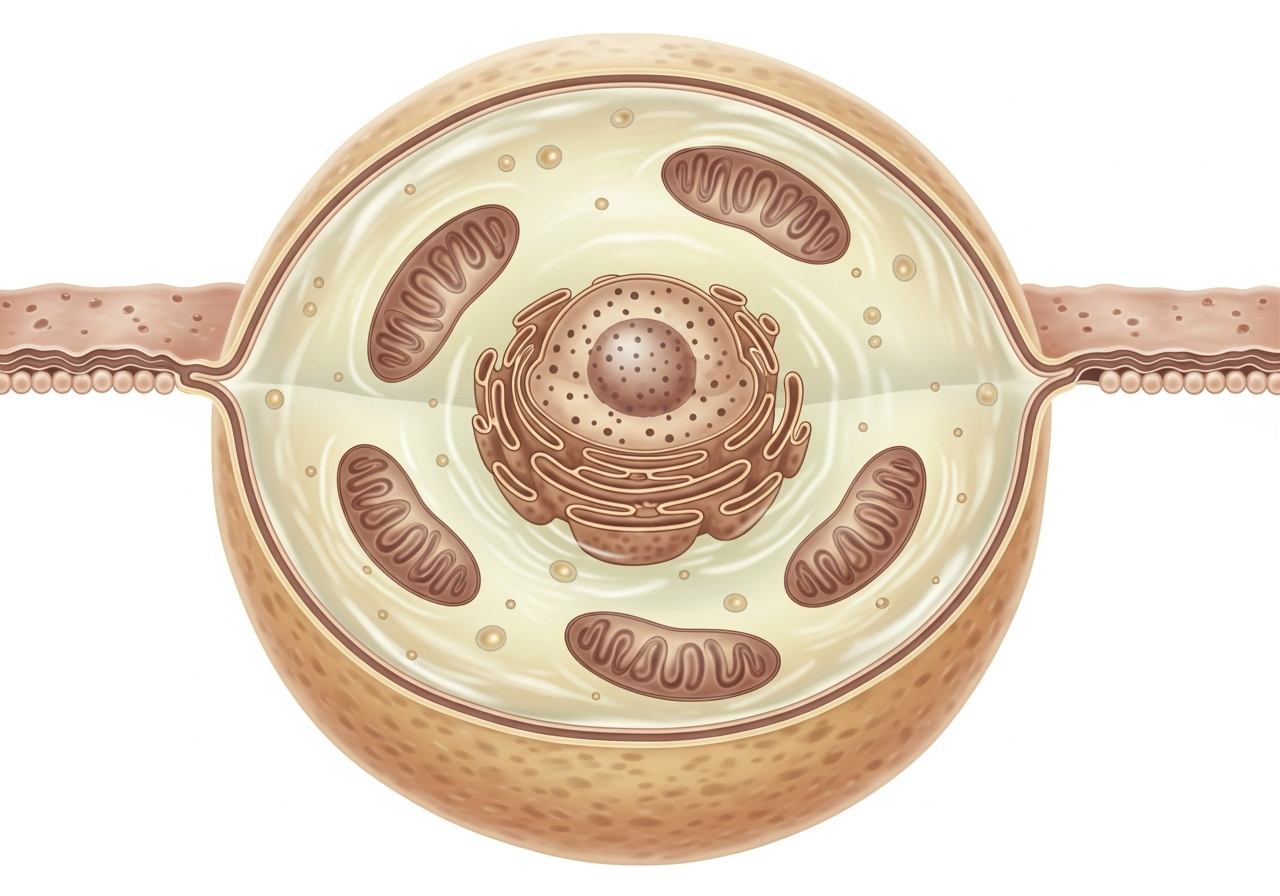
The Cell Membrane and Selective Permeability
The cell membrane is the outer boundary of the cell. Its main function is to control what enters and exits the cell. You can think of it as a security gate that only lets certain things through.
The membrane is described as selectively permeable, meaning it allows some substances to pass through while blocking others. Small molecules like oxygen and carbon dioxide can cross easily, while larger or charged molecules need help or energy to get through.
Passive Transport: Diffusion and Osmosis
When substances move from an area of higher concentration to an area of lower concentration, this is called diffusion. No energy is needed molecules naturally spread out until they reach equilibrium, meaning equal concentration on both sides.
For example, when your cells produce carbon dioxide, CO is more concentrated inside the cell than outside. It diffuses outward no energy required.
Osmosis is a special type of diffusion that applies only to water molecules. Water moves across a selectively permeable membrane from an area of higher water concentration to lower water concentration. If you place a red blood cell in a very salty solution, water moves out of the cell by osmosis, causing it to shrink. If you place it in pure water, water rushes in and the cell swells and may burst.
Facilitated Diffusion and Transport Proteins
Facilitated diffusion is still a passive process no energy is used but molecules that cannot cross the membrane on their own are helped through by transport proteins (also called channel proteins). These proteins create specific pathways in the membrane for certain molecules to pass through, moving from high to low concentration.
Active Transport: Moving Against the Gradient
Sometimes your cells need to move substances from low concentration to high concentration against the concentration gradient. This requires energy in the form of ATP. This process is called active transport.
For example, if a cell needs to absorb glucose even though glucose is already highly concentrated inside, it must use active transport to bring more in.
Two special forms of active transport involve the cell membrane folding around materials. Endocytosis is when the cell membrane wraps around a large particle and pulls it inside the cell. Exocytosis is the opposite the cell packages materials into vesicles and releases them outside the cell.
Energy Production: Cellular Respiration and ATP
Your cells need a constant supply of energy to carry out active transport, growth, reproduction, and repair. This energy comes from a process called cellular respiration, which takes place in the mitochondria often called the "powerhouse of the cell."
During cellular respiration, glucose and oxygen are broken down to produce ATP (adenosine triphosphate), carbon dioxide, and water. The overall equation is:
Glucose + Oxygen Carbon Dioxide + Water + ATP
ATP is the molecule that stores and carries usable energy for all cell activities. Without a steady supply of ATP, your cells cannot function.
Photosynthesis: Energy Production in Plant Cells
Plant cells have an additional organelle called the chloroplast, which contains the green pigment chlorophyll. Chloroplasts carry out photosynthesis the process of using light energy, carbon dioxide, and water to produce glucose and oxygen.
The overall equation for photosynthesis is:
Carbon Dioxide + Water + Light Energy Glucose + Oxygen
Photosynthesis and cellular respiration are essentially opposite processes. The products of one are the reactants of the other, making them deeply connected in the flow of energy and matter through living systems. You will explore this further in System Interactions, Energy and Matter Flow.
Key Terms and Definitions
Cell Membrane: The flexible outer layer of a cell that controls what enters and exits. You can think of it as the cell's gatekeeper.
Selectively Permeable: A property of the cell membrane that means it allows some substances to pass through while blocking others based on size, charge, or type.
Diffusion: The movement of substances from an area of higher concentration to an area of lower concentration. No energy is needed for this process.
Osmosis: The diffusion of water molecules specifically across a selectively permeable membrane, from higher water concentration to lower water concentration.
Concentration Gradient: The difference in the concentration of a substance between two areas. Substances naturally move down the gradient from high to low concentration.
Equilibrium: The state reached when the concentration of a substance is equal on both sides of a membrane, so there is no net movement of molecules.
Passive Transport: Any movement of substances across the cell membrane that does not require energy, including diffusion, osmosis, and facilitated diffusion.
Facilitated Diffusion: A type of passive transport where molecules move from high to low concentration through special transport proteins embedded in the membrane no energy required.
Transport Proteins (Channel Proteins): Proteins embedded in the cell membrane that create pathways for specific molecules to cross the membrane more easily.
Active Transport: The movement of substances from low concentration to high concentration against the concentration gradient using energy from ATP.
ATP (Adenosine Triphosphate): The molecule that serves as the main energy currency of the cell. It stores and delivers energy for all cellular activities.
Cellular Respiration: The process cells use to convert glucose and oxygen into ATP energy, carbon dioxide, and water. This occurs primarily in the mitochondria.
Mitochondria: The organelle where cellular respiration takes place. It is often called the "powerhouse of the cell" because it produces ATP.
Photosynthesis: The process by which plant cells use light energy, carbon dioxide, and water to produce glucose and oxygen. It occurs in the chloroplasts.
Chloroplast: The organelle found in plant cells that contains chlorophyll and carries out photosynthesis to produce glucose from sunlight.
Glucose: A simple sugar that serves as the primary fuel source for cellular respiration. Cells break it down to release energy stored as ATP.
Endocytosis: A process where the cell membrane folds inward to surround and engulf large particles, bringing them inside the cell in a vesicle.
Exocytosis: The opposite of endocytosis the cell packages materials into vesicles and releases them outside the cell when the vesicle fuses with the membrane.
Practice and Apply Your Knowledge
You can strengthen your understanding by working through scenarios involving cell transport. Try predicting what happens to a cell placed in different solutions will it swell, shrink, or stay the same? This connects directly to your study of Cell Types, Plant and Animal Cells, where you compare how plant and animal cells respond differently to osmosis.
You can also practice tracing the flow of energy: from sunlight captured by chloroplasts in photosynthesis, to glucose stored in the cell, to ATP produced by mitochondria during cellular respiration. This energy flow connects to Energy Transfer, Conduction, Convection, and Radiation and prepares you for Energy Transfer, Conservation of Energy.
What You Should Already Know
Before exploring cell functions and transport, you should be comfortable with the foundational topics that lead into this one. In Cells to Systems, Hierarchical Organization of Life, you learned how cells organize into tissues, organs, and systems. In Gas Exchange, Breathing and Cellular Respiration, you studied how oxygen and carbon dioxide move through the body processes that depend directly on diffusion across cell membranes.
Your understanding of Nutrient Absorption, Transport of Nutrients and Digestion Process, Mechanical and Chemical Breakdown shows you where glucose comes from before cells use it in respiration. Knowledge of Heart Function, Cardiac Cycle and Circulation and Blood and Vessels, Structure and Function explains how nutrients and gases are delivered to cells. You also built on Energy Conversion, Transformation Between Forms and Types of Energy, Mechanical, Electrical, Chemical to understand how chemical energy in glucose becomes usable ATP. Finally, System Integration, Connection Between Systems ties all these body systems together.
Related Topics and Connections
This topic sits at the center of a rich network of science concepts. You have already explored Basic Principles, Fundamental Concepts of Cells and Cell Components, Organelles and Functions, which gave you the foundation to understand what each organelle does. Now you are applying that knowledge to understand how organelles like mitochondria and chloroplasts actually work.
Understanding energy in cells connects to States of Matter, Kinetic Molecular Theory and Temperature Effects, Particle Movement and Energy, which explain how energy affects particles. You will also find connections to Phase Changes, Energy in Transitions and Energy Efficiency, Power Consumption as you think about how energy is used and conserved.
Looking ahead, this topic directly prepares you for Food Webs, Energy Transfer and Matter Cycles, Biogeochemical Cycles, where you will see how energy and matter flow through entire ecosystems. You will also build toward Energy Types, Potential and Kinetic Forms and Energy Transfer, Conservation of Energy, deepening your understanding of how energy moves and transforms at every scale of life.