TOPIC
Conservation, Protection and restorationMY PROGRESS
Pug Score
0%
Getting Started
"Let's build your foundation!"
Best Streak
0 in a row
Study Points
+0
Overview
Practice
Watch
Read
Quiz
Next Steps
Get Started
Get unlimited access to all videos, practice problems, and study tools.
Back to Menu
Topic Progress
Pug Score
0%
Getting Started
"Let's build your foundation!"
Videos Watched
0/0
Best Practice
No score
Read
Not viewed
Best Quiz
No attempts
Best Streak
0 in a row
Study Points
+0
Overview
Practice
Watch
Read
Quiz
Next Steps
Read
Protect, Restore, and Conserve: How You Can Help Save Our Planet
You will learn how conservation, protection, and restoration efforts help repair and preserve ecosystems damaged by human activity, and why biodiversity matters for a healthy planet.
What Is Conservation, Protection, and Restoration?
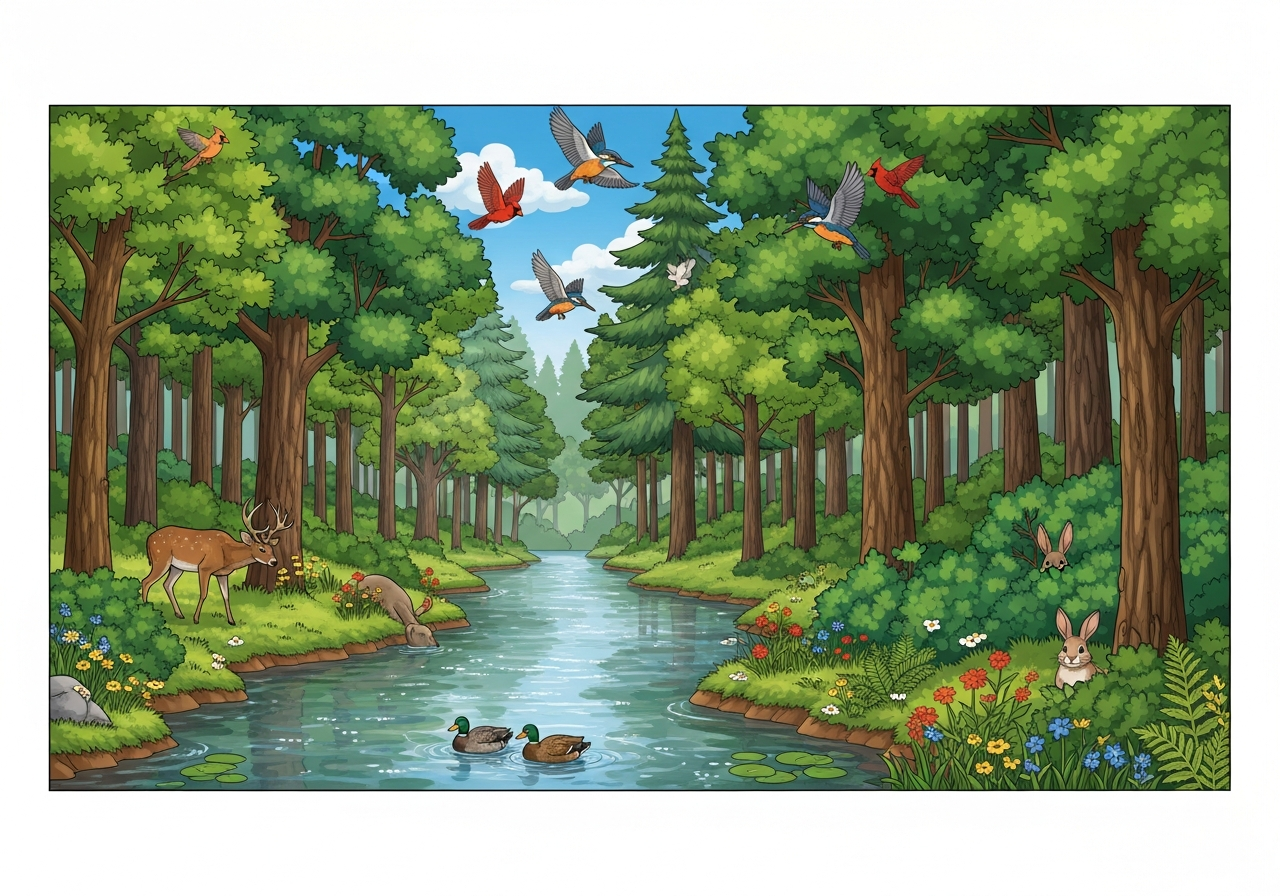
When you look at a forest, a river, or an ocean, you are seeing an ecosystem a community of living things working together. Human activities can damage these ecosystems, but you can also help protect and repair them through conservation, protection, and restoration.
Conservation means carefully managing natural resources so they last for future generations. Protection means setting aside areas where nature is kept safe from harmful activities. Restoration means actively repairing ecosystems that have already been damaged. Together, these three approaches form the foundation of environmental science and are directly connected to Environmental Systems and Human Effects on Ecosystems.
How Human Activities Damage Ecosystems
You have already explored how humans affect the natural world in Environmental Science and Human Effects on Ecosystems. Some of the biggest threats include:
- Deforestation: Clearing forests to build cities or grow crops destroys the homes of countless species and is the leading cause of habitat destruction worldwide.
- Pollution: Harmful substances released into air, water, and soil by human activities damage ecosystems and harm wildlife. For example, fertilizers washing into ponds cause algae to grow rapidly in a process called eutrophication, which uses up oxygen and kills fish.
- Invasive species: Non-native organisms introduced to a new ecosystem spread rapidly, outcompete native species, and disrupt the food web.
- Burning fossil fuels: Releasing greenhouse gases like carbon dioxide traps heat in the atmosphere, causing climate change that alters habitats and disrupts food sources for animals.
- Overfishing: Removing fish faster than populations can reproduce disrupts the food chain and causes other species to decline.
Oil spills are another serious threat oil coats the feathers and fur of animals, poisons fish, and destroys marine habitats.
Conservation and Protection Strategies
You can learn about many powerful strategies that scientists and communities use to protect nature. Understanding Resource Management and Sustainable Use is key to making these strategies work.
- Protected areas: National parks and wildlife refuges set aside large areas of natural land where wildlife can live safely, limiting harmful activities like logging and mining.
- Wildlife corridors: These are strips of natural habitat that connect separate patches of land, allowing animals to travel safely between areas to find food, mates, and shelter.
- Marine protected areas: These ocean zones limit fishing and human disturbance, allowing fish populations and coral reefs to recover.
- Endangered Species Act: Laws like this legally protect threatened and endangered species and the habitats they depend on.
- Zoos and aquariums: Modern zoos run breeding programs for endangered species and educate the public about wildlife conservation.
You can also help protect local ecosystems by picking up litter near streams, planting native plants, and avoiding harmful chemicals.
Ecosystem Restoration
Restoration goes beyond protection it actively repairs damaged environments. You will see restoration in action through examples like replanting native prairie grasses on farmland, removing pollution and replanting native plants along riverbanks, and releasing captive-bred animals back into the wild through species reintroduction programs.
The California condor is a famous example: once nearly extinct with fewer than 30 individuals, reintroduction programs have helped the population recover significantly. Planting trees and native plants in cities also creates urban habitats that support birds, pollinators, and other wildlife.
Restoration is different from conservation: conservation prevents future damage to healthy ecosystems, while restoration repairs ecosystems that have already been harmed.
Why Biodiversity Matters
Biodiversity the wide variety of living species in an ecosystem makes ecosystems stronger and more resilient. When one species is lost, others can sometimes fill the gap. But when a keystone species is removed, the entire ecosystem can collapse because so many other species depend on it.
For example, when wolves were removed from Yellowstone, deer overpopulated and overgrazed vegetation, damaging the entire ecosystem. This is called a trophic cascade. Protecting biodiversity is directly connected to your study of System Interactions, Biotic and Abiotic Factors and Energy Flow, Food Webs and Energy Pyramids.
Sustainable Practices You Can Use
You have explored Resource Use, Renewable and Non-Renewable Resources and Natural Resources, Renewable and Non-Renewable as foundations for understanding sustainability. Sustainable use means using resources only as fast as they can naturally replenish.
The three R's reduce, reuse, and recycle help protect the environment by decreasing waste and conserving natural resources like trees, water, and minerals. Planting trees also helps fight climate change because trees absorb carbon dioxide through photosynthesis and store carbon, acting as carbon sinks.
You can connect these ideas to Resource Use and Sustainable Practices and Cultural Practices and Sustainable Resource Management, which show how communities around the world manage resources wisely.
Key Terms & Definitions
Conservation: Conservation means carefully protecting and managing natural resources so they are available for future generations. For example, setting fishing limits so fish populations can recover is a form of conservation.
Habitat: A habitat is the specific place where a species lives and finds everything it needs food, water, shelter, and space. A pond is the habitat of a frog, and a forest is the habitat of a woodpecker.
Biodiversity: Biodiversity refers to the rich variety of living species found within an ecosystem or on Earth. The more species present, the healthier and more resilient the ecosystem is.
Extinction: Extinction is permanent once a species is gone, it cannot be brought back. When the last individual of a species dies, that species is extinct forever.
Sustainable practices: Sustainable practices balance human needs with protecting the environment, ensuring resources are used at a rate that allows them to naturally replenish for future generations.
Deforestation: Deforestation is the removal of entire forests, destroying the habitats of countless species and shrinking the space where wildlife can live. It is the leading cause of habitat destruction worldwide.
Pollution: Pollution occurs when harmful substances such as chemicals, trash, or gases are released into the air, water, or soil by human activities, damaging ecosystems and harming living things.
Restoration: Restoration actively repairs damaged environments so wildlife can thrive again. Examples include replanting native plants along riverbanks or reintroducing animals to their natural habitats.
Protected areas: Protected areas are places like national parks and wildlife refuges where harmful human activities are limited, giving nature a safe space to recover and thrive.
Invasive species: An invasive species is a non-native organism introduced to a new ecosystem where it has no natural predators. It spreads rapidly, outcompetes native species, and disrupts the natural food web.
Endangered species: An endangered species has so few individuals remaining that it faces a serious risk of becoming extinct if nothing is done to protect it.
Wildlife corridor: A wildlife corridor is a strip of natural habitat that connects separate patches of land, allowing animals to travel safely between areas to find food, mates, and shelter.
Keystone species: A keystone species plays a critical role in maintaining the structure of an ecosystem. Removing it can cause dramatic changes that ripple through the food web, potentially causing ecosystem collapse.
Eutrophication: Eutrophication happens when too many nutrients often from fertilizers wash into a body of water, causing algae to grow rapidly. The algae blocks sunlight and uses up oxygen, causing fish and other aquatic life to die.
Species reintroduction: A species reintroduction program breeds endangered animals in captivity and releases them into suitable wild habitats to rebuild populations that have declined or disappeared.
Greenhouse effect: The greenhouse effect is the warming of Earth caused by gases like carbon dioxide that trap heat in the atmosphere. Human activities like burning fossil fuels intensify this effect, causing climate change.
Sustainable use: Sustainable use means harvesting or using natural resources only as fast as they can be naturally replaced, ensuring future generations will also have access to them.
Practice Activities
You can strengthen your understanding of conservation and restoration by trying these activities:
- Create a diagram showing the difference between conservation, protection, and restoration with real-world examples for each.
- Research a local endangered species and identify what threats it faces and what conservation actions are being taken to help it.
- Design a butterfly garden plan using native flowering plants and explain how it supports pollinators and local biodiversity.
- Investigate a local water source and identify potential pollution threats, then propose actions to protect water quality.
These activities connect to your upcoming study of Conservation and Environmental Protection and Environmental Science, Resource Management, and Sustainable Practices.
Building on What You Already Know
You are ready for this topic because you have already explored important foundational ideas. In Environmental Science and Human Effects on Ecosystems, you learned how human activities change the natural world. In Resource Use, Renewable and Non-Renewable Resources, you discovered the difference between resources that replenish and those that can run out.
You also explored Cultural Practices and Sustainable Resource Management, which shows how communities manage resources wisely, and Indigenous Science and Traditional Ecological Knowledge, which highlights how Indigenous communities have protected ecosystems for generations using deep environmental understanding.
Related Topics & Connections
This topic connects to many other important areas of science. Here is how they all fit together:
- Environmental Systems, Human Effects on Ecosystems You will explore how human actions change entire environmental systems, building directly on what you learn here about conservation.
- Resource Management, Sustainable Use and Conservation You will learn strategies for managing natural resources wisely so ecosystems stay healthy long-term.
- Natural Resources, Renewable and Non-Renewable Understanding which resources can replenish helps you make smarter conservation decisions.
- Resource Use, Sustainable Practices You will discover everyday actions that reduce your environmental impact and support conservation goals.
- Environmental Knowledge, Ecological Understanding Deepening your ecological knowledge helps you understand why conservation efforts are so important.
- System Interactions, Biotic and Abiotic Factors You will see how living and non-living parts of ecosystems interact, which explains why protecting one part protects the whole system.
- Energy Flow, Food Webs and Energy Pyramids Understanding how energy moves through ecosystems shows you why losing one species can affect many others.
- Conservation, Environmental Protection This topic prepares you for a deeper study of environmental protection strategies and policies.
- Environmental Science, Resource Management, Sustainable Practices You will apply what you learn here to real-world resource management challenges.
- Ecological Wisdom, Sustainable Practices You will explore how ecological wisdom guides sustainable decision-making in communities around the world.
- Biodiversity, Species Relationships Basic You will build on your understanding of biodiversity to explore how species depend on each other.
- Climate Change, Human Impact You will connect conservation efforts to the broader challenge of addressing climate change caused by human activity.