TOPIC
Resource Use, Renewable and non-renewable resourcesMY PROGRESS
Pug Score
0%
Getting Started
"Let's build your foundation!"
Best Streak
0 in a row
Study Points
+0
Overview
Practice
Watch
Read
Quiz
Next Steps
Get Started
Get unlimited access to all videos, practice problems, and study tools.
BACK TO MENU
Topic Progress
Pug Score
0%
Getting Started
"Let's build your foundation!"
Videos Watched
0/0
Best Practice
No score
Read
Not viewed
Best Quiz
No attempts
Best Streak
0 in a row
Study Points
+0
Overview
Practice
Watch
Read
Quiz
Next Steps
Read
Renewable vs. Non-Renewable Resources: How You Use Earth's Materials
You will learn the difference between renewable and non-renewable resources and discover why using Earth's resources wisely is so important for the future.
What Are Natural Resources?
Every day, you use things that come from the Earth water, wood, sunlight, and even the fuel that powers cars and heaters. These are called natural resources. A natural resource is any material from the Earth that humans use to live and work.
Natural resources fall into two main groups: renewable and non-renewable. Knowing the difference helps you understand how to protect our planet, which connects to what you already know about Resource Use and Effects on the Environment and Ecosystem Components: Living and Non-Living Elements.
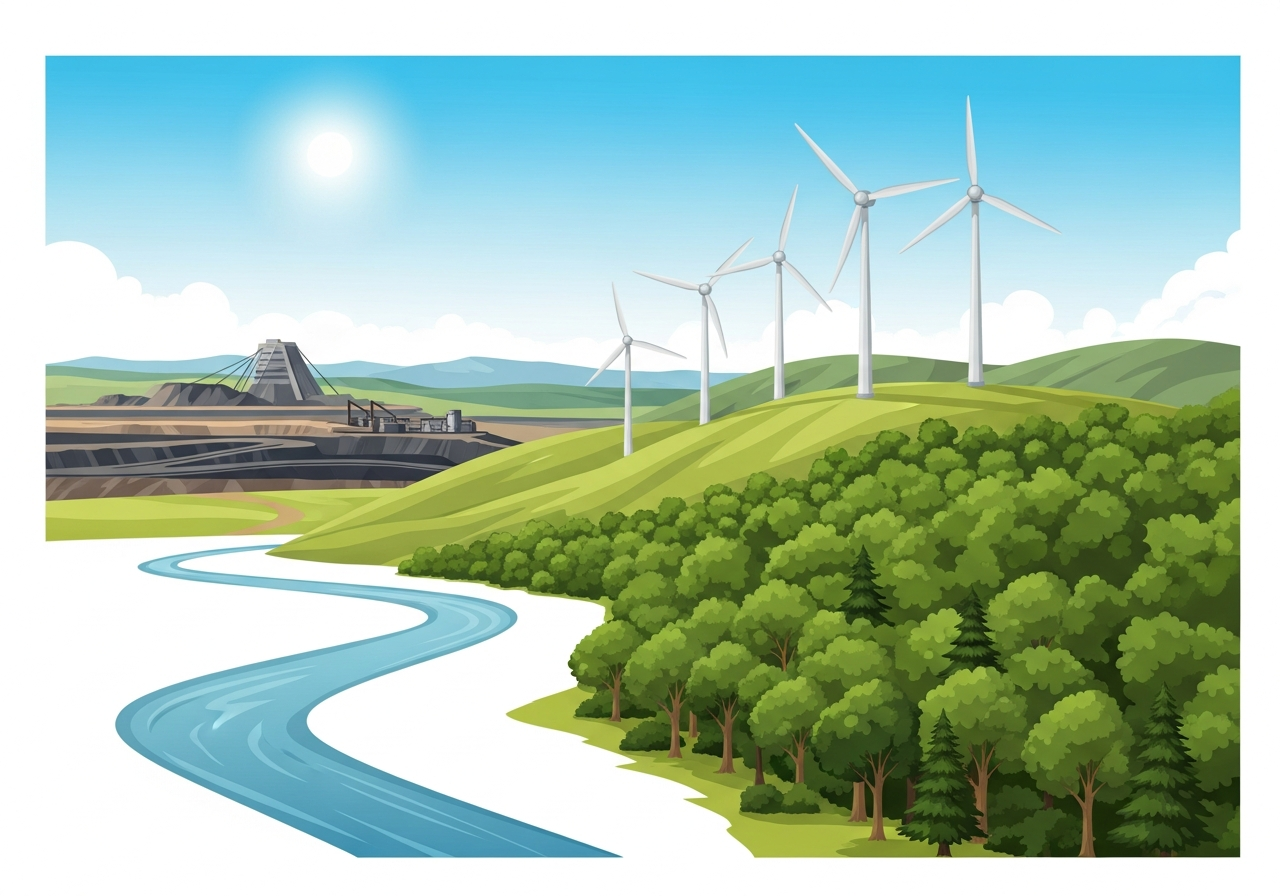
Renewable Resources
A renewable resource is one that nature can replace in a short time. You do not have to worry about these running out because they are always being made by natural processes.
Here are some great examples of renewable resources:
- Solar energy The sun produces light and heat every single day without being used up. You can collect this energy using solar panels, which convert sunlight into electricity.
- Wind energy Wind is created by natural movements of air around the Earth. Wind turbines spin to capture this energy, and the wind never runs out.
- Water (hydroelectric power) Moving water in rivers is continuously renewed by the water cycle, making it a renewable energy source.
- Trees and crops Trees can be replanted after they are cut down, and farmers grow crops like corn and wheat every season. These are renewable as long as new ones are planted to replace old ones.
You can learn more about how energy moves through living systems by exploring Energy Flow: Food Webs and Energy Transfer.
Non-Renewable Resources
A non-renewable resource is one that forms so slowly it cannot be replaced within a human lifetime. Once you use it up, it is gone for a very long time millions of years!
Fossil fuels are the most important group of non-renewable resources. Fossil fuels are formed from the remains of ancient plants and animals that were buried underground and compressed over hundreds of millions of years. The three main fossil fuels are:
- Coal formed from ancient compressed plant material
- Oil (petroleum) a liquid fossil fuel extracted from underground deposits
- Natural gas a gaseous fossil fuel found underground, often alongside oil
When you burn fossil fuels, they release harmful greenhouse gases like carbon dioxide into the air. This contributes to air pollution and climate change. You can explore this further through Environmental Science: Human Effects on Ecosystems.
Why Conservation Matters
Conservation means using resources carefully and reducing waste so they last longer and remain available for future generations. Because non-renewable resources like coal and oil cannot be replaced quickly, it is very important to conserve them.
Here are ways you can help conserve resources every day:
- Turn off lights and electronics when you are not using them
- Ride a bicycle or walk instead of riding in a gasoline-powered car
- Recycle aluminum cans, paper, and plastic to reduce the need for new raw materials
- Turn off the faucet while brushing your teeth to avoid wasting water
- Carpool with friends and family to use less gasoline
Using renewable energy whenever possible like solar panels on a school roof also helps reduce our dependence on fossil fuels. This connects to ideas you will explore in Sustainable Practices: Resource Management Strategies and Cultural Practices: Sustainable Resource Management.
Key Terms & Definitions
Natural Resources: Natural resources are materials from the Earth that humans use like water, air, wood, and minerals. You rely on natural resources every single day.
Renewable Resources: A renewable resource is one that nature can replace in a short time. Examples you know include sunlight, wind, and trees. These will not run out if used wisely.
Non-Renewable Resources: A non-renewable resource takes millions of years to form and cannot be replaced once it is used. Coal and oil are non-renewable resources you should use carefully.
Fossil Fuels: Fossil fuels are a type of non-renewable resource made from ancient buried organisms plants and animals that lived millions of years ago. Coal, oil, and natural gas are all fossil fuels.
Conservation: Conservation means using resources wisely and reducing waste to protect them for the future. When you turn off a light or recycle, you are practicing conservation.
Solar Energy: Solar energy is the light and heat that comes from the sun. It is renewable because the sun produces energy every day without being used up.
Wind Energy: Wind energy is power captured from the natural movement of air. Wind turbines convert this energy into electricity, and wind is always being renewed by natural processes.
Coal: Coal is a non-renewable fossil fuel that formed over millions of years from compressed ancient plant material. Once burned, it is gone and cannot be replaced quickly.
Natural Gas: Natural gas is a non-renewable fossil fuel found in underground deposits. It formed from ancient organic material over millions of years and still releases greenhouse gases when burned.
Hydroelectric Power: Hydroelectric power uses the energy of moving water in rivers to generate electricity. Water is renewable because it is continuously replenished by the water cycle.
Practice What You Know
You can test your understanding by thinking about the resources around you. Ask yourself: Is this resource renewable or non-renewable? How long would it take nature to replace it?
Try sorting these into two groups renewable and non-renewable: sunlight, coal, wind, oil, trees, natural gas, river water. Check your answers against what you have learned here. You can also explore Habitat Protection: Conservation Methods to see how protecting resources connects to protecting ecosystems.
Think about one action you can take today to conserve a non-renewable resource. Even small choices like turning off a light make a real difference over time.
Building on What You Already Know
You are ready for this topic because of what you have already learned. Your knowledge of Resource Use and Effects on the Environment and Conservation: Protection Strategies gives you a strong foundation.
You have also explored Traditional Practices and Sustainable Resource Management and Environmental Knowledge and Local Ecosystem Understanding, which show how communities have protected resources for generations. Your understanding of Communities: Interaction Between Populations helps you see how different groups depend on the same resources.
Related Topics & Connections
This topic connects to many other important science ideas. Here is how they all fit together:
- Environmental Science: Human Effects on Ecosystems You will see how using too many non-renewable resources harms the ecosystems around you.
- Sustainable Practices: Resource Management Strategies You will discover specific strategies for managing resources so they last for future generations.
- Habitat Protection: Conservation Methods You will learn how protecting habitats goes hand in hand with conserving natural resources.
- Cultural Practices: Sustainable Resource Management You will explore how different cultures around the world have developed ways to use resources sustainably.
- Indigenous Science: Traditional Ecological Knowledge You will discover how Indigenous communities have long understood how to live in balance with natural resources.
- Matter Cycles: Water, Carbon, and Nitrogen Cycles You will see how natural cycles help renew resources like water and keep ecosystems healthy.
- Energy Flow: Food Webs and Energy Transfer You will understand how energy from the sun flows through living things, connecting to renewable solar energy.
This topic also prepares you for more advanced ideas ahead. You will build on this knowledge in Natural Resources: Renewable and Non-Renewable, Resource Management: Sustainable Use and Conservation, Resource Use: Sustainable Practices, Conservation: Protection and Restoration, and Environmental Systems: Human Effects on Ecosystems.