TOPIC

Matter Cycles, Water, carbon, nitrogen cycles

MY PROGRESS

Pug Score

0%

Getting Started

"Let's build your foundation!"

Best Streak

0 in a row

Study Points

+0

Overview

Practice

Read

Quiz

Next Steps


Get Started

Get unlimited access to all videos, practice problems, and study tools.

Unlimited practice
Full videos

BACK TO MENU

Topic Progress

Pug Score

0%

Getting Started

"Let's build your foundation!"

Best Practice

No score

Read

Not viewed

Best Quiz

No attempts


Best Streak

0 in a row

Study Points

+0

Overview

Practice

Read

Quiz

Next Steps

Read

Discover How Water, Carbon, and Nitrogen Cycle Through Earth

You will learn how water, carbon, and nitrogen cycle through Earth's air, soil, water, and living things to keep ecosystems balanced and healthy.

What Are Matter Cycles?

Everything on Earth water, carbon, and nitrogen moves in continuous loops called matter cycles. These cycles carry important materials through the air, soil, water, and living things over and over again. Matter is never created or destroyed; it is recycled continuously through Earth's systems.

You can think of matter cycles like a giant recycling system that keeps our planet running. The three most important cycles you will learn about are the water cycle, the carbon cycle, and the nitrogen cycle.

The Water Cycle

The water cycle is the continuous movement of water through Earth's land, air, and oceans. It happens everywhere on Earth all the time and makes fresh water available for plants, animals, and people.

Here are the main steps you need to know:

  • Evaporation: The sun heats liquid water in lakes, rivers, and oceans, turning it into water vapor that rises into the atmosphere.
  • Condensation: Water vapor cools in the atmosphere and turns back into tiny liquid water droplets, forming clouds.
  • Precipitation: Water falls from clouds to Earth's surface as rain, snow, sleet, or hail.
  • Runoff: Water flows over land's surface into streams, rivers, lakes, and oceans.
  • Transpiration: Plants release water vapor through tiny openings in their leaves called stomata, adding water vapor to the atmosphere.
  • Groundwater: Some water soaks into the ground and collects underground in spaces between rocks and soil, forming groundwater that can re-enter the cycle through springs or wells.

The water cycle is important because it moves fresh water to different places where plants and animals need it.

The Carbon Cycle

The carbon cycle describes how carbon moves through living things, the air, water, and soil. Carbon is the fundamental building block of all living organisms, found in every protein, fat, and DNA molecule.

Here is how carbon moves:

  • Photosynthesis: Plants absorb carbon dioxide (CO) from the air and use sunlight to store carbon in their leaves, stems, and roots.
  • Eating: When an animal eats a plant, the carbon stored in the plant passes into the animal's body.
  • Respiration: Living things release carbon dioxide back into the air when they breathe.
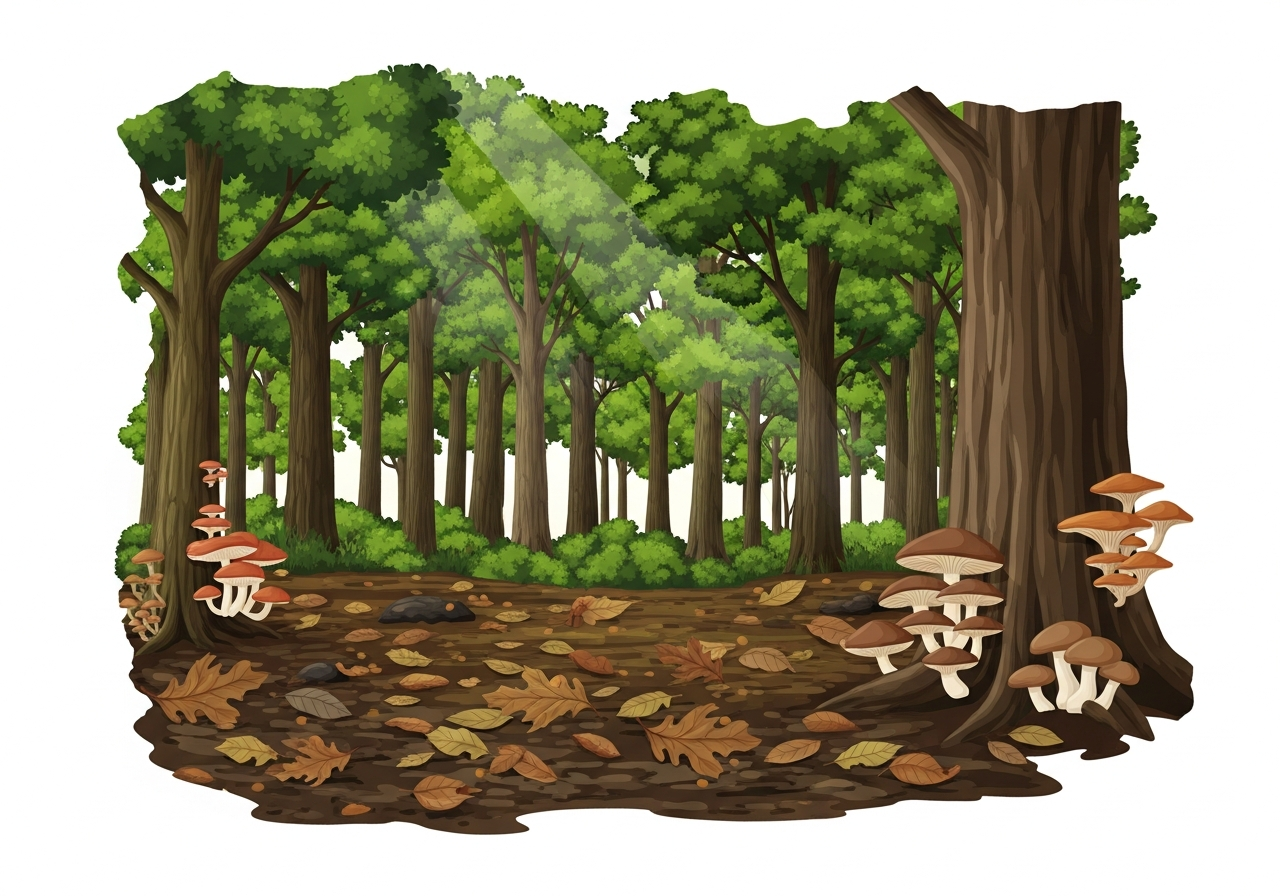
  • Decomposition: When organisms die, decomposers like bacteria and fungi break down their bodies and release carbon back into the soil and atmosphere.
  • Combustion: Burning fossil fuels like coal and oil releases stored carbon dioxide back into the atmosphere, adding more carbon than natural cycles can quickly reabsorb.
The Nitrogen Cycle

The nitrogen cycle is the process of nitrogen moving through the air, soil, and living organisms. About 78% of Earth's atmosphere is nitrogen gas, but most living things cannot use it directly from the air.

You need nitrogen to build proteins and DNA in your body. Here is how nitrogen moves:

  • Nitrogen Fixation: Special nitrogen-fixing bacteria in the soil and in the roots of legume plants convert nitrogen gas from the atmosphere into forms like ammonia that plants can absorb.
  • Plant Absorption: Plants absorb nitrogen compounds from the soil through their roots.
  • Eating: Animals get nitrogen by eating plants or other animals.
  • Decomposition: When organisms die, decomposer bacteria and fungi break down their nitrogen-containing molecules and return nitrogen compounds to the soil.
  • Denitrification: Special bacteria convert nitrates in the soil back into nitrogen gas, releasing it into the atmosphere.

If all bacteria in the soil disappeared, plants would not be able to get the nitrogen they need to grow and survive.

How the Three Cycles Are Connected

The water, carbon, and nitrogen cycles are deeply interconnected. They all continuously recycle important materials through Earth's living systems. Water acts as a transport system, carrying dissolved carbon and nitrogen through soil, rivers, and ecosystems.

Plants connect all three cycles they absorb carbon dioxide for photosynthesis, release oxygen and water vapor through transpiration, and absorb nitrogen compounds through their roots. Decomposers help recycle materials across all three cycles at the same time.

None of these cycles create new matter the same atoms are reused over and over again, keeping Earth's ecosystems balanced.

Key Terms and Definitions

Water Cycle: The continuous movement of water through Earth's environment, including processes like evaporation, condensation, and precipitation. You can find water cycling through oceans, clouds, rain, rivers, and underground all at the same time.

Evaporation: The process where liquid water absorbs heat energy from the sun and turns into water vapor, which rises into the atmosphere. When you see a puddle disappear on a sunny day, that is evaporation.

Condensation: When water vapor in the atmosphere cools down and changes back into tiny liquid water droplets, forming clouds. You can see condensation on a cold glass of water on a warm day.

Precipitation: Any form of water rain, snow, sleet, or hail that falls from clouds to Earth's surface. Rain falling from clouds is a common example of precipitation.

Transpiration: The process where plants absorb water through their roots and release it as water vapor through tiny openings in their leaves called stomata. Transpiration is an important part of the water cycle.

Runoff: Water from precipitation that flows over Earth's surface and collects in streams, rivers, and eventually oceans rather than soaking into the ground.

Groundwater: Fresh water that soaks into the ground through infiltration and collects in underground spaces called aquifers between rocks and soil particles. It can re-enter the cycle through springs or wells.

Carbon Cycle: The movement of carbon through living things, the air, water, and soil in a continuous loop. Carbon is found in every living organism on Earth.

Photosynthesis: The process where plants use sunlight to convert carbon dioxide from the air into glucose and other organic compounds, removing carbon from the atmosphere and storing it in plant tissues.

Decomposition: The process carried out by decomposers like bacteria and fungi that breaks down dead plants and animals and returns carbon and nitrogen to the environment.

Combustion: The burning of materials like fossil fuels that releases stored carbon back into the atmosphere as carbon dioxide. Burning coal and oil are examples of combustion.

Nitrogen Cycle: The process of nitrogen moving through the atmosphere, soil, water, and living organisms in a continuous loop. Nitrogen is essential for building proteins and DNA.

Nitrogen Fixation: The process performed by special soil bacteria that converts nitrogen gas from the atmosphere into forms like ammonia that plants can absorb and use. Without nitrogen fixation, most plants could not grow.

Nitrogen-Fixing Bacteria: Tiny organisms found in soil and in the root nodules of legume plants like beans and peas that convert nitrogen gas into usable soil forms for plants.

Decomposers: Organisms such as bacteria and fungi that break down dead plants and animals and return important nutrients like carbon and nitrogen to the soil, where they can be used again by plants.

Practice What You Know

You can strengthen your understanding of matter cycles by connecting each cycle to real-world examples around you. Try tracing the journey of a single water molecule from a lake to a cloud and back to the ground as rain.

You can also think about what happens to a fallen leaf in a forest. Decomposers break it down, returning carbon and nitrogen to the soil so new plants can grow. This shows you how all three cycles work together in one place.

When you practice identifying the steps of each cycle evaporation, condensation, precipitation, photosynthesis, decomposition, and nitrogen fixation you will be ready to answer questions about how matter moves through Earth's ecosystems.

Building Your Science Knowledge

To understand matter cycles well, it helps to know that all living things need certain materials water, carbon, and nitrogen to survive and grow. These materials do not disappear; they move from one place to another in cycles.

As you continue learning about science, you will see how matter cycles connect to bigger ideas about ecosystems, energy flow, and how humans affect the environment. Understanding these cycles gives you a strong foundation for exploring how Earth's systems work together.

Related Topics and Connections

Matter cycles are a central part of understanding how Earth's ecosystems function. The concepts you learn here how water, carbon, and nitrogen move through living and nonliving systems connect directly to broader ideas about interactions in nature.

As you explore the topic of Interactions in science, you will see that matter cycles are one of the most important ways that living things and their environments affect each other. Every time a plant absorbs carbon dioxide or a bacterium fixes nitrogen, an interaction is taking place that keeps the whole system in balance.

The skills you build by understanding matter cycles will help you think about environmental changes, the role of decomposers in ecosystems, and why protecting natural systems matters for all living things on Earth.