TOPIC
Environmental Response, Reactions to light, touch, gravityMY PROGRESS
Pug Score
0%
Getting Started
"Let's build your foundation!"
Best Streak
0 in a row
Study Points
+0
Overview
Practice
Watch
Read
Quiz
Next Steps
Get Started
Get unlimited access to all videos, practice problems, and study tools.
BACK TO MENU
Topic Progress
Pug Score
0%
Getting Started
"Let's build your foundation!"
Videos Watched
0/0
Best Practice
No score
Read
Not viewed
Best Quiz
No attempts
Best Streak
0 in a row
Study Points
+0
Overview
Practice
Watch
Read
Quiz
Next Steps
Read
How Plants React to Light, Touch, and Gravity
You will learn how plants respond to light, gravity, and touch through growth movements called tropisms, and why these responses help plants survive.
How Do Plants Respond to Their Environment?
Plants cannot walk or run, but they can still respond to things around them. When something in the environment like light, gravity, or touch causes a plant to react and grow in a certain direction, that response is called a tropism.
Understanding plant responses connects to what you already know about Structural Adaptations and Behavioral Adaptations plants have built-in ways to survive in their environment.
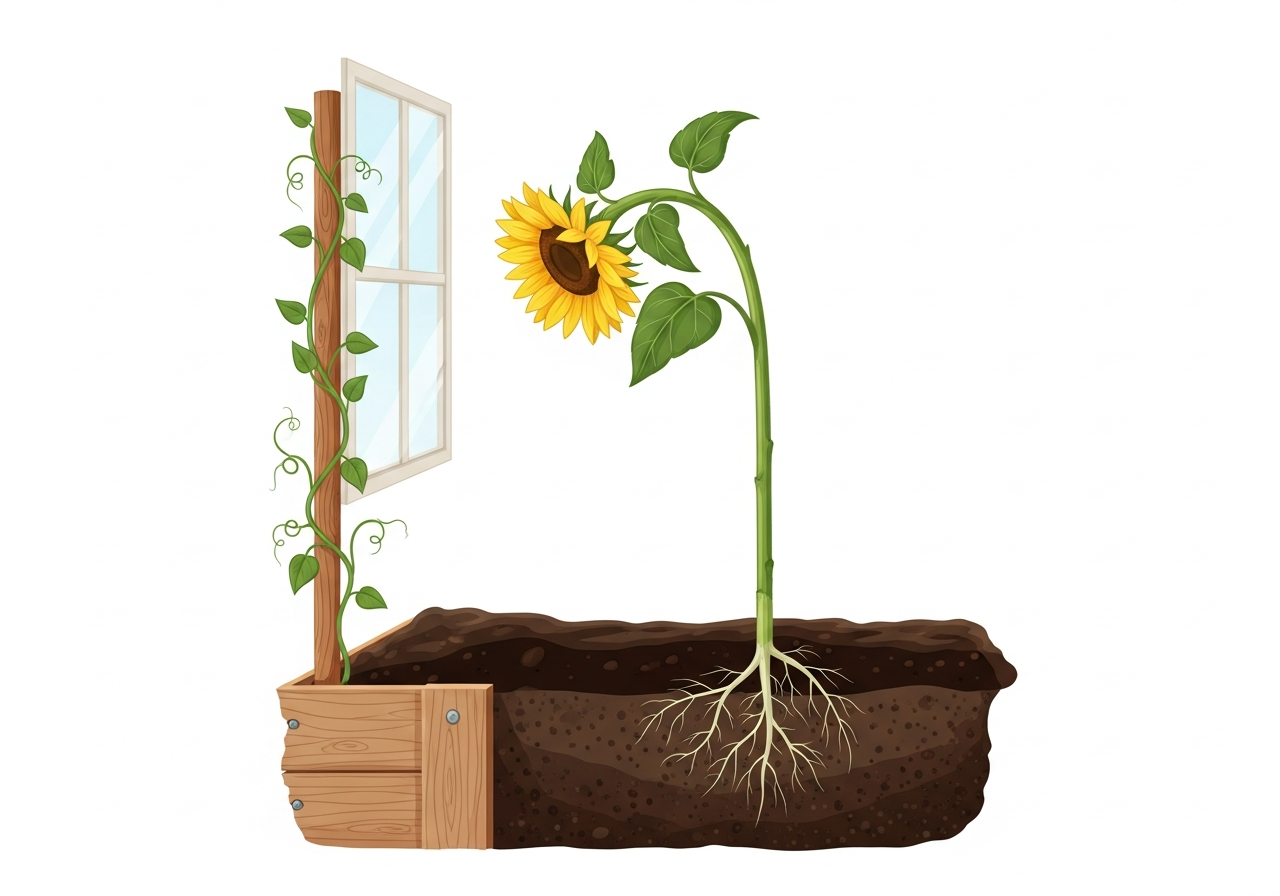
Types of Plant Tropisms
Phototropism Responding to Light
Phototropism is when a plant grows toward or away from light. The prefix "photo" means light. When a sunflower bends to face the sun, that is phototropism. Stems and leaves show positive phototropism by growing toward light. Roots show negative phototropism by growing away from light, deeper into the soil.
Gravitropism Responding to Gravity
Gravitropism is when a plant grows in response to the force of gravity. Roots show positive gravitropism they always grow downward, following gravity's pull. Stems show negative gravitropism they grow upward, against gravity. Even if you plant a seed upside down, the roots will still grow down and the shoot will still grow up!
Thigmotropism Responding to Touch
Thigmotropism is when a plant responds to physical touch or contact. Climbing vines wrap their tendrils around a fence post when they touch it. The Venus flytrap snaps shut when an insect touches the tiny hairs inside its leaves. The mimosa plant folds its leaves when you touch them.
Hydrotropism Responding to Water
Hydrotropism is when roots grow toward a water source underground. This helps plants find the moisture they need to survive.
Positive and Negative Tropisms
When a plant grows toward a stimulus, it is called a positive tropism. When a plant grows away from a stimulus, it is called a negative tropism. For example, a stem growing toward light is positive phototropism, while roots growing away from light is negative phototropism.
A plant hormone called auxin moves to the shaded side of a stem and makes those cells grow longer, causing the stem to bend toward the light. This is the chemical reason behind phototropism.
Key Terms & Definitions
Stimulus: A stimulus is anything in the environment like light, gravity, water, or touch that causes a plant to react and grow in a certain direction.
Tropism: A tropism is a plant's directional growth response to an outside stimulus. The word describes how and why plants grow the way they do.
Phototropism: Phototropism is the way a plant grows toward or away from light. The prefix "photo" means light. A sunflower turning to face the sun is a classic example.
Gravitropism: Gravitropism is the way a plant grows in response to the force of gravity. Roots grow downward (following gravity) and shoots grow upward (against gravity).
Thigmotropism: Thigmotropism is the way a plant responds to physical touch or contact with an object. Climbing vines curling their tendrils around a fence post is a great example.
Hydrotropism: Hydrotropism is the way roots grow toward a water source underground, helping the plant find the moisture it needs.
Positive Tropism: A positive tropism means the plant grows toward the stimulus. For example, a stem growing toward light is a positive tropism.
Negative Tropism: A negative tropism means the plant grows away from the stimulus. For example, roots growing away from light is a negative tropism.
Auxin: Auxin is a hormone found in plants that moves to the shaded side of a stem and causes those cells to grow longer, making the stem bend toward the light.
Explore Plant Responses in Action
You can observe phototropism at home by placing a plant near a window and watching it lean toward the light over several days. Try rotating the pot and see what happens!
You can also explore how Sensory Systems in animals compare to how plants detect their environment plants use chemicals instead of eyes or nerves. This connects to Brain Processing and how living things process signals from the world around them.
Understanding plant responses also helps you think about Energy Flow in ecosystems plants need to grow toward light so they can make food through photosynthesis, which powers the entire food web.
Building on What You Already Know
Before exploring plant tropisms, you learned about Ecosystem Components the living and non-living parts of an environment. Light, gravity, and water are all non-living parts that plants respond to.
You also studied Environmental Knowledge about local ecosystems, which helps you understand why plants in different places grow differently. Your knowledge of Structural Adaptations and Behavioral Adaptations shows you that plant tropisms are a kind of built-in survival strategy.
Related Topics & Connections
Plant responses connect to many other fascinating topics in science. You can explore Light Properties to understand more about how light travels and why plants can detect it. Specialized Senses shows you how other living things like bats using echolocation also detect their environment in unique ways.
The ecosystems where plants live matter too. You will find plant tropisms at work in Terrestrial Biomes and Aquatic Biomes, and the Climate Regions of an area affect how much light and water plants can access.
You can also connect plant responses to Indigenous Science and Cultural Practices, where traditional knowledge about plants and ecosystems has guided sustainable resource management for generations.
This topic prepares you for more advanced ideas like System Interactions between biotic and abiotic factors, Cells to Systems organization of life, Environmental Knowledge, and Energy Flow through food webs and energy pyramids.