TOPIC
Structural Adaptations, Physical features for survivalMY PROGRESS
Pug Score
0%
Getting Started
"Let's build your foundation!"
Best Streak
0 in a row
Study Points
+0
Overview
Practice
Watch
Read
Quiz
Next Steps
Get Started
Get unlimited access to all videos, practice problems, and study tools.
BACK TO MENU
Topic Progress
Pug Score
0%
Getting Started
"Let's build your foundation!"
Videos Watched
0/0
Best Practice
No score
Read
Not viewed
Best Quiz
No attempts
Best Streak
0 in a row
Study Points
+0
Overview
Practice
Watch
Read
Quiz
Next Steps
Read
Structural Adaptations: How Physical Features Help Living Things Survive
You will learn how the physical features of animals and plants called structural adaptations help living things survive in their specific habitats.
What Are Structural Adaptations?
A structural adaptation is a physical body part that helps a living thing survive in its habitat. You are born with these features they are part of your body, just like an animal is born with its claws or fur. Structural adaptations are different from behavioral adaptations, which are actions an animal takes to survive.
You can learn more about how animals use both physical and behavioral features by exploring Animal Adaptations: Physical and Behavioral Features. Plants also have structural adaptations you can discover more in Plant Adaptations: Structural Adaptations.
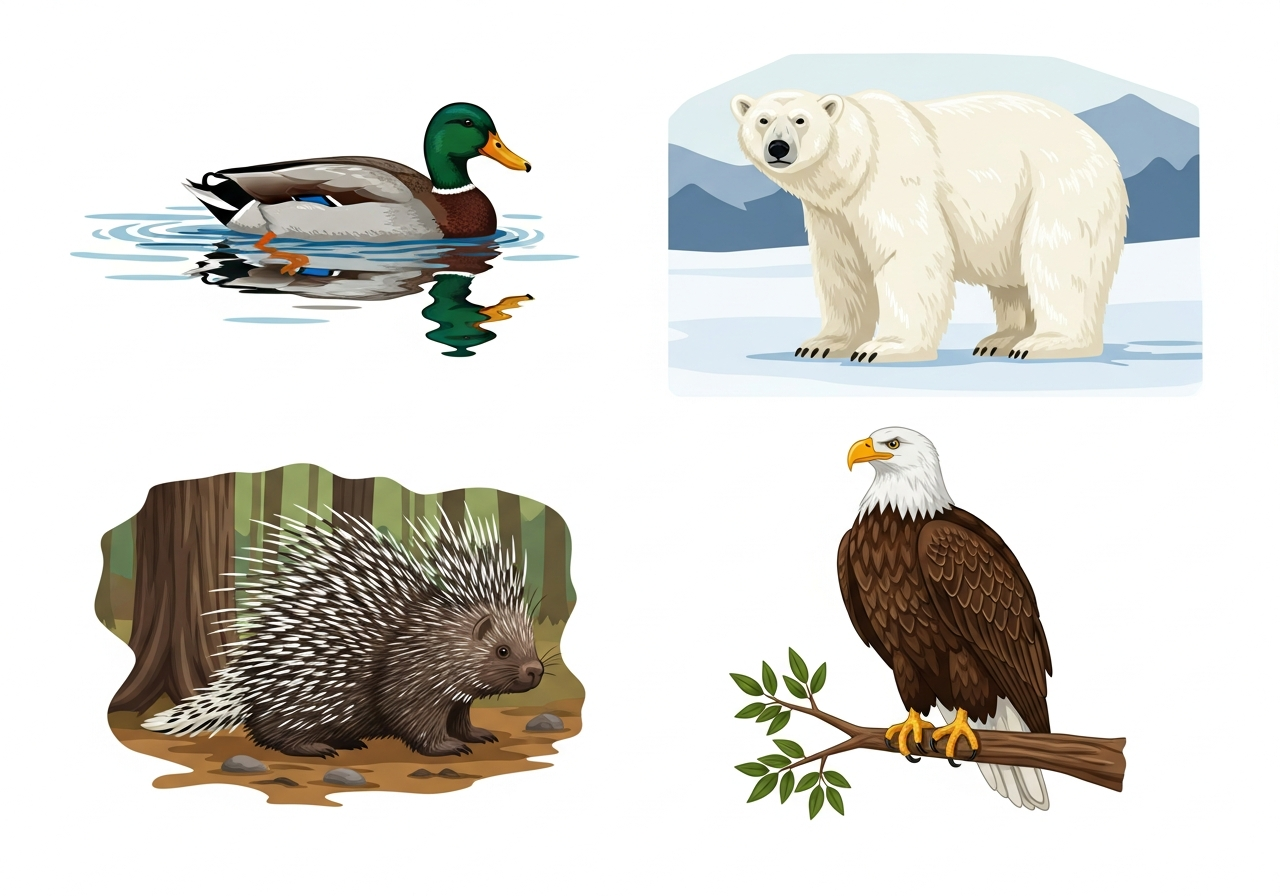
How Structural Adaptations Help Animals Survive
Every physical feature on an animal's body has a job. A duck's webbed feet act like paddles, pushing water backward so the duck can swim efficiently. A cat's separate toes are better for gripping the ground while running or climbing.
Here are some important examples you should know:
| Animal | Structural Feature | How It Helps |
|---|---|---|
| Duck | Webbed feet | Paddles through water |
| Polar bear | Thick white fur | Keeps warm; blends into snow |
| Porcupine | Sharp quills | Protects from predators |
| Eagle | Sharp curved talons | Grips and holds prey |
| Giraffe | Long neck | Reaches leaves high in trees |
| Hummingbird | Long thin beak | Reaches nectar inside flowers |
| Fish | Gills | Breathes oxygen from water |
| Shark | Streamlined body | Moves quickly through water |
| Camel | Hump (stores fat) | Survives in dry desert |
| Chameleon | Color-changing skin | Hides from predators |
A porcupine's quills are sharp spines that stick into predators who get too close, causing pain and making the porcupine very hard to attack. Quills are not used for digging, swimming, or keeping warm they are purely for defense.
Structural Adaptations in Plants
Plants have structural adaptations too! A cactus has a thick, waxy stem that stores water so it can survive in the desert where rain is very rare. The waxy coating also reduces water loss through evaporation.
A rose has sharp thorns that protect it from being eaten by animals. These thorns are a structural adaptation a physical body part that helps the plant survive. You can explore more about how plants adapt in Plant Adaptations: Structural Adaptations.
Camouflage: Blending In to Survive
Camouflage is when an animal's color or pattern helps it blend into its surroundings so predators cannot see it easily. A chameleon changes the color of its skin to hide from predators. An Arctic fox has white fur in winter to blend into the snow.
Some animals use the opposite strategy bright colors! Poison dart frogs have bright red, yellow, or blue skin to warn predators that they are poisonous and dangerous. This is called aposematism using bright colors as a warning signal.
Key Terms and Definitions
Structural adaptation: A physical body part that a living thing is born with that helps it survive in its habitat. For example, a duck's webbed feet and a cactus's thick stem are both structural adaptations.
Habitat: The natural place where an animal or plant lives, such as a desert, ocean, forest, or Arctic. Structural adaptations match the habitat where a living thing lives.
Predator: An animal that hunts and eats other animals. Structural adaptations like quills and shells protect animals from predators.
Camouflage: When an animal's color or pattern helps it blend into its surroundings so it is hard to see. A stick insect looks like a twig so predators overlook it.
Webbed feet: Feet where the toes are connected by skin, acting like a paddle to help animals like ducks swim efficiently through water.
Quills: Sharp, pointed spines on a porcupine's body that stick into predators and protect the porcupine from being attacked.
Blubber: A thick layer of fat found under the skin of animals like whales and seals that keeps them warm in cold ocean water.
Gills: Special organs that allow fish to breathe by pulling dissolved oxygen out of water, just like lungs pull oxygen from air.
Streamlined body: A smooth, torpedo-shaped body that reduces water resistance, helping animals like sharks swim quickly and efficiently.
Talons: Sharp, curved claws on a bird's feet, like an eagle's, used to grab and hold prey tightly during hunting.
Prehensile tail: A long, flexible tail that can wrap around and grip tree branches, acting like a fifth limb. Some monkeys have prehensile tails.
Aposematism: When an animal uses bright colors like red, yellow, or blue to warn predators that it is poisonous or dangerous.
Scales: Thin, flat plates that cover the skin of fish and reptiles, protecting them and reducing water loss.
Behavioral adaptation: An action that an animal takes to survive, such as migrating south in winter. This is different from a structural adaptation, which is a physical body part.
Practice What You Know
You can test your understanding by thinking about animals you know and asking: "What physical features does this animal have, and how do those features help it survive?" Try matching each animal to its habitat and its most important structural adaptation.
As you practice, remember that Behavioral Adaptations: Actions That Aid Survival work alongside structural adaptations animals use both their body parts and their actions to survive. You will also find connections to Food Webs: Interconnected Food Chains, because structural adaptations like sharp talons and strong beaks help animals get the food they need in a food web.
What You Already Know
Before studying structural adaptations, you learned about Animal Adaptations: Physical and Behavioral Features, which introduced you to the idea that animals have special features to help them survive. You also explored Plant Adaptations: Structural Adaptations, which showed you how plants like the cactus use physical features to live in tough environments.
Understanding Ecosystem Components: Living and Non-Living Elements also helps you see why adaptations matter living things must be suited to the non-living parts of their environment, like temperature, water, and sunlight.
Related Topics and Connections
Structural adaptations connect to many other science topics you will explore. Here is how they all fit together:
- Behavioral Adaptations: Actions That Aid Survival While structural adaptations are physical features, behavioral adaptations are actions animals take to survive. You will study both types together to get the full picture of how animals survive.
- Ecosystem Components: Living and Non-Living Elements Structural adaptations help living things survive alongside the non-living parts of their ecosystem, like water, soil, and temperature.
- Communities: Interaction Between Populations Adaptations affect how animals interact with each other in communities, such as predators using talons to hunt prey.
- Population Dynamics: Groups of Organisms in an Area Animals with strong adaptations are more likely to survive and reproduce, which affects population sizes.
- Food Webs: Interconnected Food Chains Structural adaptations like beaks, claws, and gills determine what animals eat and where they fit in a food web.
- Trophic Levels: Producers, Consumers, Decomposers Physical features help animals fill their role as producers, consumers, or decomposers in an ecosystem.
- Climate Zones: Regional Variations Different climate zones require different structural adaptations. Polar bears need thick fur in the Arctic, while camels need humps in the desert.
- Conservation: Protection Strategies Understanding structural adaptations helps you see why protecting habitats is so important if a habitat changes, animals may not survive.
- Environmental Knowledge: Local Ecosystem Understanding Knowing about structural adaptations helps you understand the animals and plants in your own local ecosystem.
- Terrestrial Biomes: Land-Based Ecosystem Types You will next explore how structural adaptations differ across land biomes like deserts, forests, and grasslands.
- Aquatic Biomes: Water-Based Ecosystem Types You will discover how aquatic animals like fish and sharks use structural adaptations like gills and streamlined bodies to survive in water biomes.
- Specialized Senses: Echolocation, UV Sensing, Magnetoreception Some structural adaptations involve specialized sense organs, like a bat's large ears for echolocation.
- Environmental Response: Reactions to Light, Touch, Gravity You will explore how physical features help living things respond to their environment.
- Habitat Protection: Conservation Methods Protecting habitats ensures that animals with specialized structural adaptations can continue to survive.