Topic
Climate Zones, Regional variationsMy Progress
Pug Score
0%
Getting Started
Let's build your foundation!
Best Streak
0 in a row
Study Points
+0
Overview
Practice
Watch
Read
Quiz
Next Steps
Back to Menu
Topic Progress
Pug Score
0%
Getting Started
"Let's build your foundation!"
Videos Watched
0/0
Best Practice
No score
Read
Not viewed
Best Quiz
No attempts
Best Streak
0 in a row
Study Points
+0
Overview
Practice
Watch
Read
Quiz
Next Steps
Read
Explore Climate Zones and Regional Variations Around the World
You will learn how Earth is divided into climate zones based on long-term weather patterns, and why different regions of the world experience very different climates.
What Are Climate Zones?
You already know that weather patterns can change from day to day. But climate is different it describes the usual weather a place has over many, many years. Scientists use climate to group parts of Earth into large areas called climate zones.
Climate zones are large areas of Earth that share similar weather patterns over time. The three main climate zones are the tropical, temperate, and polar zones. Where you live on Earth determines which climate zone you are in.

The Three Main Climate Zones
Tropical Climate Zone
The tropical climate zone is found near the equator, the imaginary line around the middle of Earth. The sun shines very directly here all year, so it stays hot and rainy. The Amazon Rainforest in Brazil is a great example of a tropical climate.
Temperate Climate Zone
The temperate climate zone sits between the tropics and the poles. You will find four seasons here spring, summer, fall, and winter. The Eastern United States is a good example of a temperate climate.
Polar Climate Zone
The polar climate zone is found near the North and South Poles. Sunlight hits these areas at a very low angle, so they stay extremely cold. Antarctica is a polar climate with ice and snow almost all year.
Why Do Different Places Have Different Climates?
The most important reason is distance from the equator. Places near the equator get the most direct sunlight and are the warmest. Places farther from the equator, near the poles, get less direct sunlight and are much colder.
Two other big factors are elevation and proximity to the ocean. Mountains are colder than nearby valleys because higher elevations have thinner air that holds less heat. Oceans keep nearby places from getting too hot or too cold by absorbing and releasing heat slowly.
This is why two cities at the same distance from the equator can still have very different climates one might be near the ocean while the other is high up on a mountain. You can learn more about how Earth's movement and seasonal changes also affect climate.
Desert and Tundra Climates
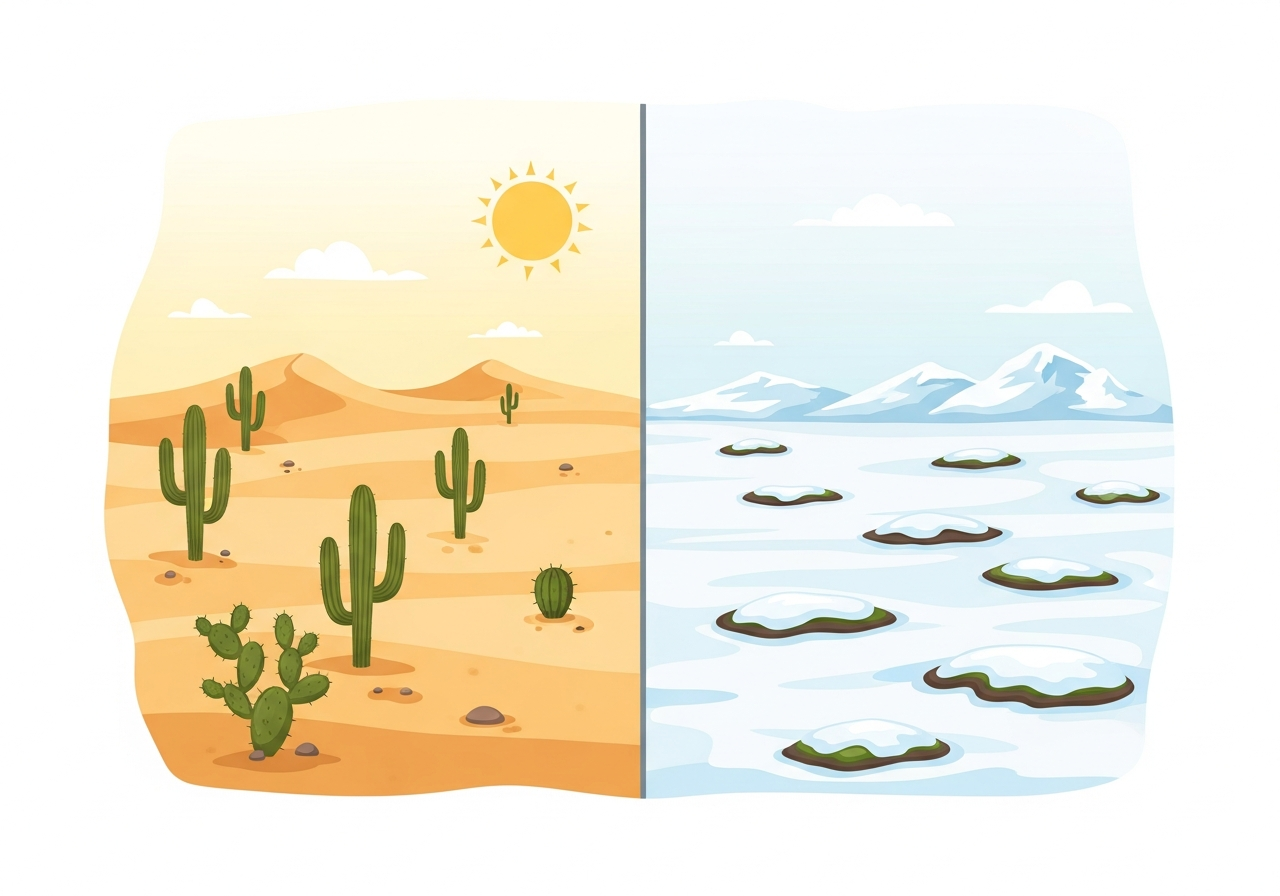
Besides the three main zones, you will also learn about desert and tundra climates. A desert climate is very dry and receives very little rainfall each year less than 10 inches. Deserts can be hot or cold, but they are always very dry.
A tundra is a cold, treeless landscape found near polar regions where the soil stays frozen most of the time. Only small, tough plants like mosses can survive there.
Climate and Living Things
The climate zone you live in affects the plants and animals around you. Rainforests grow in tropical zones because of the heat and heavy rain. Cacti grow in desert zones because they store water. Polar bears live in polar zones because they have thick fur and fat to stay warm.
You can explore how structural adaptations and behavioral adaptations help animals survive in their climate zones. You will also see how ecosystem components are shaped by the climate of a region.
Key Terms & Definitions
Climate: Climate is the usual weather a place has over many years usually 30 years or more. For example, saying "Brazil has a hot and rainy climate" describes what the weather is like there most of the time, not just on one day.
Weather: Weather describes what is happening outside on a specific day, like rain or sunshine. Weather changes daily, but climate stays the same over many years.
Climate Zone: A climate zone is a large area of Earth that shares similar weather patterns over time. The three main climate zones are tropical, temperate, and polar.
Tropical: The tropical climate zone is near the equator and stays hot and rainy all year. The Amazon Rainforest is found in the tropical zone.
Temperate: The temperate climate zone sits between the tropics and the poles and experiences all four seasons spring, summer, fall, and winter.
Polar: The polar climate zone is near the North and South Poles and is extremely cold with ice and snow most of the year.
Arid: Arid means very dry. An arid climate, like a desert, receives very little rainfall each year.
Desert: A desert is a very dry climate that gets very little rain each year less than 10 inches. Deserts can be hot or cold.
Tundra: A tundra is a cold, treeless landscape near polar regions where the soil is frozen most of the time. Only small tough plants like mosses and lichens can grow there.
Precipitation: Precipitation is all forms of water that fall from the sky, including rain, snow, sleet, and hail. Tropical zones get lots of precipitation, while polar and desert zones get very little.
Humid: Humid air feels sticky because it holds a lot of moisture. Tropical climates are often very humid.
Vegetation: Vegetation describes the plants that grow in an area. Hot, wet tropical climates grow lush rainforests, while arid desert zones grow only cacti and other drought-resistant plants.
Region: A region is a large area that shares similar features, like climate. When scientists talk about regional climate variations, they mean the differences in climate between different areas of the world.
Season: A season is a set time of year with typical weather patterns. Temperate zones experience all four seasons, while tropical zones stay warm and wet all year.
Equator: The equator is the imaginary line around the middle of Earth. Places near the equator are the warmest because sunlight hits them most directly.
Elevation: Elevation means how high above sea level a place is. Higher elevations, like mountain tops, are colder because the air is thinner and holds less heat.
Regional Variation: Regional variation means the differences in climate that exist between different regions of Earth. For example, one part of a country might be rainy while another part is dry.
Practice What You Know
You can practice identifying climate zones by looking at a world map and finding the equator, the poles, and the temperate zones in between. Try matching animals and plants to their climate zones for example, a polar bear belongs in the polar zone, and a toucan belongs in the tropical zone.
You can also compare rainfall data across climate zones. The tropical zone gets about 200 cm of rain per year, the temperate zone gets about 75 cm, and the polar zone gets only about 20 cm. Understanding these differences helps you connect climate to climate regions and their temperature and precipitation patterns.
What You Already Know
You have already learned about weather patterns and seasonal weather changes, which gives you a great foundation for understanding climate. You also know about the water cycle, including evaporation, condensation, and precipitation all of which play a big role in how climate zones get their rainfall.
Your knowledge of plant adaptations and animal adaptations helps you understand why living things in each climate zone look and behave the way they do. You have also explored how weather impacts Earth's surface and seasonal practices and traditional resource use, which connect to how people live in different climate zones.
Related Topics & Connections
Learning about climate zones connects to many other science topics you will explore. You already studied long-term weather trends, which is closely related to how climate is defined. You also learned about Earth's tilt and orbit, which explains why seasons happen and why different parts of Earth get different amounts of sunlight.
Climate zones are shaped by landforms too. You can connect what you know about types of landforms like mountains, valleys, and plains and formation processes like erosion and weathering to understand how the land affects local climate. Heat sources and heat transfer through conduction, convection, and radiation explain how the sun's energy warms different parts of Earth differently.
Climate zones directly shape ecosystem components, including the living and non-living elements of each environment. You will also see how structural adaptations and behavioral adaptations help plants and animals survive in their specific climate zones. Your environmental knowledge of local ecosystems will grow as you understand how climate shapes every living community.
This topic prepares you for exciting next steps. You will soon explore climate regions and their temperature and precipitation patterns in more detail, then move on to terrestrial biomes and aquatic biomes to see how climate creates the world's great ecosystems. You will also study revolution effects and seasonal changes to deepen your understanding of why Earth's climates vary so much.