TOPIC
Weather Patterns, Long-term weather trendsMY PROGRESS
Pug Score
0%
Getting Started
"Let's build your foundation!"
Best Streak
0 in a row
Study Points
+0
Overview
Practice
Read
Quiz
Next Steps
Get Started
Get unlimited access to all videos, practice problems, and study tools.
BACK TO MENU
Topic Progress
Pug Score
0%
Getting Started
"Let's build your foundation!"
Best Practice
No score
Read
Not viewed
Best Quiz
No attempts
Best Streak
0 in a row
Study Points
+0
Overview
Practice
Read
Quiz
Next Steps
Read
Discover Weather Patterns and Long-Term Climate Trends
You will learn how weather patterns that repeat over many years create the climate of a place, and how scientists use data to study and compare climates around the world.
What Are Weather Patterns and Long-Term Weather Trends?
Every day, you might check if it is sunny, rainy, or windy outside. That is called weather what is happening in the sky on a specific day. But when the same kinds of weather happen again and again over many years, scientists call that the climate of a place.
Think of it this way: climate is what you expect, and weather is what you get. You can learn more about how Seasonal Weather Changes connect to long-term climate patterns.
How Is Climate Different from Weather?
Weather changes from day to day one afternoon it might storm, and the next day could be sunny. Climate describes the long-term average of those conditions in a region, usually measured over 30 years or more.
A simple example: a thunderstorm on a Tuesday afternoon is weather. But if a region always gets heavy rain every year, that is part of its climate. Scientists say you need many years of data to find the true average pattern of a place.
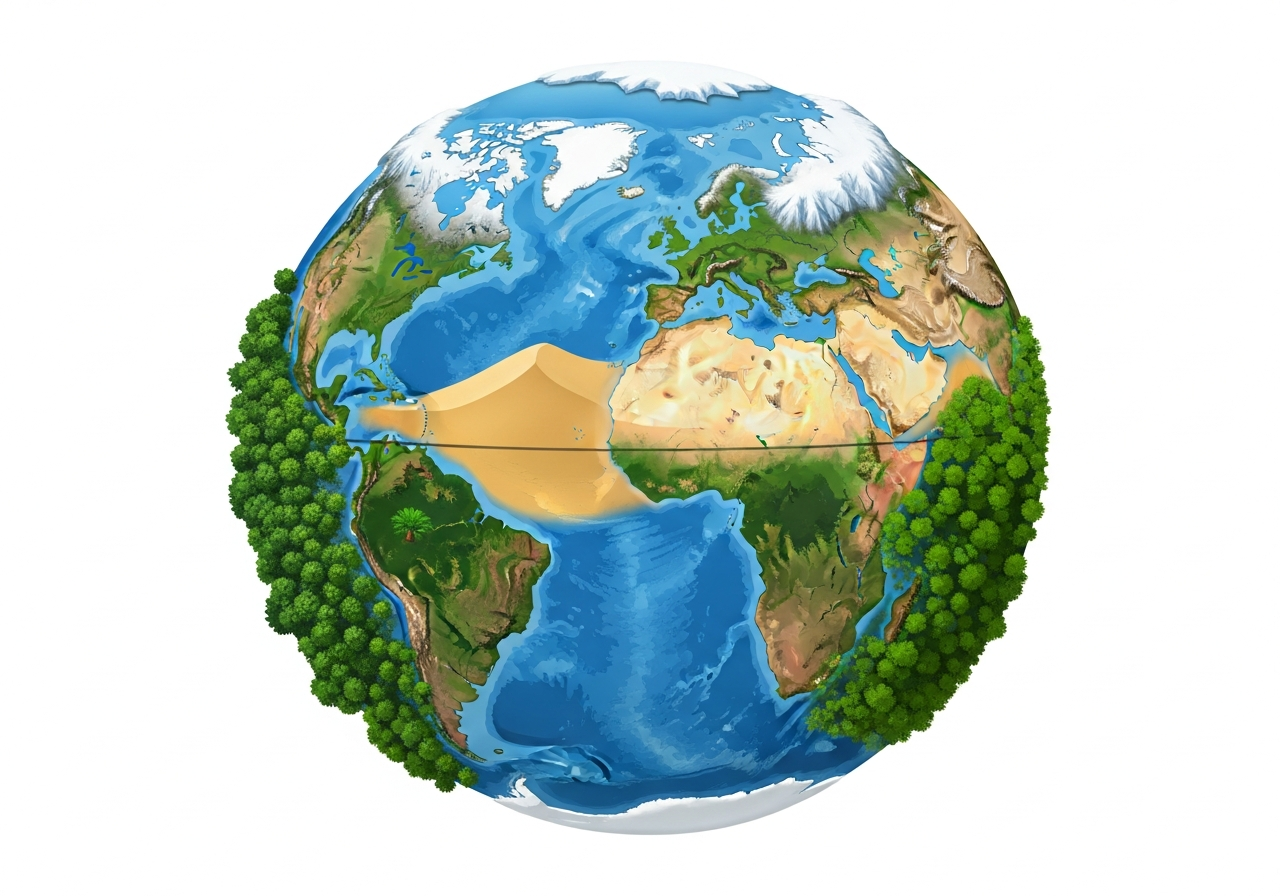
Types of Climate Zones
Different parts of Earth have very different climates. You can explore Climate Zones and Regional Variations to see how location shapes climate.
- Tropical climate: Warm and very wet all year, found near the equator. Rainforests grow here.
- Desert climate: Very dry and hot, with very little rainfall each year.
- Temperate climate: Four distinct seasons warm summers and cold winters.
- Polar climate: Extremely cold and icy year-round, found near the North and South Poles.
Places near the equator are warmest because the sun's rays hit there most directly. The farther you go toward the poles, the colder the climate becomes.
How Do Scientists Study Climate?
Scientists collect weather data every single day for many years. They use a thermometer to measure how hot or cold the air is. They also measure precipitation any form of water that falls from clouds, like rain, snow, sleet, or hail.
By averaging data over 30 or more years, scientists can smooth out unusual years and find the true typical pattern of a region. You can practice reading and analyzing this kind of data when you study Data Analysis: Patterns and Relationships.
Key Terms & Definitions
Weather: Weather is the conditions in the sky on a specific day like sunny, rainy, windy, or snowy. Weather can change very quickly from one day to the next.
Climate: Climate is the average weather in a place over many years, usually 30 years or more. It describes what weather is typical for a region.
Weather Forecast: A weather forecast uses data to predict what the weather will be like in the coming days. Forecasters look at temperature, wind, and moisture to make their predictions.
Precipitation: Precipitation is any form of water that falls from clouds to the ground. This includes rain, snow, sleet, and hail.
Temperature: Temperature tells you how warm or cold the air is. Scientists measure temperature using a thermometer.
Thermometer: A thermometer is the tool scientists use to measure air temperature. It is one of the most important tools for studying climate.
Drought: A drought happens when an area receives far less rain than usual over a long period of time. Droughts are an example of an extreme weather pattern.
Flood: A flood occurs when too much water covers land that is normally dry. Floods can happen after very heavy rainfall.
Wind: Wind is air that is moving from one place to another. It is caused by differences in air pressure and is an important part of weather and climate.
Humidity: Humidity describes how much moisture is in the air. High humidity can make the air feel sticky and warm.
Weather Pattern: A weather pattern is a repeating sequence of weather conditions that happens regularly in a region, such as rainy winters and dry summers.
Climate Zone: A climate zone is a large region of Earth that shares similar long-term weather patterns. The three main zones are tropical, temperate, and polar.
Seasons: Seasons are recurring periods of the year spring, summer, fall, and winter each with its own typical weather. Seasons are a predictable part of a region's climate.
Practice What You Know
You can practice comparing weather and climate by looking at a table of seasonal temperatures and rainfall. Ask yourself: does this pattern repeat every year? If yes, it describes the climate of that place.
Try calculating the average temperature by adding values together and dividing by the number of days. This skill connects to Data Recording: Tables, Charts, and Graphs, which helps you read and understand climate data.
You can also practice using Evidence-Based Reasoning to draw conclusions from weather data just like real scientists do.
What You Already Know That Helps
You have already learned about Seasonal Weather Changes, which shows how weather shifts throughout the year. You also know about the Water Cycle: Evaporation, Condensation, and Precipitation, which explains how water moves through the air and falls as precipitation a key part of climate.
Understanding Weather Impact and Effects on Earth's Surface also helps you see how climate shapes the land around you.
Related Topics & Connections
This topic connects to many exciting areas of science. Here is how they all fit together:
- Seasonal Changes: Earth's Tilt and Orbit You will discover why Earth's tilt causes the seasons that are part of every region's climate pattern.
- Climate Zones: Regional Variations You will explore how different parts of Earth have their own unique climate based on location.
- Data Analysis: Patterns and Relationships You will use data skills to find and describe long-term climate trends.
- Climate Regions: Temperature and Precipitation Patterns Next, you will go deeper into how temperature and rainfall define specific climate regions.
- Terrestrial Biomes: Land-Based Ecosystem Types You will learn how climate determines what kinds of plants and animals live on land.
- Aquatic Biomes: Water-Based Ecosystem Types You will also explore how climate affects water-based ecosystems like oceans and rivers.
- Revolution Effects: Seasonal Changes You will connect Earth's movement around the sun to the seasonal climate patterns you see each year.
- Analysis Methods: Patterns, Trends, and Relationships You will use scientific analysis methods to study climate data and spot important trends.