TOPIC
Resource Use, Effects on environmentMY PROGRESS
Pug Score
0%
Getting Started
"Let's build your foundation!"
Best Streak
0 in a row
Study Points
+0
Overview
Practice
Watch
Read
Quiz
Next Steps
Get Started
Get unlimited access to all videos, practice problems, and study tools.
Back to Menu
Topic Progress
Pug Score
0%
Getting Started
"Let's build your foundation!"
Videos Watched
0/0
Best Practice
No score
Read
Not viewed
Best Quiz
No attempts
Best Streak
0 in a row
Study Points
+0
Overview
Practice
Watch
Read
Quiz
Next Steps
Read
How Humans Affect the Environment: Resource Use and Its Impact
You will learn how human activities like pollution, deforestation, and overusing resources affect the environment, and discover simple actions you can take to help protect nature.
How Humans Use Natural Resources and Affect the Environment
Every day, you use natural resources things found in nature like water, wood, air, and sunlight. When people use these resources carefully, nature stays healthy. But when resources are used carelessly, the environment can be seriously harmed. You can learn about Natural Resources: Renewable vs. Non-Renewable to understand which resources can run out.
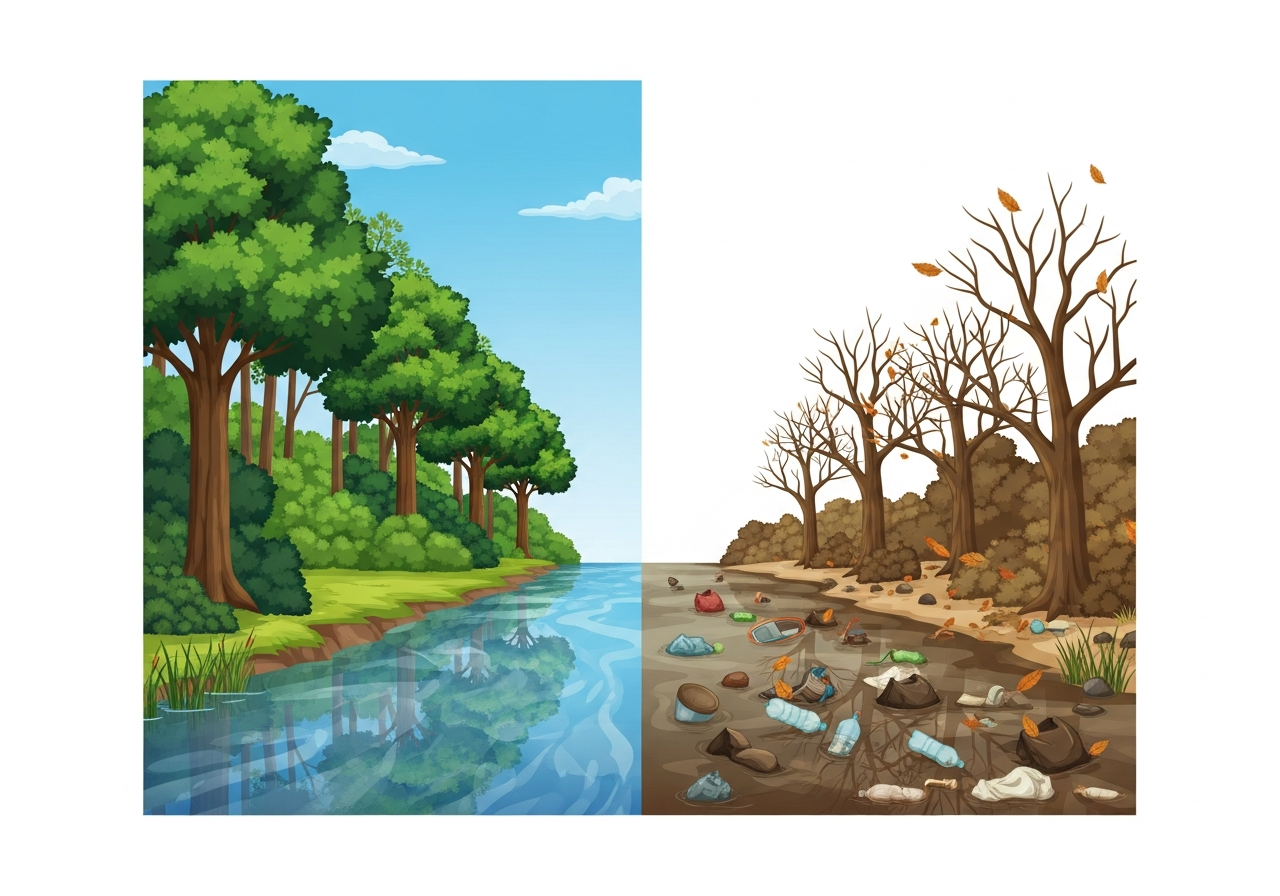
Human activities like building cities, farming, and burning fuel all change the environment. Understanding these effects helps you make better choices every day.
Types of Pollution and Their Effects
Pollution happens when harmful substances enter the air, water, or land. Factories can release chemicals into rivers, killing fish and plants. Cars burn gasoline and release exhaust fumes that make the air harder to breathe.
When too many chemical fertilizers or pesticides are used on farms, rainwater can wash them into nearby ponds and streams. This is called runoff pollution, and it harms fish, frogs, and other water animals. You can see how this connects to Environmental Changes and Local Ecosystem Effects.
Oil spills in the ocean coat animals and block sunlight, destroying entire marine ecosystems. Air pollution from burning coal releases harmful gases that cause breathing problems and contribute to climate change.
Habitat Loss and Deforestation
Deforestation is when large areas of forest are cut down for farming or building. When forests disappear, animals lose the shelter and food they need to survive. This is called habitat destruction, and it is one of the biggest threats to wildlife.
Roads built through forests can split animal families apart, making it hard for them to find food or mates. This is called habitat fragmentation. You will explore more about this when you study Environmental Science: Human Effects on Ecosystems.
Trees also absorb carbon dioxide and release clean oxygen. When forests are destroyed, more harmful gases build up in the atmosphere, making climate change worse.
Water Use and Conservation
Farming uses more fresh water than any other human activity. When people use too much water, less is left for rivers, lakes, and the animals that depend on them. You can learn more about protecting water by exploring Water Conservation: Importance and Methods.
Overusing groundwater from underground wells can cause those supplies to shrink and dry up. Fresh water is a limited resource, so using only what you need helps protect nature for everyone.
Waste, Landfills, and Composting
When people throw too much away, landfills fill up quickly. Harmful liquids from trash can leak into the soil and pollute groundwater. Burning garbage creates air pollution, making the problem even worse.
Composting is a great solution food scraps like vegetable peels break down naturally into rich soil that helps plants grow. This keeps waste out of landfills and creates something useful. You will learn more about this through Sustainable Practices: Resource Management Strategies.
Littering is another serious problem. Animals can eat trash or get tangled in plastic, which can injure or kill them. Plastic can take hundreds of years to break down in nature.
Reduce, Reuse, and Recycle
Reducing means using less of a resource in the first place this is the most powerful step you can take. Reusing means finding a new purpose for something instead of throwing it away. Recycling means turning used materials like paper, plastic, and glass into new products.
Simple actions make a big difference. Turning off lights saves electricity and reduces pollution from power plants. Using a reusable water bottle reduces plastic waste. Riding a bicycle instead of driving a car produces zero exhaust fumes. These habits connect to what you will study in Resource Use: Renewable and Non-Renewable Resources.
Key Terms and Definitions
Natural Resource: A natural resource is something found in nature like water, air, wood, or sunlight that you and other living things use to survive. Natural resources are not made in factories.
Pollution: Pollution means harmful substances like chemicals, trash, or gases that are added to the air, water, or land and cause damage to living things and the environment.
Habitat: A habitat is the natural place where a plant or animal lives and finds everything it needs, like food, water, and shelter. When habitats are destroyed, animals struggle to survive.
Conservation: Conservation means using resources wisely and carefully so they are not wasted or destroyed. When you conserve water or energy, you help protect the environment.
Recycling: Recycling means taking used materials like paper, plastic, or glass and turning them into new products instead of throwing them away. This saves natural resources and reduces landfill waste.
Erosion: Erosion happens when wind or rain washes away soil that has no plant roots to hold it in place. When forests are cut down or animals overgraze, erosion can make land dry and unusable.
Landfill: A landfill is a large area where trash is buried in the ground. When landfills fill up, harmful liquids can leak into the soil and water nearby.
Composting: Composting is when you collect food scraps and yard waste and let them break down naturally into rich soil. This keeps waste out of landfills and helps plants grow.
Littering: Littering means dropping trash in public places like parks, streets, or waterways instead of putting it in a bin. Litter harms animals and pollutes ecosystems.
Reducing: Reducing means using less of something like water, electricity, or packaging so fewer resources are wasted. It is the most effective step in protecting the environment.
Deforestation: Deforestation is when large areas of forest are cut down and cleared away, often for farming or building. It destroys animal habitats and removes trees that clean the air.
Runoff Pollution: Runoff pollution happens when rain washes chemicals like fertilizers or pesticides off fields and into rivers and lakes, harming fish and other water animals.
Renewable Resource: A renewable resource is one that nature can replace, like sunlight, wind, or trees (when managed carefully). Solar panels use sunlight, which is a renewable resource.
Non-Renewable Resource: A non-renewable resource is one that cannot be replaced quickly, like coal, oil, and natural gas. Once these fossil fuels are used up, they are gone.
Practice Activities: Protecting the Environment
You can practice identifying human impacts by looking at a river comparison table. A clean river has clear water, many healthy fish, green plants, and animals like birds and frogs. A river with trash has murky water, very few fish, dying plants, and most animals leave. This shows you exactly how pollution changes an ecosystem.
Try thinking about your daily habits. Do you turn off lights when you leave a room? Do you use a reusable bottle? These small actions reduce pollution from power plants and cut down on plastic waste. You can also explore Habitat Protection and Conservation Methods to discover more ways to help.
Consider how a school composting program works food scraps turn into rich soil instead of filling up a landfill. This is a real example of reducing waste and helping the environment at the same time.
Building on What You Already Know
Before exploring this topic, you may have already learned about Natural Resources: Renewable vs. Non-Renewable, which helps you understand which resources can run out. You may also know about Conservation and Sustainable Practices, which teaches you how to use resources wisely.
Your knowledge of Environmental Changes and Local Ecosystem Effects helps you see how human actions change the world around you. Understanding Stewardship and Taking Care of the Environment reminds you that everyone has a responsibility to protect nature.
You may also have studied Seasonal Practices and Traditional Resource Use and Sustainable Methods and Traditional Conservation, which show how communities have protected resources for generations.
Related Topics and Connections
This topic connects to many other important science ideas. You can explore Conservation and Protection Strategies to learn specific ways people protect nature. Understanding Ecosystem Components: Living and Non-Living Elements helps you see what makes up the environments that humans affect.
When you study Communities and Interaction Between Populations, you discover how different species depend on each other and why human impact can disrupt those relationships. Food Webs and Interconnected Food Chains and Energy Transfer from Producer to Consumer show you how pollution and habitat loss ripple through entire ecosystems.
You will also connect to Traditional Practices in Resource Management and Environmental Knowledge and Local Ecosystem Understanding, which explore how Indigenous communities have protected resources for thousands of years.
This topic prepares you for more advanced learning in Environmental Science: Human Effects on Ecosystems, Resource Use: Renewable and Non-Renewable Resources, Habitat Protection and Conservation Methods, and Sustainable Practices and Resource Management Strategies. You will also build toward understanding Cultural Practices in Sustainable Resource Management, Indigenous Science and Traditional Ecological Knowledge, Matter Cycles: Water, Carbon, and Nitrogen Cycles, and Energy Flow in Food Webs.