TOPIC

Population Dynamics, Groups of organisms in area

MY PROGRESS

Pug Score

0%

Getting Started

"Let's build your foundation!"

Best Streak

0 in a row

Study Points

+0

Overview

Practice

Watch

Read

Quiz

Next Steps


Get Started

Get unlimited access to all videos, practice problems, and study tools.

Unlimited practice
Full videos

BACK TO MENU

Topic Progress

Pug Score

0%

Getting Started

"Let's build your foundation!"

Videos Watched

0/0

Best Practice

No score

Read

Not viewed

Best Quiz

No attempts


Best Streak

0 in a row

Study Points

+0

Overview

Practice

Watch

Read

Quiz

Next Steps

Read

Discover How Populations of Organisms Live and Change in Ecosystems

You will learn how groups of the same type of organism living in one area form a population, and how populations grow, shrink, or change over time.

What Is a Population?

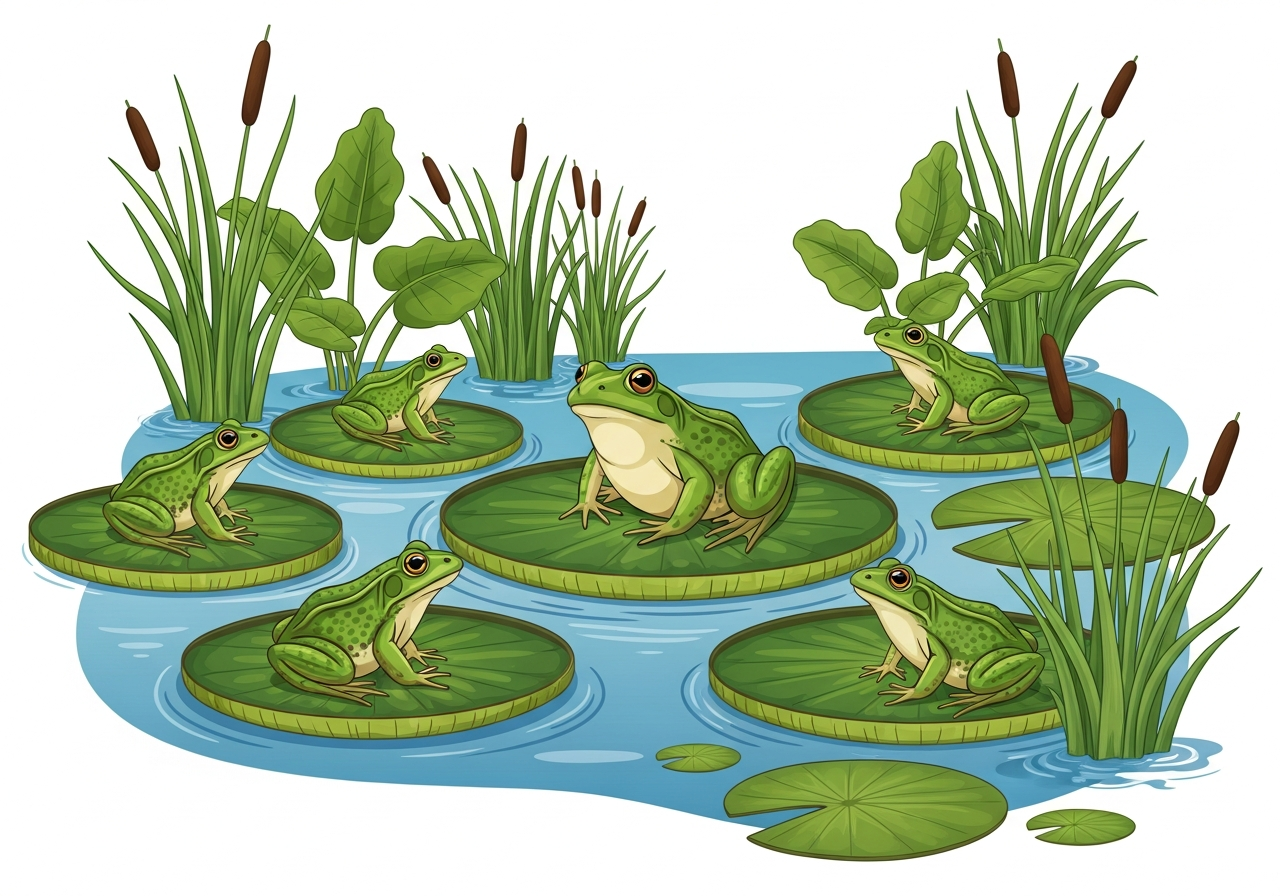
A population is a group of the same type of organism living in the same area at the same time. For example, all the frogs living in one pond form a population of frogs. All the deer living in one forest form a population of deer.

Every population is made up of just one species. If you mix rabbits and foxes together, that is not one population those are two separate populations sharing the same space.
You can explore how living things are grouped by reviewing Ecosystem Components, Living and Non-Living Elements, which shows how populations fit into the bigger picture of an ecosystem.

How Population Size Changes Over Time

Population size tells you how many individuals of the same species live in an area at one time. Population size can grow bigger or get smaller depending on several factors.

When there is plenty of food, animals survive and have more babies, so the population grows. When food is scarce, or when disease spreads, the population shrinks. Animals moving into or out of an area called migration also changes population size.

Predators also affect population size. If wolves are removed from a forest, the deer population will grow because fewer deer are hunted. You can learn more about how animals interact in Communities, Interaction Between Populations.

Populations, Communities, and Ecosystems

It is important to know the difference between a population, a community, and an ecosystem. A community includes ALL the different populations of organisms living together in one area. An ecosystem includes the community PLUS all the nonliving things like water, soil, air, and sunlight.

For example, a pond with fish, frogs, plants, water, mud, and sunlight is a complete ecosystem. The fish alone are one population. All the fish, frogs, and plants together form the community.

Understanding Food Webs, Interconnected Food Chains will help you see how populations depend on each other for energy and survival.

Key Terms and Definitions

Population: A population is a group of the same type of organism living in the same area at the same time. For example, all the pine trees in one forest section form a population of pine trees.

Population Size: Population size is the total number of individuals in a population at one time. If a pond has 50 frogs in spring and 80 frogs in summer, the population size grew.

Organism: An organism is any living thing. Plants, animals, fungi, and bacteria are all organisms.

Habitat: A habitat is the specific place where a plant or animal naturally lives and finds everything it needs food, water, and shelter. A pond is the habitat for frogs.

Community: A community includes all the different populations of living things sharing the same area. A meadow with rabbits, deer, butterflies, and owls is a community.

Ecosystem: An ecosystem includes all the living things AND nonliving things in one area working together. Sunlight, water, soil, plants, and animals are all parts of an ecosystem.

Birth Rate: Birth rate refers to how many new individuals are born into a population. A high birth rate causes a population to grow larger over time.

Death Rate: Death rate refers to how many individuals in a population die. A high death rate causes a population to shrink.

Migration: Migration is when animals move into or out of an area. When animals move in, the population grows. When they move away, the population shrinks.

Predator: A predator is an animal that hunts and eats other animals for food. Wolves are predators that hunt deer.

Prey: Prey is the animal that is hunted and eaten by a predator. Deer are prey for wolves.

Producer: A producer is a living thing, like a plant, that makes its own food using sunlight, water, and air. Producers form the base of every food chain.

Consumer: A consumer is a living thing that eats other organisms for energy. Animals that eat plants or other animals are consumers.

Decomposer: A decomposer breaks down dead plants and animals and returns nutrients to the soil. Fungi and bacteria are common decomposers.

Food Chain: A food chain shows the path that energy follows from plants to animals. It starts with a producer and moves through consumers.

Competition: Competition happens when organisms fight over the same food, water, or space. When a new animal moves into an ecosystem and eats the same food, the original animals may struggle.

Biodiversity: Biodiversity means having many different species in an ecosystem. More species help keep the ecosystem balanced and healthy.

Practice What You Know

Try counting populations! Look at this example: a meadow has 6 rabbits, 3 deer, 8 butterflies, and 1 owl. How many populations are there? There are 4 populations one for each species even though the owl is just 1 individual.

Remember: a population does not need to be large. Even a single owl in a meadow counts as a population of owls in that area.

You can also practice identifying how Trophic Levels, Producers, Consumers, and Decomposers connect to populations in an ecosystem, and explore how Energy Transfer, Producer to Consumer Flow keeps populations alive.

What You Already Know and Where You Are Headed

Before learning about population dynamics, you studied Animal Groups, Major Animal Classifications and Animal Adaptations, Physical and Behavioral Features. You also explored Environmental Changes, Local Ecosystem Effects, which showed you how changes in an environment affect the living things there.

Now that you understand populations, you are ready to explore bigger ideas like Energy Flow, Food Webs and Energy Transfer, Terrestrial Biomes, Land-Based Ecosystem Types, Aquatic Biomes, Water-Based Ecosystem Types, and Matter Cycles, Water, Carbon, and Nitrogen Cycles.

You will also build toward understanding Environmental Science, Human Effects on Ecosystems and Habitat Protection, Conservation Methods, which show you how humans can help protect populations and ecosystems.

Related Topics and Connections

Population dynamics connects to many other important science topics. Communities, Interaction Between Populations shows you what happens when many different populations share the same space. Ecosystem Components, Living and Non-Living Elements helps you understand the full system that supports every population.

You will also connect populations to Food Webs, Interconnected Food Chains and Energy Transfer, Producer to Consumer Flow, which explain how energy moves between populations. Trophic Levels, Producers, Consumers, Decomposers and Energy Loss, Energy Transfer Efficiency show you the roles different populations play.

Understanding how populations survive also connects to Structural Adaptations, Physical Features for Survival and Behavioral Adaptations, Actions That Aid Survival. Finally, Conservation, Protection Strategies, Resource Use, Effects on Environment, and Environmental Knowledge, Local Ecosystem Understanding all show you why protecting populations matters in the real world.