TOPIC
MY PROGRESS
Pug Score
0%
Best Streak
0 in a row
Study Points
+0
Overview
Practice
Watch
Read
Next Steps
Get Started
Get unlimited access to all videos, practice problems, and study tools.
Back to Menu
Topic Progress
Pug Score
0%
Videos Watched
0/0
Best Practice
No score
Read
Not viewed
Best Streak
0 in a row
Study Points
+0
Overview
Practice
Watch
Read
Next Steps
Read
Ask Questions Like a Scientist!
You will learn how to ask questions about things you observe. Asking questions is how scientists start learning about the world.
How Do You Ask a Good Question?
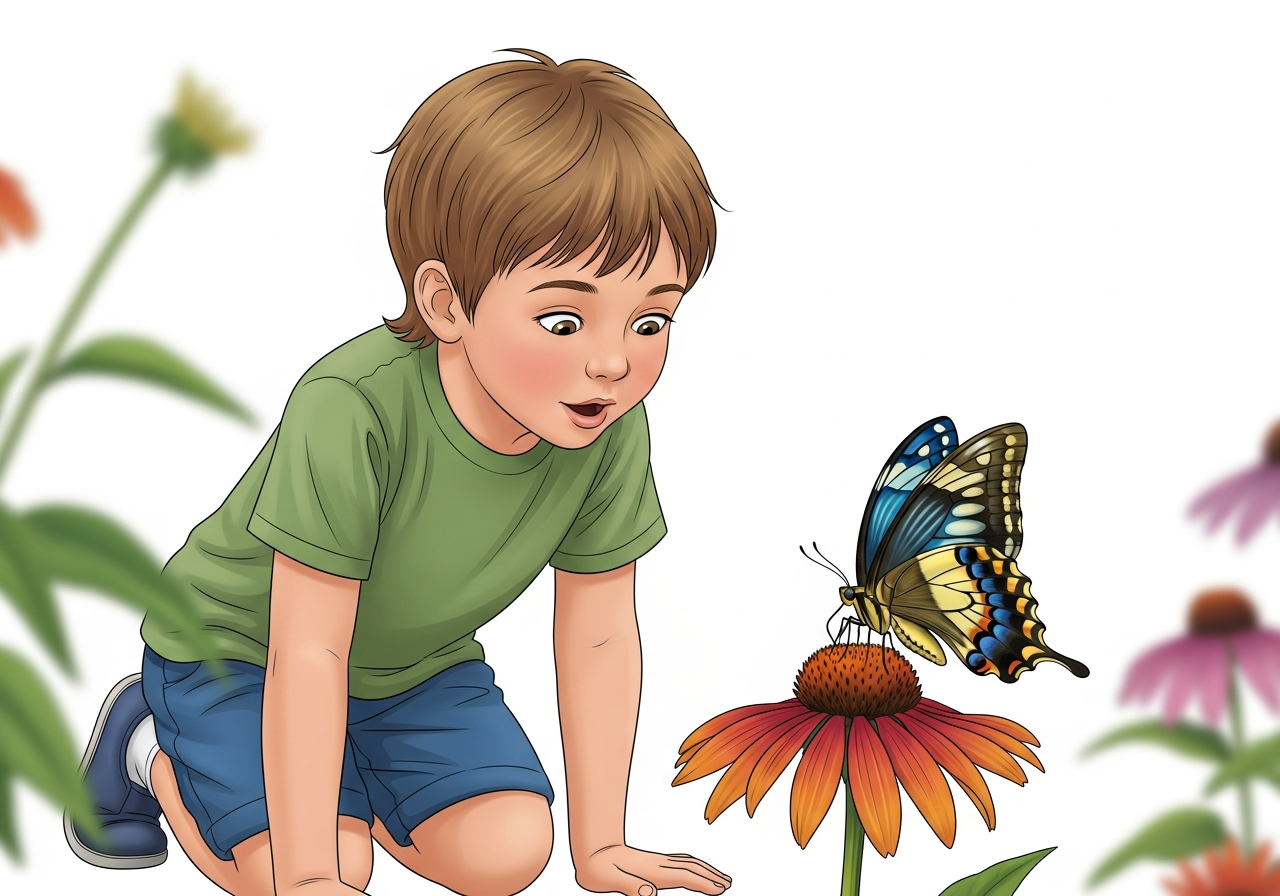
First, you look and listen carefully. You use your eyes, ears, nose, and hands to observe.
Then you think about what you noticed. You can ask: "Why does the worm wiggle?" or "How does a seed grow?" or "Why do snowflakes look different?"
Every question you ask helps you learn something new about the world around you!
Questions About Nature
You can ask questions about many things in nature. You might see a snail leaving a shiny trail and ask, "What makes that trail?"
You might watch a plant grow new leaves and ask, "Why are new leaves growing?" Questions like these help you discover amazing things!
You can also ask questions about Weather Patterns, like "Why does it snow?" or "Why is the sky cloudy today?"
Key Terms and Definitions
Observe: When you observe, you use your senses to look at, listen to, touch, or smell something carefully. For example, you observe a butterfly by watching how it moves its wings.
Question: A question is something you ask when you want to find out more. Questions often start with "why," "how," "what," or "where."
Scientist: A scientist is a person who asks questions and does experiments to learn about the world. You can think like a scientist every day!
Nature: Nature is everything in the world around you, like plants, animals, rain, and snow. You can observe nature and ask questions about it.
Try It Yourself!
Go outside and look around. What do you see? Maybe you spot a bug, a cloud, or a flower.
Pick one thing and ask a question about it. Write it down or draw a picture! You can also use Basic Measurements to compare what you find, like asking "Which leaf is bigger?"
You can also sort what you find by color or shape. This connects to Sorting Materials and Material Properties like color, texture, and hardness.
What Comes Next?
After you learn to ask questions, you will be ready to learn more science skills! You will learn about the Research Process and how to plan a science investigation.
You will also learn about Data Collection, which means writing down what you find out. And you will explore Problem Solving to test your ideas. You will even learn about Safety Procedures to stay safe while you explore!
Related Topics and Connections
Asking questions connects to many other science topics you will explore. You use Observation Skills first you look, listen, and feel before you ask a question.
You can use Basic Measurements to compare things you observe, like size or weight, and then ask questions about what you find.
When you look at Material Properties like color, texture, and hardness, you can ask questions like "Why is this rock hard?" You can also ask questions while doing Sorting Materials by grouping objects and wondering why they are different.
You can ask questions about Weather Patterns like rain and snow. And when you have a problem to solve, asking questions helps you with the Design Process to find simple solutions!