TOPIC
Observation Skills, Using senses to observe and describe objects and phenomenaMY PROGRESS
Pug Score
0%
Getting Started
"Let's build your foundation!"
Best Streak
0 in a row
Study Points
+0
Overview
Practice
Watch
Read
Quiz
Next Steps
Get Started
Get unlimited access to all videos, practice problems, and study tools.
Back to Menu
Topic Progress
Pug Score
0%
Getting Started
"Let's build your foundation!"
Videos Watched
0/0
Best Practice
No score
Read
Not viewed
Best Quiz
No attempts
Best Streak
0 in a row
Study Points
+0
Overview
Practice
Watch
Read
Quiz
Next Steps
Read
Discover the World with Your Five Senses!
You can use your five senses to observe and describe things around you. Your eyes, ears, nose, hands, and tongue all help you learn about the world.
Using Your Five Senses to Observe the World
You are a scientist! Scientists use their five senses to learn about things. Your senses help you see, hear, smell, touch, and taste.
Every day, you use your senses to explore the world around you. Let's find out how each sense helps you!
Your Sense of Sight
You use your eyes to see. Your eyes help you notice colors, shapes, and sizes. You can see if a leaf is green or if a flower is red.
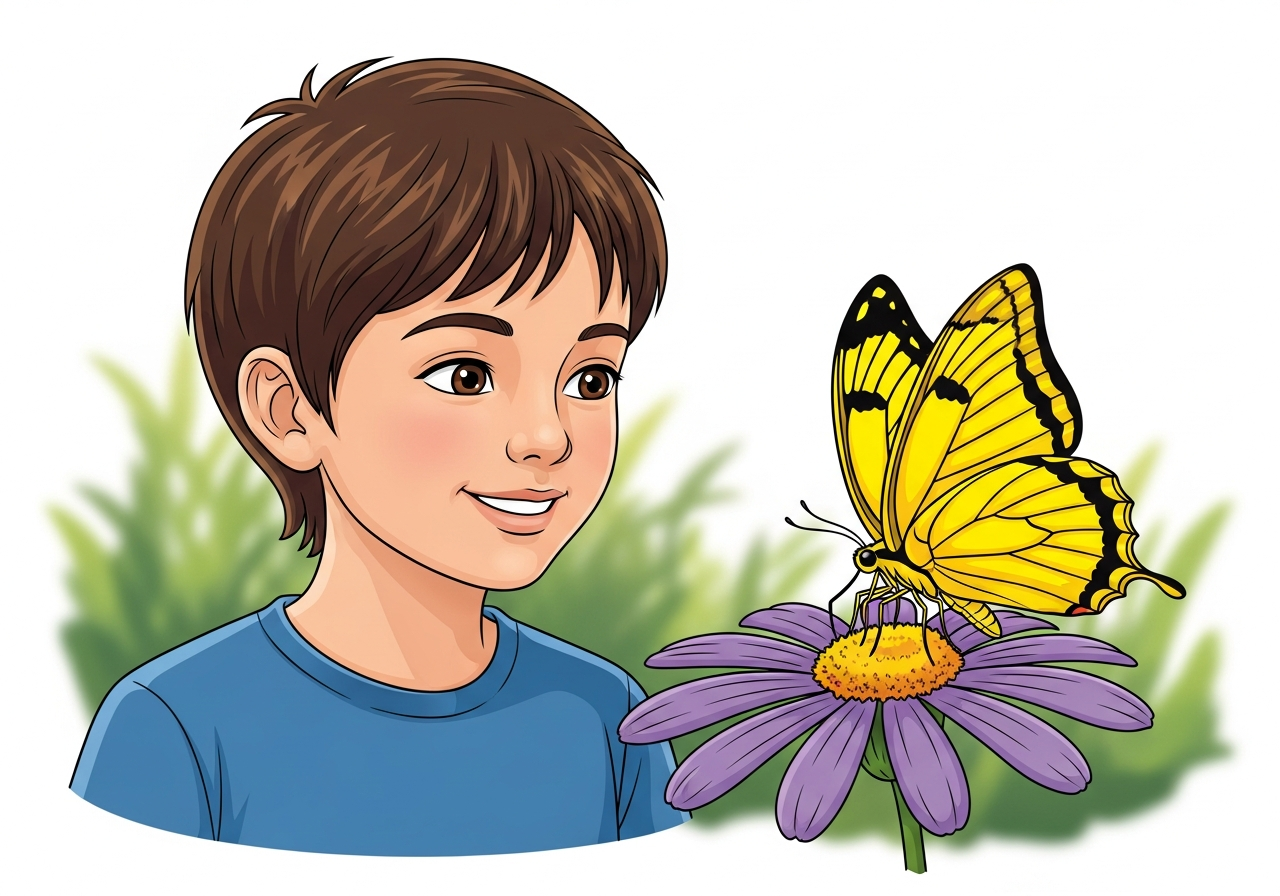
When you watch a butterfly fly through the air, you use your eyes. Seeing is a great way to observe!
Your Sense of Hearing
You use your ears to hear sounds. You can hear birds chirping, leaves crunching, and thunder booming. Your ears help you notice sounds all around you.
When you hold a seashell to your ear, you use your hearing. Listening is an important way to observe nature!
Your Sense of Smell
You use your nose to smell things. Your nose can detect sweet smells, like a flower. It can also notice other scents in the air around you.
When you want to know if a flower smells sweet, you bring it close to your nose. Smelling helps you learn about the world!
Your Sense of Touch
You use your hands and fingers to feel things. Your skin can tell you if something is smooth, rough, bumpy, or soft. You can also feel if something is cold, warm, heavy, or light.
When you run your fingers over a seashell, a pumpkin, or a rock, you use your sense of touch. Touching helps you discover textures and temperatures!
Your Sense of Taste
You use your tongue to taste food. Your tongue has special taste buds. They help you know if food is sweet, sour, salty, or bitter.
When you taste a lemon, your tongue tells you it is sour. Tasting is a fun way to observe!
Fun Ways to Practice Your Senses
You can go outside and use all five senses! Look at the colors of leaves. Listen for birds. Smell a flower. Touch the bark of a tree.
You can also try tasting different foods and describing the flavors. Using all your senses makes you a great observer!
Key Terms and Definitions
Senses: Your senses are the ways your body learns about the world. You have five senses: sight, hearing, smell, touch, and taste.
Sight: Sight is the sense you use to see. You use your eyes for sight. Your eyes help you see colors, shapes, and sizes.
Hearing: Hearing is the sense you use to listen to sounds. You use your ears for hearing. Your ears help you hear birds, thunder, and other sounds.
Smell: Smell is the sense you use to detect scents. You use your nose to smell. Your nose can tell you if something smells sweet or strong.
Touch: Touch is the sense you use to feel things. You use your hands, fingers, and skin to touch. Touch helps you feel if something is smooth, rough, bumpy, or soft.
Taste: Taste is the sense you use to find out how food flavors. You use your tongue to taste. Your tongue can tell you if food is sweet, sour, salty, or bitter.
Texture: Texture is how something feels when you touch it. A rock can feel rough. A feather can feel soft. A pumpkin can feel bumpy or smooth.
Observe: To observe means to use your senses to learn about something. You observe when you look, listen, smell, touch, or taste.
Describe: To describe means to tell about something using words. You can describe a leaf by saying it is green and smooth.
Taste buds: Taste buds are tiny special parts on your tongue. They help you taste sweet, sour, salty, and bitter flavors.
Getting Ready to Observe
You do not need any special tools to start observing. You already have everything you need your five senses! Every time you look, listen, smell, touch, or taste, you are doing science.
Practicing your observation skills helps you become a better scientist every day.
Related Topics and Connections
Observation skills are the first big step in scientific inquiry. When you learn to use your senses well, you are ready to ask questions and explore even more about the world around you.
Keep using your five senses every day. The more you practice observing, the more you will discover!