TOPIC

Data Collection, Recording observations systematically

MY PROGRESS

Pug Score

0%

Best Streak

0 in a row

Study Points

+0

Overview

Practice

Watch

Read

Quiz

Next Steps


Get Started

Get unlimited access to all videos, practice problems, and study tools.

Unlimited practice
Full videos

Back to Menu

Topic Progress

Pug Score

0%

Videos Watched

0/0

Best Practice

No score

Read

Not viewed

Best Quiz

No attempts


Best Streak

0 in a row

Study Points

+0

Read

Collect Data and Record Observations Like a Scientist!

You will learn how to collect data by recording your observations in an organized way, just like scientists do when they study nature.

What Is Data Collection?

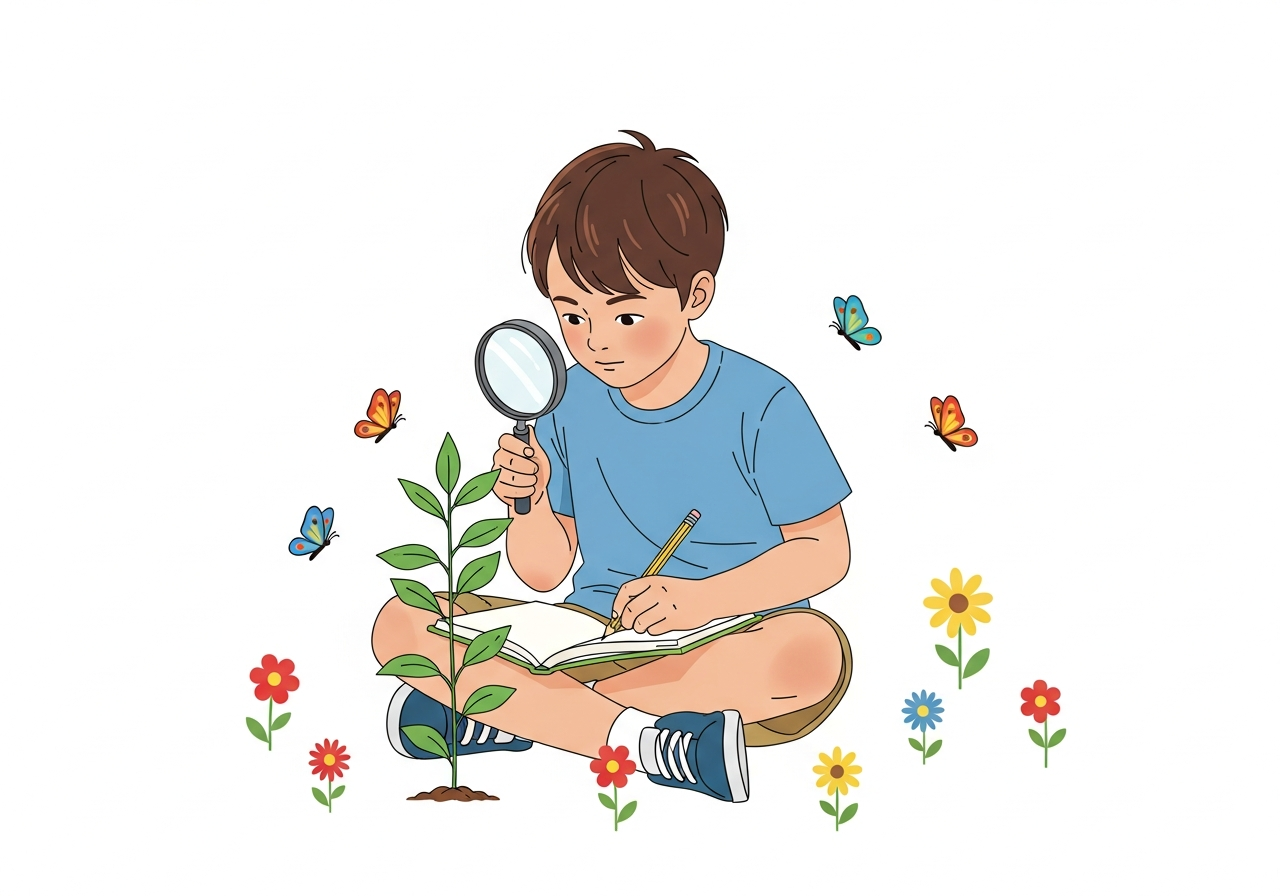
When you watch something carefully and write down what you notice, you are collecting data. Data is information that you gather by looking, counting, or measuring things around you.

Scientists collect data every day! You can be a scientist too by watching things in nature and keeping track of what you find.
What Does It Mean to Record Observations?

An observation is what you notice using your senses. When you write down or draw what you observe, you are recording your observations.

Recording observations helps you remember what you saw. It also helps you notice patterns, like how a plant grows taller each day or how the weather changes each week.

You can record observations by drawing pictures, writing numbers, or making marks in a notebook or chart.

How Do You Record Observations Systematically?

Recording observations systematically means doing it in an organized way, every time, so you can compare what you find. Here are some great ways to do this:

  • Science notebook or journal: You can draw pictures and write notes about what you see.
  • Tally marks and tally charts: You can make a mark each time you see something, like a bird or a ladybug.
  • Measurement charts: You can measure something, like a plant's height, and write the number each day.
  • Calendar with notes: You can mark what you observe on specific dates so you can see how things change over time.

Why Is Systematic Recording Important?

When you record observations in an organized way, you can look back and see patterns. For example, you might notice that more birds visit a feeder in the morning than in the afternoon.

Organized records also help you remember details you might forget, like the exact height of your plant on Monday or the color of a leaf you found in the park.

Try It Yourself!

You can practice collecting data right now! Pick something to observe, like clouds in the sky, bugs in the garden, or flowers on a walk.

Each day, draw what you see or write a number in your notebook. After a few days, look back at your notes. Can you see any patterns? That is what scientists do!

Here are some fun ideas to try:

  • Count how many birds you see each morning and make a tally chart.
  • Measure a plant each day and write down its height.
  • Draw the shapes of clouds you see and count how many of each shape you find.
  • Watch ants or worms and write notes about where they go and what they do.

Key Terms & Definitions

Data: Data is information that you gather by watching, counting, or measuring things. For example, when you count how many butterflies you see each day, those numbers are your data.

Observation: An observation is what you notice using your senses, like seeing, hearing, or touching. When you look at a leaf and notice its color and shape, you are making an observation.

Recording observations: Recording observations means writing down or drawing what you notice so you can remember it later. You can record observations in a notebook, on a chart, or by taking pictures.

Collecting data: Collecting data means gathering information in an organized way. When you count ladybugs and write the numbers in a chart, you are collecting data.

Systematic: Systematic means doing something in an organized, step-by-step way every time. Recording observations systematically means you write things down in the same organized way each day so you can compare your findings.

Tally marks: Tally marks are small lines you draw to count things. Each time you see something, you make one mark. Tally marks help you keep count in an easy and organized way.

Tally chart: A tally chart is a table where you use tally marks to count and organize information. For example, you can use a tally chart to count how many birds of each type visit a feeder.

Science notebook or journal: A science notebook is a special book where you write and draw your observations. Scientists use notebooks to keep all their data in one organized place.

Patterns: Patterns are things that happen in a regular or repeated way. When you record data over time, you can spot patterns, like a plant growing taller every week.

Recording findings: Recording findings means writing down or drawing what you discovered during your observations. This helps you share what you learned with others, just like real scientists do.

Getting Ready to Collect Data

Before you collect data, you just need to be curious! Look around you and pick something interesting to watch. It could be a plant, an insect, the weather, or even falling leaves.

You do not need any special tools to start. A piece of paper and a pencil are all you need to begin recording your observations systematically.

Related Topics & Connections

Data collection and recording observations are important STEM skills that connect to many things you will explore in science. As you keep practicing, you will use these skills in all kinds of exciting investigations.

Right now, you are building a strong foundation by learning how to watch carefully and write down what you find. These skills will help you in every science topic you explore, from studying plants and animals to watching the weather and beyond.

Every time you count something, draw what you see, or write a number in a chart, you are thinking like a scientist. Keep practicing, and you will get better and better at collecting and recording data!