TOPIC

Basic Measurements, Simple comparisons of size, weight, temperature

MY PROGRESS

Pug Score

0%

Best Streak

0 in a row

Study Points

+0

Overview

Practice

Watch

Read

Quiz

Next Steps


Get Started

Get unlimited access to all videos, practice problems, and study tools.

Unlimited practice
Full videos

Back to Menu

Topic Progress

Pug Score

0%

Videos Watched

0/0

Best Practice

No score

Read

Not viewed

Best Quiz

No attempts


Best Streak

0 in a row

Study Points

+0

Read

Learn to Measure Size, Weight, and Temperature!

You will learn to compare size, weight, and temperature using simple tools like a ruler, scale, and thermometer.

What Is Measuring?

You can measure things to learn more about them! Measuring helps you compare two things to see which is bigger, heavier, or warmer.

You use special tools to measure. Each tool helps you find out something different!
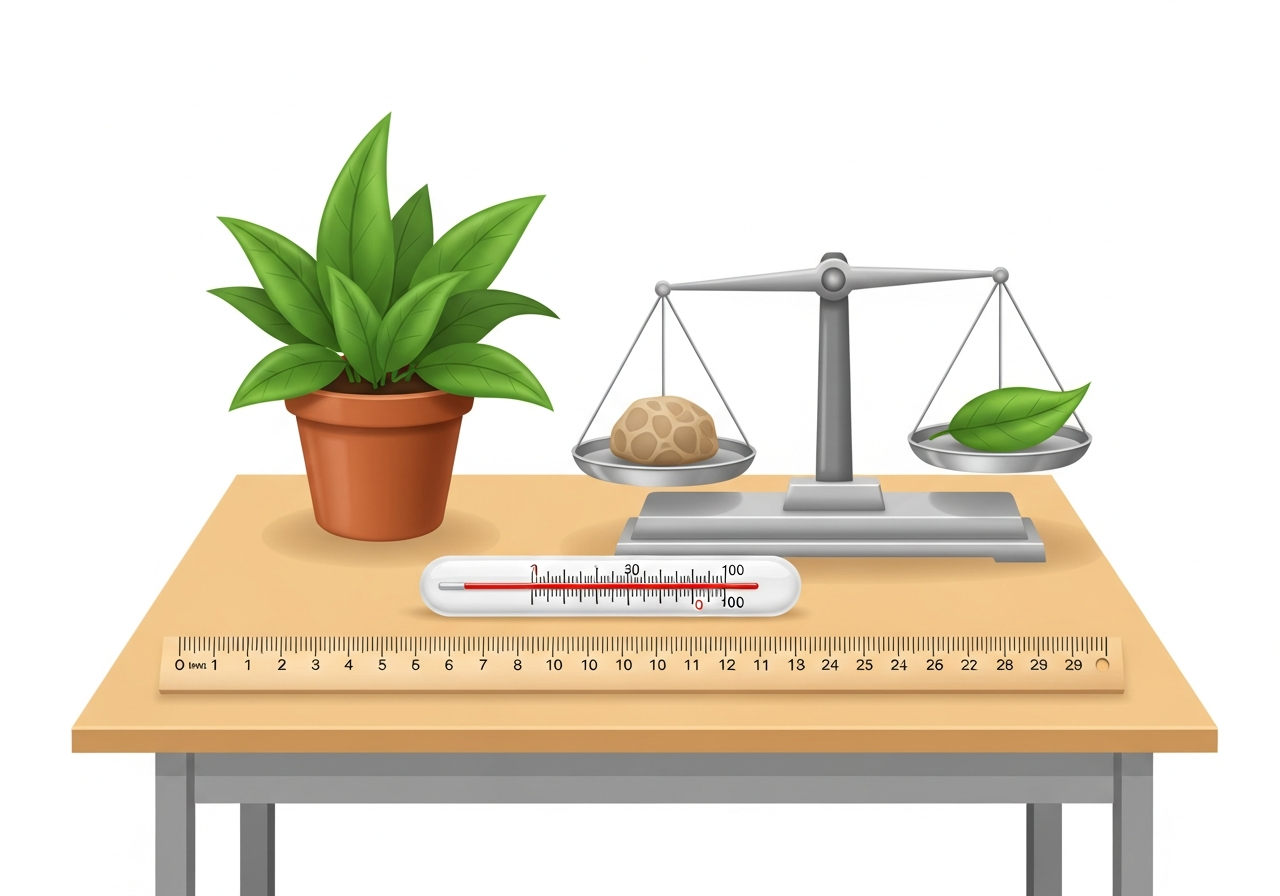
Comparing Size with a Ruler

A ruler helps you measure how long, tall, or big something is. You place the ruler next to an object to see its size in numbers.

If you want to know which plant is taller, you use a ruler! The ruler shows you which one reaches higher up.

Comparing Weight with a Scale

A scale helps you find out how heavy something is. You put objects on the scale to see which one weighs more.

A big rock is heavier than a small leaf. You can use a scale to check! The side that goes down is heavier.

Comparing Temperature with a Thermometer

A thermometer tells you if something is hot or cold. It shows numbers that go up when things are warm and down when things are cool.

If you want to know which drink is warmer, you use a thermometer! Things left in the sun feel warmer than things kept in the shade or freezer.

Key Terms & Definitions

Measure: You measure when you find out the size, weight, or temperature of something using a tool.

Ruler: A ruler is a flat tool with numbers on it. You use it to measure how long or tall something is.

Scale: A scale is a tool that tells you how heavy something is. You put objects on it to compare their weight.

Thermometer: A thermometer is a tool that measures temperature. It shows you if something is hot or cold using numbers.

Heavier: When something weighs more than another thing, you say it is heavier. A rock is heavier than a leaf.

Taller: When something reaches higher up than another thing, you say it is taller. A dinosaur is taller than a mouse.

Longer: When something is bigger from end to end, you say it is longer. You use a ruler to find out which is longer.

Thicker: When something has more material and takes up more space, you say it is thicker. A fluffy blanket is thicker than a thin one.

Warmer: When something has more heat, you say it is warmer. A toy left in the sun feels warmer than one in the shade.

Colder: When something has less heat, you say it is colder. A banana from the freezer feels colder than one on the counter.

Temperature: Temperature tells you how hot or cold something is. You use a thermometer to measure temperature.

Weight: Weight tells you how heavy something is. You use a scale to measure weight.

Size: Size tells you how big or small something is. You use a ruler to compare sizes.

Fun Ways to Practice Measuring

You can practice measuring at home and at school! Try using a ruler to see which crayon is longer.

You can also hold two objects and feel which one is heavier. Then check with a scale to see if you were right!

What You Already Know

You already know words like big, small, hot, and cold. These words help you start comparing things around you!

Now you are learning to use tools to measure more carefully. Tools like a ruler, scale, and thermometer give you exact answers.

Related Topics & Connections

Measuring is a big part of science! When you learn to compare size, weight, and temperature, you are doing scientific inquiry. This means you ask questions and find answers using tools.

These skills help you in many science topics. You will use measuring when you study plants, animals, weather, and more. Every time you want to compare two things in science, you can use what you learned here!