Year 7 Maths Help — Step-by-Step Video Lessons & Practice
Help your child understand every topic and build confidence, one lesson at a time
Expert Video Solutions
Watch the solution then try one yourself.
Build Mastery
You actually get it before moving on.
Test Prep Included
Practice real exam-style questions in your plan.
Try It Now
Test your knowledge
Our approach aligns with the evidence
Exam Scores
Better Recall
Less Anxiety
Year 7 Maths Topics
1. Numbers and Relations
3. Introduction to Ratios, and Percentages
4. Operations with Decimals
5. Adding and Subtracting Fractions
6. Multiplying and Dividing Fractions
7. Ratios, rates, and proportions
8. Rational Numbers
9. Number system and radicals
10. Powers, Exponents and square roots
11. Proportional Relationships
12. Patterns and Solving Equations
13. Measuring systems
14. Coordinates, Quadrants, and Transformations
15. Lines, angles and transversals
16. Properties of triangles
17. Scale factors and similarity
18. Surface area of 3-dimentional objects
19. Volume of 3-dimensional figures
20. Data and Graphs
22 Chapters · 94 Topics · 798 Videos

Ready to practice Year 7 Maths?
Try practice questions on every Year 7 Maths topic — with instant feedback and step-by-step video solutions when you get stuck.
Discover Our Learning Areas
Explore key subjects and start learning with interactive content.

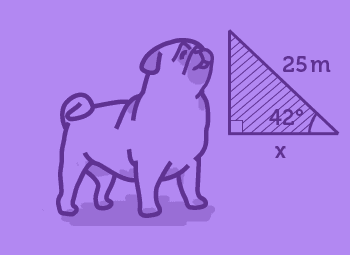
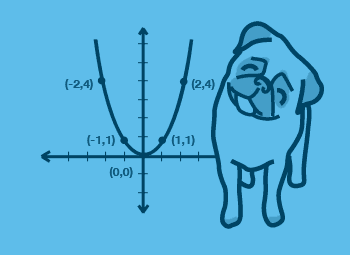

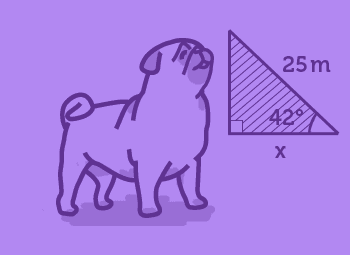



What Is Year 7 Maths?
Year 7 maths is the first year of secondary school mathematics in Australia and marks a significant transition from primary school. Under the Australian Curriculum, Year 7 maths formally introduces algebra for the first time, extends number work into integers and rational numbers, and builds a deeper understanding of geometry, measurement, and data. It is the year when abstract mathematical thinking begins in earnest — and the year when strong support at home makes the biggest difference to long-term results.
What Topics Are Covered in Year 7 Maths?
Year 7 maths covers four main content strands under the Australian Curriculum.
Number and Algebra is the largest strand. Students work with integers, fractions, decimals, and percentages, and are introduced to algebraic thinking: writing expressions, simplifying terms, and solving simple one-step and two-step equations. For many students, algebra is the defining challenge of Year 7.
Measurement and Geometry covers calculating area, perimeter, and volume of common shapes and solids, working with angles in parallel lines and triangles, and exploring transformations such as translation, reflection, and rotation.
Statistics and Probability introduces students to collecting and displaying data using dot plots, stem-and-leaf plots, and column graphs, as well as calculating mean, median, and mode. Basic probability experiments and sample spaces are also explored.
Ratio, rates, and proportional reasoning are woven through the number strand and appear in real-world problem-solving contexts throughout the year.
Is Year 7 Maths Hard? Common Struggle Points
Year 7 maths is genuinely challenging for a large proportion of students — not because the content is unreasonable, but because it requires a shift in how students think about numbers. Several topics consistently trip students up.
Algebra is the most common sticking point. Moving from arithmetic (where every number is known) to working with unknowns requires a conceptual leap that many students need extra time and guidance to make. When algebra is taught as a set of rules to memorise rather than a logical way of thinking, confusion compounds quickly.
Negative integers also cause difficulties, particularly operations such as subtracting a negative number or multiplying two negatives. Without a clear conceptual model, students often rely on shaky rules they apply inconsistently.
Fractions, decimals, and percentages — converting fluently between all three and applying them in problem-solving — remain difficult for students who still have gaps from upper primary school.
The good news is that all of these struggle points respond well to structured, step-by-step teaching. When students see the method explained clearly and then practise immediately, understanding follows.
How Is Year 7 Maths Assessed in Australia?
In Australia, Year 7 maths is assessed through a combination of school-based assessments — including topic tests, in-class tasks, and assignments — and the national NAPLAN assessment. NAPLAN Numeracy is sat in Year 7 and provides a standardised measure of each student's numeracy skills against national benchmarks. Schools also report against the Australian Curriculum achievement standards on student reports, typically using a five-point A–E scale. Regular practice on the types of questions that appear in topic tests, as well as familiarity with NAPLAN-style numeracy problems, gives students a strong advantage across both assessment types.
What Comes Before and After Year 7 Maths?
Year 7 builds directly on Year 5 and Year 6 number work — particularly fractions, decimals, and basic geometry. Students who have gaps in these areas will notice them quickly once algebra and more complex measurement begin. After Year 7, the curriculum moves into Year 8 maths, which deepens algebraic skills with linear equations and graphing, introduces congruence and similarity in geometry, and extends work on probability and statistics. The foundations laid in Year 7 — especially confidence with algebra and rational numbers — directly determine how smoothly a student progresses through Years 8 and 9 toward senior secondary mathematics.
Why StudyPug for Year 7 Maths?
StudyPug is built around the way students actually learn — not just what to do, but why it works. Every Year 7 maths lesson is taught by a certified teacher in a short, focused video that explains the concept step by step. This is real teaching, not AI-generated content: your child sees a real teacher model the method, which means they can apply it to new problems on their own rather than just copying a worked example.
The platform starts with a diagnostic assessment that identifies exactly where your child needs to focus in Year 7 maths. There is no guessing, no wasted time on topics they already know, and no anxiety about where to begin. From the first session, your child is working on what matters most to them right now.
Adaptive practice then adjusts to their level in real time, gradually increasing difficulty as confidence grows. This builds the kind of fluency that shows up in class tests and NAPLAN — not just familiarity with a topic, but the ability to apply it under pressure.
For parents, the dashboard shows exactly which Year 7 maths topics each child has worked through, where they are improving, and where they still need support. The Family Plan covers up to five children at one price, making it practical for families with students at different year levels.
All content is aligned to the Australian Curriculum, so every lesson your child watches at home directly reinforces what their teacher is covering in class.
What Your Child Will Learn in Year 7 Maths on StudyPug
StudyPug covers the full Australian Curriculum scope for Year 7 maths. The core topics your child will practise and build understanding in include:
- Integers and the number line — positive and negative numbers, ordering, and operations
- Fractions, decimals, and percentages — conversions, operations, and real-world applications
- Introduction to algebra — writing and simplifying expressions, substitution, and solving simple equations
- Ratio and proportion — understanding and applying ratios in context
- Measurement — area and perimeter of triangles, quadrilaterals, and composite shapes; volume of prisms
- Geometry — angle relationships, properties of triangles and quadrilaterals, transformations
- Statistics — collecting data, constructing and interpreting graphs, mean, median, and mode
- Probability — basic probability language, sample spaces, and simple experiments
Because no validated internal topic URLs are available in the link map for this page, all topics above are listed as plain text. Your child can browse the full topic list directly on the Year 7 maths course page.
How to Use StudyPug for Year 7 Maths
Getting started is straightforward. When your child first logs in, the diagnostic assessment takes a short time to complete and immediately identifies which Year 7 maths topics need attention. This means your child is not starting from the beginning of the course and grinding through topics they already understand — they go straight to the content that will move the needle.
From there, the recommended approach is simple: watch the certified-teacher video for the topic, then work through the adaptive practice questions immediately while the method is fresh. The platform provides instant feedback on every question, so your child knows right away whether they have understood the concept or need to rewatch a section.
You can monitor progress from the parent dashboard at any time, tracking which topics have been completed, how practice scores are trending, and where more focus is needed. For students preparing for a topic test or NAPLAN Numeracy, the practice questions are based on real exam formats — so the more they practise, the more familiar the question styles become.
Free practice content is available to try before committing to a subscription, and every plan is backed by a 30-day money-back guarantee. There are no lock-in contracts, so the risk of getting started is zero.
Year 7 Maths FAQ
Unsure how StudyPug works? Need help with setting up? Check our frequently asked questions or contact us for help.
What does my child learn in Year 7 maths, and what topics does it cover?
Year 7 maths in Australia covers a broad range of topics under the Australian Curriculum. Your child will work through number and algebra — including integers, fractions, decimals, percentages, and an introduction to algebra and linear equations. They also study measurement and geometry, covering area, perimeter, volume, angles, and transformations, as well as statistics and probability, including data displays and basic chance experiments. It is a significant step up from primary school, laying the foundation for all of secondary maths.
Is Year 7 maths hard, and where do children commonly struggle?
Year 7 maths is a notable jump for many students moving into secondary school. The most common struggle points are algebra — especially writing and solving expressions and equations for the first time — working with negative integers, converting between fractions, decimals, and percentages fluently, and interpreting statistical data. Many students also find ratio and proportion challenging. These topics require abstract thinking that is new at this level, so regular targeted practice and clear explanations of the method, not just the answer, make a significant difference.
What should my child know before Year 7 maths, and what comes next?
Before Year 7, your child should be confident with the four operations on whole numbers and simple fractions, basic measurement, and reading graphs. Gaps in Year 5 or 6 fractions and decimals often show up as difficulty in Year 7 algebra. After Year 7, students move into Year 8 maths, which deepens algebra with linear equations, expands geometry, and introduces congruence and similarity. Building strong Year 7 foundations directly supports success in Years 8, 9, and the senior secondary years.
How does StudyPug Year 7 maths map to what they learn at school?
StudyPug's Year 7 maths content is aligned to the Australian Curriculum. Every topic — from number and algebra through to statistics and probability — mirrors what Australian schools teach at Year 7. Lessons follow the same syllabus sequence, so your child is always practising exactly what is covered in their classroom. This means no confusion between what they see at school and what they see at home, and any gaps identified in their class are easy to address directly on the platform.
What is one of the trickiest maths concepts in Year 7, and how is it taught?
Introduction to algebra is widely considered the trickiest Year 7 maths concept. Many students struggle to move from arithmetic to working with unknowns and writing algebraic expressions. On StudyPug, certified teachers break algebra down into small, clearly sequenced video lessons — starting with what a variable means, moving to writing and simplifying expressions, and then solving one-step and two-step equations. Each video teaches the method step by step, not just the answer, so students can apply it to similar problems on tests and in class.
How much maths practice should my child do at Year 7?
For Year 7, education researchers generally recommend around 20–30 minutes of focused maths practice most days. Consistent shorter sessions are more effective than long occasional ones, particularly for algebra and procedural skills that need reinforcement. StudyPug's adaptive practice adjusts to your child's current level — starting with confidence-building questions and gradually increasing difficulty — so even 15–20 minutes per day on the platform delivers targeted, productive practice aligned to what they are learning at school.





Written by the StudyPug Team
Last updated June 5, 2026
3 M+
students
★★★★★
4.8 average
K–12
all grades