TOPIC
Local Knowledge, Traditional uses of plants and animalsMY PROGRESS
Pug Score
0%
Getting Started
"Let's build your foundation!"
Best Streak
0 in a row
Study Points
+0
Overview
Practice
Watch
Read
Quiz
Next Steps
Get Started
Get unlimited access to all videos, practice problems, and study tools.
Back to Menu
Topic Progress
Pug Score
0%
Getting Started
"Let's build your foundation!"
Videos Watched
0/0
Best Practice
No score
Read
Not viewed
Best Quiz
No attempts
Best Streak
0 in a row
Study Points
+0
Overview
Practice
Watch
Read
Quiz
Next Steps
Read
Discover How Plants and Animals Help Us: Indigenous Knowledge
You will learn how Indigenous communities use plants and animals in traditional ways. Elders share this special knowledge with you through stories and teaching.
What Is Indigenous Knowledge?
Indigenous knowledge is special wisdom about plants and animals. Elders in your community share this wisdom with you. You can learn so much from listening to them!
You can explore Local Environment, Caring for Immediate Environment to see how this knowledge helps you care for the world around you.
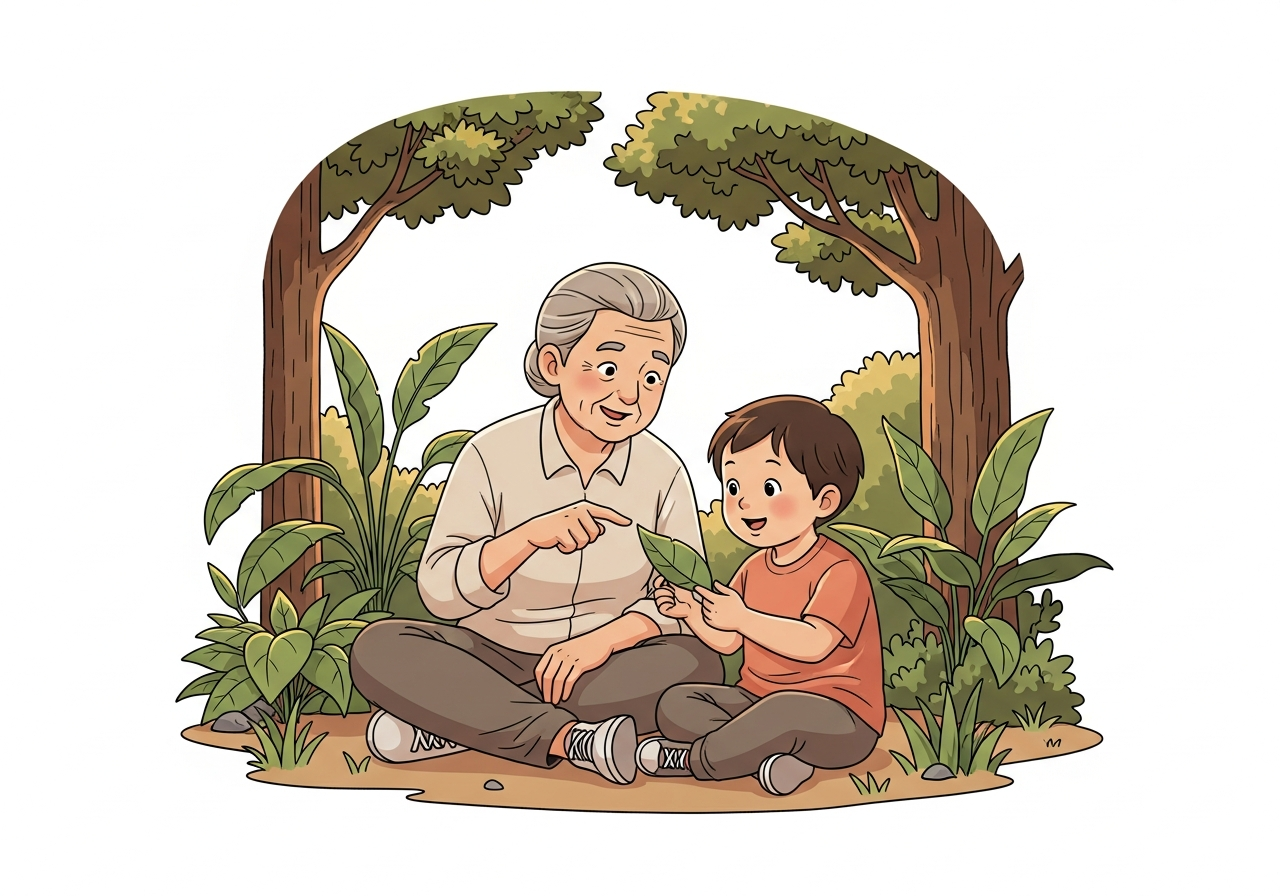
Learning About Healing Plants
Some plants can help people feel better when they are sick. Indigenous Elders know which plants make good medicine. They teach you which plants are safe and which ones to avoid.
Elders also teach you about berries and roots you can eat. You learn when berries are ripe and ready to pick. This is called seasonal knowledge knowing the right time to gather plants.
You can also learn about Plant Features, Basic Parts: Roots, Stems, Leaves, Flowers, Seeds to understand the parts of plants that Elders teach about.
How Plants Help You Every Day
Plants do more than give you food and medicine. You can use plant fibers to weave baskets. Plant fibers are strong threads that come from grasses, reeds, and bark.
You can also use plants to make colors called plant dyes. These dyes make clothing bright and beautiful. Indigenous peoples have used plant dyes for many, many years.
Tree bark is another helpful plant material. You can use bark to build shelters that keep you warm and dry.
Learning From Animal Tracks
Indigenous knowledge also teaches you about animals. You can look at animal tracks on the ground. Tracks are the footprints animals leave in mud, dirt, or snow.
When you see tracks, you can tell which animal walked there. You can also see which direction the animal went. This helps people find food in nature.
Animals can also help you know when the weather will change. Indigenous communities watch how animals act to get ready for new seasons. You can learn more about Animal Features, Observable Characteristics: Shape, Size, Body Coverings to understand animals better.
Using Animals for Clothing and Shelter
Indigenous peoples use animal fur to make warm clothing. Fur keeps you warm when it is very cold outside. This knowledge has been shared for many, many years.
You can connect this to what you know about Habitat Components, Food, Water, Shelter, and Space Requirements animals and people both need shelter and warmth!
How Elders Share Knowledge
Elders share knowledge through stories. Stories teach you which plants help people and how to use them safely. Storytelling is a very important way to pass down traditional knowledge.
Grandparents and family members also teach you by showing you things in nature. You learn by watching, listening, and doing. This is how Indigenous knowledge stays alive for future generations.
You can also explore Seasonal Connections, Cultural Significance of Seasons and Weather to see how seasons connect to when plants and animals are gathered.
Key Terms and Definitions
Indigenous Knowledge: You use this word to describe the special wisdom that Indigenous communities have about plants, animals, and nature. This knowledge is passed down from Elders to children.
Elder: An Elder is an older, wise person in an Indigenous community. Elders teach you important things about plants, animals, and how to live with nature.
Healing Plants: These are plants that help people feel better when they are sick. Indigenous Elders know which plants can be used as medicine.
Plant Medicine: Plant medicine is made from plants that help heal people. Indigenous communities have used plant medicine for many generations.
Animal Tracks: Animal tracks are the footprints or marks that animals leave on the ground. You can read tracks to find out which animal walked there and where it went.
Plant Fibers: Plant fibers are strong threads that come from plants like grasses, reeds, and bark. You can weave plant fibers into baskets and other useful things.
Plant Dyes: Plant dyes are colors that come from plants. Indigenous peoples use plant dyes to make clothing colorful and beautiful.
Seasonal Knowledge: Seasonal knowledge means knowing the right time of year to gather plants or find animals. Elders teach you when berries are ripe and when animals are nearby.
Traditional Knowledge: Traditional knowledge is wisdom that has been passed down from grandparents to parents to children for many, many years. It helps communities live well with nature.
Bark: Bark is the outer covering of a tree. Indigenous peoples use bark to make baskets, containers, and shelters.
Animal Fur: Animal fur is the thick, soft hair that covers some animals. Indigenous peoples use fur to make warm clothing for cold weather.
Try It Yourself!
You can go outside and look for animal tracks near your home or school. Can you find footprints in mud or dirt? Think about which animal made them!
You can also ask a grandparent or family member about a plant they know. Maybe they know a plant that helps people feel better. Listening to family members is a great way to learn traditional knowledge!
Learn more about how plants grow by visiting Growth and Change, Basic Patterns of Growth in Plants and Animals.
What You Already Know
You already know some things that help you understand Indigenous knowledge! You know that plants and animals are different visit Plants vs Animals, Basic Differences in How They Meet Their Needs to review.
You also know about taking care of nature. Visit Conservation, Basic Resource Conservation Practices to see how Indigenous knowledge connects to caring for the Earth.
Related Topics and Connections
This topic connects to many other things you will learn! Here is how they all fit together:
- You learned about Plant Features, Basic Parts: Roots, Stems, Leaves, Flowers, Seeds knowing plant parts helps you understand how Elders use different parts for food and medicine.
- You explored Animal Features, Observable Characteristics: Shape, Size, Body Coverings knowing animal features helps you understand tracks and fur.
- You can visit Habitat Components, Food, Water, Shelter, and Space Requirements to see how animals and people both need the same things from nature.
- You can explore Plants vs Animals, Basic Differences in How They Meet Their Needs to compare how plants and animals are used differently.
- You can learn about Growth and Change, Basic Patterns of Growth in Plants and Animals to understand when plants are ready to harvest.
- You can visit Local Environment, Caring for Immediate Environment to see how Indigenous knowledge helps protect nature.
- You can explore Conservation, Basic Resource Conservation Practices to learn how traditional knowledge teaches us to use resources wisely.
- You can discover Seasonal Connections, Cultural Significance of Seasons and Weather to learn how seasons guide when plants and animals are gathered.
- Next, you will learn even more in Cultural Uses, Traditional Uses of Plants and Animals and Indigenous Practices, Local Traditional Ecological Knowledge.
- You will also explore Community Habitats, Local Plants and Animals, Plant Parts, Functions of Roots, Stems, Leaves, Flowers, Animal Classification, Major Animal Groups and Characteristics, and Plant Classification, Major Plant Groups and Characteristics.