Topic
Animal Features, Observable characteristics: shape, size, body coveringsMy Progress
Pug Score
0%
Getting Started
Let's build your foundation!
Best Streak
0 in a row
Study Points
+0
Overview
Practice
Watch
Read
Quiz
Next Steps
Back to Menu
Topic Progress
Pug Score
0%
Getting Started
"Let's build your foundation!"
Videos Watched
0/0
Best Practice
No score
Read
Not viewed
Best Quiz
No attempts
Best Streak
0 in a row
Study Points
+0
Overview
Practice
Watch
Read
Quiz
Next Steps
Read
Discover Amazing Animal Features: Shapes, Sizes, and Body Coverings!
You will learn how animals look different by exploring their shapes, sizes, and body coverings like fur, feathers, and scales.
What Are Animal Features?
You can look at animals and see how they are different. Animals have special features you can observe, like their shape, size, and body coverings. These are called observable characteristics.
You use your eyes to see these features. You can also use your hands to feel them! Learning to use your senses to observe helps you notice animal features.
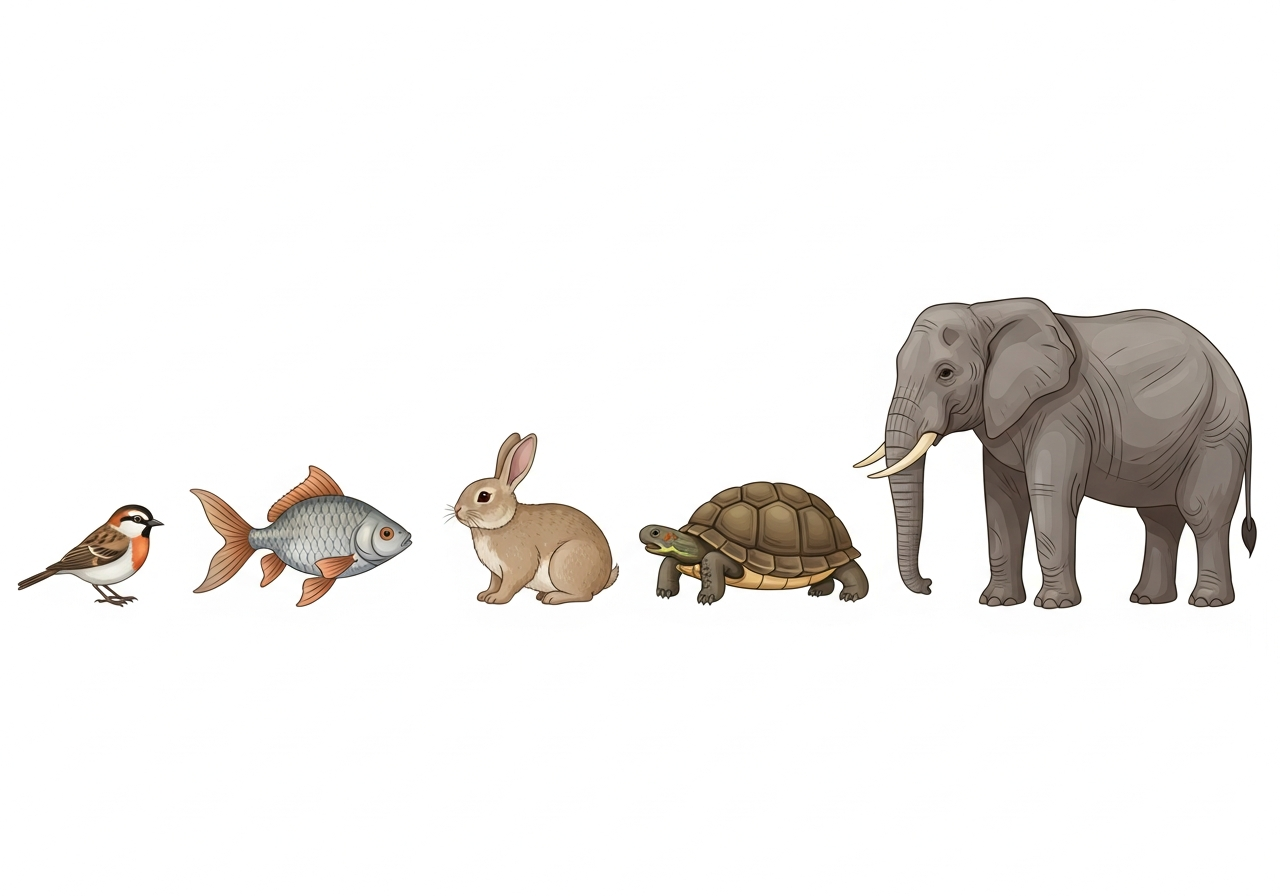
Animal Body Coverings
Different animals have different body coverings. A body covering is what covers the outside of an animal's body.
- Feathers cover birds like swans, penguins, and woodpeckers. Feathers help birds fly and stay warm.
- Fur covers animals like rabbits, koalas, gorillas, and polar bears. Fur keeps animals warm like a cozy coat.
- Scales cover fish and snakes. Scales are small, flat pieces that protect the animal's body.
- Shells cover turtles. A shell is hard and works like a shield to keep the turtle safe.
- Skin covers elephants and toads. Elephant skin is thick and gray. Toad skin is bumpy and rough.
- Spines cover porcupines. Sharp spines stick out to keep porcupines safe.
Animal Shapes and Sizes
You can see that animals come in many shapes and sizes. A giraffe has a very long neck. This helps it reach leaves high up in trees.
A seal has flat flippers. Flippers help seals swim in water. Kangaroos have strong back legs for hopping. Each animal's shape helps it live and find food.
Special Animal Body Parts
Animals have special body parts that help them every day.
- An elephant's trunk helps it grab food from tall trees.
- A hummingbird's beak is long and thin to drink nectar from flowers.
- A squirrel's claws help it grip and climb trees.
- A monkey's tail helps it grab branches and swing.
- A lizard's tongue is sticky and helps it catch bugs.
- Wings help birds and butterflies fly through the air.
Key Terms and Definitions
Observable Characteristics: These are features you can see or feel on an animal, like its shape, size, or body covering.
Body Covering: A body covering is what covers the outside of an animal's body. It can be fur, feathers, scales, skin, or a shell.
Feathers: Feathers are the soft, light coverings on birds. They help birds fly and stay warm.
Fur: Fur is soft hair that covers animals like rabbits and polar bears. It keeps them warm.
Scales: Scales are small, flat, hard pieces that cover fish and snakes. They protect the animal's body.
Shell: A shell is a hard covering on a turtle's back. It works like a shield to keep the turtle safe.
Skin: Skin is the outer covering of animals like elephants and toads. Elephant skin is thick. Toad skin is bumpy.
Spines: Spines are sharp, pointy coverings on a porcupine. They protect the porcupine from danger.
Wings: Wings are body parts that help birds and butterflies fly in the air.
Fins: Fins are flat body parts on fish that help them swim through water.
Flippers: Flippers are wide, flat body parts on seals that help them swim.
Claws: Claws are sharp nails on animals like squirrels that help them grip and climb.
Beak: A beak is the hard mouth part of a bird. A hummingbird has a long, thin beak for drinking nectar.
Trunk: A trunk is the long nose of an elephant. It helps the elephant grab food and pick up things.
Fun Ways to Learn About Animal Features
You can look at animals around you and notice their body coverings. Is your pet covered in fur? Do you see birds with feathers outside?
You can also sort animals by their body coverings. This connects to sorting and grouping by observable properties. Try putting animals with feathers in one group and animals with fur in another group!
What You Already Know
You already know how to use your senses to look at and describe things. This skill helps you notice animal features. You can also compare how plants and animals are different and how they meet their needs.
You may also know about plant features like roots, stems, and leaves. Just like plants have special parts, animals have special features too!
Related Topics and Connections
Learning about animal features connects to many other fun science topics!
- You used observation skills to look at and describe animals using your senses. These skills help you notice body coverings and shapes.
- You can compare plants vs animals to see how they are different and how they meet their needs in different ways.
- You can explore plant features like roots, stems, and leaves, just like you explore animal features.
- You will learn about material properties like color, texture, and hardness just like animal body coverings have different textures!
- You can practice sorting animals into groups by their body coverings and other observable properties.
- You will discover how animals grow and change as they get bigger.
- Next, you will learn about animal classification and how animals are sorted into major groups.
- You will also explore external features like body coverings, limbs, and sensory organs in more detail.
- You will learn about how different animals move using their special body parts like legs, wings, and flippers.
- You will discover how baby animals look like their parents by sharing similar features.
- You will also explore living vs non-living things and what makes animals alive.
- You will connect animal features to physical properties of materials you can observe.