Topic
Movement Types, How different animals moveMy Progress
Pug Score
0%
Getting Started
Let's build your foundation!
Best Streak
0 in a row
Study Points
+0
Overview
Practice
Watch
Read
Quiz
Next Steps
Back to Menu
Topic Progress
Pug Score
0%
Getting Started
"Let's build your foundation!"
Videos Watched
0/0
Best Practice
No score
Read
Not viewed
Best Quiz
No attempts
Best Streak
0 in a row
Study Points
+0
Overview
Practice
Watch
Read
Quiz
Next Steps
Read
Discover How Animals Move!
You will learn how different animals move in their own special ways, using their bodies and legs, wings, or fins to get around.
How Do Animals Move?
Animals move in many different ways. Each animal has a special body that helps it get around. You can see animals moving when you visit a farm, zoo, pond, or park!
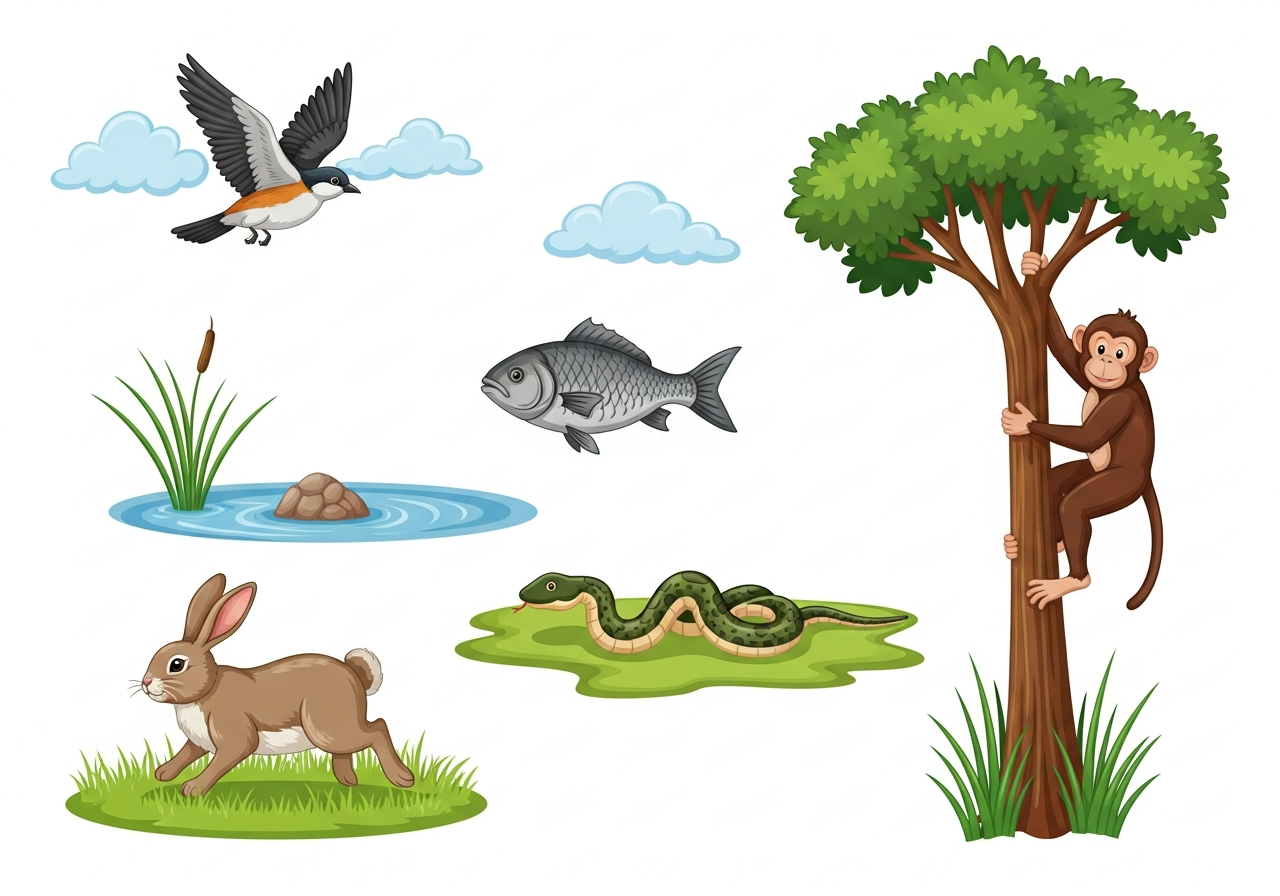
Some animals use legs to walk or run. Others use wings to fly. Some use fins and tails to swim through water. Let's find out how different animals move!
Animals That Fly
Birds use their wings to fly through the air. When you look up at the sky, you can see birds flying from place to place. Hummingbirds and eagles both fly using their wings.
Flying squirrels do something special. They stretch out skin between their legs to glide from tree to tree. They do not flap wings like birds they glide through the air!
Animals That Swim
Fish use their tails and fins to swim through water. When you visit an aquarium, you can watch fish glide smoothly through the water. Salmon swim through rivers and oceans this way.
Octopuses swim using their eight arms and jet propulsion. Eels slither their long bodies from side to side to move through water. Sharks also swim through the ocean using their powerful bodies.
Animals That Hop and Jump
Rabbits use their strong back legs to hop along the ground. Kangaroos also use powerful back legs to hop and jump quickly across open spaces.
Grasshoppers use their strong back legs to jump very high and far. You might see grasshoppers jumping from plant to plant in a garden or meadow!

Animals That Walk, Run, and Gallop
Many animals use legs to walk and run. Turtles crawl slowly on four legs, putting one foot in front of the other. Deer run quickly on four legs to find food and stay safe.
Horses gallop using their four strong legs. When a horse gallops, all four legs leave the ground at once! Ants walk using their six legs across many different surfaces.
Scorpions crawl using their eight legs to move across the ground. Crabs walk sideways with their legs pointing out from their bodies you can see this at the beach!
Animals That Slither, Wiggle, and Crawl
Snakes do not have legs. They slither by moving their long bodies across the ground using their muscles. You might see snakes slithering through grass, rocks, or sand.
Worms wiggle by stretching and squeezing their bodies to push forward through soil. Moles use their special front paws to dig and burrow underground.
Animals That Climb and Waddle
Monkeys climb trees by gripping branches with their hands and feet. Chimpanzees swing from branch to branch using their long arms. This helps them travel through forests quickly and safely.
Penguins waddle from side to side when they walk on land. Their round bodies and short legs make them rock back and forth as they move. Ducks also waddle when they walk!
Key Terms and Definitions
Flying: Flying means moving through the air using wings. You can see birds and butterflies flying when you go outside.
Swimming: Swimming means moving through water using fins, tails, or arms. Fish and sharks swim through the water to get around.
Hopping: Hopping means jumping forward using strong back legs. Rabbits and kangaroos hop to move from place to place.
Jumping: Jumping means pushing off the ground with strong legs to go up or forward. Grasshoppers jump very high using their back legs.
Walking: Walking means moving on legs, one step at a time. Turtles, ants, and scorpions all walk to get around.
Running: Running means moving on legs very quickly. Deer run fast on four legs to escape danger.
Galloping: Galloping is a very fast running movement where all four legs leave the ground at once. Horses gallop across open fields.
Slithering: Slithering means moving by sliding the body along the ground without legs. Snakes and eels slither to get around.
Wiggling: Wiggling means moving by stretching and squeezing the body back and forth. Worms wiggle through soil to move forward.
Crawling: Crawling means moving slowly on legs close to the ground. Turtles and scorpions crawl when they move.
Climbing: Climbing means moving up by gripping with hands and feet. Monkeys and chimpanzees climb trees in the forest.
Waddling: Waddling means walking by rocking from side to side. Penguins and ducks waddle when they walk on land.
Gliding: Gliding means floating through the air without flapping wings. Flying squirrels glide from tree to tree using special skin on their bodies.
Burrowing: Burrowing means digging tunnels underground to live and find food. Moles burrow underground using their strong front paws.
Wings: Wings are body parts that help animals fly or glide through the air. Birds and butterflies use wings to fly.
Fins: Fins are flat body parts on fish that help them steer and balance in water. Fish use fins and tails to swim.
Legs: Legs are body parts that help animals walk, run, hop, and jump. Ants have six legs, and spiders have eight legs.
Fun Ways to Learn About Animal Movement
You can act out how different animals move! Try hopping like a rabbit, waddling like a penguin, or slithering like a snake on the floor. Moving your body helps you remember how each animal gets around.
Next time you visit a zoo, farm, pond, or beach, watch how the animals move. See if you can name the type of movement each animal uses. You might spot animals flying, swimming, crawling, or waddling!
You can also watch nature shows to see animals like chimpanzees swinging through trees or horses galloping across fields. Every animal has its own special way of moving that helps it survive in its home.
What You Already Know
You already know that animals are living things. You know that animals have different body parts like legs, wings, and fins. This helps you understand why each animal moves in its own special way.
As you learn more about animals, you will see how the way an animal moves helps it find food, stay safe, and live in its habitat. Every movement type is a special skill that helps the animal survive!
Related Topics and Connections
Learning how animals move is part of a bigger topic about Animals. As you explore the Animals chapter, you will discover many amazing things about how animals live, eat, and survive in their homes.
Understanding animal movement helps you learn about animal body parts and habitats too. When you know how an animal moves, you can understand why it has the body parts it does like a fish's fins or a bird's wings.
Keep exploring the world of animals to discover even more exciting science facts about the living things around you!