TOPIC

Natural Selection, Survival and reproduction

MY PROGRESS

Pug Score

0%

Getting Started

"Let's build your foundation!"

Best Streak

0 in a row

Study Points

+0

Overview

Practice

Watch

Read

Quiz

Next Steps


Get Started

Get unlimited access to all videos, practice problems, and study tools.

Unlimited practice
Full videos

BACK TO MENU

Topic Progress

Pug Score

0%

Getting Started

"Let's build your foundation!"

Videos Watched

0/0

Best Practice

No score

Read

Not viewed

Best Quiz

No attempts


Best Streak

0 in a row

Study Points

+0

Overview

Practice

Watch

Read

Quiz

Next Steps

Read

Natural Selection: How Survival and Reproduction Shape Life on Earth

This topic teaches students how natural selection operates through survival and reproduction, explaining how favorable inherited traits become more common in populations over time.

What Is Natural Selection?

Natural selection is the process by which organisms with traits better suited to their environment survive and reproduce more successfully than others. It is the primary mechanism driving evolutionary change in populations over many generations. Students exploring Natural Selection, Adaptation and Survival will find that this topic builds directly on those foundational ideas.

Three essential conditions must be present for natural selection to occur: heritable variation among individuals, a link between traits and survival or reproduction, and the passing of those traits to offspring through inheritance.
Survival, Reproduction, and Fitness

In evolutionary biology, fitness refers specifically to an organism's ability to survive and reproduce in its environment not physical strength or size. A faster cheetah that catches more prey and raises more offspring is considered more fit than a slower one, regardless of other characteristics.

Organisms that survive longer have more opportunities to reproduce, passing their favorable traits to more offspring. Over many generations, these advantageous traits become more common in the population, gradually shifting the population's characteristics.

Overproduction of offspring is a key driver of natural selection. Most species produce more offspring than the environment can support, creating competition for limited resources such as food, water, and shelter. This competition means only the most well-adapted individuals tend to survive and reproduce.

Adaptations and Selective Pressures

An adaptation is an inherited trait that increases an organism's chance of surviving and reproducing in its environment. Adaptations are shaped by natural selection over many generations and are encoded in an organism's genes, not acquired during its lifetime.

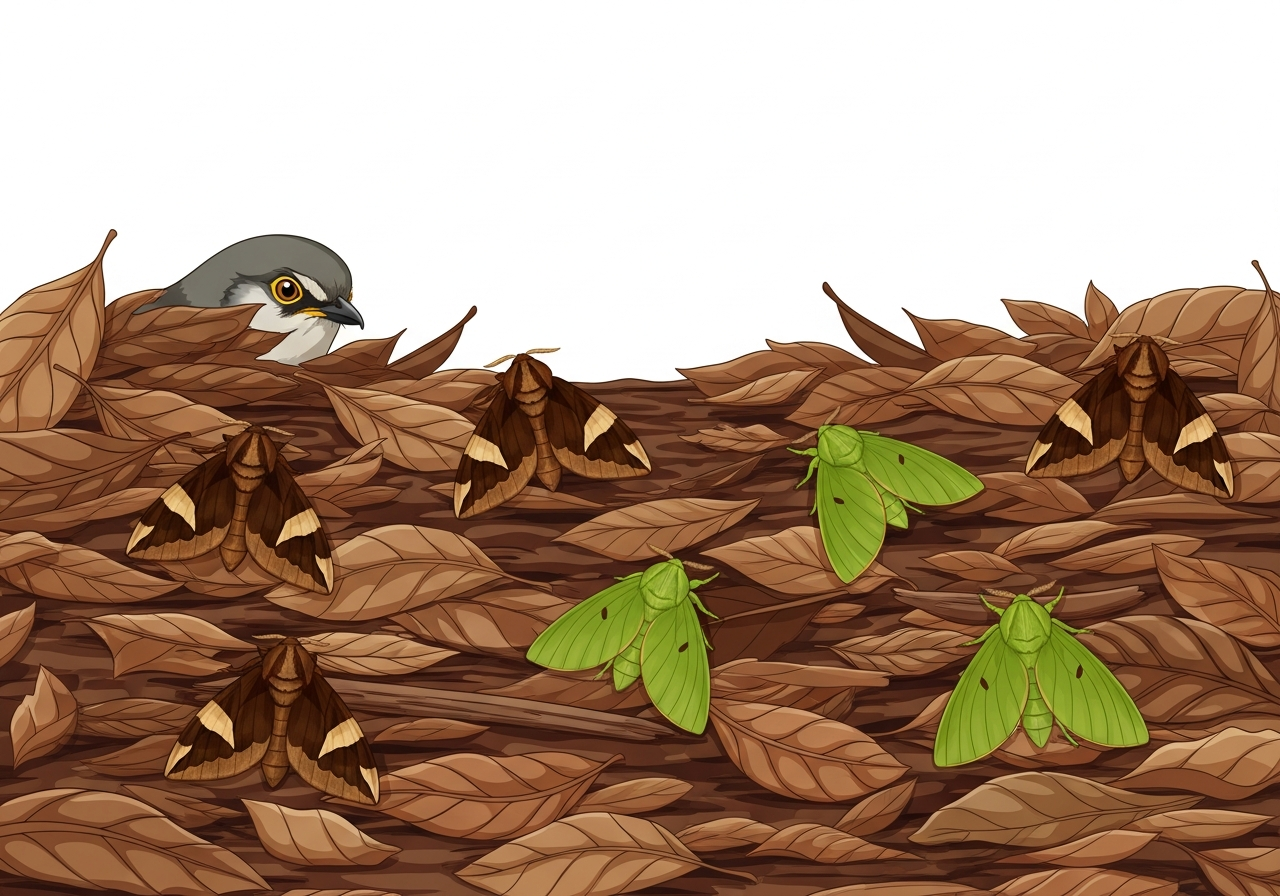
Selective pressures are environmental factors that determine which traits are advantageous. Common selective pressures include predation, disease, climate, and competition for food. For example, camouflage coloring in moths helps them avoid predatory birds, making that trait more likely to be passed on. Understanding Adaptation and Environmental Pressures deepens this concept further.

Predation acts as a powerful selective pressure by removing organisms with traits that make them easier to catch, leaving better-adapted individuals to reproduce. Similarly, antibiotic resistance in bacteria demonstrates natural selection occurring rapidly resistant bacteria survive treatment and reproduce, spreading resistance traits through the population.

Variation and Heredity

Genetic variation provides the raw material for natural selection. Without differences among individuals, there would be nothing for the environment to select. Learners can explore the origins of this variation through Genetic Variation and Sources of Diversity.

Traits are passed from parents to offspring through genes during reproduction. Only inherited genetic traits can be selected by natural selection characteristics acquired during an individual's lifetime cannot be passed on. This is why individual organisms cannot evolve; only populations change over many generations.

Key Terms and Definitions

Natural Selection: The process where organisms with traits better suited to their environment survive and reproduce more successfully, causing those traits to become more common over generations.

Fitness: An organism's ability to survive and reproduce in its specific environment. Fitness is always measured relative to how well an organism passes its genes to the next generation.

Adaptation: An inherited trait shaped by natural selection that improves an organism's survival or reproductive success in its environment. Example: thick fur in cold climates.

Variation: Differences in traits among individuals within a population, providing the raw material for natural selection to act upon.

Heredity: The passing of genetic traits from parents to offspring through reproduction, ensuring favorable traits can spread through a population over generations.

Selective Pressure: Any environmental factor such as predators, disease, drought, or climate that influences which traits are advantageous for survival and reproduction.

Overproduction of Offspring: The tendency of species to produce more offspring than the environment can support, creating competition that drives natural selection.

Survival of the Fittest: A phrase describing how organisms best suited to their environment are most likely to survive and reproduce fitness refers to environmental suitability, not physical strength.

Inherited Trait: A characteristic encoded in an organism's genes and passed from parent to offspring. Only inherited traits can be acted upon by natural selection.

Population: A group of individuals of the same species living in the same area, within which natural selection acts over many generations.

Applying Natural Selection Concepts

Students can apply these concepts by analyzing real-world examples such as the peppered moth, antibiotic-resistant bacteria, and giraffe neck length variation. In each case, learners should identify the variation present, the selective pressure acting on the population, which traits are favored, and how those traits spread through reproduction.

Connecting natural selection to Ecosystems, Sustainability, and Conservation Strategies shows how evolutionary processes influence biodiversity and ecosystem health. Understanding how populations change also prepares students for Population Studies: Growth and Regulation.

Building on Prior Knowledge

This topic connects to several foundational concepts. Evidence of Change: Fossil Record and Similarities and Fossil Record and Historical Evidence provide evidence that populations change over time. Taxonomy Systems: Kingdoms and Classification Criteria and Species Diversity and Biodiversity Measurements establish the framework for understanding species differences.

Knowledge of Biodiversity and Species Relationships and System Interactions: Energy and Matter Flow also supports understanding of how organisms interact within ecosystems and compete for resources.

Related Topics and Connections

Natural selection connects to a broad network of biological concepts. Genetic Variation and Sources of Diversity explains where the variation that fuels natural selection originates. Adaptation and Environmental Pressures examines how specific environmental conditions shape particular adaptations over time.

Comparative Biology: Anatomical and Genetic Evidence provides tools for identifying evolutionary relationships between species. Fossil Record and Historical Evidence documents how populations have changed across geological time, supporting the theory of natural selection.

At the ecosystem level, Food Webs and Energy Transfer and Matter Cycles and Biogeochemical Cycles show how organisms interact within systems shaped by evolutionary pressures. Environmental Change and Ecosystem Alterations demonstrates how changing conditions create new selective pressures. Finally, Ecosystems, Sustainability, and Conservation Strategies applies evolutionary thinking to protecting biodiversity today.