TOPIC
Environmental Tech, Green solutionsMY PROGRESS
Pug Score
0%
Getting Started
"Let's build your foundation!"
Best Streak
0 in a row
Study Points
+0
Overview
Practice
Watch
Read
Quiz
Next Steps
Get Started
Get unlimited access to all videos, practice problems, and study tools.
BACK TO MENU
Topic Progress
Pug Score
0%
Getting Started
"Let's build your foundation!"
Videos Watched
0/0
Best Practice
No score
Read
Not viewed
Best Quiz
No attempts
Best Streak
0 in a row
Study Points
+0
Overview
Practice
Watch
Read
Quiz
Next Steps
Read
Environmental Technology & Green Solutions: Building a Sustainable Future
Environmental technology and green solutions encompass the scientific tools, systems, and practices designed to protect natural ecosystems while meeting human needs sustainably. Students explore how innovations like solar panels, electric vehicles, and bioremediation contribute to a healthier planet.
What Is Environmental Technology?
Environmental technology refers to the application of science and engineering to develop solutions that reduce human impact on the natural world. These green solutions address challenges such as pollution, resource depletion, and climate change. Students exploring this topic build on foundational knowledge from Climate Change and Human Impact and Conservation and Environmental Protection.
Green solutions span many fields, from energy production to waste management, water treatment, and sustainable building design. Understanding these applications prepares learners for advanced study in Future Tech and Emerging Technologies and Modern Technology and Current Innovations.
Renewable Energy Sources
Renewable energy comes from naturally replenished sources that do not run out over time. The most common types include solar, wind, geothermal, hydroelectric, and wave energy. This connects directly to the study of Generation Methods and Different Power Sources and Energy Resources, Renewable and Non-Renewable.
Solar panels use photovoltaic cells to convert sunlight directly into usable electrical energy. Wind turbines capture kinetic energy from moving air through spinning blades connected to generators. Geothermal energy taps into Earth's internal heat, which is available continuously day and night, making it one of the most reliable renewable sources. Wave energy converters are installed along coastal shorelines to harness the kinetic energy of ocean waves and transform it into electricity.
These technologies reduce dependence on fossil fuels, which release greenhouse gases when burned and contribute to climate change. Learners who have studied Energy Efficiency and Power Consumption will recognize how using less energy and using cleaner energy sources work together as complementary strategies.
Waste Management and the Circular Economy
Effective waste management is a cornerstone of green solutions. The principle of reduce, reuse, recycle encourages people to minimize waste by consuming less and repurposing existing materials before discarding them.
Composting uses natural decomposition by microorganisms to turn organic waste such as food scraps and yard trimmings into nutrient-rich soil material. Upcycling goes beyond recycling by transforming waste into something of greater value rather than simply reprocessing it. Recycling programs divert materials like paper, glass, aluminum, and plastic from landfills and process them into new products, reducing the need for mining new raw materials.
A landfill is a site where unrecycled solid waste is buried. Landfills generate methane gas as organic material decomposes, contributing to greenhouse gas emissions. A circular economy aims to eliminate waste entirely by keeping materials in continuous use through repair, reuse, remanufacturing, and recycling. Biodegradable materials break down naturally through the action of living organisms, reducing long-term environmental pollution. In contrast, single-use plastics take hundreds of years to decompose, polluting oceans and harming wildlife.
Green Building and Energy Efficiency
Green buildings incorporate technologies and design features that reduce energy and water consumption. Green roofs are covered with vegetation that absorbs rainwater, reduces stormwater runoff, and lowers building temperatures by combating the urban heat island effect. Proper insulation installed within walls and roofs reduces heat transfer, keeping buildings comfortable with less energy use.
Smart thermostats automatically adjust temperature settings based on household patterns, reducing energy waste when people are away or asleep. LED light bulbs use up to 75% less electricity than traditional incandescent bulbs and last significantly longer, reducing both energy consumption and waste. Rain barrels collect rainwater from rooftops for later use in garden irrigation, reducing demand on municipal water supplies. These innovations connect to the broader study of Emerging Technologies and Current Developments.
Water Conservation and Purification
Access to clean water is a critical environmental challenge. Water purification technology removes harmful contaminants, bacteria, and pollutants to make water safe for drinking and daily use. Water treatment plants clean wastewater by removing harmful pollutants before releasing it back into rivers, lakes, or oceans, protecting aquatic ecosystems and public health.
Desalination plants use processes like reverse osmosis or distillation to remove salt from seawater, producing fresh drinking water for water-scarce coastal regions. Rainwater harvesting systems collect and store rain from rooftops in tanks for uses such as irrigation and toilet flushing, reducing pressure on groundwater sources. Wetlands act as natural water filtration systems, with plants, microorganisms, and soil naturally absorbing and breaking down pollutants from water flowing through them.
Sustainable Agriculture and Bioremediation
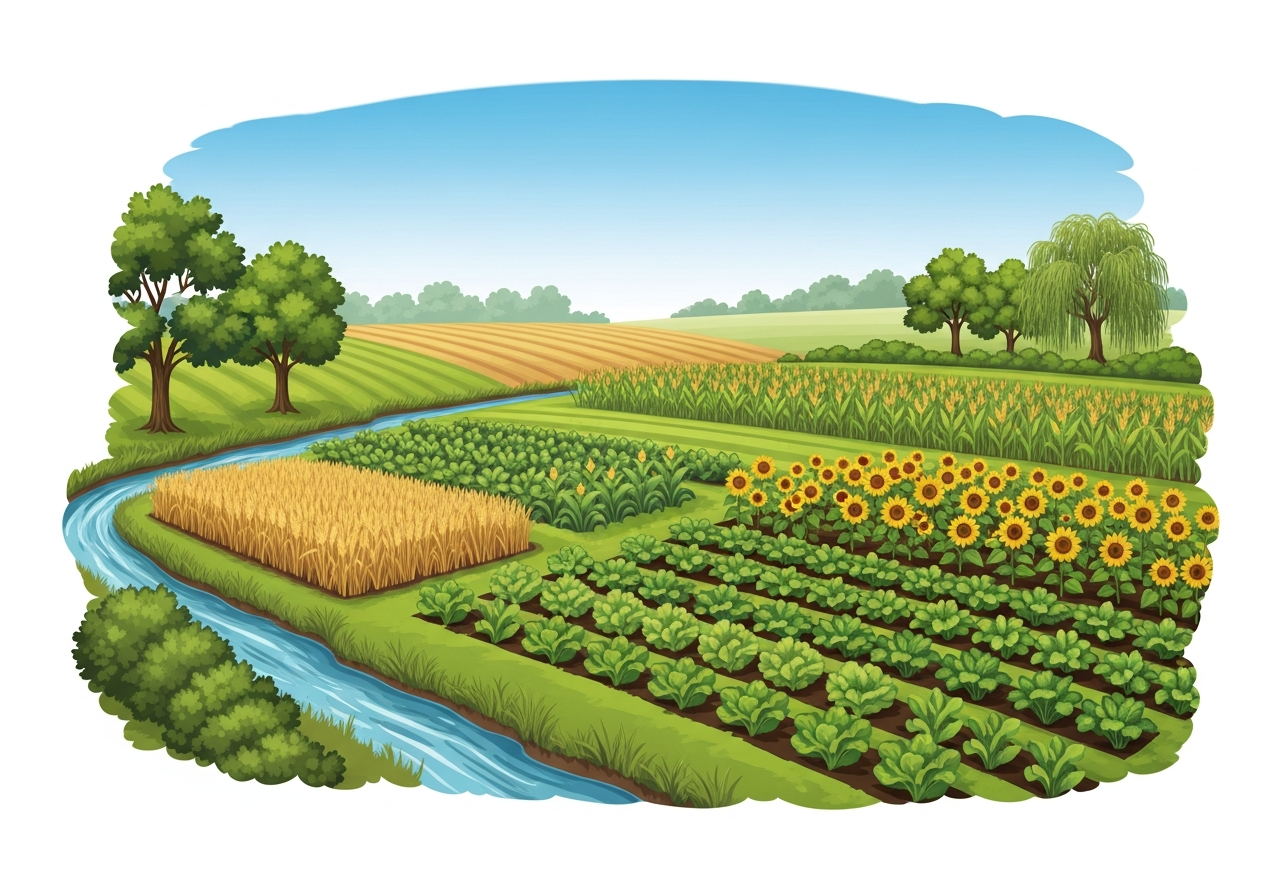
Sustainable agriculture uses farming methods that protect soil health, conserve water, and preserve the environment for future generations. Practices include crop rotation, organic fertilizers, and reduced chemical use. Heavy pesticide use, deforestation for farmland, and monoculture all damage ecosystems and deplete soil nutrients.
Bioremediation is an environmental technology that uses living organisms such as microorganisms, fungi, or plants to break down or absorb environmental pollutants naturally. It is an eco-friendly cleanup method that avoids adding further contamination. Reforestation involves planting trees to restore forests, which absorb carbon dioxide and release oxygen through photosynthesis, acting as carbon sinks that help combat climate change. These practices connect to the study of Environmental Science, Resource Management, and Sustainable Practices and Ecological Wisdom and Sustainable Practices.
Protecting Biodiversity and Natural Systems
Biodiversity refers to the variety of species within an ecosystem. Diverse species create stable and resilient natural ecological communities that can recover from disturbances. Fewer species make ecosystems more vulnerable to collapse.
The ozone layer in the stratosphere absorbs most of the Sun's harmful ultraviolet radiation, protecting living organisms from DNA damage and health problems. Satellite imaging systems track changes in forest coverage from space, helping scientists monitor deforestation and environmental damage over time. A catalytic converter in vehicles uses chemical reactions to transform harmful exhaust gases like carbon monoxide into less toxic substances. These concepts build on knowledge from Natural Systems and Environmental Relationships and connect to Ecosystems, Sustainability, and Conservation Strategies.
Key Terms & Definitions
Renewable Energy: Energy that comes from naturally replenished sources such as sunlight, wind, and water, which do not run out over time.
Carbon Footprint: A measure of the total greenhouse gases, especially carbon dioxide, produced by human activities such as driving, using electricity, and manufacturing goods.
Photovoltaic Cell: A device that converts sunlight into electricity through the photoelectric effect; the basic unit of a solar panel.
Biomass: Organic material derived from plants and animals that can be used as fuel to generate energy.
Energy Efficiency: Achieving the same useful outcome while using less energy, thereby reducing environmental impact and lowering costs.
Composting: A natural process that uses decomposition by microorganisms to turn organic waste such as food scraps into nutrient-rich soil material useful for gardening and farming.
Upcycling: The process of transforming waste materials into something of greater value or quality, going beyond standard recycling.
Landfill: A site where unrecycled solid waste is buried underground; landfills can generate methane gas and contribute to greenhouse gas emissions.
Biodegradable: Describes materials that can be broken down naturally by living organisms such as bacteria and fungi, reducing long-term environmental pollution.
Circular Economy: An economic model that aims to eliminate waste entirely by keeping materials in continuous use through reuse, repair, remanufacturing, and recycling.
Bioremediation: An environmental technology that uses living organisms such as microorganisms, fungi, or plants to clean up polluted environments by breaking down or absorbing contaminants.
Sustainable Agriculture: Farming methods that meet current food needs while protecting soil health, conserving water, and preserving the environment for future generations.
Geothermal Energy: Energy derived from the Earth's internal heat, available continuously regardless of weather, making it a reliable renewable energy source.
Wave Energy Converters: Devices installed along coastal shorelines that capture the kinetic energy of ocean waves and convert it into electricity.
Green Roof: A building roof covered with vegetation that absorbs rainwater, reduces stormwater runoff, and lowers building temperatures by combating the urban heat island effect.
Desalination: The process of removing salt from seawater using methods like reverse osmosis or distillation to produce fresh drinking water.
Reforestation: The process of planting trees to restore forests, which absorb carbon dioxide and release oxygen, helping to combat climate change.
Biodiversity: The variety of different species of plants, animals, and other organisms within an ecosystem, which contributes to ecological stability and resilience.
Ozone Layer: A region of Earth's stratosphere that absorbs most of the Sun's harmful ultraviolet radiation, protecting living organisms from DNA damage and health problems.
Catalytic Converter: A device in vehicle exhaust systems that uses chemical reactions to transform harmful gases like carbon monoxide into less toxic substances.
Applying Green Technology Concepts
Students can deepen their understanding by analyzing real-world examples of green technology in their communities. Identifying which renewable energy sources are used locally, examining product labels for biodegradable or recycled content, and calculating a simple carbon footprint are all practical applications of these concepts.
Learners can also explore how Materials Science, Properties and Applications, and Technology informs the development of new green materials, and how Design Process and Advanced Problem-Solving guides engineers in creating sustainable solutions. Connecting these ideas to Systems Thinking and Integrated Solutions helps students see how individual technologies work together as part of a larger environmental strategy.
Building on Prior Knowledge
This topic draws on several foundational areas of study. Knowledge of Energy Efficiency and Power Consumption helps students understand why green technologies are designed to use less energy. Understanding Climate Change and Human Impact provides context for why reducing carbon footprints and transitioning to renewable energy is urgent.
Familiarity with Environmental Science, Resource Management, and Sustainable Practices and Ecological Wisdom and Sustainable Practices gives students the ecological framework needed to evaluate green solutions critically. Knowledge of Natural Systems and Environmental Relationships and Conservation and Environmental Protection rounds out the foundational understanding required for this topic.
Related Topics & Connections
This topic connects to a broad network of related scientific concepts. Environmental Change and Ecosystem Alterations and Human Impact and Anthropogenic Effects examine the problems that green technology is designed to solve. Future Scenarios and Climate Predictions explores what may happen if green solutions are or are not adopted at scale.
Traditional Practices and Sustainable Methods and Climate Records and Historical Knowledge provide historical context for understanding how humans have managed environmental relationships over time. Ecosystems, Sustainability, and Conservation Strategies deepens understanding of the natural systems that green technology aims to protect.
This topic prepares students for advanced study in Environmental Science, Sustainability, and Conservation Strategies, Global Change and Environmental Effects, Advanced Design and Complex Problem-Solving, and Systems Thinking and Integrated Solutions.