TOPIC

Nutrient Absorption, Transport of nutrients

MY PROGRESS

Pug Score

0%

Best Streak

0 in a row

Study Points

+0

Overview

Practice

Watch

Read

Quiz

Next Steps


Get Started

Get unlimited access to all videos, practice problems, and study tools.

Unlimited practice
Full videos

Back to Menu

Topic Progress

Pug Score

0%

Videos Watched

0/0

Best Practice

No score

Read

Not viewed

Best Quiz

No attempts


Best Streak

0 in a row

Study Points

+0

Read

How Your Body Absorbs and Transports Nutrients

You will learn how your digestive system absorbs nutrients from food and how your circulatory system transports those nutrients to every cell in your body.

What Is Nutrient Absorption?

After your body breaks down food through digestion, it needs to absorb the nutrients and send them to your cells. Nutrient absorption is the process by which digested nutrients pass through the walls of your digestive organs and enter your bloodstream. You can think of it as your body collecting the useful parts of food so every cell gets what it needs.

To understand this topic fully, it helps to know about the Digestion Process: Mechanical and Chemical Breakdown, which explains how food is broken into small molecules before absorption can happen.
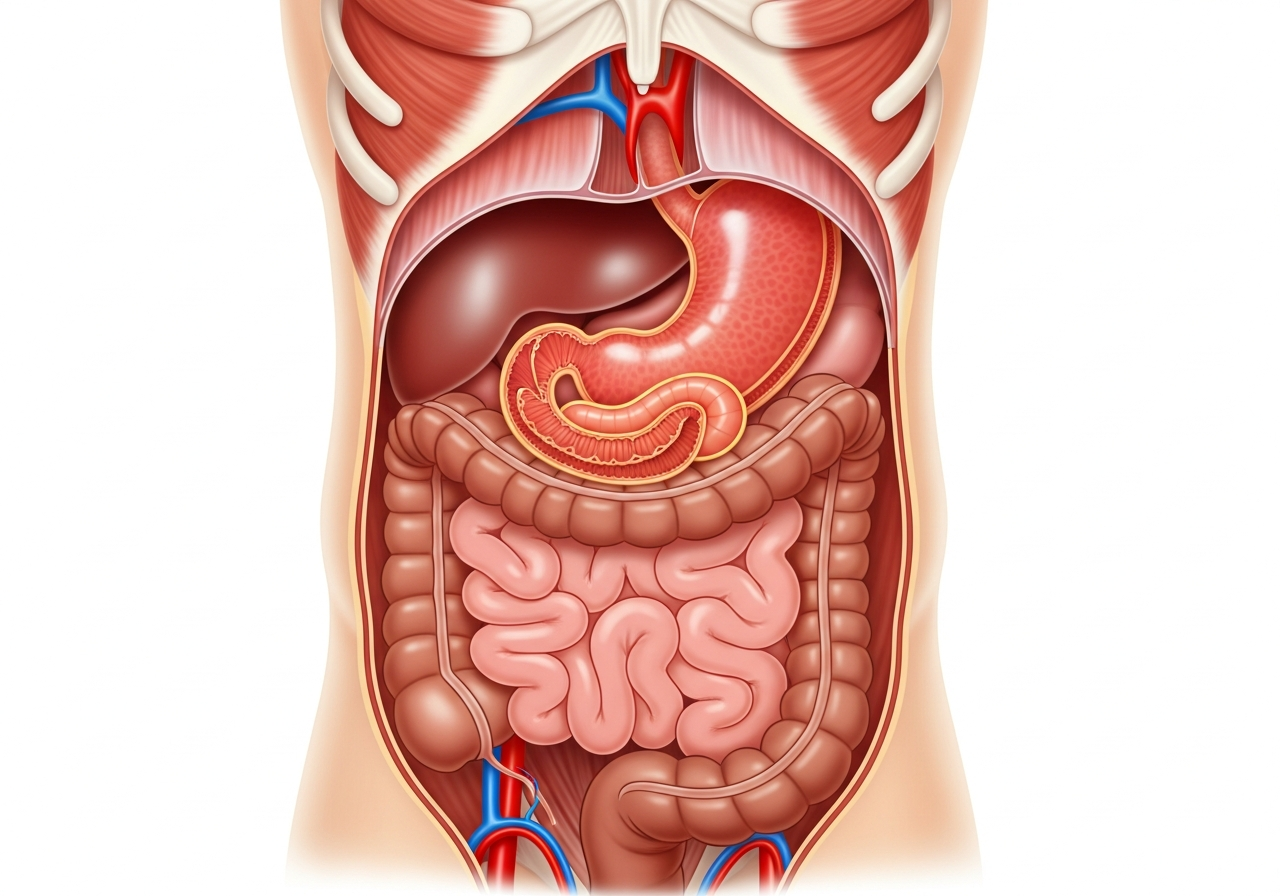
The Small Intestine: Your Body's Main Absorption Site

Most nutrient absorption takes place in your small intestine. Its inner walls are covered with millions of tiny finger-like structures called villi. These villi dramatically increase the surface area available for absorbing nutrients, allowing your body to absorb as many nutrients as possible efficiently.

Inside each villus are tiny blood vessels called capillaries. Nutrients like glucose, amino acids, and vitamins pass through the villus walls and directly into these capillaries, entering your bloodstream. The more surface area the small intestine has, the faster and more completely nutrients can be absorbed.

Special lymphatic vessels inside the villi, called lacteals, absorb fats and fat-soluble vitamins. These are too large to enter capillaries directly, so they travel through the lymphatic system first before joining the bloodstream. This is a key difference from how carbohydrates and proteins are absorbed.

How Nutrients Travel Through Your Body

Once nutrients enter your capillaries, your circulatory system takes over. Blood carries absorbed nutrients including glucose from carbohydrates, amino acids from proteins, and fatty acids from fats to every cell in your body. You can explore this further in Blood and Vessels: Structure and Function and Heart Function: Cardiac Cycle and Circulation.

After leaving the small intestine, nutrient-rich blood travels first to your liver. The liver processes, filters, and regulates nutrients before sending them to the rest of your body. It also stores some nutrients, like glycogen (stored glucose), for later use.

The Large Intestine's Role

After most nutrients are absorbed in the small intestine, the remaining liquid mixture moves into your large intestine. The large intestine's main job is to absorb water from this leftover mixture, keeping your body hydrated and turning liquid waste into solid waste (feces) that leaves your body.

Food that cannot be digested like dietary fiber passes through the large intestine and is eventually eliminated as waste. The large intestine does not absorb proteins, sugars, or fats; those are absorbed much earlier in the small intestine.

Key Organs That Support Digestion and Absorption

Several organs work together to make nutrient absorption possible. The stomach uses acid and muscle contractions to break food into a thick liquid called chyme. The pancreas releases powerful digestive enzymes into the small intestine to break down carbohydrates, proteins, and fats. The liver produces bile, which is stored in the gallbladder and released into the small intestine to help digest fats.

Wave-like muscle contractions called peristalsis push food through the entire digestive tract, from the esophagus all the way to the large intestine. Without peristalsis, food could not move through your digestive system efficiently.

Types of Nutrients and What They Do

Your body needs different nutrients for different jobs. Here is a quick overview:

NutrientBroken Down IntoMain Job in Your Body
CarbohydratesGlucose (simple sugars)Quickest source of energy for your cells
ProteinsAmino acidsBuild and repair muscles and tissues
FatsFatty acids and glycerolStore energy, protect organs, absorb fat-soluble vitamins
VitaminsAbsorbed as-isSupport chemical processes like immunity and healing
WaterN/ADissolves nutrients and moves food through the tract

Key Terms & Definitions

Nutrient Absorption: The process by which digested nutrients pass through the walls of your small intestine and enter your bloodstream so your cells can use them.

Villi: Tiny finger-like projections lining the inside of your small intestine that dramatically increase the surface area available for absorbing nutrients into the blood.

Capillaries: Tiny blood vessels found inside each villus that absorb nutrients like glucose and amino acids and carry them into your bloodstream.

Lacteals: Special lymphatic vessels inside the villi that absorb fats and fat-soluble vitamins, which are too large to enter capillaries directly.

Lymphatic System: A network of vessels that absorbs fats and fat-soluble vitamins from the small intestine and eventually delivers them to the bloodstream.

Small Intestine: The organ where most nutrient absorption takes place; its walls are lined with villi that pass nutrients into the blood.

Large Intestine: The organ that absorbs water from leftover undigested material and turns it into solid waste for elimination.

Peristalsis: Wave-like muscle contractions in the walls of your digestive organs that push food through the digestive tract from the esophagus to the large intestine.

Enzymes: Special proteins that speed up the chemical breakdown of food into smaller nutrients your body can absorb; produced by organs like the pancreas and salivary glands.

Bile: A digestive fluid produced by your liver and stored in the gallbladder that helps break large fat droplets into smaller ones so they can be digested more easily.

Liver: An organ that produces bile, processes absorbed nutrients from the small intestine, and stores some nutrients like glycogen for later use.

Pancreas: An organ that releases powerful digestive enzymes into the small intestine to help break down carbohydrates, proteins, and fats.

Gallbladder: An organ that stores bile made by the liver and releases it into the small intestine when you eat fatty foods.

Chyme: The thick, semi-liquid mixture that forms when your stomach uses acid and muscle contractions to break down food before it moves into the small intestine.

Carbohydrates: A nutrient found in foods like bread, rice, and fruit that is broken down into glucose your body's quickest and most immediate source of energy.

Proteins: A nutrient found in meat, eggs, and beans that is broken down into amino acids used to build and repair your muscles and body tissues.

Fats: A nutrient found in oils, nuts, and dairy that is broken down into fatty acids and glycerol; fats store long-term energy, protect organs, and help absorb certain vitamins.

Vitamins: Nutrients found in fruits and vegetables that support important chemical processes in your body, such as fighting illness and healing wounds, even though your body only needs them in small amounts.

Glucose: A simple sugar that carbohydrates are broken down into; it is your body cells' main and quickest fuel source for energy.

Amino Acids: The small building-block molecules that proteins are broken down into during digestion; your body uses them to build and repair tissues.

Mechanical Digestion: The physical breaking apart of food through actions like chewing in the mouth and churning in the stomach.

Chemical Digestion: The use of enzymes, acids, and bile to chemically break food molecules into smaller nutrients your body can absorb.

Esophagus: The muscular tube that connects your mouth to your stomach and uses peristalsis to push food downward.

Nutrient: Any substance in food such as carbohydrates, proteins, fats, vitamins, minerals, and water that your body uses for energy, growth, and repair.

Practice What You Know

You can strengthen your understanding by tracing the journey of a single nutrient like glucose from a piece of bread all the way from your mouth to a muscle cell. Think about which organ breaks it down, where it is absorbed, and how it travels through your System Integration: Connection Between Systems.

You can also compare how fats are absorbed differently from carbohydrates and proteins. Remember: fats enter the lymphatic system through lacteals, while glucose and amino acids go directly into capillaries. This distinction is an important concept you will encounter in practice questions.

Building on What You Already Know

Before exploring nutrient absorption, you should be familiar with how your body processes information and responds to its environment. Your study of Sensory Systems: Five Senses Structure and Function showed you how your body detects the world around it, and Brain Processing: Neural Signals and Responses explained how your nervous system coordinates responses. These systems work alongside your digestive system to regulate hunger, digestion, and nutrient use.

You also need a solid understanding of the Digestion Process: Mechanical and Chemical Breakdown, which explains how food is physically and chemically broken down before absorption begins. Understanding Cells to Systems: Hierarchical Organization of Life also helps you see how individual cells depend on nutrients delivered by larger body systems.

Related Topics & Connections

Nutrient absorption connects directly to many other important science topics. Once nutrients enter your blood, the Blood and Vessels: Structure and Function topic explains the network of vessels that carries them, and Heart Function: Cardiac Cycle and Circulation shows you how your heart pumps that nutrient-rich blood throughout your body.

Your cells also need oxygen to use those nutrients for energy, which connects to Gas Exchange: Breathing and Cellular Respiration. All of these systems work together, as you will discover in System Integration: Connection Between Systems.

The chemistry of how nutrients dissolve and move through fluids connects to Solution Properties: Concentration and Solubility and Mixtures: Heterogeneous and Homogeneous. Nutrients also play a role in larger ecosystems, which you will explore in Energy Flow: Food Webs and Energy Pyramids and System Interactions: Biotic and Abiotic Factors.

This topic prepares you for more advanced concepts about how cells actually use the nutrients they receive. You will explore this in Cell Functions: Transport and Energy Production and Cell Components: Organelles and Functions, where you will learn how organelles inside your cells process nutrients to produce energy and build new structures.