TOPIC
Rotation Effects, Day/night cycleMY PROGRESS
Pug Score
0%
Getting Started
"Let's build your foundation!"
Best Streak
0 in a row
Study Points
+0
Overview
Practice
Read
Quiz
Next Steps
Get Started
Get unlimited access to all videos, practice problems, and study tools.
Back to Menu
Topic Progress
Pug Score
0%
Getting Started
"Let's build your foundation!"
Best Practice
No score
Read
Not viewed
Best Quiz
No attempts
Best Streak
0 in a row
Study Points
+0
Overview
Practice
Read
Quiz
Next Steps
Read
Earth's Rotation: Discover How Day and Night Are Created
You will learn how Earth's rotation on its axis causes the day and night cycle, why the Sun appears to move across the sky, and how this 24-hour spin shapes your daily life.
What Is Earth's Rotation?
Earth is always spinning, just like a top. This spinning motion is called rotation. Earth rotates around an imaginary line called its axis, which runs straight through Earth from the North Pole to the South Pole.
You can explore the basics of this motion in Earth's Movement, Rotation and Revolution, which gives you the foundation for understanding everything on this page.
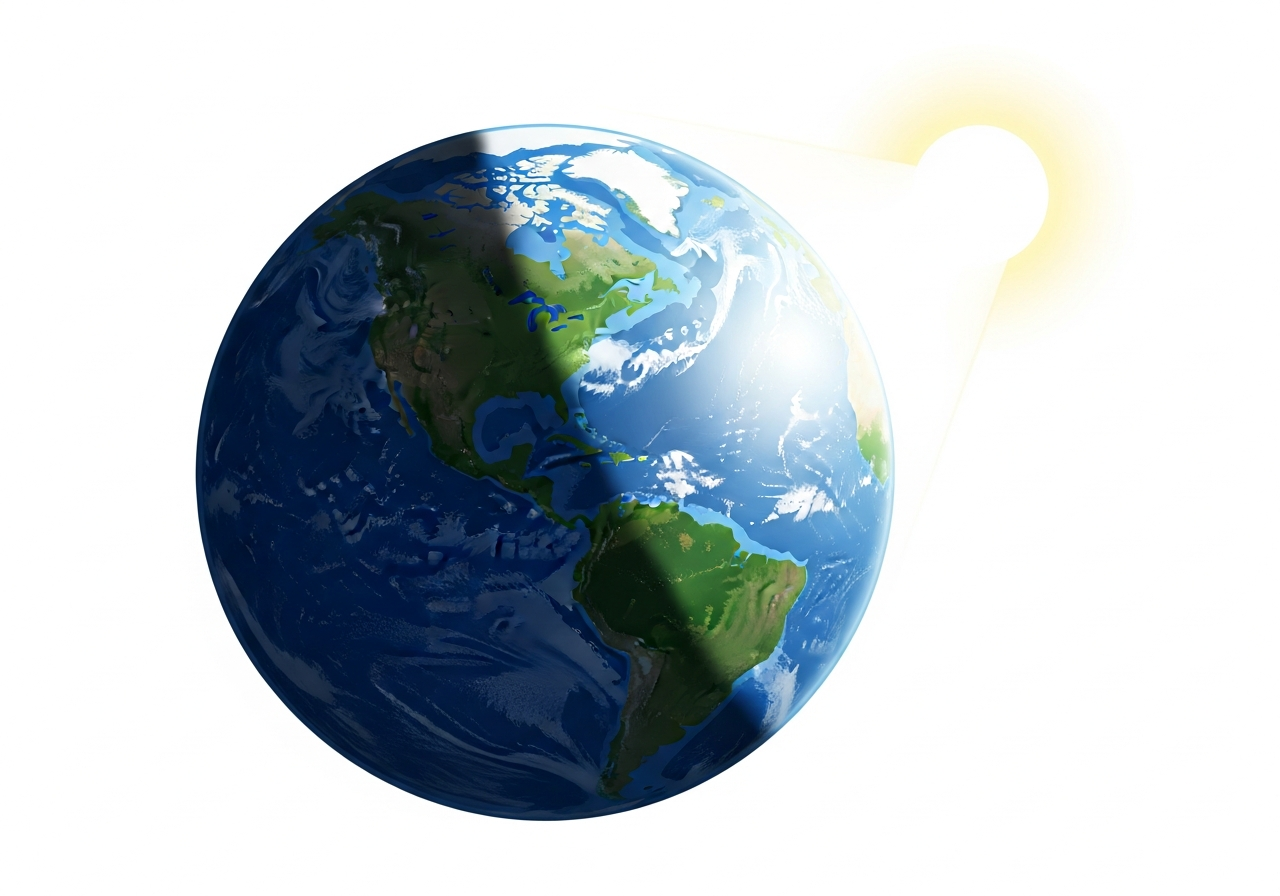
Earth completes one full rotation in about 24 hours. That is why one day lasts 24 hours. Earth rotates from west to east, which looks counterclockwise when you view it from above the North Pole.
How Rotation Creates the Day and Night Cycle
As Earth spins, different parts of its surface take turns facing the Sun. The side facing the Sun receives sunlight and experiences daytime. The side facing away from the Sun is in shadow and experiences nighttime.
When it is daytime where you live, people on the opposite side of Earth are experiencing nighttime. You can learn more about this in Day and Night, Earth's Rotation Effects.
If Earth stopped rotating completely, one side would always have permanent daytime and the other side would always have permanent nighttime. The regular cycle of day and night depends entirely on Earth's continuous spin.
The Sun's Apparent Motion Across the Sky
You might think the Sun moves across the sky each day, but it is actually Earth that is moving. Because Earth rotates eastward, the Sun appears to rise in the east every morning and set in the west every evening. This is called the apparent motion of the Sun.
At noon, the Sun appears highest in the sky, so shadows are at their shortest. At sunrise and sunset, sunlight hits at a low angle, making shadows their longest. As Earth continues to rotate throughout the day, the Sun's apparent position changes and shadows shift direction. This is exactly how a sundial tells time.
Rotation and Time Zones
Because Earth is a sphere that rotates, different places face the Sun at different times. When it is morning where you live, it could be nighttime on the other side of the world. This is why time zones exist different areas of Earth have different local times based on when their part of Earth faces the Sun.
For example, when it is morning in Canada, Japan is on the opposite side of Earth facing away from the Sun, so it is nighttime there.
Key Terms and Definitions
Rotation: Rotation is when Earth spins around its own central axis, like a top spinning in place. One full rotation takes about 24 hours and is what creates the day and night cycle you experience every day.
Axis: Earth's axis is an imaginary line that runs through the center of Earth from the North Pole to the South Pole. Earth spins around this line. It is not a real physical object you cannot see it, but it helps you understand how Earth moves.
Day and Night Cycle: The day and night cycle is the regular pattern of daytime and nighttime that repeats every 24 hours. It is caused by Earth's rotation, which brings different parts of Earth into and out of sunlight.
Orbit: Earth's orbit is the path it follows as it travels around the Sun each year. This is different from rotation orbit is Earth's yearly journey around the Sun, while rotation is Earth's daily spin on its axis.
Revolution: Revolution is Earth's journey all the way around the Sun, which takes about 365 days or one year. Revolution is different from rotation: rotation is spinning on the axis (24 hours), while revolution is orbiting the Sun (365 days).
Hemisphere: A hemisphere is half of Earth. Earth is divided into the Northern Hemisphere and Southern Hemisphere by an imaginary line called the equator. Each hemisphere can experience different amounts of daylight depending on Earth's tilt and position in its orbit.
Sunrise: Sunrise happens when your location on Earth rotates into the sunlit side, and the Sun appears to come up over the eastern horizon. It occurs because Earth is spinning eastward.
Sunset: Sunset happens when your location on Earth rotates away from the Sun toward the dark side, and the Sun appears to sink below the western horizon.
Apparent Motion: Apparent motion means the Sun looks like it is moving across the sky, but it is actually Earth rotating that creates this appearance. The Sun does not travel around Earth Earth's spin makes it seem that way.
Time Zones: Time zones are regions of Earth that share the same local time. They exist because Earth's rotation means different places face the Sun at different times, so the time of day is different in different parts of the world.
Ways to Observe Rotation Effects
You can observe the effects of Earth's rotation in your everyday life. Watch how the Sun's position changes from morning to afternoon to evening. Notice how shadows from trees or buildings shift direction and length throughout the day.
A great model to use is a flashlight and a spinning globe. Shine the flashlight on the globe to represent the Sun, then slowly spin the globe. You will see how one side is lit (daytime) while the other is dark (nighttime) just like the real Earth. A sundial is another tool that directly tracks the Sun's changing apparent position caused by Earth's rotation.
You can also think about what would happen if Earth rotated twice as fast each day and night cycle would last only about 12 hours instead of 24. This shows you just how directly rotation controls the length of your day.
Building on What You Already Know
Before exploring rotation effects, you should be comfortable with the ideas in Earth's Movement, Rotation and Revolution and Day and Night, Earth's Rotation Effects. These topics introduce the basic concepts of how Earth moves.
You should also have some background in Seasonal Changes, Earth's Tilt and Orbit and Climate Zones, Regional Variations, which show you how Earth's movements affect temperature and weather patterns around the world.
Related Topics and Connections
Once you understand rotation and the day/night cycle, you are ready to explore Revolution Effects, Seasonal Changes. While rotation creates day and night, revolution Earth's yearly orbit around the Sun creates the seasons you experience throughout the year.
You will also want to explore Orbital Patterns, Planet and Moon Movements, which shows you how other objects in space move in patterns similar to Earth's rotation and revolution. Connected to this is Celestial Bodies, Planets, Moons, Asteroids, where you learn about all the different objects in our solar system and how they move.
Understanding rotation also connects to Climate Regions, Temperature and Precipitation Patterns, because the amount of sunlight a region receives shaped partly by Earth's rotation and tilt affects its climate.
This topic prepares you for more advanced ideas like Planetary Motion, Orbits and Rotations, where you will study how all planets in our solar system spin and orbit. You will also be ready for Gravity Effects, Gravitational Forces in Space, which explains the force that keeps planets in their orbits and influences all motion in space.