TOPIC
Cultural Practices, Sustainable resource managementMY PROGRESS
Pug Score
0%
Getting Started
"Let's build your foundation!"
Best Streak
0 in a row
Study Points
+0
Overview
Practice
Read
Quiz
Next Steps
Get Started
Get unlimited access to all videos, practice problems, and study tools.
BACK TO MENU
Topic Progress
Pug Score
0%
Getting Started
"Let's build your foundation!"
Best Practice
No score
Read
Not viewed
Best Quiz
No attempts
Best Streak
0 in a row
Study Points
+0
Overview
Practice
Read
Quiz
Next Steps
Read
Traditional Knowledge: How Cultural Practices Protect Our Planet
You will learn how traditional cultural practices help communities manage natural resources sustainably, and how this wisdom passed down through generations connects to modern conservation science.
What Is Traditional Knowledge?
Traditional knowledge is wisdom and practices that communities have developed and passed down through many generations. You can think of it as a living library of lessons about how to live carefully with the natural world. This knowledge comes from thousands of years of close observation of plants, animals, weather, and land not from books or laboratories.
Traditional knowledge is also called Traditional Ecological Knowledge (TEK). It is shared through stories, songs, ceremonies, and hands-on practice. You will find that modern science and traditional knowledge are different but can work powerfully together to protect nature. Learn more about this connection through Indigenous Science and Traditional Ecological Knowledge.
Sustainable Resource Management What Does It Mean?
When you use resources sustainably, you use them carefully so they are still available for people in the future. It means meeting your needs today without stopping future generations from meeting theirs. Traditional communities have practiced this balance for thousands of years.
You can explore how resources are used and their effects on the environment through Resource Use and Effects on the Environment. Understanding Renewable and Non-Renewable Resources also helps you see why sustainable practices matter so much.
Traditional Farming and Land-Care Practices
Traditional farmers around the world developed brilliant methods to keep soil healthy and grow food without harming the land. Here are some key practices you should know:
Crop rotation means growing different crops in the same field each season. Different plants use and return different nutrients, keeping the soil fertile. Intercropping means growing two or more crops together at the same time for example, the famous Three Sisters method used by Native American communities, where corn, beans, and squash are planted together to help each other thrive.
Composting turns fallen leaves and food scraps into rich nutrients for the soil. Terracing means cutting flat steps into hillsides to prevent soil from washing away a process called erosion. Traditional farmers also read natural signs to understand weather patterns, helping them decide the best times to plant and harvest.
Protecting Water, Forests, and Wildlife
Traditional communities developed careful rules to protect forests, rivers, and animals. Many communities plant trees along riverbanks to prevent soil erosion and keep rivers clean. Water harvesting techniques collect rainwater during wet seasons and store it for dry periods using ponds, terraces, and underground systems.
Many communities protect special forest areas called sacred groves patches of forest preserved for spiritual and cultural reasons. Scientists have found that sacred groves often contain rare species and very healthy ecosystems. Some cultures also have a totem animal a special animal that a clan protects and never hunts, which effectively protects that species from overhunting.
Traditional fishing communities use nets with large holes so small and young fish can escape and grow. Hunters follow seasonal rules to allow animals time to raise their young. These practices connect directly to Habitat Protection and Conservation Methods.
Passing Knowledge Down Through Generations
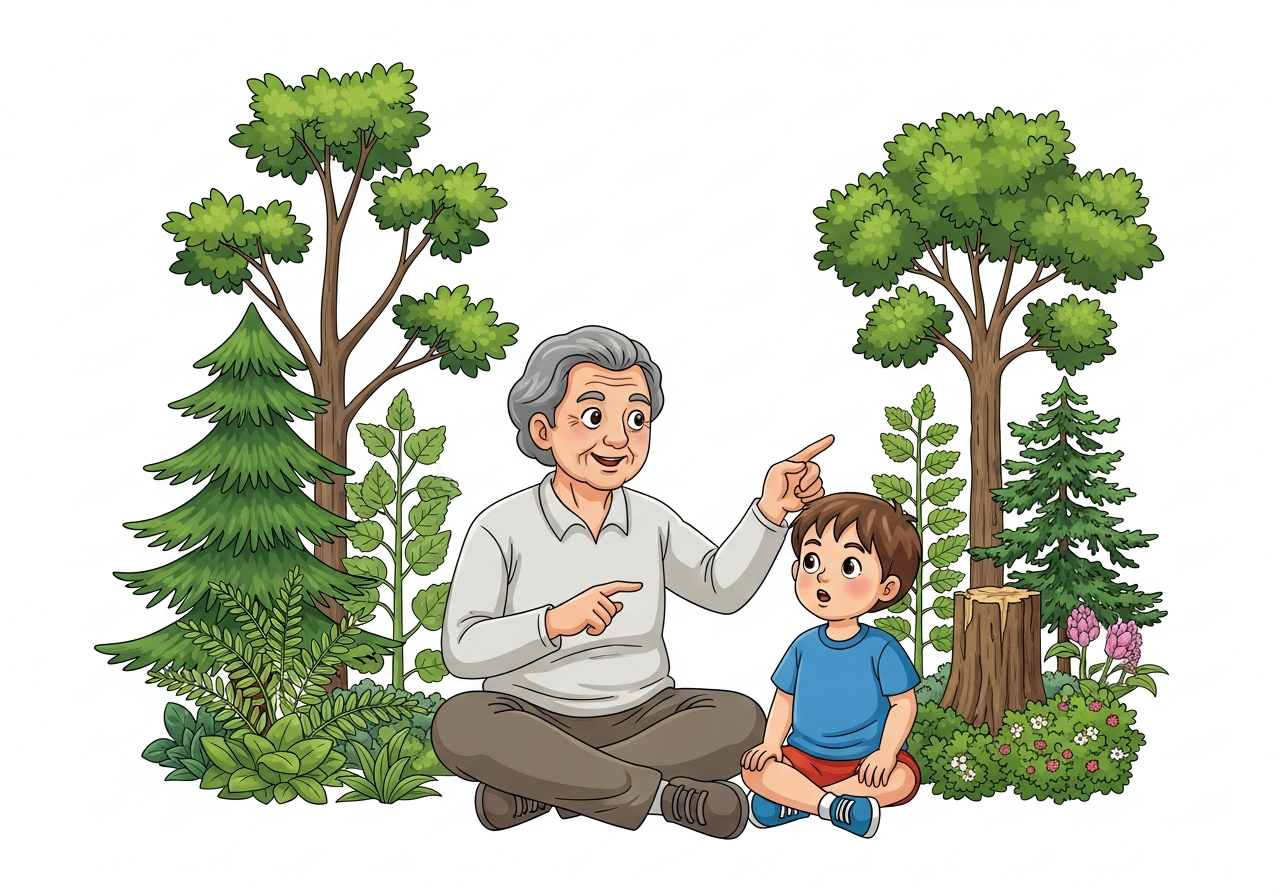
Traditional knowledge is often passed down orally through stories, songs, and spoken conversations between elders and younger community members. Traditional stories teach important ecological lessons in memorable ways, making it easy to pass on rules about respecting nature.
When you learn from elders, you preserve irreplaceable knowledge about local plants, animals, weather, and land management. When this knowledge is lost, it cannot easily be replaced. Protecting traditional knowledge helps communities and scientists develop better strategies for conservation. This connects to your learning about Conservation and Protection Strategies.
Traditional Knowledge and Modern Science Together
Traditional knowledge provides deep, place-based understanding of local ecosystems built over generations. Modern science provides tools to measure, analyze, and share findings widely. When you combine both, you get more complete and effective solutions to environmental problems.
Many important modern medicines were originally identified through traditional plant knowledge. Modern land managers now use traditional controlled burning techniques to prevent large wildfires. You can explore how human actions affect ecosystems through Environmental Science and Human Effects on Ecosystems and Sustainable Practices and Resource Management Strategies.
Key Terms & Definitions
Traditional Knowledge: Wisdom and practices that communities have developed and passed down through many generations through stories, ceremonies, and hands-on experience with the natural world.
Traditional Ecological Knowledge (TEK): The detailed knowledge that Indigenous and local communities have built over generations by carefully observing and interacting with their local environment.
Sustainable: Using resources carefully so they are still available for people in the future taking only what nature can renew.
Sustainable Resource Management: Using natural resources in a way that meets today's needs without preventing future generations from meeting their needs.
Crop Rotation: A traditional farming practice where you grow different crops in the same field each season so the soil can regain its nutrients and stay healthy.
Composting: Recycling organic waste like fallen leaves and food scraps into rich nutrients that feed the soil and help plants grow.
Terracing: Cutting flat steps into hillsides to prevent soil from being washed away by rain a process called erosion.
Pollination: The process by which pollen is moved between flowers, which is essential for plants to reproduce and produce fruit and seeds.
Watershed: An area of land where all the water drains into the same river, lake, or stream. Understanding your watershed helps communities protect their water supply.
Seed Saving: The traditional practice of keeping seeds from your harvest to plant in future seasons, which preserves plant diversity and protects food security.
Reforestation: Planting trees to restore forests that have been cut down or damaged, which helps rebuild ecosystems that provide clean air and habitat for animals.
Natural Pest Control: Using natural methods like companion planting or encouraging helpful insects to keep pests away from crops without using harmful chemicals.
Soil Conservation: Protecting and maintaining healthy, fertile soil so it can continue to grow crops for future generations.
Sustainable Harvest: The practice of taking only as much from nature as it can naturally replace, so resources never run out.
Intercropping: Growing two or more different crops together in the same field at the same time, which improves soil health, reduces pests, and often produces more food.
Three Sisters: A traditional Native American companion planting system where corn, beans, and squash are grown together because they help each other thrive.
Sacred Grove: A protected area of forest that a traditional community preserves for spiritual and cultural reasons, which also functions as a natural wildlife refuge.
Totem Animal: A special animal that a clan in some Indigenous cultures considers their spiritual ancestor and protects from hunting, which helps that species survive.
Water Harvesting: Collecting and storing rainwater during wet seasons for use during dry periods, using traditional methods like ponds, terraces, and underground cisterns.
Controlled Burning: Carefully setting small, managed fires to clear dead vegetation, return nutrients to the soil, and encourage new healthy plant growth a traditional land management technique.
Biodiversity: The variety of different plant and animal species living in an ecosystem. Protecting biodiversity keeps ecosystems strong and balanced.
Reciprocity: The principle of giving back to nature after taking from it by replanting, protecting, or caring for the ecosystem so that natural systems stay healthy.
Oral Tradition: Passing knowledge from one generation to the next through spoken language, including storytelling, songs, ceremonies, and direct teaching.
Practice What You Know
You can practice identifying traditional sustainable practices by looking at everyday examples. Think about how a farmer who rotates crops each season is using traditional knowledge to protect the soil. Consider how a fishing community that uses large-holed nets is protecting fish populations for the future.
You can also practice connecting cultural ceremonies to environmental care for example, a community festival where everyone cleans up a local river teaches you that caring for the environment is a shared responsibility. Explore how Matter Cycles like the Water, Carbon, and Nitrogen Cycles and Energy Flow through Food Webs connect to why traditional communities protect forests and rivers.
Building on What You Already Know
Before exploring this topic, you should be familiar with some important ideas. You have already learned about Traditional Practices and Sustainable Resource Management, which gives you the foundation for understanding how communities manage resources carefully. You have also studied Environmental Knowledge and Local Ecosystem Understanding, which helps you see why local knowledge of ecosystems is so valuable.
Your earlier learning about Conservation and Protection Strategies and Resource Use and Effects on the Environment prepared you to understand why traditional communities developed such careful rules about using natural resources.
Related Topics & Connections
This topic connects to many other important science ideas. You have already explored Indigenous Science and Traditional Ecological Knowledge, which digs deeper into how Indigenous communities observe and understand nature scientifically. You can also connect what you learn here to Sustainable Practices and Resource Management Strategies, which looks at how these traditional ideas are applied in the modern world.
Understanding how traditional communities protect forests connects directly to Habitat Protection and Conservation Methods. You can see how human actions both traditional and modern affect nature through Environmental Science and Human Effects on Ecosystems. The resources that traditional communities protect include Renewable and Non-Renewable Resources, which you can explore further.
Traditional knowledge also connects to natural cycles you have studied, including Matter Cycles Water, Carbon, and Nitrogen Cycles and Energy Flow and Food Webs, because traditional communities understood these cycles through observation long before modern science named them.
This topic prepares you for more advanced learning ahead. You will build on these ideas when you study Resource Management and Sustainable Use and Conservation, Resource Use and Sustainable Practices, Environmental Knowledge and Ecological Understanding, Conservation, Protection, and Restoration, and Environmental Systems and Human Effects on Ecosystems.