TOPIC
Living vs Non-living, Characteristics that define lifeMY PROGRESS
Pug Score
0%
Getting Started
"Let's build your foundation!"
Best Streak
0 in a row
Study Points
+0
Overview
Practice
Watch
Read
Quiz
Next Steps
Get Started
Get unlimited access to all videos, practice problems, and study tools.
Back to Menu
Topic Progress
Pug Score
0%
Getting Started
"Let's build your foundation!"
Videos Watched
0/0
Best Practice
No score
Read
Not viewed
Best Quiz
No attempts
Best Streak
0 in a row
Study Points
+0
Overview
Practice
Watch
Read
Quiz
Next Steps
Read
Living vs Non-living Things: Discover What Makes Something Alive!
You will learn what makes something living or non-living by looking at special characteristics like growing, eating, and moving.
What Are Living and Non-living Things?
Look around you! Some things are living and some things are non-living. You can learn to tell them apart by looking for special signs of life.
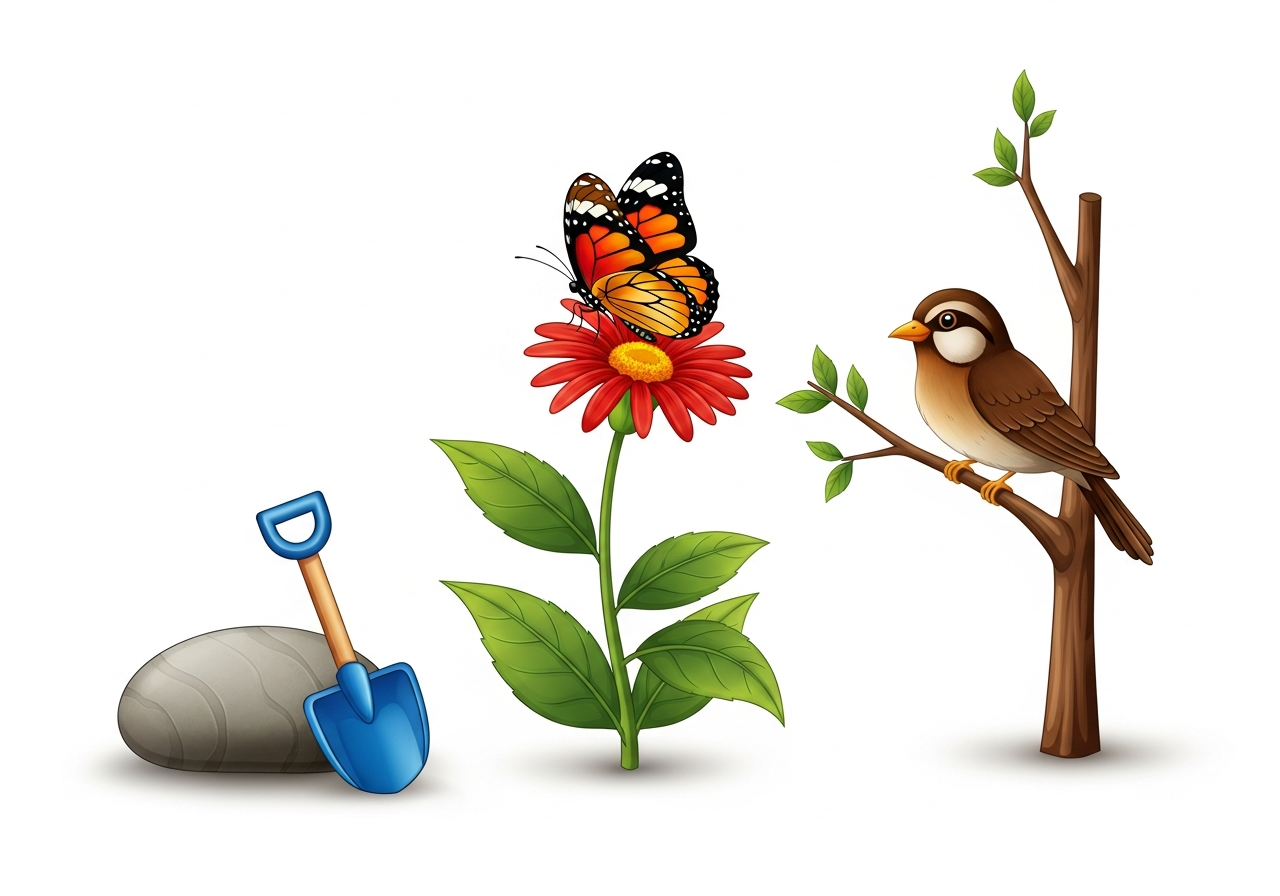
A dog, a flower, and a butterfly are all living things. A rock, a toy, and a pencil are non-living things. You already know about Plants vs Animals both plants and animals are living things!
Characteristics That Define Life
Living things share special characteristics. These are the signs that tell you something is alive.
Living Things Grow and Change
You have learned about Growth and Change in plants and animals. A seed grows into a plant. A caterpillar grows into a butterfly. Non-living things like rocks do not grow.
Living Things Need Food, Water, and Air
Every living thing needs food, water, and air to stay alive. You learned about Habitat Components food, water, shelter, and space are what living things need. A tomato plant needs water. A fish needs food. A rock does not need any of these things.
Living Things Move on Their Own
Animals move by themselves to find food. Plants move slowly toward light. A clock can move its hands, but it needs batteries it is not alive. Only living things move on their own.
Living Things Make More of Their Kind
A bird lays eggs to make baby birds. A flower makes seeds to grow new plants. Non-living things like plastic toys cannot make more of themselves.
How to Sort Living and Non-living Things
You can use your Observation Skills to sort things. Look at each object and ask: Does it grow? Does it need food or water? Can it move by itself? If yes, it is a living thing!
You have also practiced Sorting Materials by their properties. Now you can sort by whether something is living or non-living. A butterfly, a worm, and a flower are living. A seashell, a pebble, and a plastic toy are non-living.
Some things like a pine cone or a fossil were once part of living things, but they are now non-living because they no longer grow or need food.
Key Terms and Definitions
Living thing: A living thing is something that grows, needs food, water, and air, and can move or make more of its kind. You are a living thing! So are plants and animals.
Non-living thing: A non-living thing does not grow, does not need food or water, and cannot move on its own. Rocks, toys, and pencils are non-living things.
Characteristics of life: These are the special signs that tell you something is alive. They include growing, needing food and water, breathing air, moving, and making more of their kind.
Grow: When something gets bigger or changes over time, it grows. You grow, plants grow, and animals grow but rocks and toys do not grow.
Breathe: Living things take in air to stay alive. You breathe air. Fish breathe underwater. Plants also use air to live.
Reproduce: This means making more of your own kind. A bird has baby birds. A plant makes seeds that grow into new plants.
Classification: Classification means sorting things into groups. You can classify things as living or non-living based on their characteristics.
Fun Ways to Practice
Go on a nature walk and look for living and non-living things. Can you find a plant, an insect, and a rock? Use your observation skills to check each one.
Make a chart with two columns: "Living" and "Non-living." Put each thing you find in the right column. Remember to ask: Does it grow? Does it need food and water? Can it move by itself?
What You Already Know
You already know about Plant Features like roots, stems, leaves, flowers, and seeds. You also know about Animal Features like body coverings and shapes. These help you recognize living things!
You have learned how to use your senses through Observation Skills and how to group things using Sorting Materials. All of this helps you sort living and non-living things.
Related Topics and Connections
Now that you know what makes something living, you are ready to learn more! You will explore Animal Groups and Plant Groups these topics help you sort living things into even smaller groups.
You will also learn about Animal Classification and Plant Classification, which show you how scientists organize all living things. Understanding Basic Requirements like air, water, food, shelter, and space will help you understand why living things need these things to survive.
You can explore External Features like body coverings and limbs to learn more about how animals look. You will also discover Growth Patterns to see how different living things grow and change over time.
Learning about Plant Parts and Plant Responses will show you how plants react to light and water signs that they are alive! You will also learn about Parent-Offspring Relations to see how living things pass traits to their babies. Finally, Physical Properties will help you compare the features of living and non-living materials.