TOPIC
MY PROGRESS
Pug Score
0%
Best Streak
0 in a row
Study Points
+0
Overview
Practice
Read
Quiz
Next Steps
Get Started
Get unlimited access to all videos, practice problems, and study tools.
Back to Menu
Topic Progress
Pug Score
0%
Best Practice
No score
Read
Not viewed
Best Quiz
No attempts
Best Streak
0 in a row
Study Points
+0
Overview
Practice
Read
Quiz
Next Steps
Read
Watch Living Things Grow and Change: Life Cycles Explained
You will explore how different living things grow and change through stages called life cycles, from tiny eggs and seeds to fully grown plants and animals.
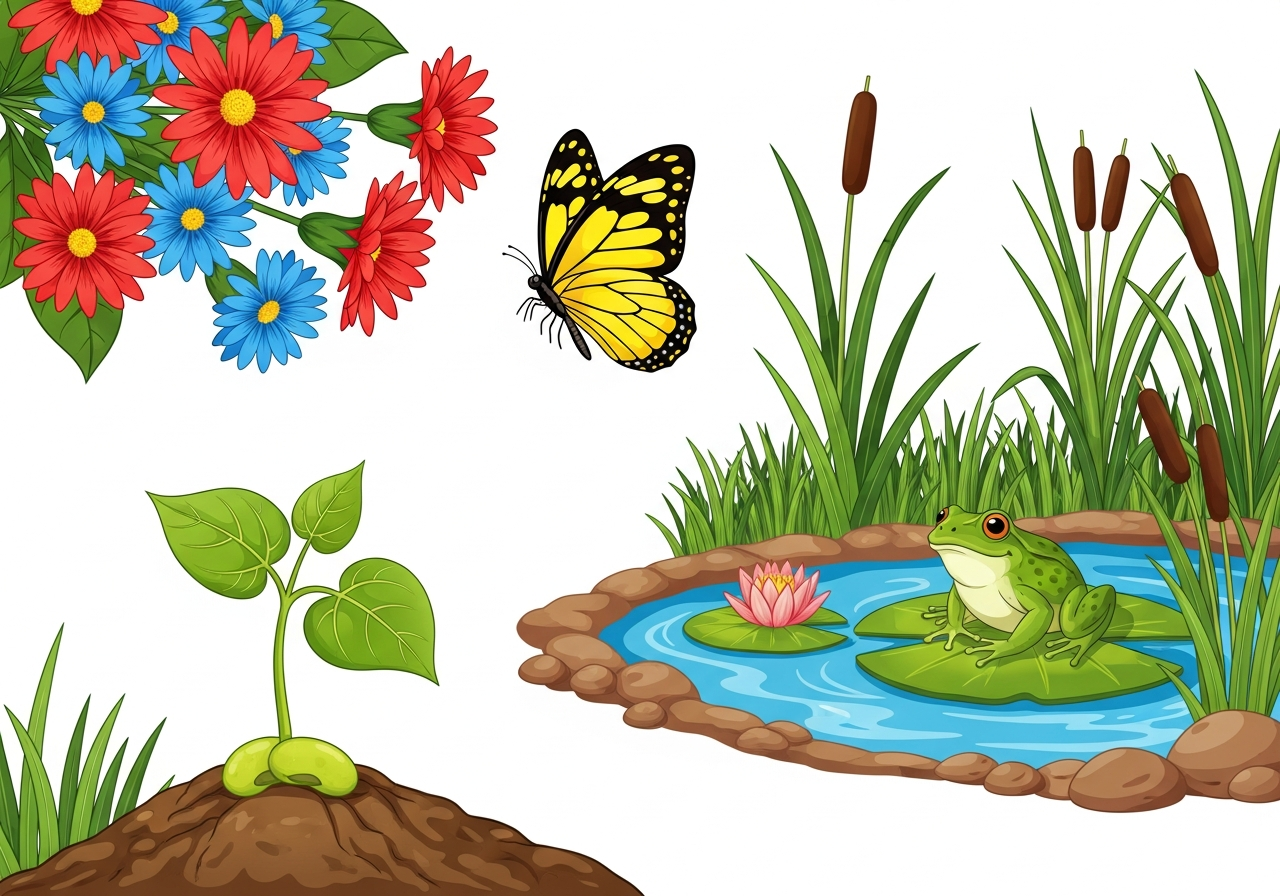
Every living thing grows and changes over time. This special pattern of growing is called a life cycle. You can see life cycles happen all around you in gardens, ponds, and even your classroom!
Plants and animals each follow their own steps as they grow. These steps happen in the same order every time.
The Butterfly Life Cycle
One of the most amazing life cycles belongs to the butterfly. You can watch a butterfly go through four big changes!

First, a tiny egg is laid on a leaf. The egg hatches into a hungry caterpillar (also called a larva). The caterpillar eats and grows, then wraps itself in a chrysalis. Finally, a beautiful butterfly comes out! Monarch butterflies follow this same pattern, eating milkweed leaves as caterpillars before forming their chrysalis.
The Frog and Toad Life Cycle
Frogs and toads also change a lot as they grow. You might spot their eggs near a pond!
A frog starts as an egg in the water. The egg hatches into a tadpole that swims with a tail. Slowly, the tadpole grows legs and loses its tail, becoming an adult frog or toad. This big change is called metamorphosis. Salamanders go through similar stages too starting as eggs, then becoming larvae with gills, and finally growing into adults.
Plant Life Cycles
Plants grow and change too! A plant's life cycle often starts with a tiny seed.
When you plant a seed and give it water and light, a root grows down into the soil first. Then a small seedling pushes up through the dirt with tiny leaves. The seedling grows into a full plant with flowers. The flowers make new seeds, and the cycle starts again! Bean plants, pumpkins, apple trees, sunflowers, and oak trees all follow this pattern.
Other Amazing Life Cycles
Many other animals have interesting life cycles too. Chickens start as eggs, hatch into baby chicks, and grow into adult hens or roosters. Goldfish stay fish their whole lives but grow bigger and their colors get brighter.
Insects like ladybugs, bees, and mealworms go through four stages: egg, larva, pupa, and adult. Silkworms spin a cocoon around themselves before becoming moths. Salmon begin as eggs in streams, hatch into tiny fish called fry, and grow into adult salmon.
Key Terms and Definitions
Life Cycle: A life cycle is the set of stages a living thing goes through as it grows and changes. You can see a life cycle when a seed grows into a plant or an egg hatches into an animal.
Egg: An egg is the first stage for many animals. You can find eggs laid by butterflies, frogs, birds, and fish.
Caterpillar (Larva): A caterpillar is the worm-like stage of a butterfly or moth. It eats lots of leaves to grow big. Another word for this stage is larva.
Chrysalis: A chrysalis is the hard covering a caterpillar makes around itself. Inside, it changes into a butterfly.
Cocoon: A cocoon is a silky covering that some insects, like silkworms, spin around themselves while they change into adults.
Metamorphosis: Metamorphosis is the big change some animals go through as they grow. A tadpole changing into a frog is metamorphosis!
Tadpole: A tadpole is a baby frog or toad. It lives in water and has a tail for swimming.
Seed: A seed is the starting stage of a plant's life cycle. You plant a seed in soil, and it grows into a new plant.
Seedling: A seedling is a very young plant that has just sprouted from a seed. It has tiny leaves and a small stem.
Larva: A larva is the young, worm-like stage of an insect after it hatches from an egg. Caterpillars and mealworms are larvae.
Pupa: A pupa is the resting stage of an insect between larva and adult. Inside the pupa, the insect changes into its adult form.
Adult: An adult is the fully grown stage of a living thing. Adult butterflies can fly and lay eggs to start the cycle again.
Fry: Fry are baby fish that have just hatched from eggs. Baby salmon are called fry.
Growth Pattern: A growth pattern is the order of stages a living thing follows as it grows. Every butterfly follows the same growth pattern.
Fun Ways to Explore Life Cycles
You can watch life cycles happen right in your classroom or backyard! Try planting a bean seed in a cup of soil. Give it water and sunlight, and watch for the first tiny sprout to appear.
You can also draw the stages of a butterfly or frog life cycle. Start with the egg, then draw each stage with an arrow pointing to the next one. This helps you remember the order of each stage.
What You Already Know
You already know that living things need water, sunlight, and food to grow. This helps you understand why seeds need water to sprout and why caterpillars eat so many leaves!
You also know that animals and plants are living things. Now you can learn how each living thing follows its own special pattern of growing and changing.
Related Topics and Connections
This topic is part of the bigger chapter on Life Cycles. As you learn about growth patterns, you are building a strong understanding of how all living things on Earth grow, change, and continue their kind. Every plant and animal you see around you is somewhere in its own life cycle right now!
Understanding growth patterns helps you ask great science questions like: "What stage is this caterpillar in?" or "What will this seed become?" These are the kinds of questions real scientists ask every day.