Organic Chemistry Help: Video Lessons & Practice
Work through every topic with clear solutions. Start your free practice test now!
Value vs. Private Tutor
Expert help for less than a tutor.

Multi-Subject
Master organic chemistry then explore any subject.
Build Mastery
You actually master it before moving on.
Organic Chemistry Topics
1. Introduction to Organic Chemistry
2. Intro to Atomic and Molecular Structure
3. Chemical analysis and structure determination
4. Introduction to organic reactions, reactivity and mechanisms
4 Chapters · 24 Topics · 191 Videos
Discover Our Learning Areas
Explore key subjects and start learning with interactive content.
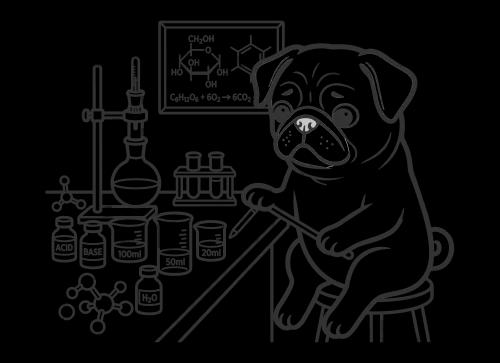




What is Organic Chemistry?
Organic Chemistry is the branch of chemistry that studies carbon-containing compounds — their structure, properties, composition, reactions, and synthesis. It sits at the heart of modern science, underpinning everything from drug discovery and materials science to biochemistry and food technology. For students at Irish universities, Organic Chemistry is typically encountered in first or second year as part of a Chemistry, Pharmacy, Biochemistry, Medicinal Chemistry, or related science degree. The module demands both conceptual understanding and strong problem-solving skills, making targeted practice and clear explanations essential from the very start.
What topics are covered in Organic Chemistry?
University Organic Chemistry builds from foundational concepts toward increasingly complex synthetic and analytical challenges. Typical topics include:
- Structure and bonding: hybridisation, molecular geometry, resonance, and aromaticity.
- Functional groups: alkanes, alkenes, alkynes, alcohols, ethers, aldehydes, ketones, carboxylic acids and their derivatives, amines, and aromatic compounds.
- Reaction mechanisms: nucleophilic substitution (SN1/SN2), elimination (E1/E2), electrophilic addition, electrophilic aromatic substitution, and carbonyl reactions.
- Stereochemistry: chirality, R/S configuration, enantiomers, diastereomers, meso compounds, and conformational analysis.
- Spectroscopy: IR, ¹H NMR, ¹³C NMR, and mass spectrometry for structure determination.
- Synthesis: retrosynthetic analysis and multi-step reaction planning.
Each topic connects to the others — understanding mechanisms makes spectroscopy interpretation easier, and stereochemistry knowledge is essential for synthesis planning. StudyPug covers all of these areas with certified-teacher video lessons and targeted practice problems so you can build genuine fluency, not just surface familiarity.
Why do students find Organic Chemistry difficult?
Organic Chemistry has a well-earned reputation as one of the most challenging modules in an Irish science degree. The volume of material is significant — hundreds of named reactions, dozens of functional groups, and a web of mechanistic pathways — but the real difficulty is conceptual. Many students arrive expecting to memorise their way through, only to find that exam questions require them to apply mechanisms to unfamiliar substrates or design a synthesis from scratch.
The most common sticking points are:
- Arrow-pushing notation: understanding that curved arrows represent electron movement, not atom movement, is a fundamental shift that many students take time to internalise.
- SN1/SN2/E1/E2 competition: four pathways that can apply to the same substrate — selecting the correct one requires weighing substrate structure, nucleophile/base strength, solvent, and temperature simultaneously.
- Stereochemistry: R/S assignments, optical activity, and the relationship between configuration and reactivity trip up a large proportion of students in assessments.
- Carbonyl chemistry: the range of reactions involving aldehydes, ketones, and carboxylic acid derivatives, combined with their sensitivity to conditions, makes this section particularly demanding.
The solution is not more memorisation — it is building mechanistic intuition through repeated, structured practice. StudyPug's adaptive practice problems push you at the right level and the step-by-step video lessons explain the why behind every transformation.
How is Organic Chemistry examined in Irish universities?
Assessment structures vary by institution, but most Irish universities assess Organic Chemistry through a combination of end-of-semester or end-of-year written examinations, laboratory practicals, and some element of continuous assessment. Written exams — the primary high-stakes component — typically ask students to draw mechanisms, predict products, identify unknowns from spectral data, and plan synthetic routes. Practical lab reports assess technique, data analysis, and scientific communication. Some modules include mid-semester MCQ tests or structured problem sheets as part of continuous assessment.
Preparing effectively for written exams means going well beyond reading notes. You need to practise writing mechanisms under time pressure, work through past paper questions, and test yourself on spectroscopy interpretation. StudyPug's mock exams and practice tests are structured to reflect the style and difficulty of university-level Organic Chemistry assessments, giving you the exam experience you need before the real thing.
Why use StudyPug for Organic Chemistry?
StudyPug is built for university students who need more than a textbook — they need clear explanations, structured practice, and a way to identify and close their specific knowledge gaps quickly.
Certified-teacher concept videos are the foundation. Every lesson is taught by an experienced, certified instructor — not AI-generated content — and focuses on teaching the method, not just showing the answer. You learn why electrons flow the way they do in a nucleophilic substitution, not just that a product forms. That kind of deep understanding prepares you for the next course, not just the next exam.
Diagnostic assessment means you never waste time. Before you dive into practice, StudyPug's diagnostic identifies exactly which Organic Chemistry topics you need to focus on. Whether it's stereochemistry or carbonyl reactions, you get a targeted study plan rather than a vague to-do list.
Adaptive practice keeps your sessions productive. As your understanding improves, the difficulty of practice problems adjusts to match — so you're always working at the edge of your ability, which is where learning happens fastest.
Full course coverage in one subscription means you have access to Organic Chemistry alongside Calculus, Statistics, Linear Algebra, and every other university course on the platform. No need to pay separately per topic or per course.
The 30-day money-back guarantee means there is no risk in getting started.
What you learn: Organic Chemistry course coverage on StudyPug
StudyPug's Organic Chemistry content covers the full scope of a university module, from foundational concepts through to advanced synthetic and analytical topics. Key areas include:
- Bonding, hybridisation, and molecular geometry
- Functional group identification and nomenclature
- Reaction mechanisms — SN1, SN2, E1, E2, electrophilic addition and aromatic substitution
- Stereochemistry — chirality, R/S configuration, optical activity, and diastereomers
- Carbonyl chemistry — aldehydes, ketones, carboxylic acids, and derivatives
- Spectroscopy — IR, ¹H NMR, ¹³C NMR, and mass spectrometry
- Multi-step synthesis and retrosynthetic analysis
- Exam-style practice tests and mock assessments
Every topic is supported by step-by-step video lessons, adaptive practice problems, and solutions that walk through the reasoning at each stage. Note: internal topic page links for this course are not yet available in our validated link set — use the topic browser on the course page to navigate directly to any area you want to practise.
How to use StudyPug for Organic Chemistry
The most effective way to use StudyPug for Organic Chemistry is to start with the diagnostic assessment. It takes only a few minutes and gives you a clear picture of where your understanding is strong and where the gaps are. From there, work through the recommended video lessons for your priority topics — watch them as many times as you need until the logic of each mechanism feels natural.
After each video, move straight into practice problems. The adaptive system will begin at an appropriate difficulty level and increase the challenge as you demonstrate understanding. Use the mock exams and practice tests to simulate the conditions of your actual assessments — timed, without notes, working through the full range of question types. Review your solutions carefully, paying attention to the steps where your reasoning diverged from the correct pathway.
For ongoing study, dip into free daily practice content to keep mechanisms fresh between sessions. StudyPug is available on desktop and mobile, so you can fit a practice session into any gap in your day. Whether you're heading into your first-year Organic Chemistry module or preparing for final-year assessments, StudyPug gives you the tools to build real understanding and walk into your exam with confidence.
Organic Chemistry FAQ
Unsure how StudyPug works? Need help with setting up? Check our frequently asked questions or contact us for help.
What do you learn in Organic Chemistry, and what topics does it cover?
Organic Chemistry focuses on the structure, properties, and reactions of carbon-based compounds. Core topics include functional groups, reaction mechanisms (substitution, elimination, addition), stereochemistry, carbonyl chemistry, aromatic compounds, spectroscopy (IR, NMR, mass spec), and synthesis strategies. In Irish university programmes, you'll typically progress from bonding and molecular structure in first year through to complex multi-step synthesis and spectral analysis by second and third year. A strong grasp of mechanisms is essential, as later modules in biochemistry, pharmacology, and medicinal chemistry all build on organic foundations.
What is the difference between Organic Chemistry and Inorganic Chemistry?
Organic Chemistry deals specifically with carbon-containing compounds and the mechanisms by which they react — covering everything from simple alkanes to complex natural products and pharmaceuticals. Inorganic Chemistry focuses on non-carbon elements, coordination compounds, transition metal chemistry, and solid-state materials. In Irish universities both branches form part of a general Chemistry degree, but they demand different problem-solving approaches. Organic requires you to think in terms of electron flow and mechanistic logic, while inorganic often centres on periodic trends, bonding theory, and crystal structures. Many students find organic more challenging due to the volume of mechanisms to learn.
What are the prerequisites for Organic Chemistry, and what course comes after it?
You typically need a solid Leaving Certificate Chemistry foundation — particularly atomic structure, bonding, and introductory reactions. At university level, first-year general chemistry (covering thermodynamics, kinetics, and basic organic) is the usual prerequisite before a dedicated Organic Chemistry module. After Organic Chemistry, students progress to Physical Organic Chemistry, Medicinal Chemistry, Biochemistry, or Advanced Synthesis depending on their degree pathway. A strong performance in organic is especially important for students aiming at pharmacy, medicine, or chemical engineering programmes, where the concepts appear repeatedly in later years.
Is Organic Chemistry hard, and where do students struggle most?
Organic Chemistry has a reputation for being one of the most demanding university science modules, and that reputation is not entirely undeserved. The sheer volume of reactions, mechanisms, and nomenclature rules can feel overwhelming. Students most commonly struggle with: understanding electron-pushing arrow notation in mechanisms; distinguishing SN1 vs SN2 vs E1 vs E2 pathways; stereochemistry concepts like chirality, R/S configuration, and diastereomers; and carbonyl chemistry (aldehydes, ketones, carboxylic acid derivatives). The key shift is moving from memorisation to mechanistic understanding — once you grasp why electrons move the way they do, predicting new reactions becomes much more manageable.
How is Organic Chemistry assessed — exams, practicals, and assignments?
In Irish universities, Organic Chemistry is typically assessed through a combination of written end-of-semester or end-of-year examinations, laboratory practicals, and continuous assessment. Written exams usually account for 60–70% of the final grade and include mechanism questions, synthesis problems, and spectroscopy interpretation. Laboratory work — including lab reports and practical technique — generally contributes 20–30%. Some modules include short in-semester tests or MCQ quizzes. End-of-year written exams are the primary high-stakes assessment, so practising exam-style mechanism and synthesis questions throughout the semester is essential for a strong result.
What is one of the hardest topics in Organic Chemistry, and how do you approach it?
Nucleophilic substitution and elimination reactions — specifically distinguishing between SN1, SN2, E1, and E2 mechanisms — are consistently the most challenging area for students. The same substrate can undergo different pathways depending on the nucleophile, solvent, temperature, and leaving group, so rote memorisation fails quickly. The best approach is to build a decision flowchart: first assess the substrate (primary, secondary, or tertiary), then the nucleophile or base strength, then the solvent polarity and temperature. Work through practice problems systematically, drawing curved arrows for each mechanism until the pattern becomes instinctive. StudyPug's step-by-step video lessons walk through each factor in sequence so the logic becomes clear.




Written by the StudyPug Team
Last updated June 5, 2026
3 M+
students
★★★★★
4.8 average
K–12
all grades