Differential Equations Help: Video Lessons & Practice
Step-by-step solutions for every topic — from first-order ODEs to Laplace transforms.
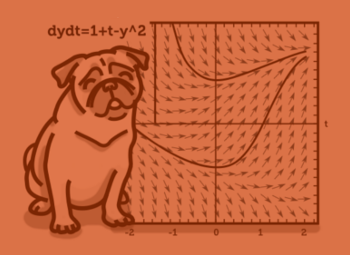
Value vs. Private Tutor
Expert differential equations help affordably.

Multi-Subject
Master differential equations then switch subjects.
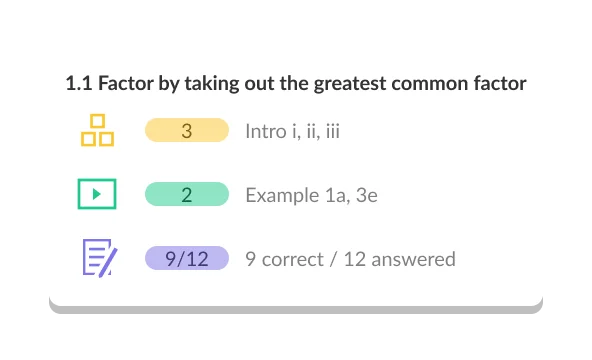
Practice Until Perfect
Practice until it truly clicks.
Try It Now
Test your knowledge
Our approach aligns with the evidence
Exam Scores
Better Recall
Less Anxiety
Differential Equations Topics
1. Introduction to Differential Equations
2. First Order Differential Equations
3. Second Order Differential Equations
4. Laplace Transforms
4 Chapters · 26 Topics · 151 Videos
Discover Our Learning Areas
Explore key subjects and start learning with interactive content.
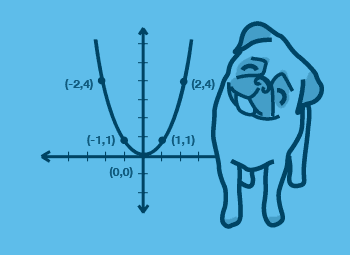



What is Differential Equations?
Differential Equations is a university mathematics course that studies equations containing an unknown function and one or more of its derivatives. Rather than solving for a number, you solve for a function — typically one that describes how a quantity changes over time or space. This makes differential equations the mathematical language of the physical world: they model everything from the cooling of a cup of tea to the oscillation of a bridge, the spread of a disease, and the flow of electrical current through a circuit.
At Irish universities, the course appears in the first or second year of Mathematics, Engineering, Physics, and related programmes. It builds directly on Calculus I and II, extending integration and differentiation into a powerful problem-solving framework used throughout advanced study and professional practice.
What types of differential equations will I encounter in this course?
The course broadly divides into ordinary differential equations (ODEs) and, in some programmes, an introduction to partial differential equations (PDEs). Within ODEs, you work with first-order equations — separable, linear, exact, and Bernoulli types — before progressing to second-order linear equations with constant and variable coefficients. You also study systems of ODEs, where multiple interacting quantities change simultaneously, and learn solution techniques including undetermined coefficients, variation of parameters, the method of Frobenius for series solutions, and the Laplace transform method.
Each technique has its own domain of applicability, and a core skill the course develops is recognising which approach suits a given problem. That pattern-recognition is what examiners test, which is why working through a large variety of practice problems — not just repeating one method — is the most effective study strategy.
How do Laplace transforms work, and why are they so useful?
The Laplace transform converts a differential equation in the time domain into an algebraic equation in the s-domain, where it is far easier to manipulate. You apply the transform to both sides of the ODE, use a table of standard transform pairs together with shifting and convolution theorems, solve the resulting algebraic equation for the transformed function, then apply the inverse Laplace transform to recover the solution.
The technique is especially powerful for equations with discontinuous forcing functions — for example, a switch turning on partway through a process — where classical methods become cumbersome. Initial conditions are folded into the algebra automatically, removing a separate step. Engineers and physicists use Laplace transforms constantly, so fluency here pays dividends well beyond this course.
What is the difference between homogeneous and non-homogeneous equations?
A homogeneous linear ODE is one where the right-hand side is zero — the equation describes free, unforced behaviour. A non-homogeneous equation has a non-zero right-hand side, representing an external input or forcing function such as a driving force, heat source, or electrical signal. The general solution to a non-homogeneous equation is the sum of the complementary solution (solving the associated homogeneous equation) and a particular solution that accounts for the forcing term. Methods such as undetermined coefficients and variation of parameters provide systematic ways to find the particular solution. Understanding this structure — complementary plus particular — is fundamental to the entire second-order theory.
How do systems of differential equations differ from single equations?
A system of ODEs models situations where several quantities interact and each changes according to a rate that depends on the others — population dynamics with predator and prey, coupled electrical circuits, or multi-compartment pharmacokinetic models are classic examples. Instead of one unknown function you have several, and instead of one equation you have a set. The standard approach converts the system into matrix form and uses eigenvalues and eigenvectors to construct the solution. This is why Linear Algebra is often taken alongside or before Differential Equations — the two subjects are deeply connected. Phase portraits give a geometric picture of how solutions behave over time, helping you classify equilibria as stable, unstable, or saddle points.
How do I prepare for Differential Equations exams at an Irish university?
Differential Equations examinations at Irish universities are written, closed-book assessments that require you to derive and apply solution techniques under timed conditions. Past papers — available through your university library or department — are the single most important preparation tool. Work through them under exam conditions, timing yourself and checking solutions carefully. Pay particular attention to the phrasing of questions: examiners often ask you to find a general solution, apply initial conditions, or sketch a phase portrait, and each requires a slightly different final step. Building a reliable checklist for each technique (for example, the five steps of the Laplace transform method) reduces errors under pressure. Mock exams and structured practice tests help you identify which topics still need attention before the terminal written examination.
Why StudyPug for Differential Equations help?
Differential Equations demands more than memorising formulas — you need to understand why each technique works so you can adapt it when an exam question presents an unfamiliar twist. StudyPug's certified-teacher video lessons are built around exactly this principle. Each lesson teaches the method, not just the answer, so you leave understanding the reasoning and can apply it confidently to problems you have never seen before.
The platform begins with a short diagnostic assessment that maps your current understanding across the full Differential Equations curriculum. Within minutes you know which topics are solid and which need attention. That focus makes your study time far more efficient than reading a textbook chapter by chapter or reworking topics you already understand.
Adaptive practice then adjusts difficulty to match your progress. As you build fluency on easier ODE types, the system introduces more challenging problems — Laplace transform applications, non-constant-coefficient equations, systems with complex eigenvalues — at the right moment. This gradual, responsive challenge is far more effective than static problem sets at building the kind of confidence you need for a high-stakes written examination.
All Differential Equations content is included in a single StudyPug subscription, alongside Calculus I, II, and III, Linear Algebra, Statistics, and every other course on the platform. There is no need to pay separately for each subject. Every subscription is backed by a 30-day money-back guarantee, and free practice content is available immediately so you can start improving before you commit.
What you learn in Differential Equations: course coverage
StudyPug covers the full Differential Equations curriculum as taught at Irish universities. Key topics include:
- First-order ODEs — separable equations, linear equations and the integrating-factor method, exact equations, Bernoulli equations, and applications to growth, decay, and mixing problems.
- Second-order linear ODEs — homogeneous equations with constant coefficients, the characteristic equation, repeated and complex roots, non-homogeneous equations via undetermined coefficients and variation of parameters.
- Laplace transforms — definition and properties, standard transform pairs, first and second shifting theorems, convolution, solving IVPs including equations with discontinuous and impulse forcing functions.
- Series solutions — power series method, ordinary and singular points, the method of Frobenius, Bessel's equation and Legendre's equation as canonical examples.
- Systems of ODEs — matrix formulation, eigenvalue-eigenvector method, real distinct, repeated, and complex eigenvalues, phase portraits and stability analysis.
- Numerical methods — Euler's method and an introduction to Runge-Kutta, for courses that include a computational component.
- Introduction to PDEs — separation of variables, the heat equation, wave equation, and Laplace's equation, for programmes that extend into partial differential equations.
Every topic is covered with step-by-step video lessons and matching practice problems, so you can watch a technique explained, then immediately apply it yourself. No validated internal topic links are placed in this section per O15 — the internal link MAP contains no verified entries for this page at this time.
How to use StudyPug for Differential Equations practice
The most effective approach on StudyPug follows a simple cycle: diagnose, watch, practice, test. Start with the diagnostic assessment to see exactly where you stand. Then, for each topic the diagnostic flags, watch the certified-teacher concept video — pause, rewind, and watch again as many times as you need until the method is clear. Next, work through the adaptive practice problems for that topic. Finally, once you have covered the material, take a full mock exam under timed conditions to simulate your actual written examination.
For Differential Equations specifically, prioritise the topics your own course is currently covering rather than working through the platform in order. If your lecturer has just introduced Laplace transforms, focus there. Use the practice tests to check your technique before each in-semester class test or assignment, and revisit any topic where you are making systematic errors — the video lessons are available unlimited times, so you can re-watch a derivation as many times as it takes.
StudyPug works on desktop and mobile, so you can fit practice into your schedule — whether that is a focused session the evening before a class test or a quick set of problems on the way to campus. The platform is available any time, so help is always there when you are stuck on a problem set at midnight before a deadline.
Work through every topic with clear solutions. Start your free practice test now!
Differential Equations FAQ
Unsure how StudyPug works? Need help with setting up? Check our frequently asked questions or contact us for help.
What do you learn in Differential Equations, and what topics does it cover?
Differential Equations is a university mathematics course covering techniques for solving equations that relate functions to their derivatives. Core topics include first-order ODEs (separable, linear, exact), second-order linear equations (constant coefficients, variation of parameters), systems of ODEs, Laplace transforms, series solutions, and an introduction to partial differential equations. You develop analytical and numerical methods used widely in engineering, physics, biology, and economics. The course builds problem-solving rigour essential for advanced study in applied mathematics and the physical sciences.
What is the difference between Differential Equations and Calculus III?
Calculus III (Multivariable Calculus) extends single-variable calculus into multiple dimensions — covering partial derivatives, multiple integrals, and vector calculus. Differential Equations uses the tools of calculus to model and solve equations involving rates of change. While Calculus III focuses on geometric and analytical extensions of differentiation and integration, Differential Equations focuses on constructing and solving mathematical models. Many programmes require Calculus II or III before Differential Equations, making them sequential rather than parallel courses.
What are the prerequisites for Differential Equations, and what course comes after it?
Most Irish university programmes require at least Calculus I and II before taking Differential Equations; some engineering programmes also require Calculus III. You need comfort with integration techniques, Taylor series, and basic matrix operations. After Differential Equations, students typically progress to Partial Differential Equations, Numerical Methods, Complex Analysis, or Advanced Engineering Mathematics, depending on their programme. A strong foundation here is essential — the methods you learn appear throughout every subsequent applied mathematics and engineering course.
Is Differential Equations hard, and where do students struggle most?
Differential Equations is widely considered one of the more demanding first or second-year university mathematics courses. Students typically find Laplace transforms, series solutions (especially the method of Frobenius), and systems of ODEs the most challenging areas. The difficulty often comes from recognising which solution technique to apply — the course tests conceptual understanding, not just computation. Students who struggle usually lack confidence with integration methods or algebraic manipulation. Consistent practice with varied problem types and clear, method-focused explanations make the biggest difference.
How is Differential Equations assessed — midterms, finals, and assignments?
In Irish universities, Differential Equations is typically assessed through continuous assessment and a terminal written examination. Continuous assessment usually includes homework assignments, online quizzes, and one or two in-semester tests or class tests, contributing roughly 20–40% of the final mark. The terminal examination, held at the end of semester, accounts for the remainder. Exam questions require you to solve ODEs analytically, apply Laplace transforms, and interpret solutions. Practicing past papers and mock exams is highly effective preparation for the written examination format.
What is one of the hardest topics in Differential Equations, and how do you approach it?
The Laplace transform method is frequently the topic students find hardest. It requires building fluency with a table of transform pairs, applying shifting theorems, handling partial fractions, and correctly interpreting initial conditions — all in a single problem. The key approach is breaking each problem into discrete steps: transform the ODE, solve algebraically in the s-domain, then apply the inverse transform. Working through many practice problems with fully worked solutions — rather than memorising formulas in isolation — is the most effective way to build reliable technique.




Written by the StudyPug Team
Last updated June 5, 2026
3 M+
students
★★★★★
4.8 average
K–12
all grades