Calculus 3 Help: Video Lessons & Practice
Step-by-step lessons on multivariable calculus and vector analysis — so you're ready for your next module, not just this exam.
Value vs. Private Tutor
Get expert Calculus 3 help cheaper than tutors.

Multi-Subject
Struggling with vectors? Switch free.

Practice Until Perfect
Keep practicing until it finally clicks.
Try It Now
Test your knowledge
Our approach aligns with the evidence
Exam Scores
Better Recall
Less Anxiety
Calculus 3 Topics
1. Three Dimensions
2. Vector Functions
3. Partial Derivatives
4. Partial Derivative Applications
5. Multiple Integrals
6. Multiple Integral Applications
6 Chapters · 34 Topics · 249 Videos
Discover Our Learning Areas
Explore key subjects and start learning with interactive content.



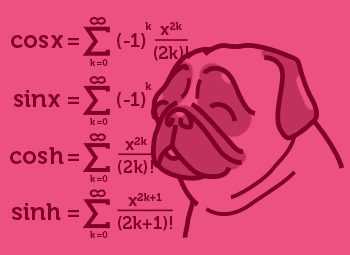
What is Calculus 3?
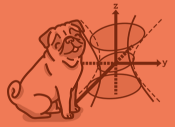
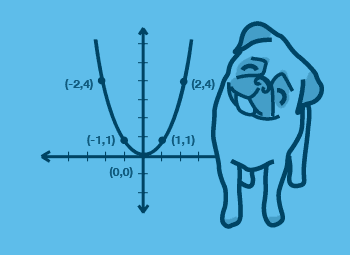
Calculus 3 is the branch of mathematics that extends calculus from one variable into two and three dimensions. Where earlier calculus courses deal with functions of a single variable, Calculus 3 studies functions of multiple variables — asking how they change in different directions, how they integrate over surfaces and volumes, and how they describe physical phenomena like fluid flow and electromagnetic fields. It is a core module in engineering, physics, mathematics, and computer science programmes at Irish universities.
The course sits at the intersection of calculus and geometry. You are no longer working on a flat number line or a single curve — you are working in three-dimensional space, and the tools you build in this module are the same ones used in everything from aeronautical engineering to machine learning.
What Topics Are Covered in Calculus 3?
A typical Calculus 3 module at an Irish university covers the following areas. Understanding the structure of the course before you begin helps you allocate study time effectively.
Multivariable functions and partial derivatives. You will learn to differentiate functions of two or three variables with respect to one variable at a time, holding others constant. This underpins everything else in the course — from gradient vectors to optimisation problems involving Lagrange multipliers.
Multiple integrals. Double and triple integrals extend the single-variable integral over regions in two- and three-dimensional space. A large part of the practical difficulty here lies in setting up the correct limits of integration, especially when converting between Cartesian, polar, cylindrical, and spherical coordinate systems.
Vector calculus. This section introduces vector fields and the three key differential operators: gradient (∇f), divergence (∇·F), and curl (∇×F). These operators describe how scalar and vector fields change in space and are essential for physics and engineering.
The integral theorems. Green's Theorem, Stokes' Theorem, and the Divergence Theorem each relate a higher-dimensional integral to a lower-dimensional one over a boundary. These theorems are the capstone of the course and are reliably the most heavily examined topics in end-of-semester papers.
Is Calculus 3 Harder Than Calculus 2?
Most students find Calculus 3 more conceptually demanding than Calculus 2. Calculus 2 is technically difficult — integration techniques require practice and precision — but the concepts remain one-dimensional. Calculus 3 adds spatial reasoning as a constant requirement. You need to visualise surfaces in three dimensions, orient boundaries correctly for Stokes' Theorem, and choose the most convenient coordinate system for a given integral.
That said, many students find the subject more intuitive than Calculus 2 once the spatial reasoning develops. The calculus machinery itself (differentiation and integration) is familiar; the challenge is applying it in higher dimensions. Students who struggled with series and convergence in Calculus 2 sometimes find Calculus 3 a more natural fit.
How Is Calculus 3 Used After University?
Calculus 3 is not a terminal module — it is a gateway. In engineering, multivariable calculus underpins structural analysis, fluid dynamics, heat transfer, and signal processing. In physics, it is the language of electromagnetism (Maxwell's equations are written in terms of divergence and curl) and quantum mechanics. In data science and machine learning, gradient methods — particularly gradient descent — rely directly on the partial derivative machinery from this course.
Understanding Calculus 3 deeply, rather than just passing the exam, gives you a significant advantage in every subsequent technical module. That is why StudyPug's video lessons focus on teaching the method — not just the procedure to follow for a given question type.
What Are the Most Common Mistakes in Calculus 3?
Three mistakes come up repeatedly in exam scripts. First, students set up limits of integration in the wrong order or for the wrong region, especially when the region is not rectangular. Drawing and labelling the region before writing any integral is the single most effective habit you can build. Second, students confuse when to apply which integral theorem. Green's Theorem applies to closed curves in the plane; Stokes' Theorem generalises this to surfaces in three-space; the Divergence Theorem relates a surface integral to a volume integral. Knowing the conditions for each theorem — not just the formula — is what earns marks. Third, students drop sign errors in curl calculations. The cross-product structure of the curl operator means a missed negative sign produces an entirely wrong answer. Writing out the determinant fully every time, without shortcuts, eliminates most of these errors.
Why Use StudyPug for Calculus 3 Help?
Calculus 3 practice problems and video solutions are widely available online, but not all explanations are created equal. Here is what makes StudyPug different for Irish university students.
Certified teachers who explain the method. StudyPug's video lessons are created by experienced, certified instructors — not AI-generated content. Every lesson focuses on the reasoning behind each step, so you understand why a method works, not just how to execute it. When you understand the method, you can adapt it to unseen exam questions — which is exactly what Irish university exams require.
A diagnostic that shows you where to start. If you are already a few weeks into the semester and behind on certain topics, the StudyPug diagnostic assessment identifies your specific gaps. You get a clear starting point rather than working through material you already know.
Adaptive practice that builds real skill. The practice system adjusts the difficulty of problems to match your current level. You are always working at the edge of your ability — challenging enough to build skill, not so difficult that you lose confidence. This is far more efficient than working through static problem sheets sequentially.
Full university coverage in one subscription. Your Calculus 3 subscription also covers Calculus 1, Calculus 2, Linear Algebra, Differential Equations, Statistics, and more. As you progress through your degree, everything you need is already included — no additional cost.
Free practice content and a 30-day money-back guarantee. You can start with free Calculus 3 practice problems today. If you subscribe and find it is not the right fit, the 30-day money-back guarantee means there is no financial risk.
What You Learn: Calculus 3 Topic Coverage
StudyPug's Calculus 3 content covers the full range of topics you will encounter in an Irish university module. The core areas include:
- Partial Derivatives — higher-order partials, the chain rule for multivariable functions, implicit differentiation in multiple variables
- Gradient, Directional Derivatives, and Tangent Planes — finding the direction of steepest ascent and linear approximations to multivariable functions
- Optimisation — critical points of multivariable functions, the second derivative test, and Lagrange multipliers for constrained optimisation
- Double and Triple Integrals — integration over general regions, switching order of integration, and coordinate transformations (polar, cylindrical, spherical)
- Vector Fields — gradient fields, conservative fields, and potential functions
- Line Integrals — of scalar functions and vector fields; the Fundamental Theorem of Line Integrals
- Surface Integrals — of scalar functions and vector fields (flux integrals)
- Green's Theorem, Stokes' Theorem, and the Divergence Theorem — statement, conditions, and exam-ready application
Each topic is broken into individual concept videos with accompanying practice problems. Because validated topic-page URLs for the Irish Calculus 3 module are not yet available in the StudyPug site index, direct deep links to individual topic pages are omitted here — visit the Calculus 3 course page on StudyPug to browse all available topics.
How to Use StudyPug for Calculus 3 Practice
Getting the most from StudyPug for Calculus 3 is straightforward, and you can start before you have even subscribed.
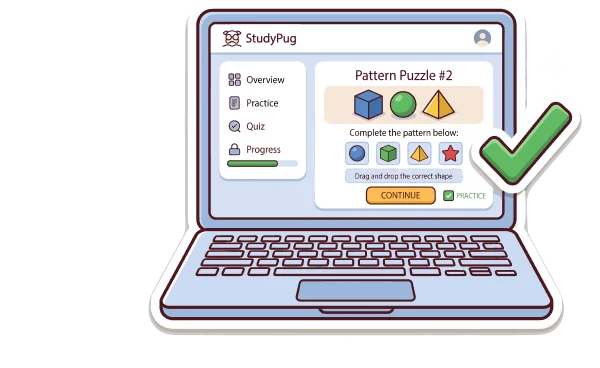
Step 1: Take the diagnostic. When you log in, run the Calculus 3 diagnostic assessment. It takes a few minutes and produces a prioritised list of topics to focus on. This is especially useful if you are mid-semester and need to catch up efficiently before a midterm or end-of-semester exam.
Step 2: Watch the concept video before attempting problems. For each topic, watch the certified-teacher video lesson first. Pay attention to the method being explained — not just the steps. Pause and replay any section where the reasoning is not clear. StudyPug lessons are designed to be watched multiple times; rewatching a solution until it clicks is a deliberate part of the learning process.
Step 3: Work through adaptive practice problems. After the video, move to practice. The adaptive system will present problems at the right difficulty for your current level. Work through them without looking at the solution first — the struggle is part of building the skill. When you do check the solution, compare your method to the step-by-step walkthrough and identify exactly where your reasoning diverged.
Step 4: Use practice tests for exam preparation. In the weeks before your end-of-semester exam or midterm, work through Calculus 3 practice tests under timed conditions. This builds both speed and the ability to identify which theorem or technique applies to an unseen question — a skill that is only developed through repeated full-length practice.
Step 5: Return to weak topics before the exam. After each practice test, note which topics produced the most errors and revisit the corresponding video lessons. The combination of targeted video review and additional practice problems is the most efficient preparation strategy for Calculus 3 exams at Irish universities.
Start your free Calculus 3 practice today and build the problem-solving skills that carry through your entire degree.
Calculus 3 FAQ
Unsure how StudyPug works? Need help with setting up? Check our frequently asked questions or contact us for help.
What do you learn in Calculus 3, and what topics does it cover?
Calculus 3 extends single-variable calculus into multiple dimensions. Core topics include multivariable functions, partial derivatives, multiple integrals (double and triple), vector-valued functions, vector calculus (gradient, divergence, curl), and the integral theorems — Green's, Stokes', and the Divergence Theorem. Many Irish university modules also cover Lagrange multipliers and cylindrical and spherical coordinate systems. It is the mathematical foundation for fields such as engineering, physics, and data science.
What is the difference between Calculus 3 and Calculus 2?
Calculus 2 focuses on single-variable integration techniques — integration by parts, sequences, series, and polar coordinates. Calculus 3 moves into three dimensions, introducing partial derivatives, multivariable integration, and vector fields. While Calculus 2 asks 'how does a function of one variable behave?', Calculus 3 asks 'how does a function of two or three variables behave in space?' The conceptual leap is significant, and a strong Calculus 2 foundation is essential before starting.
What are the prerequisites for Calculus 3, and what course comes after it?
You need a solid grounding in Calculus 1 (limits, differentiation) and Calculus 2 (integration techniques, infinite series). Familiarity with basic vectors from Leaving Cert mathematics or a first-year linear algebra module is also helpful. After Calculus 3, students typically progress to Differential Equations, Real Analysis, or Linear Algebra. Engineering students often move into modules like Vector Mechanics, Electromagnetism, or Fluid Mechanics, all of which rely heavily on Calculus 3 techniques.
Is Calculus 3 hard, and where do students struggle most?
Calculus 3 is considered one of the more demanding first- and second-year university mathematics modules in Ireland. Students most commonly struggle with visualising three-dimensional surfaces, setting up the correct limits for multiple integrals, and understanding when to apply which integral theorem (Green's vs Stokes' vs Divergence). Partial derivatives themselves are usually manageable, but problems requiring coordinate transformations or physical interpretation — especially in engineering contexts — trip up many students who try to memorise procedures rather than understanding the underlying concepts.
How is Calculus 3 assessed at Irish universities — exams and assignments?
At most Irish universities, Calculus 3 is assessed through a combination of continuous assessment and a written end-of-semester examination. Continuous assessment typically includes weekly problem sheets or online quizzes worth around 20–30% of the total grade. The end-of-semester examination, sat during the official exam period, makes up the remaining 70–80%. Some modules include a midterm test. Results contribute to your overall degree classification under the Irish Honours Bachelor's grading scale (First Class Honours, 2:1, 2:2, Third Class).
What is one of the hardest topics in Calculus 3, and how do you approach it?
Stokes' Theorem is consistently one of the most challenging topics in Calculus 3. It relates the surface integral of the curl of a vector field to the line integral around its boundary curve. Students often struggle because it requires understanding both the geometry (orienting the surface and boundary consistently) and the mechanics (computing the curl and setting up the integral correctly). The most effective approach is to work from first principles: sketch the surface and boundary, apply the right-hand rule for orientation, compute the curl explicitly, then set up the parametrisation step by step.




Written by the StudyPug Team
Last updated June 5, 2026
3 M+
students
★★★★★
4.8 average
K–12
all grades