Differential Calculus Help: Video Lessons & Practice
Work through every topic with clear solutions. Start your free practice test now!
Value vs. Private Tutor
Expert help without the tutor price tag.

Multi-Subject
One subscription unlocks all subjects.

Build Mastery
You actually master it before test day.
Try It Now
Test your knowledge
Our approach aligns with the evidence
Exam Scores
Better Recall
Less Anxiety
Differential Calculus Topics
1. Limits
2. Differentiation
3 Chapters · 31 Topics · 217 Videos
Discover Our Learning Areas
Explore key subjects and start learning with interactive content.
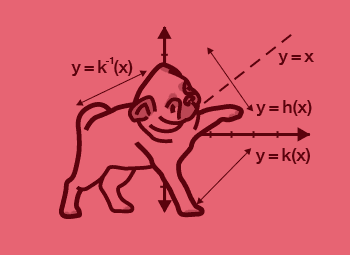

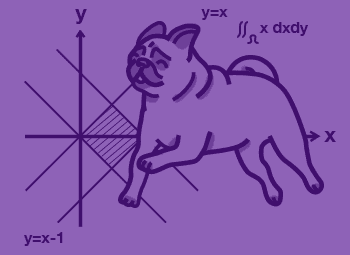



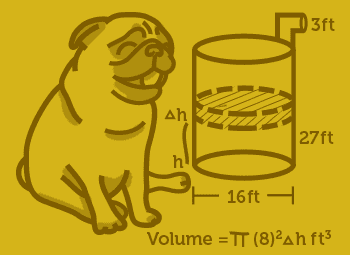
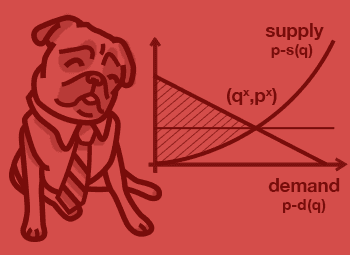

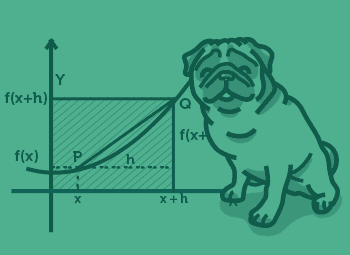
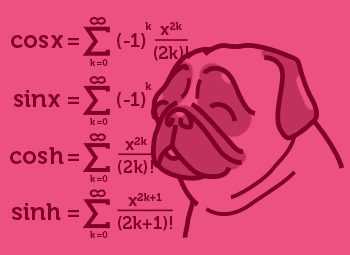
What is Differential Calculus?
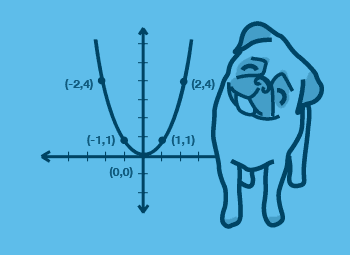
Differential Calculus is the branch of mathematics that studies how quantities change. At its core, it answers one question: given a function, how fast is it changing at any specific point? The central concept is the derivative — a precise measure of instantaneous rate of change. Differential Calculus underpins virtually every quantitative discipline, from engineering and physics to economics and data science. In Ireland, it is formally introduced in Leaving Certificate Higher Level Maths and then developed in depth across first and second year university mathematics, science, and engineering programmes.
What topics are covered in Differential Calculus?
A standard Differential Calculus course moves through several connected topic areas. You begin with limits and continuity — the rigorous foundation that makes calculus work. You then build the definition of the derivative from first principles before learning the core differentiation rules: power rule, constant rule, sum rule, product rule, quotient rule, and the chain rule. From there the course expands to implicit differentiation, differentiation of trigonometric, exponential, and logarithmic functions, and higher-order derivatives. The final major areas are applications: related rates (where two or more quantities change together over time), curve sketching using first and second derivatives, and optimisation (finding maximum and minimum values). Each topic builds directly on the last, so the course rewards steady, structured study over cramming.
Is Differential Calculus hard to pass?
The honest answer is that Differential Calculus is demanding — but its difficulty is concentrated in a small number of areas. Most students find limits straightforward once the notation is demystified. The differentiation rules are largely procedural and become automatic with practice. The real difficulty spikes at the chain rule in complex compositions, implicit differentiation, and especially related rates, where you must translate a written scenario into a calculus equation before you can differentiate anything. Students who struggle most are often those who learn the procedures without understanding the underlying reasoning. StudyPug's certified-teacher videos focus precisely on this: teaching the method and the logic, not just the steps, so that when exam questions are phrased differently from the examples you practised, you still know what to do.
How does Differential Calculus connect to other university maths courses?
Differential Calculus is the gateway to almost all higher mathematics. It feeds directly into Integral Calculus (the inverse operation), Multivariable Calculus (extending derivatives to functions of several variables), and Differential Equations (which model real-world systems using derivatives). Linear Algebra courses also assume calculus fluency for topics like eigenvalues in applied contexts. In Ireland, most engineering and science degree programmes require students to pass first-year calculus modules before progressing to second year. Investing in a genuine understanding of Differential Calculus — not just passing the exam — pays dividends across every subsequent module in your degree.
How is Differential Calculus assessed in Ireland?
Assessment varies slightly by institution, but the typical structure at Irish universities is a combination of continuous assessment and a written end-of-semester examination. Continuous assessment usually includes weekly or fortnightly homework assignments and in-class tests, contributing roughly 20–30% of the overall module grade. The formal written examination accounts for the remainder and tests the full course curriculum, requiring students to apply differentiation techniques to unseen, multi-step problems under time pressure. For students preparing via the Leaving Certificate, calculus appears on Higher Level Maths Paper 1, which is sat in June and marked by the State Examinations Commission. In both contexts — Leaving Cert and university — exam success depends on practising a wide variety of problem types, not just reviewing theory.
What are the hardest topics in Differential Calculus, and how do you get better at them?
Three topics account for the majority of lost marks in Differential Calculus assessments: related rates, implicit differentiation, and optimisation word problems. Related rates problems are difficult because the mathematical set-up is entirely on you — the problem gives you a scenario in words, and you must identify the variables, find the equation that relates them geometrically or physically, and then differentiate implicitly with respect to time. Implicit differentiation trips students who forget to apply the chain rule every time they differentiate a term in y. Optimisation problems require finding critical points and then correctly classifying them using the second derivative test. The pattern that reliably works for all three: work through many varied examples, identify the general structure of the problem type, and practise the set-up phase — not just the computation — until it becomes automatic.
Why use StudyPug for Differential Calculus?
StudyPug is built for exactly the student who is stuck — whether that is a first-year engineering student who cannot get the chain rule to stick, a Leaving Cert student trying to push from a B to an H1, or a postgraduate who needs to refresh calculus for a new programme.
The starting point is StudyPug's diagnostic assessment, which identifies precisely which Differential Calculus topics need attention. Rather than working through an entire course from scratch, you focus your time where it actually matters. From there, certified-teacher concept videos — made by experienced instructors, not AI-generated content — walk through each topic methodically. These videos teach the underlying method, not just the answer to a specific problem, which means you are prepared for the next course, not just the current exam.
As you practise, StudyPug's adaptive practice system adjusts the difficulty to match your current level. Problems get harder as you improve and provide targeted support when you are stuck — keeping you in the zone where real learning happens. All of this is available on any device, so you can practise between lectures, on the bus, or at home at midnight before a morning exam.
One subscription covers every course: Differential Calculus, Integral Calculus, Multivariable Calculus, Linear Algebra, Differential Equations, Statistics, and more. There is no need to purchase separate resources for each module. And with a 30-day money-back guarantee, you can start today without any financial risk.
What you learn in Differential Calculus on StudyPug
StudyPug's Differential Calculus coverage is comprehensive, following the standard university and Leaving Cert curriculum. Topic areas include:
- Limits and continuity — formal definition, limit laws, one-sided limits, limits at infinity, and the squeeze theorem
- Definition of the derivative — from first principles using the difference quotient
- Core differentiation rules — power, product, quotient, and chain rules with worked examples
- Derivatives of special functions — trigonometric, inverse trigonometric, exponential, and logarithmic functions
- Implicit differentiation — including applications to curves not expressed as y = f(x)
- Higher-order derivatives — second and nth derivatives and their interpretations
- Related rates — step-by-step method for translating word problems into calculus equations
- Curve analysis — intervals of increase/decrease, concavity, inflection points, and curve sketching
- Optimisation — finding absolute and relative extrema with real-world applications
- L'Hôpital's Rule — evaluating indeterminate limit forms
- Mean Value Theorem — statement, proof sketch, and applications
No validated internal topic links are available for this page at present. For the full topic list, browse the Differential Calculus course page directly on StudyPug.
How to use StudyPug to improve your Differential Calculus results
The most effective approach combines the diagnostic, video lessons, and practice in a structured loop. Start by running the diagnostic to get a clear picture of your current strengths and gaps. Use this to prioritise which topics to tackle first — do not just start at the beginning of the course if your weak point is specifically related rates or the chain rule.
For each topic, watch the certified-teacher video lesson first. Pause, rewind, and re-watch the method explanation until the logic is clear — not just the steps. Then move into practice problems. Use the adaptive practice to build fluency: the system will increase difficulty as you improve, and will flag patterns in your errors that you might not spot yourself.
As your exam date approaches, shift to mock exams and timed practice tests. These are structured to reflect the format and difficulty of Leaving Cert Higher Level Paper 1 and university end-of-semester assessments. Work through them under exam conditions, then use the detailed solutions to identify any remaining gaps. This revision loop — video, practice, mock exam, review — is the fastest route from struggling to confident in Differential Calculus.
Start your free practice today and see exactly where you stand.
Differential Calculus FAQ
Unsure how StudyPug works? Need help with setting up? Check our frequently asked questions or contact us for help.
What do you learn in Differential Calculus, and what topics does it cover?
Differential Calculus focuses on rates of change and the mathematics of instantaneous variation. Core topics include limits and continuity, the definition of the derivative, differentiation rules (power, product, quotient, and chain rules), implicit differentiation, higher-order derivatives, related rates, and optimisation. You will also study the behaviour of functions using first and second derivatives, including finding maxima, minima, and points of inflection. These concepts form the backbone of all advanced calculus and are essential for engineering, physics, economics, and mathematical sciences.
What is the difference between Differential Calculus and Integral Calculus?
Differential Calculus is the study of derivatives — it answers how fast a quantity changes at any given moment. Integral Calculus is its counterpart, dealing with accumulation and area under curves. The Fundamental Theorem of Calculus links both: differentiation and integration are inverse operations. Students typically study Differential Calculus first, mastering limits and derivatives, before progressing to integration. Many university courses (such as Calculus I and II) follow this order, so a strong foundation in Differential Calculus is critical for success in all subsequent mathematics modules.
What are the prerequisites for Differential Calculus, and what course comes after it?
Prerequisites include a solid understanding of algebra (functions, equations, and graphs), trigonometry (sin, cos, tan and their identities), and pre-calculus concepts such as limits. In Ireland, Leaving Certificate Higher Level Maths provides strong preparation. After Differential Calculus, students typically progress to Integral Calculus or a combined Calculus II course, then Multivariable Calculus, Differential Equations, and Linear Algebra. Building genuine understanding in Differential Calculus — not just memorising rules — is the key to handling those later courses confidently.
Is Differential Calculus hard, and where do students struggle most?
Differential Calculus has a reputation for being challenging, but the difficulty usually comes from a handful of specific areas. Students most commonly struggle with the chain rule (especially in compositions of multiple functions), implicit differentiation, related rates problems (translating a word problem into a derivative equation), and applying l'Hôpital's Rule correctly. Many students also find the epsilon-delta definition of a limit conceptually difficult. The good news is these are learnable with the right step-by-step explanations and targeted practice — pattern recognition builds quickly once the underlying method is clear.
How is Differential Calculus assessed — midterms, finals, and assignments?
At Irish universities, Differential Calculus is typically assessed through continuous assessment (homework assignments and in-class tests, often worth 20–30% of the module grade) and a formal end-of-semester written examination (70–80%). Some programmes also include lab or tutorial participation. The end-of-year exam usually covers all topics from the course and requires students to apply differentiation techniques to unseen problems. For Leaving Certificate students in Ireland, calculus questions appear on the Leaving Cert Higher Level Maths Paper 1, assessed by the State Examinations Commission.
What is one of the hardest topics in Differential Calculus, and how do you approach it?
Related rates problems are consistently the hardest topic for most students. The challenge is not the differentiation itself — it is setting up the equation correctly from a written scenario. A reliable approach: (1) draw a diagram and label all quantities; (2) write an equation relating those quantities; (3) differentiate both sides implicitly with respect to time using the chain rule; (4) substitute known values and solve. Practising a range of problem types — ladder problems, cone-filling, circular expansion — builds the pattern recognition needed to tackle any related rates question in an exam.




Written by the StudyPug Team
Last updated June 5, 2026
3 M+
students
★★★★★
4.8 average
K–12
all grades