College Algebra Help — Video Lessons & Practice
Get clear, step-by-step explanations for any College Algebra problem and build exam-ready confidence.
Value vs. Private Tutor
Expert instruction without the price tag.

Multi-Subject
One subscription unlocks every subject.
Practice Until Perfect
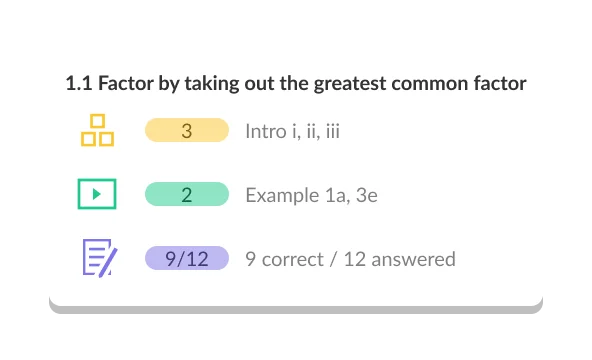
Keep practicing until it truly clicks.
Try It Now
Test your knowledge
Our approach aligns with the evidence
Exam Scores
Better Recall
Less Anxiety
College Algebra Topics
1. Surface Area and Volume
2. Rational Numbers
3. Powers and Exponents
4. Number System and Radicals
5. Radicals
6. Exponents
7. Operations of Polynomials
8. Factorising Polynomial Expressions
9. Introduction to Relations and Functions
10. Linear Functions
11. Absolute Value Functions
12. Linear Equations
13. Solving Linear Systems
14. Linear Inequalities
15. Inequalities in Two Variables
16. Factorising Quadratic Equations
17. Quadratic Functions
18. Quadratic Equations and Inequalities
19. Graphing Rational Functions
20. Functions
21. Direct and Inverse Variation
22. Piecewise Functions
23. Transformations of Functions
24. Exponential Functions
25. Logarithmic Functions
26. Applications of Exponential and Logarithmic Functions
27. Sequences and Series
28 Chapters · 215 Topics · 1321 Videos
Discover Our Learning Areas
Explore key subjects and start learning with interactive content.










What is College Algebra?
College Algebra is the branch of mathematics that extends beyond basic arithmetic to study the structure, relationships, and operations of algebraic expressions. It serves as the essential bridge between Junior Cycle Maths and the higher-level quantitative reasoning required in Leaving Cert Higher Level Maths, third-level STEM programmes, and professional careers in science, finance, and technology. At its core, College Algebra asks you to move fluently between numbers, variables, equations, and functions — learning to model real-world problems symbolically and solve them systematically.
What are the main topics covered in College Algebra?
College Algebra is organised around several interconnected topic areas, each building on the previous one. Understanding the full scope before you begin helps you plan your study and avoid surprise gaps later.
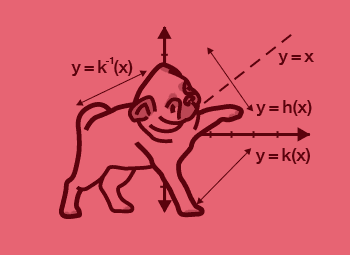
Functions and their graphs form the conceptual backbone of the course. You learn to define a function, identify its domain and range, and interpret transformations — shifts, stretches, and reflections — both algebraically and graphically. Linear, quadratic, polynomial, rational, exponential, and logarithmic functions all appear here.
Equations and inequalities cover techniques for solving problems involving a single variable and multiple variables simultaneously. Systems of equations — solved by substitution, elimination, or matrix methods — are a key component and appear regularly in Leaving Cert Paper 1.
Polynomials and rational expressions require you to factor, expand, simplify, and divide algebraic expressions efficiently. Long division of polynomials and the Remainder Theorem are recurring exam topics at Higher Level.
Exponential and logarithmic functions introduce the inverse relationship between growth and its logarithm. These topics have real-world applications in compound interest, population modelling, and scientific measurement — all contexts that the Leaving Cert draws on for applied questions.
Sequences and series — arithmetic and geometric — round out the core syllabus. Proof by induction, which appears at Higher Level, is closely tied to series and is one of the most marks-rich topics to prepare thoroughly.
Is College Algebra hard?
College Algebra has a reputation for being demanding, but the difficulty is specific rather than general. Most students do not struggle with algebra as a whole — they hit walls at particular transition points where several rules must be applied together in the right order. Rational expressions, logarithmic equations, and function composition are the three areas where marks are most often lost.
The key insight is that these are procedural skills, not abstract mysteries. They respond well to deliberate practice on worked examples before attempting problems independently. Students who struggle most are usually trying to memorise answers rather than understanding the method. Once you learn to work step by step and check each transformation, the apparent difficulty drops significantly. A well-structured video lesson — one that shows each step and explains why it works — is often enough to make a previously confusing topic feel manageable.
How does College Algebra connect to the Leaving Certificate?
Algebra is not a standalone subject in the Irish system — it is woven throughout the Leaving Certificate Mathematics Papers 1 and 2. At Ordinary Level, algebra questions test your ability to solve equations, work with functions, and apply logarithms in context. At Higher Level, the demands are significantly steeper: you are expected to construct proofs, work with complex numbers, apply the binomial theorem, and handle multi-step problems that combine several algebraic techniques in a single question.
Algebra typically accounts for a substantial portion of Paper 1 marks at both levels, which means improving your algebraic fluency has an outsized effect on your overall Leaving Cert grade. The CAO points system makes this particularly high-stakes for students targeting engineering, science, or business programmes that require H4 or above in Mathematics.
Practising with exam-style questions — rather than only textbook exercises — is critical. Leaving Cert questions are worded to test understanding of context and method simultaneously, not just computational ability. StudyPug's practice problems are based on real exam formats, so you become familiar with how questions are phrased before sitting the actual paper.
Why StudyPug for College Algebra?
There are many places to find algebra explanations online, but most stop at showing you an answer. StudyPug is built around a different principle: certified teachers teach the method behind every problem, so you can replicate the approach on questions you have never seen before — which is exactly what the Leaving Cert demands.
Every video lesson is created by a qualified, experienced teacher — not generated by AI. This matters because good teaching requires anticipating where students go wrong and addressing those misconceptions explicitly. The lessons are structured to guide you through each step, with clear narration of the reasoning behind every move.
The diagnostic assessment is one of StudyPug's most practical features for Leaving Cert students. Rather than working through every topic from the start — which is inefficient this close to exams — the diagnostic identifies the specific gaps in your understanding and directs your study there first. Combined with adaptive practice that adjusts to your level in real time, you make measurable progress in every session rather than spinning your wheels on material you already know.
StudyPug also aligns directly with the Irish Leaving Certificate curriculum, so every lesson you watch is relevant to your actual exam. There are no irrelevant detours into topics your syllabus does not cover.
What you learn — College Algebra curriculum coverage
StudyPug's College Algebra content follows the Leaving Certificate Mathematics syllabus for Senior Cycle, covering both Ordinary and Higher Level requirements. The topic areas below give you a clear picture of what is available on the platform.
You will find full coverage of linear and quadratic functions, including vertex form, completing the square, the discriminant, and applications to modelling. Polynomial algebra — factoring techniques, synthetic division, the factor and remainder theorems — is covered in step-by-step video lessons with worked examples drawn from past-paper-style questions.
Rational expressions and equations are covered from simplification through to solving equations with restrictions, including asymptotic behaviour when graphed. Exponential and logarithmic functions receive detailed treatment: the laws of logarithms, change of base, solving exponential equations, and real-world applications in growth and decay.
Systems of equations are addressed using substitution, elimination, and matrix methods. Sequences and series — arithmetic progressions, geometric progressions, the sum to infinity — are covered fully, along with the binomial theorem and proof by induction for Higher Level students.
Because no validated internal topic-page URLs are available in the current sitemap map for this course, direct topic links are omitted here. You can explore the full topic library directly on the College Algebra course page after signing in.
How to use StudyPug for College Algebra
The most effective StudyPug workflow for Leaving Cert College Algebra follows three stages: diagnose, learn, practise.
Start with the diagnostic. Before watching any videos, run the diagnostic assessment for College Algebra. It takes around ten minutes and produces a prioritised list of the topics where your understanding is weakest. This alone saves most students hours of misdirected study.
Watch the concept video before attempting problems. For each topic on your list, watch the relevant certified-teacher video lesson. Pause when the teacher introduces a new step, try to anticipate the next move, then continue. The goal is not passive viewing — it is active understanding of the method. Most College Algebra video lessons on StudyPug run between eight and fifteen minutes.
Practise with adaptive problems. After watching the lesson, move into practice mode. The adaptive system starts at an appropriate difficulty for your current level and adjusts upward as you answer correctly. If you make an error, it provides a worked solution and steps back slightly before trying again. This mirrors the spaced repetition approach that research consistently shows improves long-term retention.
Use exam-style practice in the final weeks. In the run-up to your Leaving Cert, switch to exam-format practice questions. These mirror the structure and phrasing of actual Leaving Cert algebra questions, so you are practising not just the maths but also the exam technique.
StudyPug is available on any device — desktop, tablet, or phone — so you can fit a twenty-minute practice session into a lunch break or study a video lesson on the bus. There is no fixed schedule; you move at the pace that suits your revision plan. And with a 30-day money-back guarantee, there is no financial risk in getting started today.
College Algebra FAQ
Unsure how StudyPug works? Need help with setting up? Check our frequently asked questions or contact us for help.
What do you learn in College Algebra, and what topics does it cover?
College Algebra covers the core algebraic skills needed for higher-level mathematics. Topics include linear and quadratic equations, polynomials, rational expressions, exponential and logarithmic functions, systems of equations, inequalities, sequences and series, and an introduction to complex numbers. The course builds the problem-solving and analytical thinking skills that underpin further study in calculus, statistics, and engineering. Students leave with a solid grounding in algebraic reasoning they can apply across science, business, and technology subjects.
What is the difference between College Algebra and Pre-Calculus?
College Algebra focuses on developing fluency with algebraic structures — functions, equations, polynomials, and logarithms — with an emphasis on reasoning and manipulation. Pre-Calculus extends this foundation by introducing trigonometry, limits, and the behaviour of functions as they approach calculus concepts. Think of College Algebra as building the toolkit and Pre-Calculus as learning how to use it in more complex mathematical settings. Many students take College Algebra first, then move to Pre-Calculus before tackling calculus.
Is College Algebra hard, and where do students struggle most?
College Algebra is manageable with consistent practice, but many students struggle with rational expressions, function composition, and logarithmic equations. These topics require layering several rules at once, which can be overwhelming without clear step-by-step guidance. Students also commonly lose marks on sign errors in polynomial operations and on interpreting function transformations graphically. The good news is that these are all learnable patterns — once the method clicks, problems that seemed impossible become straightforward.
What should I take before College Algebra, and what comes after it?
Before College Algebra you should be comfortable with basic algebra — solving linear equations, working with exponents, and graphing simple functions. Junior Cycle Maths in Ireland provides a solid foundation. After College Algebra the natural progression is Pre-Calculus and then Calculus, which is central to engineering, physics, and economics degrees. College Algebra also supports Leaving Cert Higher Level Maths, making it a strong preparation for CAO-points subjects that require quantitative reasoning.
Is College Algebra on the Leaving Certificate, and how is it tested?
Algebra is a core strand of the Leaving Certificate Mathematics syllabus at both Ordinary and Higher Level. On the Leaving Cert exam, algebra appears across Paper 1 questions — including functions, equations, sequences and series, and proof by induction at Higher Level. Questions range from short structured parts to longer multi-step problems worth significant marks. Practising with Leaving Cert-style questions is essential, and StudyPug's practice problems are based on real exam formats so you know exactly what to expect.
What is one of the hardest concepts in College Algebra, and how do you tackle it?
Logarithmic equations consistently rank among the most challenging concepts for students. The difficulty lies in switching fluently between logarithmic and exponential forms and applying log laws without losing track of restrictions on the domain. The most effective approach is to first master the three core log laws in isolation, then practise converting between forms, and finally work through multi-step equations in increasing complexity. Watching a worked example video that shows each transformation written out clearly — before attempting practice problems — makes the pattern stick much faster.





Written by the StudyPug Team
Last updated June 5, 2026
3 M+
students
★★★★★
4.8 average
K–12
all grades