AP Calculus BC Help — Video Lessons & Practice
Get clear explanations for every AP Calculus BC topic and build the exam-ready confidence you need for test day.
Expert Video Solutions
Watch it solved then solve the next alone.
Unlimited Practice
Practice until BC finally clicks.
Test Prep Included
Practice real exam questions in your plan.
Try It Now
Test your knowledge
Our approach aligns with the evidence
Exam Scores
Better Recall
Less Anxiety
AP Calculus BC Topics
1. Limits & Continuity
2. Derivatives
3. Derivative Applications
4. Integrals
5. Integration techniques
6. Integral Applications
7. Differential Equations
8. Sequence and Series
8 Chapters · 68 Topics · 454 Videos
Discover Our Learning Areas
Explore key subjects and start learning with interactive content.

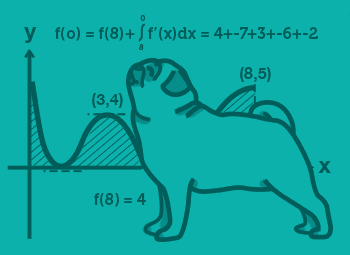
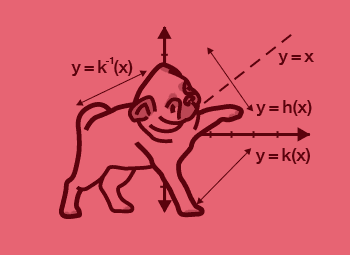

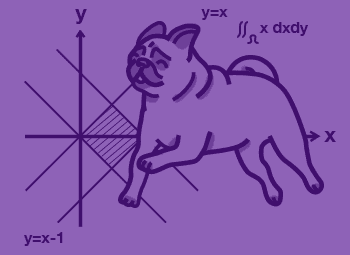


What is AP Calculus BC?
AP Calculus BC is a College Board Advanced Placement course and exam that covers the equivalent of two semesters of university-level calculus in a single secondary school year. It builds from the foundations of AP Calculus AB — limits, derivatives, and integrals — and extends into advanced integration techniques, infinite sequences and series, parametric and polar functions, and deeper work with differential equations. Students who complete the course and sit the AP exam in May can earn up to two semesters of university maths credit, making it one of the most valuable courses available to secondary students in Ireland and internationally.
What topics are covered in AP Calculus BC?
The course is organised into units that build on each other progressively. The first half revisits and deepens AB-level content: limits and continuity, differentiation rules including the chain rule and implicit differentiation, and integration using substitution and the Fundamental Theorem of Calculus. The second half introduces BC-specific content: integration techniques such as integration by parts, partial fraction decomposition, and improper integrals; logistic differential equations; parametric, vector, and polar functions and their derivatives and integrals; and the full unit on infinite sequences and series, which includes power series, Taylor and Maclaurin series, and multiple convergence tests.
The AP exam tests all of this material across multiple-choice and free-response sections, with some questions permitting a graphing calculator and others requiring work by hand. A thorough grasp of every unit is necessary for a strong score.
Is AP Calculus BC hard?
AP Calculus BC is consistently rated among the most demanding AP courses. The challenge comes from three sources: the volume of distinct concepts, the speed at which the course moves, and the cumulative nature of the content. A weakness in limits or derivatives does not stay isolated — it surfaces again in every later unit. Students who struggle tend to lose ground specifically in the series unit, where knowing the correct convergence test for a given problem type requires both pattern recognition and genuine conceptual understanding, not just memorisation.
That said, students who engage with the material actively — working through practice problems and reviewing errors rather than re-reading notes passively — do significantly better. The exam rewards clear mathematical reasoning and correct justification, so the study habit that pays off most is explaining your working at every step.
What comes before and after AP Calculus BC?
The standard pathway into AP Calculus BC runs through precalculus and, for most students, AP Calculus AB. Precalculus builds the algebraic fluency and trigonometric grounding the course assumes from day one. AB gives students the limits-to-integration foundation that BC accelerates through. Some students with strong precalculus backgrounds take BC directly, skipping AB; this is viable but demanding. After BC, students are well placed for multivariable calculus, linear algebra, and differential equations at university — the standard second- and third-year maths sequence for STEM degrees. A strong BC exam score means arriving at university already ahead of the introductory maths requirement.
How does the AP Calculus BC exam work?
The AP Calculus BC exam is sat each May and scored on a 1–5 scale by College Board. It has two main sections. Section I is multiple choice: 45 questions split into a no-calculator part (30 questions, 60 minutes) and a calculator-permitted part (15 questions, 45 minutes). Section II is free response: 6 questions split similarly between calculator and no-calculator sub-sections. Free-response questions are graded on the quality of mathematical justification, not only the final answer — clear notation and correct reasoning earn points even if the final value contains a minor error. Scores of 4 and 5 earn university credit at most institutions; many universities accept a 3. The exam also produces an AB subscore, which reflects performance on the AB-level subset of questions.
Why StudyPug for AP Calculus BC?
StudyPug is built around three things that matter most when you are preparing for a high-stakes exam like AP Calculus BC: knowing where to start, understanding the method, and practising until it is automatic.
The diagnostic assessment removes the guesswork from revision. Rather than working through topics in order from the beginning, you take a short diagnostic that maps your current understanding and identifies the exact units and concepts where your time will have the most impact. For a course as long and cumulative as BC Calculus, this is the difference between studying efficiently and running out of time before the exam.
Certified-teacher concept videos form the core of every lesson. These are not AI-generated explanations or automated walkthroughs — they are taught by qualified teachers who focus on the method: why this approach works, what the common errors are, and how to recognise which technique a problem is asking for. That last point matters enormously in AP Calculus BC, where the free-response section specifically tests whether you can choose the right tool and justify its use.
Adaptive practice adjusts difficulty to your performance in real time. As you work through integration techniques or series problems, the system tracks which question types you answer confidently and which ones you hesitate on, and it adjusts the next set accordingly. You spend more time on the problems that are just beyond your current level — the most productive zone for building exam-ready fluency.
All lessons are aligned to the AP Calculus BC curriculum as set by College Board, and practice questions are based on real exam-style questions so the format and difficulty feel familiar before test day.
What you learn — AP Calculus BC curriculum coverage
StudyPug covers every unit in the AP Calculus BC course. The full lesson library includes:
- Limits and continuity — including L'Hôpital's Rule and limits at infinity
- Differentiation — all standard rules, implicit differentiation, related rates, and optimisation
- Integration — Riemann sums, definite and indefinite integrals, substitution, and the Fundamental Theorem
- Advanced integration techniques — integration by parts, partial fractions, improper integrals
- Differential equations — slope fields, Euler's method, separable equations, logistic growth
- Parametric, vector, and polar functions — derivatives, arc length, area in polar form
- Infinite sequences and series — convergence tests, power series, Taylor and Maclaurin series, error bounds
Every topic has dedicated concept videos, worked examples, and practice problem sets. Whether you are working through the course for the first time or reviewing before the May exam, the full curriculum is available in one place.
Note: No validated internal topic-page links are available for this course in the current site map. The curriculum topics listed above reflect the full AP Calculus BC scope; use the StudyPug topic browser to navigate to individual lesson pages.
How to use StudyPug for AP Calculus BC
The most effective way to use StudyPug for AP Calculus BC is to start with the diagnostic. It takes around ten minutes and produces a personalised focus list — the specific topics where your understanding is weakest. From there, work through the corresponding concept videos one topic at a time, pausing to attempt problems before watching the worked solution. That active retrieval step is what turns watching into learning.
Once you have covered a unit, use the adaptive practice sets to consolidate. The system will keep increasing difficulty until the topic is solid, then move on. In the weeks before the AP exam, shift to the exam-prep practice: timed sets of multiple-choice questions followed by free-response practice with attention to written justification. Use Photo Search if you want to find the lesson that matches a specific problem from your textbook or past paper — take a photo of the problem and StudyPug will surface the matching lesson.
StudyPug is available on any device, any time, so revision sessions can fit around school, the Leaving Certificate preparation schedule, or whatever else is competing for your attention in sixth year. The 30-day money-back guarantee means you can explore the full course without any financial risk — if it is not right for you, a full refund is available within 30 days.
AP Calculus BC FAQ
Unsure how StudyPug works? Need help with setting up? Check our frequently asked questions or contact us for help.
What do you learn in AP Calculus BC, and what topics does it cover?
AP Calculus BC covers all the content of AP Calculus AB plus additional advanced topics. Core areas include limits, derivatives, integrals, the Fundamental Theorem of Calculus, differential equations, and parametric and polar functions. The BC-only content adds integration techniques such as integration by parts and partial fractions, infinite sequences and series including Taylor and Maclaurin series, and more advanced work with differential equations. It is one of the most rigorous maths courses available at secondary level and is designed to mirror first-year university calculus.
What is the difference between AP Calculus BC and AP Calculus AB?
AP Calculus AB covers roughly one semester of university-level calculus — limits, derivatives, and introductory integration. AP Calculus BC covers all of AB plus a second semester's worth of material: more advanced integration techniques, infinite series, parametric equations, polar coordinates, and deeper work with differential equations. Students who score well on the BC exam typically receive two semesters of university credit. BC is the more comprehensive qualification; AB is the recommended starting point if you are new to calculus.
Is AP Calculus BC hard, and where do students struggle most?
AP Calculus BC is widely considered one of the most challenging AP courses. Students typically find the infinite series unit — especially convergence tests and Taylor series — the most demanding, because it requires both procedural fluency and conceptual understanding. Integration techniques, particularly integration by parts and partial fractions, also trip up many students. The pace is fast and cumulative: weak foundations in algebra or AB-level calculus compound quickly. Early topic mastery and consistent practice are the most reliable ways to stay on track throughout the course.
What should I take before AP Calculus BC, and what comes after it?
Students should have a strong command of precalculus — including trigonometry, functions, and algebraic manipulation — before starting AP Calculus BC. Many students take AP Calculus AB first, though confident students sometimes take BC directly. After BC, students are well-prepared for university-level Calculus III (multivariable calculus), linear algebra, and differential equations. A strong BC score also counts as credit at most universities, letting students skip introductory maths modules and move into more specialised coursework immediately on arrival.
Is AP Calculus BC on the AP exam, and how is it tested?
Yes. The AP Calculus BC exam is administered by College Board every May and is scored on a 1–5 scale. The exam has two sections: a multiple-choice section (45 questions, some calculator-allowed) and a free-response section (6 questions, some calculator-allowed). The free-response questions reward clear mathematical communication and justification — not just the correct answer. A score of 3 or above is considered passing; scores of 4 or 5 typically earn university credit. The exam includes an AB subscore, so strong AB-level performance still earns recognition.
What is one of the hardest concepts in AP Calculus BC, and how do you tackle it?
Series convergence is consistently the hardest concept in BC Calculus. Students must know when and how to apply multiple tests — the Ratio Test, Comparison Test, Integral Test, Alternating Series Test, and others — and understand why a series converges or diverges, not just follow a procedure. The best approach is to build a decision-tree habit: classify the series type first, then select the appropriate test. Working through many varied examples with immediate feedback, and reviewing errors on practice problems before the exam, is the most reliable path to fluency.





Written by the StudyPug Team
Last updated June 5, 2026
3 M+
students
★★★★★
4.8 average
K–12
all grades