TOPIC
MY PROGRESS
Pug Score
0%
Best Streak
0 in a row
Study Points
+0
Overview
Practice
Read
Quiz
Next Steps
Get Started
Get unlimited access to all videos, practice problems, and study tools.
Back to Menu
Topic Progress
Pug Score
0%
Best Practice
No score
Read
Not viewed
Best Quiz
No attempts
Best Streak
0 in a row
Study Points
+0
Overview
Practice
Read
Quiz
Next Steps
Read
Mendelian Genetics: Unlocking the Secrets of Inheritance
Mendelian Genetics covers the basic inheritance patterns discovered by Gregor Mendel, including dominant and recessive alleles, Punnett squares, and the laws of segregation and independent assortment.
Mendelian genetics is the study of how traits are inherited from parents to offspring, based on the pioneering work of Gregor Mendel in the 19th century. Through careful experiments with pea plants, Mendel identified predictable patterns of inheritance that form the foundation of modern genetics. Students exploring this topic will understand how dominant and recessive alleles interact to produce observable traits.
This topic builds directly on an understanding of Cellular Disease, Cancer and Mutations, which introduces how changes at the genetic level can affect organisms a concept that becomes clearer once students understand normal inheritance patterns.
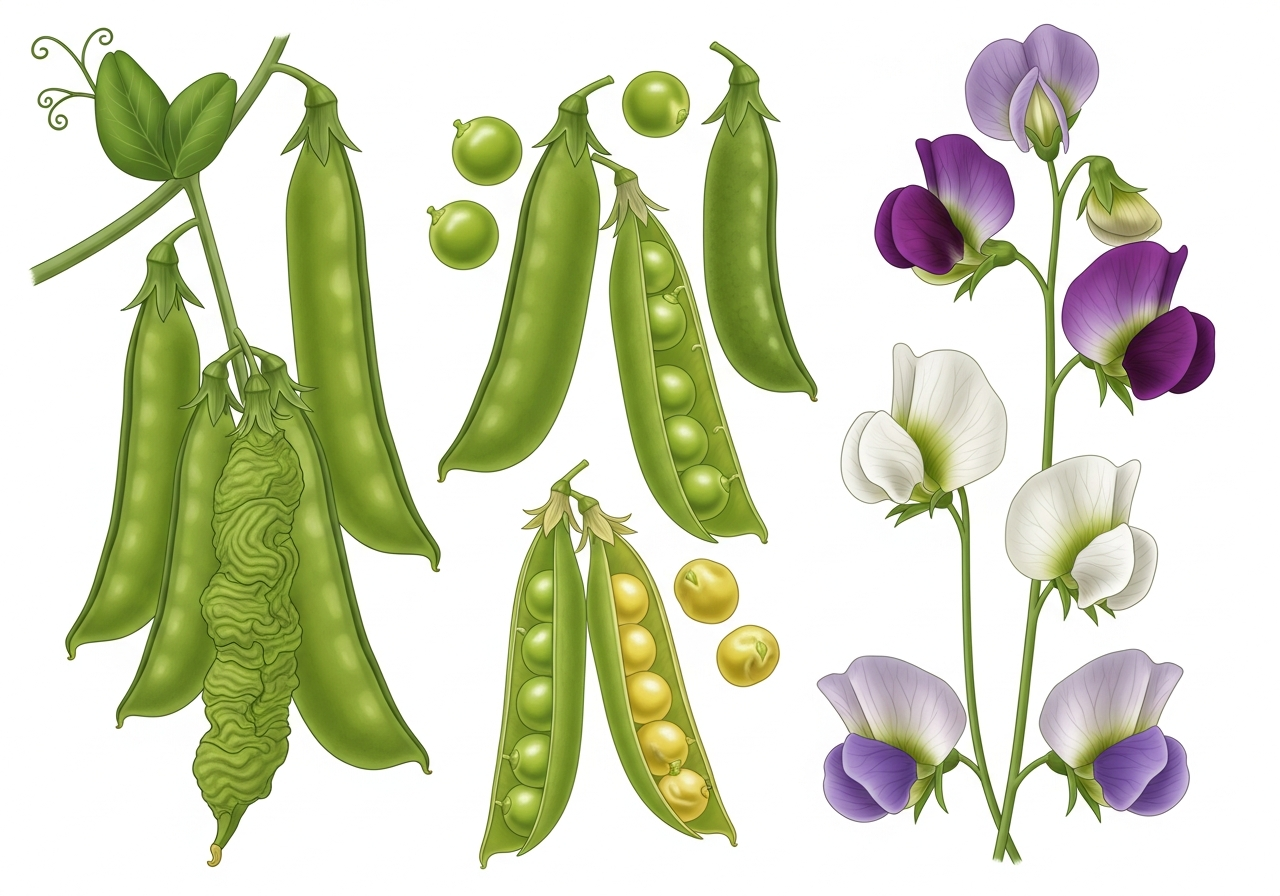
Mendel's Laws: Segregation and Independent Assortment
Mendel's Law of Segregation states that each organism carries two alleles for each trait, and these alleles separate during gamete formation so that each gamete carries only one allele. This principle explains why traits can reappear in later generations even when hidden in the first generation.
Mendel's Law of Independent Assortment states that alleles for different traits are distributed to gametes independently of one another. This law is demonstrated through dihybrid crosses, where two traits are tracked simultaneously, producing a 9:3:3:1 phenotypic ratio in the second generation. This topic connects closely to Meiosis and Gamete Formation, which explains the cellular mechanism behind allele segregation.
Monohybrid Crosses and Punnett Squares
A monohybrid cross examines the inheritance of a single trait between two parents. Students use a Punnett square a grid tool that maps all possible allele combinations to predict the genotypic and phenotypic ratios of offspring. For example, crossing two heterozygous tall pea plants (Tt × Tt) produces a 3:1 phenotypic ratio of tall to short offspring.
When a homozygous dominant parent (TT) is crossed with a homozygous recessive parent (tt), all first-generation (F1) offspring are heterozygous (Tt) and display the dominant phenotype. This classic result demonstrates complete dominance and the predictive power of Punnett squares.
Variations in Dominance: Incomplete Dominance and Codominance
Not all inheritance follows simple dominant-recessive patterns. In incomplete dominance, neither allele is fully dominant, producing a blended intermediate phenotype. For example, crossing red carnations (RR) with white carnations (WW) produces pink offspring (RW), and a subsequent cross of two pink plants yields a 1:2:1 phenotypic ratio of red, pink, and white.
Codominance occurs when both alleles are fully expressed simultaneously. Human ABO blood types illustrate this: a person with blood type AB has inherited one A allele and one B allele, and both are expressed equally. These variations extend Mendel's original principles and connect to Modern Genetics and Complex Inheritance.
Key Terms & Definitions
Dominant Allele: An allele that is expressed in the phenotype even when only one copy is present. It masks the effect of a recessive allele. Represented by a capital letter (e.g., T for tall).
Recessive Allele: An allele whose effect is only expressed in the phenotype when two copies are present (homozygous recessive). Represented by a lowercase letter (e.g., t for short).
Genotype: The actual genetic makeup of an organism, written as a combination of allele letters (e.g., TT, Tt, or tt). The genotype determines what traits can potentially be expressed.
Phenotype: The observable physical characteristics of an organism that result from its genotype and environmental interactions (e.g., tall or short, purple or white flowers).
Homozygous: Having two identical alleles for a particular gene either both dominant (AA) or both recessive (aa). Homozygous organisms breed true for that trait.
Heterozygous: Having two different alleles for a particular gene (e.g., Aa). Heterozygous organisms carry one dominant and one recessive allele and are sometimes called hybrids for that trait.
Punnett Square: A grid diagram used to predict the possible genotypes and phenotypes of offspring from a genetic cross. It maps all possible combinations of parental alleles.
Monohybrid Cross: A genetic cross that tracks the inheritance of a single trait between two parents, used to determine offspring ratios for that one characteristic.
Allele: One of two or more versions of a gene. Organisms inherit one allele from each parent for each gene (e.g., the gene for eye color may have a brown allele or a blue allele).
F1 Generation: The first filial generation the offspring produced from a cross between two parental (P) generation individuals. The F1 generation often shows only the dominant phenotype in simple crosses.
Incomplete Dominance: A pattern of inheritance where neither allele is completely dominant, resulting in a blended intermediate phenotype in heterozygous individuals (e.g., red × white = pink).
Codominance: A pattern of inheritance where both alleles are fully and simultaneously expressed in the phenotype of a heterozygous individual (e.g., AB blood type).
Applying Mendelian Genetics: Practice and Problem Solving
Students strengthen their understanding of inheritance by working through genetic cross problems using Punnett squares. Practicing monohybrid crosses (e.g., Tt × Tt) and dihybrid crosses (e.g., RrYy × RrYy) helps learners predict phenotypic ratios and understand probability in genetics. These skills directly prepare students for Genetic Patterns and Complex Inheritance Models.
Learners should also practice identifying genotypes from phenotypes, distinguishing between complete dominance, incomplete dominance, and codominance, and interpreting pedigree-style problems. Mastery of these foundational skills supports future study of Mutations, Types and Effects and Biotechnology and Current Applications.
Prerequisite and Related Knowledge
Before studying Mendelian genetics, students should be familiar with Cellular Disease, Cancer and Mutations, which introduces how genetic changes affect cell function. Understanding Genetic Variation, Sources of Diversity, and Cell Reproduction and Meiosis and Gamete Formation provides the cellular context for how alleles are separated and passed to offspring.
The molecular basis of heredity is explored in DNA Structure and the Molecular Basis of Heredity, while Gene Expression and Protein Synthesis explains how genetic information is converted into physical traits. Together, these topics form a complete picture of how genetic information flows from DNA to observable characteristics.
Related Topics & Connections
Mendelian genetics serves as the gateway to a broad network of biological concepts. The following related topics build upon or connect directly to the principles of basic inheritance:
- Modern Genetics, Complex Inheritance Extends Mendelian principles to more complex patterns such as polygenic inheritance, epistasis, and sex-linked traits.
- DNA Structure, Molecular Basis of Heredity Explains the chemical structure of DNA that carries the alleles Mendel described.
- Gene Expression, Protein Synthesis Shows how alleles are ultimately expressed as proteins that produce observable phenotypes.
- Genetic Variation, Sources of Diversity, Cell Reproduction Explores how genetic diversity arises through processes that interact with Mendelian inheritance.
- Meiosis, Gamete Formation Provides the cellular mechanism that physically separates alleles during reproduction, directly supporting the Law of Segregation.
- Genetic Patterns, Complex Inheritance Models A subsequent topic that applies and extends Mendelian concepts to more sophisticated inheritance scenarios.
- Mutations, Types and Effects Examines how changes in alleles can alter inheritance patterns and phenotypes.
- Gene Expression, Transcription and Translation Connects genotype to phenotype at the molecular level.
- Molecular Structure, DNA Components and Organization Provides deeper understanding of the molecules that carry genetic information.
- Genetic Drift, Population Changes Explores how allele frequencies shift in populations over time.
- Natural Selection, Selection Pressures Examines how environmental pressures favor certain alleles and phenotypes.
- Speciation, Species Formation Connects genetic inheritance to the long-term process of species divergence.
- Evolutionary Evidence, Multiple Lines of Evidence Uses genetic data as one of several lines of evidence supporting evolutionary theory.
- Biotechnology, Current Applications Applies knowledge of inheritance and genetics to real-world technologies such as genetic engineering and medical diagnostics.
- Research Ethics, Ethical Considerations Addresses the ethical dimensions of applying genetic knowledge in research and medicine.