Topic
Speciation, Species formationMy Progress
Pug Score
0%
Getting Started
Let's build your foundation!
Best Streak
0 in a row
Study Points
+0
Overview
Practice
Read
Quiz
Next Steps
Back to Menu
Topic Progress
Pug Score
0%
Getting Started
"Let's build your foundation!"
Best Practice
No score
Read
Not viewed
Best Quiz
No attempts
Best Streak
0 in a row
Study Points
+0
Overview
Practice
Read
Quiz
Next Steps
Read
Speciation & Species Formation: How New Species Arise
Speciation is the evolutionary process by which new species form from existing populations through reproductive isolation and genetic divergence over time.
What Is Speciation?
Speciation is the evolutionary process through which new and distinct species develop from existing populations. It is a cornerstone of Evolutionary Evidence and occurs when populations accumulate enough genetic differences to become reproductively isolated from one another.
The Biological Species Concept, developed by Ernst Mayr in 1942, defines a species as a group of organisms that can naturally interbreed and produce fertile offspring. Physical similarity alone does not define a species two different species can look alike, while genetically distinct populations may appear identical.

Types of Speciation
Allopatric Speciation
Allopatric speciation occurs when a geographic barrier such as a mountain range, river, or ocean physically separates a population into isolated groups. Without gene flow, each group evolves independently under different selective pressures, mutations, and genetic drift, eventually becoming distinct species.
A classic example involves a river forming and splitting a squirrel population. Over thousands of generations, the two groups diverge until they can no longer interbreed, even if the barrier is removed.
Sympatric Speciation
Sympatric speciation occurs when new species evolve from a single population occupying the same geographic area, without physical separation. A common mechanism is polyploidy a condition in which an organism inherits more than two complete sets of chromosomes, often due to errors in cell division. Polyploid plants are immediately reproductively isolated from their diploid relatives, making polyploidy one of the fastest known speciation mechanisms.
Parapatric Speciation
Parapatric speciation occurs when two adjacent populations experience different environmental conditions at their border. Natural selection favors different traits on each side, and over time the populations may become reproductively isolated without complete physical separation.
Reproductive Isolating Mechanisms
Reproductive isolation is the key biological condition that finalizes species separation. These mechanisms are divided into two major categories.
Pre-zygotic Barriers
Pre-zygotic barriers prevent fertilization from occurring in the first place. They include:
- Behavioral Isolation: Different courtship rituals, mating calls, or displays prevent species from recognizing each other as potential mates.
- Temporal Isolation: Species reproduce at different times of day or year, so they never encounter each other during breeding.
- Habitat (Ecological) Isolation: Species occupy different microhabitats within the same region, reducing contact and gene flow.
- Mechanical Isolation: Differences in the physical structure of reproductive organs or flowers prevent successful mating or pollination.
- Gametic Isolation: Even if mating is attempted, sperm and egg are chemically incompatible and fertilization cannot occur.
Post-zygotic Barriers
Post-zygotic barriers act after fertilization has taken place. Hybrid inviability means the hybrid embryo or offspring cannot survive to reproduce. Hybrid sterility means the hybrid survives but is sterile the mule, offspring of a horse and donkey, is a classic example of hybrid sterility confirming that horses and donkeys are separate species.
Evolutionary Forces Driving Speciation
Gene Flow
Gene flow is the movement of alleles between populations through migration. High levels of gene flow keep populations genetically similar and prevent speciation. When gene flow stops such as when a geographic barrier forms populations begin to diverge.
Natural Selection
As explored in Natural Selection and Selection Pressures, natural selection favors different traits in different environments. When isolated populations face different selective pressures, they evolve in different directions, driving genetic divergence and ultimately speciation.
Genetic Drift and the Founder Effect
As covered in Genetic Drift and Population Changes, genetic drift refers to random changes in allele frequencies, especially powerful in small populations. The Founder Effect occurs when a small group colonizes a new area, carrying only a subset of the original genetic variation. This limited gene pool leads to rapid divergence from the original population.
The Bottleneck Effect similarly reduces genetic diversity when a population is drastically reduced by a catastrophic event, accelerating genetic drift and potentially speciation.
Mutations
As discussed in Mutations: Types and Effects, mutations are the ultimate source of new genetic variation. Different mutations accumulate in isolated populations over many generations, increasing genetic differences between groups. Speciation is typically a gradual process involving many genetic changes over long periods.
Adaptive Radiation and Classic Examples
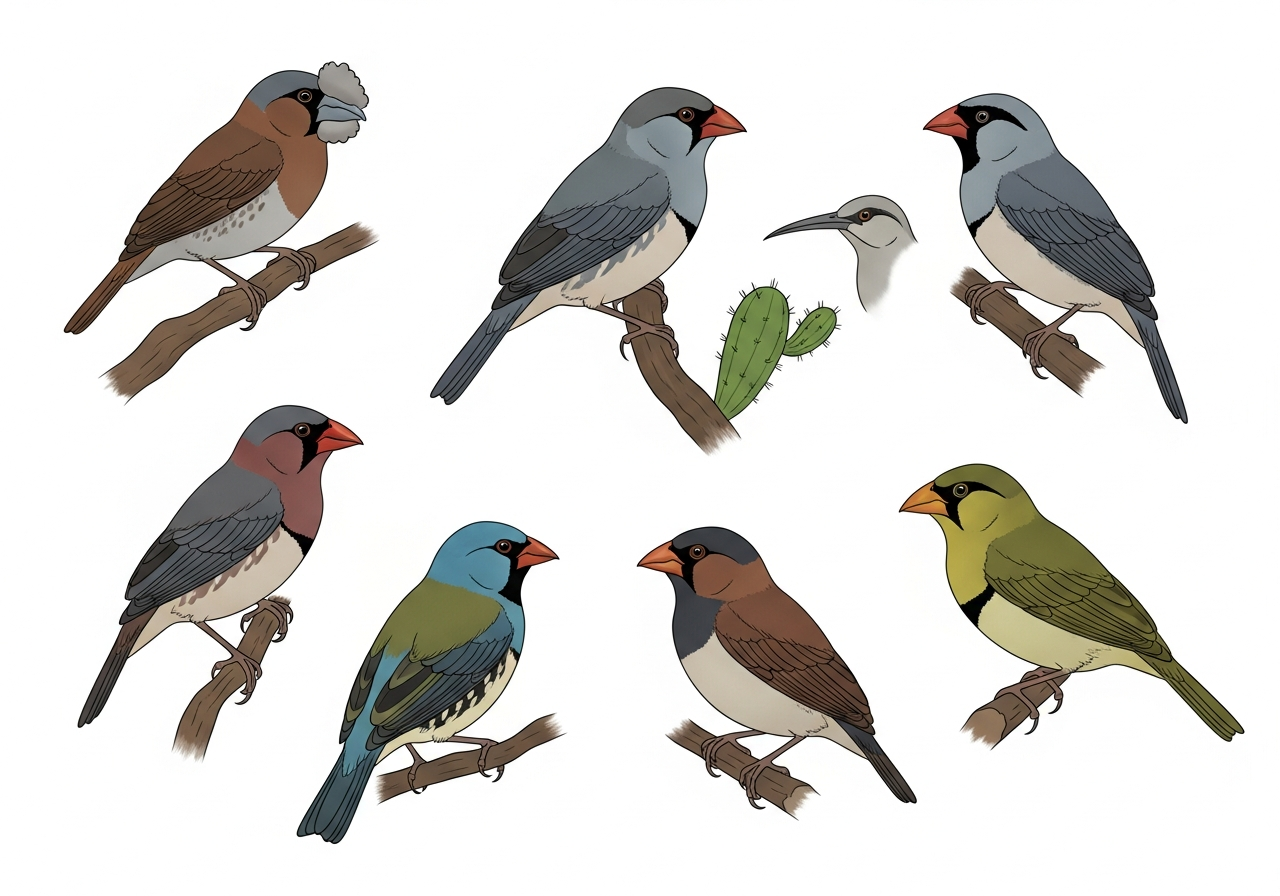
Adaptive radiation describes the rapid evolution of many diverse species from a single common ancestor into different ecological niches. Darwin's Galápagos finches are a textbook example one ancestral finch species colonized the islands and diversified into approximately 15 species, each with a beak shape adapted to a different food source. This process involved allopatric speciation as populations on different islands evolved independently.
Microevolution vs. Macroevolution
Microevolution refers to small-scale genetic changes within a population over time, such as shifts in allele frequencies driven by natural selection, drift, or gene flow. Macroevolution refers to large-scale evolutionary changes at or above the species level, including speciation and extinction. Speciation is a macroevolutionary event, representing the cumulative result of many microevolutionary changes.
Key Terms & Definitions
Biological Species Concept: Developed by Ernst Mayr (1942), this concept defines a species as a group of organisms that can naturally interbreed and produce fertile offspring under natural conditions. It is based on reproductive compatibility, not physical appearance.
Speciation: The evolutionary process through which new and distinct species develop from existing populations, typically involving the accumulation of genetic differences and the establishment of reproductive isolation over time.
Gene Flow: The movement of alleles between populations through migration. Gene flow keeps populations genetically similar; when it stops, populations can diverge and eventually speciate.
Reproductive Isolation: The biological condition in which two populations can no longer interbreed and exchange genes, representing the key final step in the formation of a new species.
Founder Effect: A form of genetic drift that occurs when a small group of individuals breaks away from a larger population and establishes a new colony, carrying only a subset of the original genetic variation. This limited gene pool can lead to rapid divergence and speciation.
Allopatric Speciation: Speciation that occurs when populations are physically separated by a geographic barrier such as a mountain range, river, or ocean, preventing gene flow and allowing independent evolution.
Sympatric Speciation: Speciation that occurs within the same geographic area without physical separation, often through mechanisms such as polyploidy or ecological divergence.
Parapatric Speciation: Speciation occurring when two adjacent populations experience different environmental conditions at their border, with natural selection driving divergence across the contact zone.
Pre-zygotic Barriers: Reproductive isolating mechanisms that prevent fertilization from occurring, including behavioral, temporal, habitat, mechanical, and gametic isolation.
Post-zygotic Barriers: Reproductive isolating mechanisms that act after fertilization, including hybrid inviability (hybrid cannot survive) and hybrid sterility (hybrid survives but cannot reproduce).
Behavioral Isolation: A pre-zygotic barrier in which differences in courtship rituals, mating calls, or displays prevent two species from recognizing each other as potential mates.
Temporal Isolation: A pre-zygotic barrier in which two species cannot interbreed because they reproduce at different times of the day or year.
Habitat (Ecological) Isolation: A pre-zygotic barrier in which two species occupy different microhabitats within the same general area, reducing the chance of meeting and mating.
Mechanical Isolation: A pre-zygotic barrier in which differences in the physical structure of reproductive organs or flowers prevent successful mating or pollination between species.
Gametic Isolation: A pre-zygotic barrier in which mating may be attempted but fertilization fails because the gametes of the two species are chemically incompatible and cannot fuse.
Hybrid Inviability: A post-zygotic barrier in which a hybrid embryo or offspring cannot survive to reproductive age.
Hybrid Sterility: A post-zygotic barrier in which a hybrid organism survives but is sterile and cannot reproduce. The mule (offspring of horse and donkey) is the classic example.
Genetic Drift: Random changes in allele frequencies within a population due to chance events, especially powerful in small, isolated populations. Genetic drift can cause populations to diverge significantly from one another.
Bottleneck Effect: A sharp reduction in population size due to a catastrophic event, leaving survivors with reduced genetic diversity. This can accelerate genetic drift and contribute to speciation.
Polyploidy: A condition in which an organism has more than two complete sets of chromosomes in its cells, often due to errors during cell division. Polyploidy can instantly create reproductively isolated plant species and is a rapid mechanism of sympatric speciation.
Adaptive Radiation: The rapid evolution of many diverse species from a single common ancestor into different ecological niches, as seen in Darwin's Galápagos finches.
Microevolution: Small-scale genetic changes within a population over time, such as shifts in allele frequencies driven by natural selection, drift, or gene flow.
Macroevolution: Large-scale evolutionary changes at or above the species level, including speciation and extinction. Speciation is a macroevolutionary event.
Applying Speciation Concepts
Learners can strengthen their understanding by analyzing real-world case studies such as the Galápagos finches (adaptive radiation), the mule (hybrid sterility), and polyploid wheat (sympatric speciation via polyploidy). Connecting these examples to the mechanisms of Natural Selection and Genetic Drift helps students see how multiple evolutionary forces interact to produce new species.
Students should also practice distinguishing between pre-zygotic and post-zygotic barriers, and between allopatric and sympatric speciation, as these distinctions are central to understanding how biodiversity arises. Exploring Biodiversity and Species Relationships further contextualizes why speciation matters for ecosystem health.
Prerequisite Knowledge
A solid understanding of speciation requires foundational knowledge from several related areas. Students should be familiar with DNA Structure and the Molecular Basis of Heredity, which explains how genetic information is stored and transmitted. Knowledge of Meiosis and Gamete Formation is essential for understanding how reproductive isolation operates at the cellular level.
Understanding Genetic Variation, Sources of Diversity, and Cell Reproduction provides the raw material that makes divergence possible. Familiarity with Mendelian Genetics and Basic Inheritance Patterns and Modern Genetics and Complex Inheritance helps learners understand how traits are inherited and how genetic differences accumulate across generations.
Related Topics & Connections
Speciation sits at the intersection of several major biological concepts. Mutations: Types and Effects provides the ultimate source of genetic variation that fuels divergence between isolated populations. Natural Selection and Selection Pressures explains how different environments favor different traits, driving populations apart over time.
Genetic Drift and Population Changes describes how random allele frequency changes especially in small populations can accelerate speciation. Evolutionary Evidence: Multiple Lines of Evidence provides the fossil, molecular, and anatomical data that confirm speciation has occurred throughout Earth's history.
Biodiversity and Species Relationships explores the outcomes of speciation at the ecosystem level, while Conservation and Protection Methods applies knowledge of speciation to protecting endangered species and preserving genetic diversity. System Dynamics and Complex Interactions connects speciation to broader ecological and evolutionary systems.
At the molecular level, Molecular Structure: DNA Components and Organization, Gene Expression: Transcription and Translation, and Genetic Patterns and Complex Inheritance Models all provide the mechanistic foundation for understanding how genetic differences between populations arise and are expressed.