8th Grade Science Help for Your Child
Targeted assessments find gaps in forces, waves, and chemistry — then adaptive practice builds the foundations your child needs for high school science.
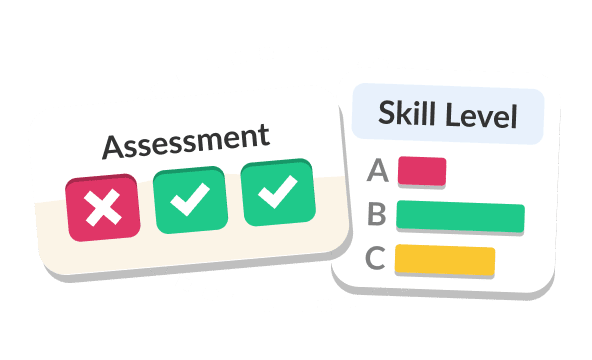
Find Learning Gaps
Spot your child's weak areas before testing.
Step-by-Step Video Lessons
Child learns lessons and repeats them alone.

Matches School Work
Matches your state's 8th grade standards.
Try It Now
Test your knowledge
Our approach aligns with the evidence
Exam Scores
Better Recall
Less Anxiety
8th Grade Science Topics
1. Advanced Methods
2. Cell Theory
3. Cell Structure
4. Cell Processes
7. Atomic Theory
14. Behavior
16. Resources
18. Technology
19. Ecosystems
20. Human Impact
21. Engineering
22 Chapters · 44 Topics
Discover Our Learning Areas
Explore key subjects and start learning with interactive content.





What Is 8th Grade Science?
8th Grade Science is a pivotal year in your child's education. It bridges the exploration of middle school science with the rigour of high school biology, chemistry, and physics. At this grade, students move beyond surface-level observation and begin to understand the why behind natural phenomena. Topics like forces and motion, waves and light, chemistry foundations, and Earth science are not just standalone units — they are the core building blocks every high school science course assumes students already know.
If your child enters 9th grade with gaps in these areas, catching up becomes significantly harder. That is why targeted, curriculum-aligned practice in 8th grade matters so much. StudyPug's 8th Grade Science help gives your child a clear path from where they are to where they need to be.
What Do Students Learn in 8th Grade Science?
8th Grade Science covers four major disciplines, all aligned to state science standards:
- Forces and Motion: Newton's laws, speed, velocity, acceleration, and how forces interact with objects. This is the foundation for high school physics.
- Waves and Light: How waves transfer energy, properties of sound and light waves, reflection, refraction, and electromagnetic spectrum basics.
- Chemistry Foundations: Properties of matter, atoms and molecules, physical and chemical changes, and basic chemical reactions. These concepts feed directly into high school chemistry.
- Earth Science: Plate tectonics, rock cycles, Earth's structure, weather systems, and the relationship between human activity and Earth's systems.
Together, these topics give students the scientific vocabulary and conceptual framework they need to succeed in every high school science course they will encounter.
Is 8th Grade Science Hard?
For many students, 8th Grade Science is where things start to feel genuinely challenging. The concepts become more abstract — your child can no longer just observe and describe; they need to explain and predict. Chemistry vocabulary, wave equations, and Newton's laws all require a level of analytical thinking that feels new at this stage.
The good news is that difficulty is rarely about ability. More often, it comes down to gaps from earlier grades or a concept that was introduced too quickly in class. When those gaps are identified and addressed directly, 8th Grade Science becomes manageable — and often genuinely interesting. Adaptive practice that adjusts to your child's current level makes the climb much less steep.
How Is Science Assessed in 8th Grade?
At the 8th grade level, science assessment typically includes classroom unit tests, lab reports, science fair projects, and in many states, a formal state science assessment. These assessments test not just memorisation but the ability to apply concepts — reading a graph, interpreting an experiment, or explaining a physical process in writing.
StudyPug's practice is based on real exam-style questions that reflect the types of problems your child will see on school tests and state assessments. Quiz replay means your child can work through question types repeatedly until the approach becomes second nature — building real exam readiness, not just familiarity.
Why StudyPug for 8th Grade Science Help?
StudyPug gives your child a structured, proven path through 8th Grade Science — built around five core strengths:
- Diagnostic Assessment: A targeted assessment identifies exactly where your child has gaps across forces and motion, waves, chemistry, and Earth science — so practice is focused, not random.
- Step-by-Step Video Lessons: Certified teachers explain every concept clearly, walking through the method step by step. Your child can watch, pause, and rewatch until the idea clicks — available for all K-10 Science topics.
- Adaptive Practice: Practice adjusts to your child's level, gradually increasing challenge as understanding grows. No wasted time on topics already mastered.
- Quiz Replay: Your child can retake any quiz until they genuinely understand the material — not just guess their way through it once.
- Parent Progress Tracking: The parent dashboard shows completed sessions, quiz scores, and areas needing attention across all science topics. You stay informed without micromanaging.
There is no free trial, but a 30-day money-back guarantee means you can start without financial risk. Free practice content is available so your child can explore the approach before you commit.
What Your Child Will Learn: 8th Grade Science Topics
StudyPug's 8th Grade Science coverage is fully aligned to state science standards. Core topics include:
- Newton's laws of motion and applied force problems
- Speed, velocity, and acceleration calculations
- Wave properties: amplitude, frequency, wavelength, and speed
- Sound waves, light waves, and the electromagnetic spectrum
- Atoms, elements, compounds, and mixtures
- Physical and chemical changes in matter
- Introduction to chemical reactions and energy changes
- Plate tectonics and Earth's interior structure
- The rock cycle and Earth's surface processes
- Scientific inquiry, data analysis, and lab skills
For families in Florida, you can explore how these topics map to your state's expectations on the Florida grade 8 science curriculum page. Families in New York can review alignment on the New York grade 8 science curriculum page.
How to Use StudyPug for 8th Grade Science
Getting started takes less than five minutes. Here is how most families approach it:
- Start with the diagnostic. Before anything else, let the assessment identify your child's specific gaps. This shapes everything that follows.
- Watch the video lessons for weak areas. Certified teachers walk through every concept clearly. For a topic like Newton's second law or chemical reactions, seeing the method explained step by step makes a significant difference.
- Practice with adaptive problems. After the lesson, adaptive practice reinforces the concept at exactly the right challenge level. The system adjusts as your child improves.
- Replay quizzes until the concept sticks. Quiz replay builds the kind of deep understanding that holds up under test conditions — not just in a review session the night before.
- Check the parent dashboard weekly. A quick look at progress reports tells you which topics are improving and which still need attention — keeping you informed without disrupting your child's study flow.
Twenty to thirty minutes of daily practice builds stronger science understanding than infrequent long sessions. Consistency is the single biggest factor in improvement. With the right tools and a clear path, 8th Grade Science becomes a year your child finishes feeling genuinely prepared — not just relieved it is over.
8th Grade Science FAQ
Unsure how StudyPug works? Need help with setting up? Check our frequently asked questions or contact us for help.
How will StudyPug help my child with 8th Grade Science?
A diagnostic assessment finds exactly where your child has gaps in forces and motion, waves, chemistry, and Earth science. Then adaptive practice builds those skills step by step, so your child arrives at high school science with real, solid understanding rather than surface-level familiarity.
What 8th Grade Science topics are covered?
Coverage includes all core 8th grade science areas: forces and motion, waves and light, chemistry foundations, and Earth science. These are the building blocks students need for high school biology, chemistry, and physics courses — all aligned to state science standards.
Is 8th Grade Science hard to catch up on if my child has gaps?
It can feel overwhelming, but targeted practice makes a real difference. The diagnostic assessment identifies specific gaps quickly, so your child practices only what needs work rather than reviewing everything from scratch. Most parents see noticeable improvement in comprehension within four to six weeks of regular practice.
Does the content match what my child learns in school?
Yes. All 8th Grade Science content follows state science standards, so every practice problem and concept explanation connects directly to what your child's teacher is covering in class. Nothing feels off-topic or out of sequence.
What comes after 8th Grade Science?
After 8th Grade Science, students move into dedicated high school courses — typically Biology, Chemistry, and Physics. Building strong foundations now in forces and motion, waves, and chemistry means your child enters those courses with confidence rather than starting from behind.
How is science assessed at the 8th grade level?
8th grade science is typically assessed through classroom quizzes, lab reports, unit tests, and sometimes state science assessments. StudyPug's practice is based on real exam-style questions, so your child builds familiarity with the format and question types they'll encounter in school.





Written by the StudyPug Team
Last updated June 5, 2026
3 M+
students
★★★★★
4.8 average
K–12
all grades