TOPIC
Indigenous Science, Traditional ecological knowledgeMY PROGRESS
Pug Score
0%
Getting Started
"Let's build your foundation!"
Best Streak
0 in a row
Study Points
+0
Overview
Practice
Watch
Read
Quiz
Next Steps
Get Started
Get unlimited access to all videos, practice problems, and study tools.
BACK TO MENU
Topic Progress
Pug Score
0%
Getting Started
"Let's build your foundation!"
Videos Watched
0/0
Best Practice
No score
Read
Not viewed
Best Quiz
No attempts
Best Streak
0 in a row
Study Points
+0
Overview
Practice
Watch
Read
Quiz
Next Steps
Read
Discover Indigenous Science and Traditional Ecological Knowledge
You will learn about Traditional Ecological Knowledge the generations-old wisdom Indigenous peoples have developed about nature and discover how this knowledge helps protect ecosystems and supports modern science.
What Is Traditional Ecological Knowledge?
Traditional Ecological Knowledge, or TEK, is the deep understanding of nature that Indigenous peoples have built over thousands of years. You can think of it as a living library of wisdom about plants, animals, weather, water, and land all collected through careful observation across many generations.
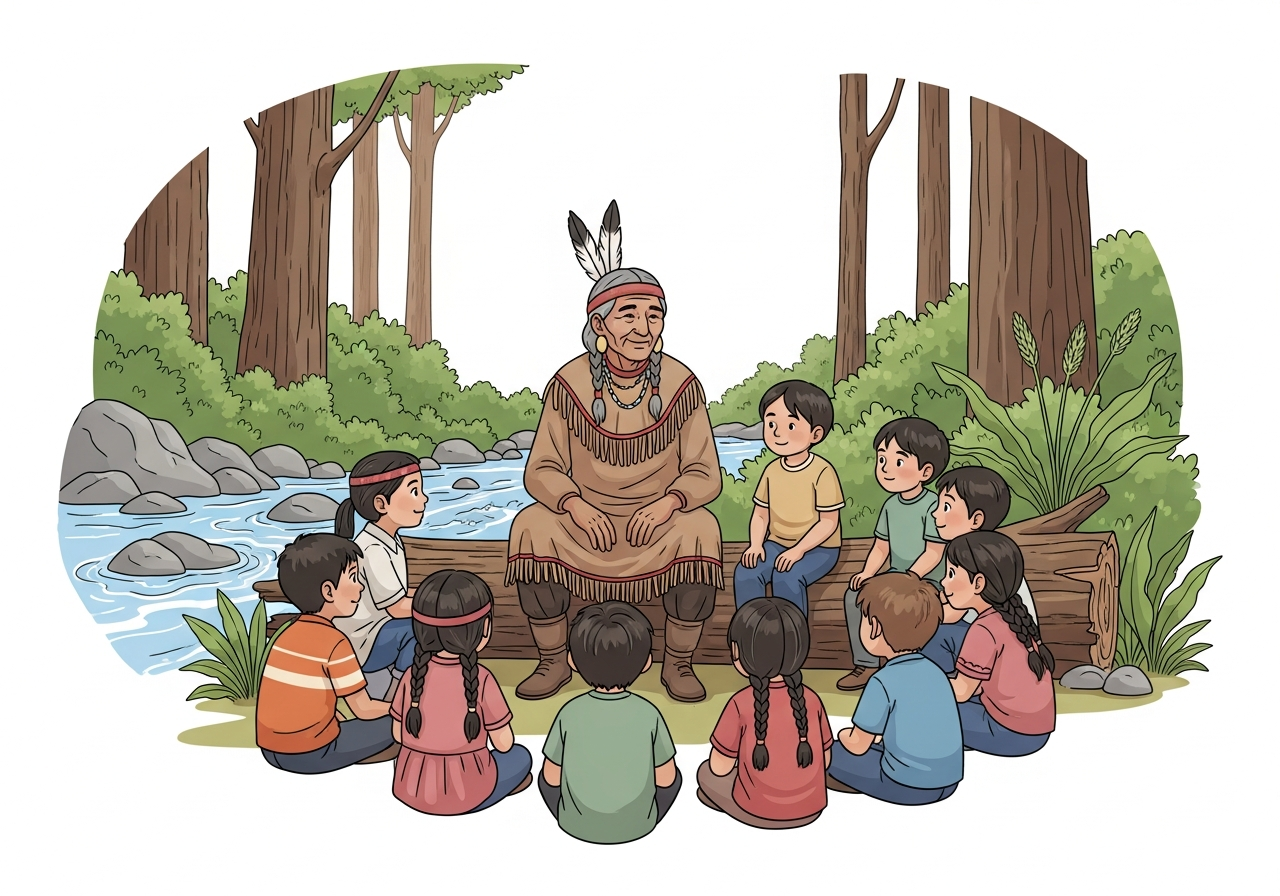
TEK is not found in textbooks. Instead, it is shared through oral tradition spoken stories, songs, ceremonies, and hands-on learning with elders outdoors. This is how knowledge travels from one generation to the next without being written down.
You will also explore how TEK connects to Environmental Knowledge and Local Ecosystem Understanding, which forms an important foundation for understanding how Indigenous peoples observe and care for their surroundings.
Indigenous Knowledge of Natural Environments
Indigenous peoples have spent thousands of years observing the natural world in specific places. They know which plants are safe to eat, how animals behave before a storm, and when fish are ready to be harvested. This is called place-based knowledge it is deeply connected to a specific land or region.
For example, Indigenous hunters read animal tracks, weather signs, and plant clues passed down from their ancestors. Elders in many communities can predict seasonal weather changes by watching animal behavior, plant flowering, and sky patterns. This connects directly to Ecosystem Components and Living and Non-Living Elements, which you may have already explored.
TEK also includes knowledge about migration patterns of birds, fish, and mammals, as well as indicator species living things like frogs or salmon that signal whether an ecosystem is healthy or in trouble.
TEK and Sustainable Practices
A core value of TEK is stewardship the responsibility to care for the land and water so future generations can enjoy them too. Indigenous communities practice sustainable harvesting, which means collecting only what is needed so the source population is never permanently damaged.
Traditional farming methods like the Three Sisters growing corn, beans, and squash together keep soil healthy without chemical fertilizers. Traditional fire management uses controlled burns to clear dead plants and encourage healthy new growth. These practices connect to Traditional Practices, Resource Management, and Sustainable Practices.
Many Indigenous communities also view land, water, and animals as sacred living relatives that deserve respect and care, not just resources to be used. This worldview supports Conservation and Protection Strategies that keep ecosystems balanced.
TEK and Western Science Working Together
Western science and TEK are two different but equally valuable ways of understanding the natural world. Western science relies on measurable experiments and laboratory data. TEK includes spiritual and cultural values alongside careful ecological observation.
One important idea is called two-eyed seeing, developed by Mi'kmaw Elder Albert Marshall. It means using both Indigenous knowledge and Western science together like using two eyes to see more fully. When scientists and Indigenous knowledge holders collaborate, they create a richer understanding of ecosystems.
For example, a scientist studying climate change can learn from Indigenous elders who have observed changes in ice, seasons, and animal populations over many decades. This connects to Environmental Science and Human Effects on Ecosystems.
Key Terms & Definitions
Traditional Ecological Knowledge (TEK): TEK is the wisdom about nature including plants, animals, weather, and land that Indigenous peoples have built and shared across many generations through stories, ceremonies, and hands-on practice.
Oral Tradition: Oral tradition is the practice of sharing knowledge through speaking, storytelling, songs, and listening rather than writing it down. Many Indigenous communities have preserved their ecological knowledge this way for thousands of years.
Stewardship: Stewardship means taking responsibility for caring for the land and water so they stay healthy for future generations. Indigenous communities practice stewardship as a core part of their relationship with nature.
Biodiversity: Biodiversity means the richness of different species living together in an ecosystem. When you protect biodiversity, you help keep many different plants and animals thriving in one place.
Sustainable Harvesting: Sustainable harvesting means collecting resources like plants, fish, or animals only in amounts that allow the population to recover and survive. This reflects a core principle of TEK.
Habitat: A habitat is the place where an organism lives and finds everything it needs to survive, like food, water, and shelter.
Migration Patterns: Migration patterns describe the regular seasonal movements of animals like birds, fish, and mammals from one place to another. Indigenous peoples have tracked these patterns for thousands of years.
Indicator Species: An indicator species is a plant or animal like a frog or salmon whose health signals whether an ecosystem is doing well or is in trouble.
Watershed: A watershed is a connected system of waterways rivers, streams, and lakes that drain into one area. Indigenous communities have traditionally cared for watersheds, knowing that healthy water means a healthy land.
Indigenous: Indigenous peoples are those whose ancestors were the original inhabitants of a particular land or region, long before other groups arrived. They have deep cultural and spiritual connections to their ancestral lands.
Knowledge Keeper: A knowledge keeper is a respected elder or community member who holds and shares important traditional cultural knowledge, stories, ceremonies, and ecological wisdom.
Two-Eyed Seeing: Two-eyed seeing is the idea of using both Indigenous knowledge and Western science together to understand the world more fully. It was developed by Mi'kmaw Elder Albert Marshall.
Place-Based Knowledge: Place-based knowledge is knowledge that is deeply connected to a specific land, region, or environment where a community has lived for generations.
Practice What You Know
You can practice recognizing TEK by thinking about the natural world around you. Ask yourself: What do the people who have lived in your region for a long time know about local plants, animals, and weather? How is that knowledge shared?
You can also explore Cultural Practices and Sustainable Resource Management to see how traditional knowledge guides the way communities use and protect natural resources. Try connecting what you learn about TEK to Sustainable Practices and Resource Management Strategies to see how these ideas work in real life.
Think about the Three Sisters planting method or traditional fire management these are real examples of TEK in action that you can research and discuss with your class.
Building on What You Already Know
Before exploring TEK, you may have already learned about Resource Use and Effects on the Environment and Communities and Interaction Between Populations. These topics help you understand why caring for ecosystems matters.
You also may have studied Resource Use, Renewable and Non-Renewable Resources and Habitat Protection and Conservation Methods, which connect directly to the sustainable values at the heart of TEK.
After this topic, you will be ready to explore Environmental Knowledge and Ecological Understanding, Resource Use and Sustainable Practices, Resource Management, Sustainable Use and Conservation, Conservation, Protection and Restoration, and Environmental Systems and Human Effects on Ecosystems.
Related Topics & Connections
TEK connects to many important science topics you will study. Cultural Practices and Sustainable Resource Management shows you how traditional knowledge guides communities in using resources wisely. Habitat Protection and Conservation Methods connects to how TEK identifies and protects important animal habitats and migration routes.
Sustainable Practices and Resource Management Strategies builds on the TEK values of stewardship and sustainable harvesting. Environmental Science and Human Effects on Ecosystems helps you understand how both TEK and Western science study the impact humans have on the natural world.
Finally, Resource Use, Renewable and Non-Renewable Resources connects to the TEK principle of taking only what is needed a practice that protects both renewable and non-renewable resources for the future.