TOPIC
MY PROGRESS
Pug Score
0%
Best Streak
0 in a row
Study Points
+0
Overview
Practice
Read
Quiz
Next Steps
Get Started
Get unlimited access to all videos, practice problems, and study tools.
Back to Menu
Topic Progress
Pug Score
0%
Best Practice
No score
Read
Not viewed
Best Quiz
No attempts
Best Streak
0 in a row
Study Points
+0
Overview
Practice
Read
Quiz
Next Steps
Read
Discover the Amazing World of Plant Groups and Classifications
You will learn how scientists sort plants into major groups based on their features, such as whether they have flowers, cones, or spores.
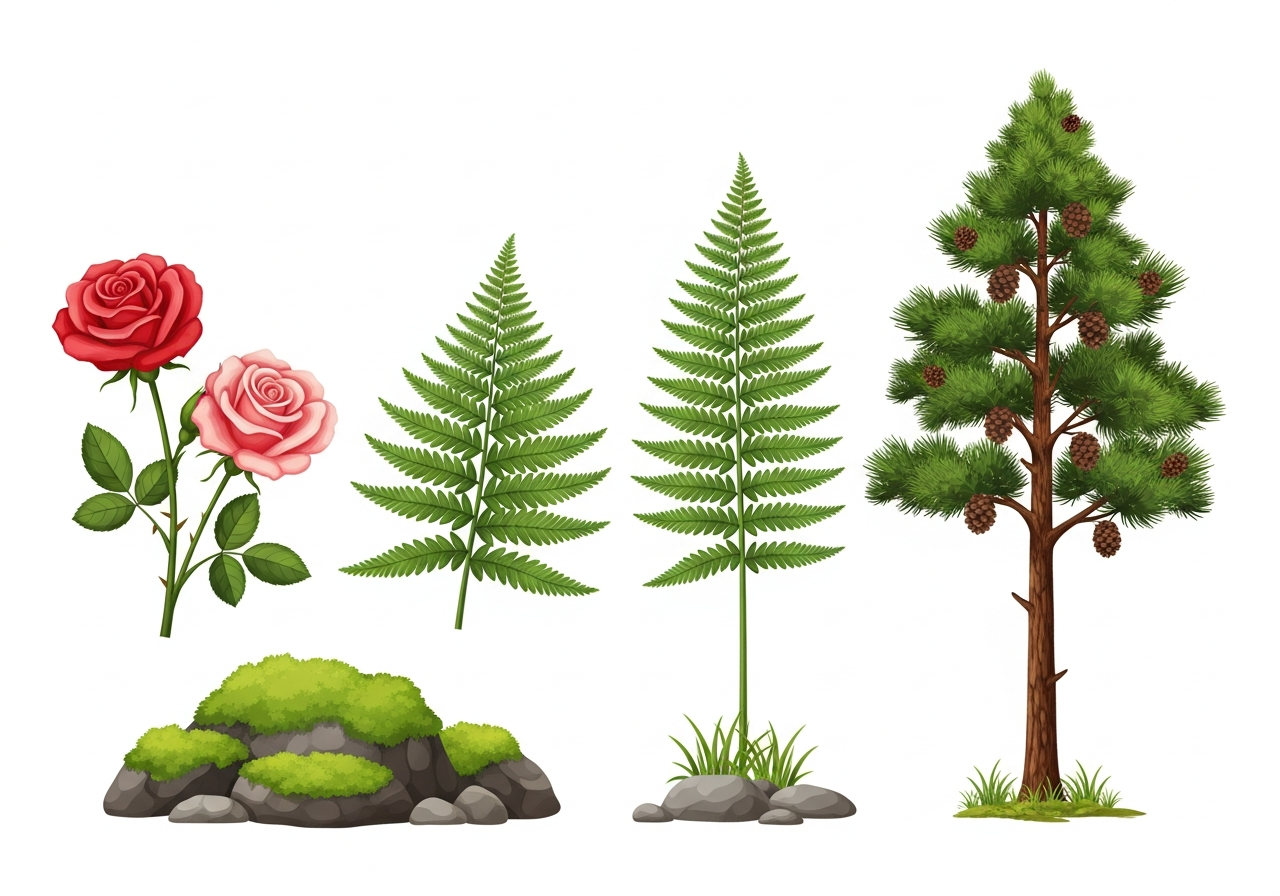
Did you know that scientists sort all plants into groups? You can learn about Plant Classification, Major plant groups and characteristics to understand how plants are organized. Plants are grouped by how they look, how they grow, and how they make new plants. There are four main plant groups you will explore: flowering plants, ferns, mosses, and conifers.
Flowering Plants
Flowering plants are the biggest group of plants on Earth! You can find over 300,000 kinds of flowering plants in the world. These plants grow colorful flowers that turn into fruits with seeds inside. A daisy, a rose bush, a sunflower, and even grass and wheat are all flowering plants. Scientists call this group angiosperms.
Flowering plants make seeds inside a fruit. The fruit protects the seed until it is ready to grow into a new plant. You can see this when you eat an apple the seeds are tucked safely inside the fruit!
Non-Flowering Plants: Ferns, Mosses, and Conifers
Not all plants make flowers. Plants that do not produce flowers are called non-flowering plants. This group includes mosses, ferns, and conifers.
Ferns
Ferns have large, feathery leaves called fronds. You would most likely find a fern growing on a shady forest floor where it is cool and damp. Ferns do not make seeds or flowers. Instead, they make tiny cells called spores. You can spot tiny brown dots called spore cases on the underside of fern leaves those are where the spores come from!
Mosses
Mosses are very small, soft plants with no true roots or stems. They love damp, wet places like rocks near streams or shady forest floors. Mosses also use spores instead of seeds to make new plants. A soft, green carpet growing on a rock is a great example of moss.
Conifers
Conifers are trees like pine trees and spruce trees. The word conifer means "cone-bearer" these plants use cones to hold and protect their seeds. Conifers have thin, needle-shaped leaves. Most conifers are evergreen plants, which means they keep their green needle leaves all year long. Scientists call this group gymnosperms.
Trees, Shrubs, and Herbs
You can also sort plants by the type of stem they have. Trees are the tallest plants, with one thick, hard, woody trunk. Shrubs are shorter than trees and have many woody stems branching near the ground. Herbs have soft, bendy stems and are the smallest of the three. Basil and mint are examples of herbs you might find in a kitchen garden.
What Do Plants Need to Grow?
All plants need sunlight, water, and air to make their own food. You can learn more about Plant Parts, Functions of roots, stems, leaves, flowers to see how each part helps the plant survive. The roots absorb water and nutrients from the soil. The stem moves water up to the leaves. The leaves use sunlight to make food through a process called photosynthesis. Without sunlight and water, a plant will look pale and droopy.
Key Terms & Definitions
Flowering plants (Angiosperms): You use this word to describe plants that grow flowers and make seeds inside a fruit. Roses, daisies, and apple trees are all flowering plants.
Non-flowering plants: These are plants that do not grow flowers at all. Mosses, ferns, and conifers are all non-flowering plants.
Ferns: Ferns are non-flowering plants with large, feathery leaves called fronds. They use spores, not seeds, to make new plants and love shady, damp places.
Fronds: Fronds are the large, feathery leaf-like parts of a fern plant. You can find tiny brown spore cases on the underside of fronds.
Mosses (Bryophytes): Mosses are tiny, soft plants with no true roots or stems. They grow in damp, shady spots and use spores to make new plants.
Conifers (Gymnosperms): Conifers are plants like pine and spruce trees that grow cones to hold their seeds. The word conifer means "cone-bearer."
Spores: A spore is a tiny cell that can grow into a new plant. Ferns and mosses use spores instead of seeds. Spores are so light they float on the wind to new places.
Seeds: Seeds are tiny packages that contain everything needed for a new plant to grow. Flowering plants and conifers both make seeds, but in different ways.
Cones: Cones are the structures that conifers use to hold and protect their seeds. Pine cones are a well-known example.
Evergreen plants: Evergreen plants keep their green leaves all year long. Most conifers, like pine trees, are evergreen.
Deciduous plants: Deciduous plants lose their leaves every fall and grow new ones in spring. Many flowering trees, like maple trees, are deciduous.
Trees: Trees are the tallest plants, with one thick, hard, woody trunk. Oak trees and pine trees are examples of trees.
Shrubs: Shrubs are shorter than trees and have many woody stems that branch near the ground. A rose bush is an example of a shrub.
Herbs: Herbs are small plants with soft, bendy stems. Basil and mint are examples of herbs.
Photosynthesis: Photosynthesis is the process plants use to make their own food. Plants use sunlight, water, and air to do this.
Roots: Roots are the part of a plant that grows underground and absorbs water and nutrients from the soil. They also hold the plant firmly in the ground.
Stem: The stem holds the plant up and moves water from the roots to the leaves and flowers.
Leaves: Leaves use sunlight to make food for the plant through photosynthesis.
Flower: The flower is the part of a flowering plant used to make seeds. Flowers often attract insects that help with seed-making.
Practice What You Know
You can practice sorting plants into groups by looking at pictures of plants and asking: Does it have flowers? Does it have cones? Does it have fronds with spore cases? You can also look at Plant Life Cycles, Seed production and dispersal to learn more about how plants make new plants using seeds, cones, or spores.
Try to find examples of each plant group around your home or school. Can you spot a flowering plant, a conifer, or even a patch of moss?
What You Already Know
Before exploring plant groups, you already learned some important ideas. You know about Living vs Non-living, Characteristics that define life, which helps you understand why plants are living things. You also know about Plant Parts, Functions of roots, stems, leaves, flowers, which shows you how each part of a plant does a special job. Understanding Plant Responses, Reactions to light, water, touch helps you see why plants need sunlight and water to stay healthy.
You also learned about Animal Classification, Major animal groups and characteristics, which is similar to how scientists sort plants into groups. Comparing plant and animal classification helps you see patterns in the living world.
Related Topics & Connections
Learning about plant groups connects to many other exciting science topics. You can explore Plant Adaptations, Structural adaptations to discover how different plant groups have special features that help them survive in their environment. For example, conifers have needle-shaped leaves that help them survive cold winters.
You can also look at Animal Groups, Major animal classifications and Animal Adaptations, Physical and behavioral features to compare how scientists sort animals into groups, just like they sort plants. This helps you see how all living things can be organized by their features.
What you learn about plant groups will prepare you for bigger topics ahead. You will use this knowledge when you study Structural Adaptations, Physical features for survival, where you will see how a plant's group affects how it survives. You will also need it for Ecosystem Components, Living and non-living elements and Communities, Interaction between populations, where different plant groups play important roles in ecosystems.