Integral Calculus Help: Video Lessons & Practice
Work through every topic with clear solutions. Start your free practice test now!

Value vs. Private Tutor
Get expert instruction without the price tag.
Multi-Subject
Master Integral Calculus with one plan.
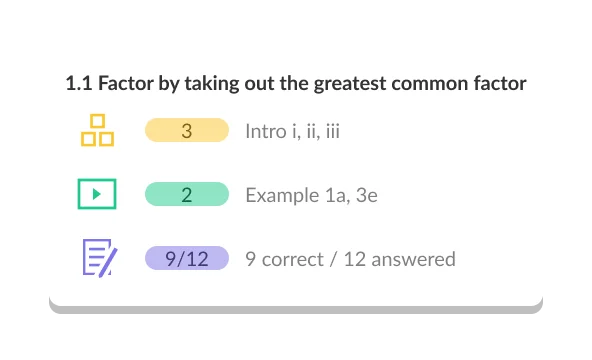
Unlimited Practice
Master integrals before test day.
Try It Now
Test your knowledge
Our approach aligns with the evidence
Exam Scores
Better Recall
Less Anxiety
Integral Calculus Topics
1. Integrals
2. Integration Techniques
3. Integration Applications
4. Differential Equations
5. Sequence and Series
6. Parametric Equations and Polar Coordinates
6 Chapters · 49 Topics · 346 Videos
Discover Our Learning Areas
Explore key subjects and start learning with interactive content.
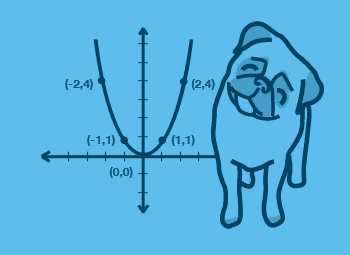








What is Integral Calculus?
Integral Calculus is the branch of calculus concerned with accumulation — specifically, finding areas, volumes, and total quantities by summing infinitely many infinitesimally small pieces. At the university level, Integral Calculus (commonly called Calculus II) builds directly on the derivatives you learned in Calculus I and introduces a rich toolkit of integration techniques. The central result of the course is the Fundamental Theorem of Calculus, which establishes that differentiation and integration are inverse processes and provides the computational bridge between the two. Mastery of this course is a gateway requirement for Calculus III, Differential Equations, Linear Algebra, and virtually every advanced STEM discipline.
What Topics Are Covered in Integral Calculus?
A standard US university Integral Calculus course moves through three broad phases. The first phase establishes the foundations: indefinite and definite integrals, Riemann sums, and the Fundamental Theorem of Calculus. The second phase develops integration techniques — u-substitution, integration by parts, trigonometric integrals, trigonometric substitution, and partial fraction decomposition. The third phase covers applications and extends the theory: area between curves, volumes of revolution using disk, washer, and shell methods, arc length, work and physics applications, and an introduction to improper integrals. Many courses conclude with sequences and infinite series, including convergence tests (Ratio Test, Integral Test, Comparison Test) and power series. Each phase introduces new patterns of reasoning that build on the last, which is why sustained practice throughout the semester — not just before exams — is essential.
Is Integral Calculus Hard? Where Do Students Struggle Most?
Integral Calculus has a well-earned reputation as the most technique-intensive calculus course. Differentiation follows clear rules; integration does not. Every problem requires you to identify the correct method before you can even begin, and the wrong choice can send you down a dead end. The most common struggle areas are:
- Technique selection: Knowing when to use substitution versus integration by parts versus partial fractions requires pattern recognition that only comes from practice with varied problems.
- Trigonometric substitution: The multi-step process of substituting, converting dx, simplifying with identities, integrating, and back-substituting is where algebra errors accumulate fastest.
- Volumes of revolution: Setting up the disk, washer, or shell integral correctly — especially choosing the right axis of rotation — trips up even strong students.
- Series convergence: The abstract nature of infinite series and the many convergence tests feel disconnected from earlier calculus work until the connections become clear with practice.
The students who do well share one habit: they practice problems from each technique category until selection feels automatic, then tackle mixed problem sets that force them to decide the method without a hint.
How is Integral Calculus Graded at US Universities?
Most US university Integral Calculus courses weight assessments roughly as follows: homework or online problem sets (15–25%), midterm exams (40–50%), and a cumulative final exam (25–35%). Midterms typically focus on a block of techniques — for example, the first midterm might cover u-substitution and integration by parts, while the second covers trig substitution and partial fractions. The final is comprehensive. Many instructors use WebAssign or similar platforms for homework, which provides immediate feedback but penalizes repeated incorrect attempts. For students in engineering, physics, or mathematics programs, the calculus sequence GPA can affect graduate school applications and competitive internship eligibility, making thorough exam preparation important beyond just passing the course.
What Comes Before and After Integral Calculus?
The direct prerequisite for Integral Calculus is Differential Calculus (Calculus I), covering limits, continuity, derivatives, and basic applications such as curve sketching and optimization. If your derivative rules and algebra feel shaky, address those gaps first — integration builds on them constantly. After Integral Calculus, the standard progression leads to Multivariable Calculus (Calculus III), where integration extends to functions of two and three variables, double and triple integrals, and line and surface integrals. The other common next step is Differential Equations, which uses integration directly to solve models of physical systems. Both courses assume fluency with every technique from Integral Calculus, so a solid foundation now pays off significantly in the courses that follow.
Why Use StudyPug for Integral Calculus?
StudyPug is designed for university students who need more than a textbook re-read. Here is what makes it effective for Integral Calculus specifically.
Diagnostic assessment first. Rather than guessing where to start, StudyPug's diagnostic assessment identifies precisely which topics — substitution, volumes, series convergence — need the most attention. You study what matters, not what you already know.
Certified-teacher concept videos that teach the method. Every lesson is taught by an experienced, certified instructor who explains the reasoning behind each technique, not just the steps. Understanding why trigonometric substitution works — not just which substitution to pick — is what prepares you for a problem you have never seen before. These are not AI-generated explanations; they are the same quality of instruction you would get from a strong professor, available whenever you need it. Watch a lesson once before class, or replay it ten times the night before an exam.
Adaptive practice that adjusts to you. After watching a lesson, adaptive practice problems calibrate to your performance. If you are getting substitution problems correct, the system advances the difficulty. If you keep making the same error in integration by parts, it serves more problems of that type until the pattern sticks. This is more efficient than working through a static problem set where you waste time on topics you already know.
Full course coverage in one subscription. StudyPug covers the complete university mathematics sequence — Differential Calculus, Integral Calculus, Multivariable Calculus, Differential Equations, Linear Algebra, Statistics, and more — all in a single subscription. You are never paywalled out of a related topic you need for context.
Midterm and final exam preparation. Mock exams and practice tests based on real exam formats help you practice under conditions that match what you will face. Timed practice is one of the strongest predictors of exam performance, and StudyPug makes it easy to run a full mock session for any upcoming assessment.
What You Learn in Integral Calculus — Course Coverage
StudyPug's Integral Calculus coverage follows the standard US university Calculus II curriculum. Topics include:
- Definite and indefinite integrals; Riemann sums and the definition of the integral
- The Fundamental Theorem of Calculus (Parts 1 and 2)
- U-substitution and change of variables
- Integration by parts (and repeated application)
- Trigonometric integrals (powers of sine and cosine, secant and tangent)
- Trigonometric substitution (sin, tan, and sec forms)
- Partial fraction decomposition
- Improper integrals and convergence
- Area between curves
- Volumes of revolution: disk method, washer method, shell method
- Arc length and surface area of revolution
- Applications to physics: work, fluid pressure, center of mass
- Sequences and series: convergence tests (Ratio, Root, Integral, Comparison, Limit Comparison, Alternating Series)
- Power series, Taylor series, and Maclaurin series
Every topic has dedicated video lessons and practice problem sets. You can move through the full course in order or jump directly to any topic you need — ideal for targeted exam review.
How to Use StudyPug for Integral Calculus
Step 1 — Take the diagnostic. Start with StudyPug's Integral Calculus diagnostic assessment. In a short session, it maps which techniques you are solid on and which need work. This prevents the common mistake of over-practicing easy material while ignoring the gaps that will cost marks on the exam.
Step 2 — Watch the concept video for each weak topic. Go to the lesson for that technique — say, integration by parts. Watch the certified-teacher video, which teaches the method and the decision logic, not just the formula. Pause, take notes, and replay any section that is not clear. You can watch it as many times as you need.
Step 3 — Practice with adaptive problems. After the video, work through the adaptive practice set. The problems adjust to your level. If you make an error, the detailed solution explains where the reasoning broke down — not just what the right answer is.
Step 4 — Run mock exams before midterms and finals. Two to three days before each exam, simulate the test experience using StudyPug's mock exam for the relevant topic block. Timed, mixed-technique practice is the closest preparation to the real exam environment.
Step 5 — Use Photo Search if you are stuck on a specific problem. StudyPug's Photo Search lets you photograph a problem from your homework or textbook and find the matching lesson instantly — available across all grades and subjects.
Integral Calculus rewards students who practice consistently and understand the reasoning behind each technique. StudyPug is built to support exactly that — with expert instruction, smart practice, and the flexibility to study on any device, at any hour, as many times as it takes.
Integral Calculus FAQ
Unsure how StudyPug works? Need help with setting up? Check our frequently asked questions or contact us for help.
What do you learn in Integral Calculus, and what topics does it cover?
Integral Calculus focuses on the theory and techniques of integration. Core topics include definite and indefinite integrals, the Fundamental Theorem of Calculus, u-substitution, integration by parts, trigonometric integrals, trigonometric substitution, partial fractions, improper integrals, and applications such as area between curves, volumes of revolution, arc length, and work. Most university courses also introduce sequences and series. Together these topics build the analytical foundation needed for Differential Equations, Multivariable Calculus, and upper-level STEM coursework.
What is the difference between Integral Calculus and Differential Calculus?
Differential Calculus studies rates of change and slopes — derivatives tell you how a function changes at any point. Integral Calculus is, in a sense, the reverse: it accumulates quantities over an interval. The Fundamental Theorem of Calculus formally connects the two, showing that integration and differentiation are inverse operations. In most university programs, Differential Calculus (Calc I) is taken first, followed by Integral Calculus (Calc II). Strong derivative skills are essential before tackling integration techniques.
What are the prerequisites for Integral Calculus, and what course comes after it?
The standard prerequisite is Differential Calculus (Calculus I) or an equivalent course covering limits, derivatives, and basic differentiation rules. Solid algebra and trigonometry skills are also critical — weak trig is the most common hidden barrier. After Integral Calculus, most students progress to Multivariable Calculus (Calculus III), which extends integration to multiple dimensions, or to Differential Equations, which applies integration to model real-world systems. Both courses build directly on the integration techniques learned in Integral Calculus.
Is Integral Calculus hard, and where do students struggle most?
Integral Calculus is widely considered the most technique-heavy calculus course. Unlike differentiation, integration has no single algorithm — you must recognize which method applies: substitution, integration by parts, partial fractions, or trig substitution. The top struggle areas are choosing the right technique, setting up volumes of revolution correctly, and managing the algebra in multi-step problems. Students also find improper integrals and convergence tests for series challenging. Consistent practice with varied problem types — not just reading worked examples — is the most effective way to build fluency.
How is Integral Calculus assessed — midterms, finals, and assignments?
At most US universities, Integral Calculus (Calculus II) is assessed through weekly or biweekly homework sets, two to three midterm exams, and a cumulative final exam. Homework often counts for 15–25% of the grade, with exams making up the remainder. Some courses include online gateway quizzes or WebAssign problems. The final exam is typically two to three hours and covers all integration techniques plus series. For students planning to transfer or apply to competitive programs, a strong calculus GPA is important — mock exam practice under timed conditions is highly recommended.
What is one of the hardest topics in Integral Calculus, and how do you approach it?
Trigonometric substitution is consistently one of the hardest topics. It requires recognizing a radical expression, choosing the correct substitution (sin, tan, or sec), converting the entire integral including dx, simplifying using trig identities, evaluating, and then converting back to the original variable. The multi-step process makes it easy to lose track. The most effective approach is to practice the three substitution forms separately until pattern recognition becomes automatic, then tackle mixed problem sets. Drawing the reference triangle at each step prevents the back-substitution errors that cost the most points on exams.





Written by the StudyPug Team
Last updated June 5, 2026
3 M+
students
★★★★★
4.8 average
K–12
all grades