Grade 12 College Algebra Help — Video Lessons & Practice
Get clear explanations for any College Algebra problem and build exam-ready confidence.
Value vs. Private Tutor
Get expert instruction at no extra cost.

Multi-Subject
One subscription unlocks all subjects.
Practice Until Perfect
Keep practicing until it truly clicks.
Try It Now
Test your knowledge
Our approach aligns with the evidence
Exam Scores
Better Recall
Less Anxiety
College Algebra Topics
1. Surface Area and Volume
2. Rational Numbers
3. Powers and Exponents
4. Number System and Radicals
5. Radicals
6. Exponents
7. Operations of Polynomials
8. Factorising Polynomial Expressions
9. Introduction to Relations and Functions
10. Linear Functions
11. Absolute Value Functions
12. Linear Equations
13. Solving Linear Systems
14. Linear Inequalities
15. Inequalities in Two Variables
16. Factorising Quadratic Equations
17. Quadratic Functions
18. Quadratic Equations and Inequalities
19. Graphing Rational Functions
20. Functions
21. Direct and Inverse Variation
22. Piecewise Functions
23. Transformations of Functions
24. Exponential Functions
25. Logarithmic Functions
26. Applications of Exponential and Logarithmic Functions
27. Sequences and Series
28 Chapters · 215 Topics · 1321 Videos
Discover Our Learning Areas
Explore key subjects and start learning with interactive content.









What Is College Algebra?
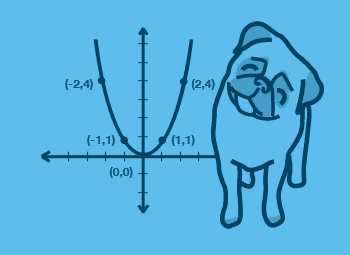
College Algebra is a high-school and early-college mathematics course that deepens your understanding of functions, equations, and algebraic structures. It is the bridge between the algebra you learned in earlier grades and the calculus or statistics courses ahead. In a single sentence: College Algebra teaches you how to analyze, manipulate, and model mathematical relationships using functions and equations across real-world and abstract contexts.
In the US, College Algebra is commonly taken in Grade 12 and frequently satisfies the math requirement for college admission, dual-enrollment credit, or standardized testing preparation. It appears in a significant portion of both the SAT Math section and the ACT Mathematics test, making it one of the most test-relevant courses a high-school student can study.
What Topics Are Covered in College Algebra?
College Algebra spans several major topic families. Understanding the structure helps you study more efficiently:
Functions. Linear, quadratic, polynomial, rational, exponential, and logarithmic functions — their graphs, transformations, compositions, and inverses — are the backbone of the course. Expect to spend significant time here because every later topic builds on function fluency.
Equations and Inequalities. You will solve quadratic equations by factoring, completing the square, and the quadratic formula; solve rational and radical equations; and analyze systems of equations with two or three variables.
Polynomials and Rational Expressions. Long division, synthetic division, the Remainder and Factor Theorems, and partial-fraction decomposition appear here. Rational functions — with their asymptotes and holes — are among the most conceptually demanding topics.
Exponential and Logarithmic Models. Compound interest, population growth, and radioactive decay all use exponential and logarithmic equations. You learn to switch between forms and solve equations involving natural log and common log.
Systems, Matrices, and Sequences. Solving systems by substitution, elimination, and matrices; determinants; arithmetic and geometric sequences and series — these cap the course and connect algebra to discrete math and statistics.
Is College Algebra Hard? Where Do Students Struggle Most?
College Algebra has a reputation for difficulty mainly because it moves quickly and assumes comfort with earlier algebra that many students have partially forgotten. The topics students find hardest are consistent:
Rational functions. Identifying vertical and horizontal asymptotes, removable discontinuities (holes), and correct graph shape requires applying multiple rules in sequence. One missed step throws off the entire graph.
Logarithms and their properties. Students often confuse log rules — the product, quotient, and power rules — or make sign errors when expanding or condensing expressions.
Polynomial long division and synthetic division. The algorithm is procedural and unforgiving; skipping a placeholder zero or misaligning terms causes cascading errors.
Systems of nonlinear equations. Unlike linear systems, nonlinear systems can have zero, one, or multiple solutions, and the substitution required is more algebraically intensive.
The common thread is that each of these topics has a clear method that, once learned correctly, becomes reliable. Watching a certified teacher work through a full example step by step — not just showing the answer but explaining each decision — is the fastest way to stop repeating the same mistakes.
What Should You Know Before College Algebra, and What Comes Next?
Before starting College Algebra you should be comfortable with Algebra 1 and Algebra 2 fundamentals: solving linear and quadratic equations, factoring polynomials, working with exponents and radicals, and reading function notation. If any of those feel shaky, a short diagnostic can pinpoint exactly where to review first rather than guessing.
After College Algebra, the standard path is Pre-Calculus (which adds trigonometry and an introduction to limits) and then Calculus. Students whose programs lead toward business, nursing, or social sciences may branch to Statistics instead. College Algebra also frequently earns dual-enrollment or college-credit equivalency, meaning strong performance here can reduce your future tuition load.
Why StudyPug for College Algebra Help?
StudyPug is built specifically for how high-school students actually learn — which is rarely in a straight line through a textbook. Three things make it work for College Algebra in particular:
Diagnostic assessment that saves time. Instead of starting at page one, StudyPug's diagnostic identifies your exact gaps — whether that is logarithm rules, rational functions, or polynomial division — so you study what you actually need. Students who use the diagnostic report spending less time on topics they already know and more time where it matters.
Certified-teacher video lessons that teach the method. Every College Algebra video is made by a certified teacher who explains the reasoning behind each step, not just the procedure. That distinction matters enormously on tests: when a problem looks slightly different from your homework examples, understanding the method lets you adapt. These are not AI-generated videos — they are real teachers walking through real problems.
Adaptive practice that keeps you moving forward. After watching a lesson, you practice. StudyPug's adaptive practice adjusts the difficulty based on how you perform, so you are always working at the edge of your current ability — challenged enough to grow, never so overwhelmed that you shut down.
For College Algebra specifically, the SAT and ACT exam-style practice built into every subscription means your study time does double duty: you improve your course grade and raise your standardized test score at the same time. Lessons align to US high-school College Algebra standards, so what you practice matches what your teacher assigns.
What You Learn: College Algebra Curriculum Coverage
StudyPug covers the full College Algebra curriculum as taught in US high schools, including all the topic families listed above. Lesson categories include:
- Functions — domain, range, graphs, transformations, composition, and inverses
- Polynomial functions — end behavior, zeros, division, and the Fundamental Theorem of Algebra
- Rational functions — asymptotes, holes, and graphing
- Exponential and logarithmic functions — properties, equations, and real-world models
- Systems of equations — linear and nonlinear, two and three variables, matrix methods
- Sequences and series — arithmetic, geometric, and sigma notation
- Conic sections — parabolas, circles, ellipses, and hyperbolas
No validated internal topic links are available for this page in the current site map. To explore specific topics, use the topic browser on this page or the search bar at the top of StudyPug.
How to Use StudyPug for College Algebra
Getting started takes less than five minutes. Here is the most effective workflow:
Step 1 — Take the diagnostic. The diagnostic assessment pinpoints your weak spots across all College Algebra topics. This replaces the guesswork of deciding where to start and is the single biggest time-saver on the platform.
Step 2 — Watch the lesson video. For each flagged topic, watch the certified-teacher video. Pause when the teacher works an example and try the next step yourself before they show it. Active watching beats passive viewing every time.
Step 3 — Practice immediately. Do the practice problems right after the video while the method is fresh. StudyPug's adaptive engine will adjust the next set of problems based on how you do — getting harder when you're on track, reviewing key steps if you slip.
Step 4 — Use Photo Search when you are stuck on a specific problem. If a homework problem has you stuck, Photo Search lets you find the matching lesson instantly — take a photo of the problem and StudyPug surfaces the relevant video. Available for all grades and all subjects.
Step 5 — Run a practice test before your exam. The included exam-style practice tests are built around real SAT, ACT, and course-exam question formats. Running a timed practice test a few days before your exam is the most reliable way to find last-minute gaps while there is still time to fix them.
StudyPug is available on any device — desktop, tablet, or phone — so you can keep up with College Algebra practice whether you are at your desk or on the go. Every subscription includes a 30-day money-back guarantee, and free daily practice problems are available without a subscription so you can see the platform in action before committing.
College Algebra FAQ
Unsure how StudyPug works? Need help with setting up? Check our frequently asked questions or contact us for help.
What do you learn in College Algebra, and what topics does it cover?
College Algebra covers the core algebraic concepts you need before calculus and higher math. You study functions (linear, quadratic, polynomial, rational, exponential, and logarithmic), systems of equations, inequalities, matrices, sequences and series, and conic sections. The course builds both algebraic fluency and problem-solving skills that appear across science, engineering, economics, and standardized tests. By the end you can model real-world situations with equations, analyze graphs, and manipulate expressions confidently.
What is the difference between College Algebra and Pre-Calculus?
College Algebra focuses on mastering algebraic structures — functions, polynomials, systems, and matrices — as standalone skills. Pre-Calculus extends those foundations and adds trigonometry, polar coordinates, and an introduction to limits to prepare you specifically for Calculus. Many schools treat College Algebra as a prerequisite to Pre-Calculus. If your goal is Calculus, you will likely take both; if you need quantitative reasoning for business or social sciences, College Algebra alone is often sufficient.
Is College Algebra hard, and where do students struggle most?
College Algebra is manageable with consistent practice, but students most often struggle with rational functions and their asymptotes, logarithmic and exponential equations, polynomial long division, and solving systems of nonlinear equations. The jump in abstraction from middle-school algebra catches many students off guard. Breaking each topic into small steps — exactly what certified-teacher video lessons are designed to do — and practicing regularly closes those gaps faster than re-reading notes alone.
What should I take before College Algebra, and what comes after it?
You should be comfortable with Algebra 1 and Algebra 2 (or Intermediate Algebra) before starting College Algebra — specifically linear equations, factoring, and basic function notation. After College Algebra the natural next steps are Pre-Calculus and then Calculus, or Statistics if your program requires it. College Algebra also satisfies quantitative-reasoning requirements for many college programs in business, nursing, and the social sciences.
Is College Algebra on the SAT or ACT, and how is it tested?
Yes. College Algebra content forms a major portion of both the SAT Math section and the ACT Mathematics test. The SAT's Math section tests linear and quadratic functions, systems of equations, polynomials, and exponential models — all core College Algebra topics. The ACT Mathematics section similarly includes polynomial operations, rational expressions, and function analysis. AP Precalculus also builds directly on College Algebra. Practicing exam-style College Algebra problems is one of the highest-leverage ways to raise your standardized-test math score.
What is one of the hardest concepts in College Algebra, and how do you tackle it?
Rational functions — including finding domain restrictions, vertical and horizontal asymptotes, and sketching graphs — consistently trip students up because they require you to apply several rules simultaneously. The best approach is to factor the numerator and denominator first, identify zeros and holes, then determine end behavior before graphing. Watching a step-by-step video that works through a full example slowly, then immediately attempting a similar practice problem, locks in the method far better than passive review.