Math 30-2 Diploma Prep: Practice Tests & Video Solutions
Step-by-step video solutions from certified teachers, unlimited diploma practice tests, and a diagnostic that pinpoints exactly where to focus.
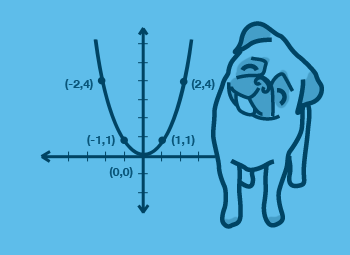
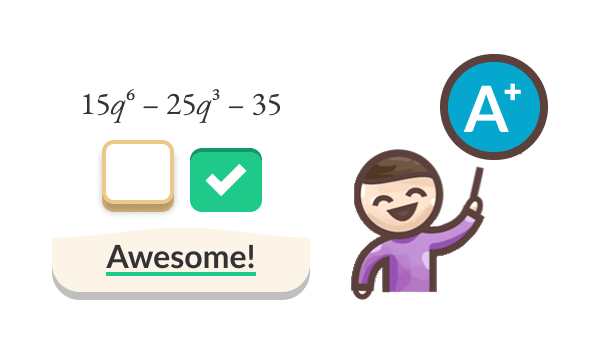
Step-by-Step Video Lessons
Learn the steps to solve it alone.
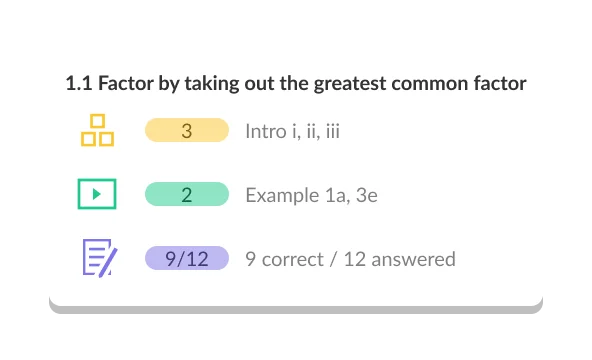
Build Mastery
Stop moving on until it actually sticks.

Test Prep Included
Practice real exam-style questions in your plan.
Try It Now
Test your knowledge
Our approach aligns with the evidence
Exam Scores
Better Recall
Less Anxiety
Math 30-2 (Alberta) Topics
1. Rational Expressions
2. Reciprocal Functions
3. Polynomial Functions
4. Exponential Functions
5. Logarithmic Functions
6. Applications of Exponential and Logarithmic Functions
7. Data Collection
8. Permutations and Combinations
9. Probability
10. Scatter Plots and Best Fit Line
10 Chapters · 81 Topics · 524 Videos

Ready to practice Math 30-2 (Alberta)?
Try practice questions on every Math 30-2 (Alberta) topic — with instant feedback and step-by-step video solutions when you get stuck.
Discover Our Learning Areas
Explore key subjects and start learning with interactive content.


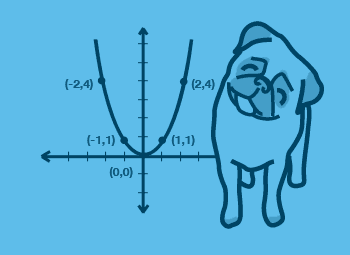

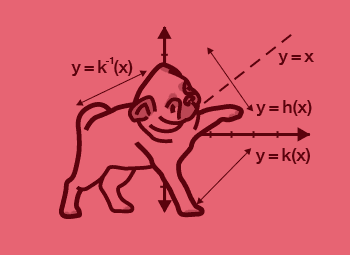


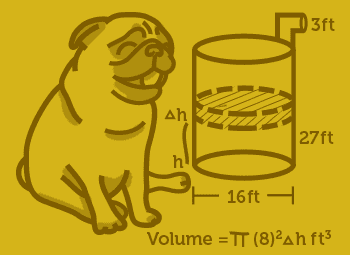
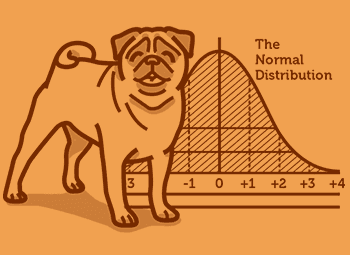
What Is the Math 30-2 Diploma Exam?
The Math 30-2 Diploma Exam is an Alberta Education standardized assessment written by Grade 12 students who complete the Math 30-2 course. It is a two-hour examination worth 50 marks, and its result is blended equally with your school-awarded mark — 50% each — to determine your final course grade. The diploma is administered three times per year: January, June, and August. Because it counts for half your final mark, strong preparation directly impacts your transcript and any post-secondary applications that require Math 30-2.
Math 30-2 Format and Sections
The exam has two main parts. Part A consists of multiple-choice questions, and Part B contains numerical-response and written-response items. Together these cover all six curriculum strands: Logical Reasoning, Probability, Rational Expressions and Equations, Polynomial Functions, Exponential and Logarithmic Functions, and Sinusoidal Functions. An approved graphing calculator is permitted throughout. Understanding the format before you sit the exam — including how numerical-response answers are entered on the grid — is an important part of preparation. Taking a full-length math 30-2 diploma practice test under timed conditions is the most effective way to get comfortable with both parts.
How Is the Math 30-2 Diploma Scored?
The diploma exam is marked out of 50. Alberta Education releases scoring guides that show how marks are awarded for written-response questions, including partial credit. For numerical-response questions there is no partial credit — the exact answer must be entered correctly. Your diploma mark and your teacher-awarded school mark are each weighted at 50% to produce the final course percentage. A blended grade of 50% or above earns a passing credit; most students aiming for post-secondary programs target 65%+ overall.
What Content Areas Are on Math 30-2?
All six content strands appear on every diploma administration. Logical Reasoning questions ask you to analyze conditional statements, prove or disprove claims, and solve puzzles using structured reasoning. Probability questions cover permutations, combinations, odds, and multi-event probability including dependent and independent events. Rational Expressions and Equations require you to simplify, perform operations, and solve equations involving rational expressions. Polynomial Functions questions focus on characteristics, factored form, and graphing of polynomial curves. Exponential and Logarithmic Functions test the laws of logarithms, solving exponential equations, and real-world applications. Sinusoidal Functions questions involve the graphs, transformations, and applications of sine and cosine functions.
What Is the Hardest Section on the Math 30-2 Diploma?
Student performance data consistently shows that Probability and Logical Reasoning account for a large share of dropped marks. These strands require multi-step reasoning and careful interpretation of question wording — errors in counting arrangements or misreading a conditional statement can cost full marks on a numerical-response item. Exponential and Logarithmic Functions is a close second: students who have not fully internalized the log laws often make sign or base errors under exam pressure. The most effective approach to both strands is to work through many diploma-style questions based on real exam structure, reviewing the method in the solution rather than just checking whether the final answer is right.
Why StudyPug for Math 30-2 Diploma Prep?
StudyPug is built around the Alberta Math 30-2 curriculum, which means every video lesson, practice quiz, and diploma practice test maps directly to the six content strands assessed on the exam. Three features make the difference for diploma prep specifically.
Certified-teacher video solutions — not AI-generated content — walk through each problem type step by step, teaching you the method so you can handle similar questions on test day. When you miss a question on a practice test, you do not just see the correct answer; you watch a teacher explain why, which is the fastest way to actually close a knowledge gap rather than repeat the same mistake.
A diagnostic assessment pinpoints which of the six strands need the most work before you invest time reviewing material you already know. This means your study hours are spent on the topics most likely to move your diploma mark, not on comfortable territory.
Adaptive practice then adjusts question difficulty based on your performance, keeping you in the productive zone where questions are challenging enough to build real understanding but not so far beyond your current level that they become discouraging. The combination of diagnostic, adaptive practice, and certified-teacher video solutions is what allows students to see meaningful improvement within a focused preparation period.
What Math 30-2 Topics Does StudyPug Cover?
StudyPug covers the full scope of the Alberta Math 30-2 Program of Studies. Topic areas include:
- Logical Reasoning: conditional statements, proof, and puzzle-solving
- Probability: permutations, combinations, odds, and multi-event probability
- Rational Expressions and Equations: simplifying, operating, and solving
- Polynomial Functions: factored form, characteristics, and graphing
- Exponential and Logarithmic Functions: log laws, exponential equations, and applications
- Sinusoidal Functions: graphs, transformations, period, and amplitude
All content is organized by strand so you can jump directly to the topics the diagnostic identifies as your weakest areas. If you are also preparing for an earlier Alberta math exam, StudyPug's eqao practice test grade 9 resources cover the foundations that underpin several Math 30-2 strands, including probability and rational numbers.
How to Prepare for the Math 30-2 Diploma: A Study Plan
Six to ten weeks out: Take a full-length diploma practice test first. Do not study beforehand — you want a genuine baseline. Review your results strand by strand and note where you lost the most marks. This is your diagnostic starting point.
Weeks one to four: Work through the two or three strands where you scored lowest. For each topic, watch the certified-teacher video lesson before attempting practice questions. Focus on understanding the method, not memorizing steps. Use the adaptive quizzes to confirm understanding before moving on.
Weeks five to six: Revisit the remaining strands with a lighter touch — review key concepts, complete shorter quizzes, and make sure you are solid on all six areas.
Final two weeks: Shift entirely to full-length diploma-style practice tests under timed conditions. After each test, review every question you missed using the video solutions. Retake sections where your accuracy is still below target. By the final week, your goal is consistency — performing at your target level across all six strands, not just your strongest ones.
Consistent sessions of 45–60 minutes, four to five days per week, are more effective than cramming. Starting early enough to complete at least three or four full practice tests before exam day gives you the repetition needed to handle the diploma with confidence.
Math 30-2 (Alberta) FAQ
Unsure how StudyPug works? Need help with setting up? Check our frequently asked questions or contact us for help.
What does the Math 30-2 Diploma Exam cover, and how is it structured?
The Math 30-2 Diploma Exam is a two-hour, 50-mark Alberta diploma examination. It is divided into two parts: Part A (multiple-choice, approximately 30 questions) and Part B (numerical-response and written-response questions). Content draws from the full Math 30-2 curriculum, including logical reasoning, probability, rational expressions and equations, polynomial functions, exponential and logarithmic functions, and trigonometry. Students may use an approved graphing calculator throughout the exam. The diploma mark is blended with school-awarded marks — typically 50% each — to produce the final course mark.
How is the Math 30-2 Diploma scored, and what is a good score?
The diploma exam is marked out of 50, and Alberta Education combines it at 50% weight with your teacher-awarded school mark (also 50%) to produce your final percentage grade. A final blended mark of 50% or above earns a passing credit. Most post-secondary programs that accept Math 30-2 look for final grades in the 60–70%+ range, depending on the institution and program. Aiming for 70%+ on the diploma portion itself gives you the best buffer for a strong final grade. Practising with full-length diploma-style tests is the most reliable way to gauge where you stand before test day.
What subjects and content areas are tested on Math 30-2?
Math 30-2 tests six main content strands drawn from the Alberta Program of Studies: (1) Logical Reasoning — analyzing puzzles, proof, and conditional statements; (2) Probability — odds, permutations, combinations, and dependent/independent events; (3) Rational Expressions and Equations — simplifying, operating, and solving; (4) Polynomial Functions — characteristics, factored form, and graphing; (5) Exponential and Logarithmic Functions — laws of logarithms, solving equations, and applications; and (6) Sinusoidal Functions — graphs, transformations, and applications of sine and cosine. Questions from all six strands appear in both the multiple-choice and numerical/written-response sections of the diploma.
How should I prepare for the Math 30-2 Diploma, and how long does it take?
Most students benefit from six to ten weeks of structured prep. Start by taking a diagnostic practice test to identify which of the six content strands need the most attention. Prioritize those weak areas first — working through certified-teacher video lessons to understand the method, then reinforcing with adaptive practice quizzes until the concepts stick. In the final two weeks, shift to full-length diploma-style practice tests under timed conditions. Retake any section where you score below your target. Consistent sessions of 45–60 minutes, four to five days per week, generally produce solid improvement by exam day.
When should I take the Math 30-2 Diploma, and how do I register?
Math 30-2 Diploma Exams are written in January, June, and August each year, administered by Alberta Education. Most Grade 12 students write the June session at the end of the school year. Registration is handled through your school — your teacher or guidance counsellor submits your exam registration, so you do not register directly with Alberta Education yourself. If you need to rewrite, the August session is available. Check with your school's administration for exact registration deadlines, which typically fall four to six weeks before the exam date. Starting structured prep at least six weeks before your session gives you the best chance of hitting your target grade.
What is the hardest part of Math 30-2, and how do I tackle it?
Most students find the Probability and Logical Reasoning strands the trickiest, because the questions require multi-step reasoning rather than straightforward formula application. Permutations, combinations, and conditional-probability problems in particular tend to drop marks quickly when students mix up the counting rules. The best approach is to work through each question type systematically: identify what is being counted or compared, choose the right formula or reasoning structure, and check your work against the numerical-response format. Watching step-by-step video solutions based on real diploma-style questions — rather than just reviewing notes — is the fastest way to learn to spot and avoid the common errors on these high-value items.




Written by the StudyPug Team
Last updated June 5, 2026
3 M+
students
★★★★★
4.8 average
K–12
all grades