TOPIC
Weather Patterns, Basic weather observations and recordingMY PROGRESS
Pug Score
0%
Getting Started
"Let's build your foundation!"
Best Streak
0 in a row
Study Points
+0
Overview
Practice
Read
Quiz
Next Steps
Get Started
Get unlimited access to all videos, practice problems, and study tools.
Back to Menu
Topic Progress
Pug Score
0%
Getting Started
"Let's build your foundation!"
Best Practice
No score
Read
Not viewed
Best Quiz
No attempts
Best Streak
0 in a row
Study Points
+0
Overview
Practice
Read
Quiz
Next Steps
Read
Explore Weather Patterns and Seasonal Changes!
You will learn how to observe and record weather each day. You will discover how weather changes with the seasons.
What Is Weather?
Weather is what the sky and air feel like outside. It can be sunny, rainy, cloudy, or snowy!
Weather changes every day. It also changes with each season of the year.
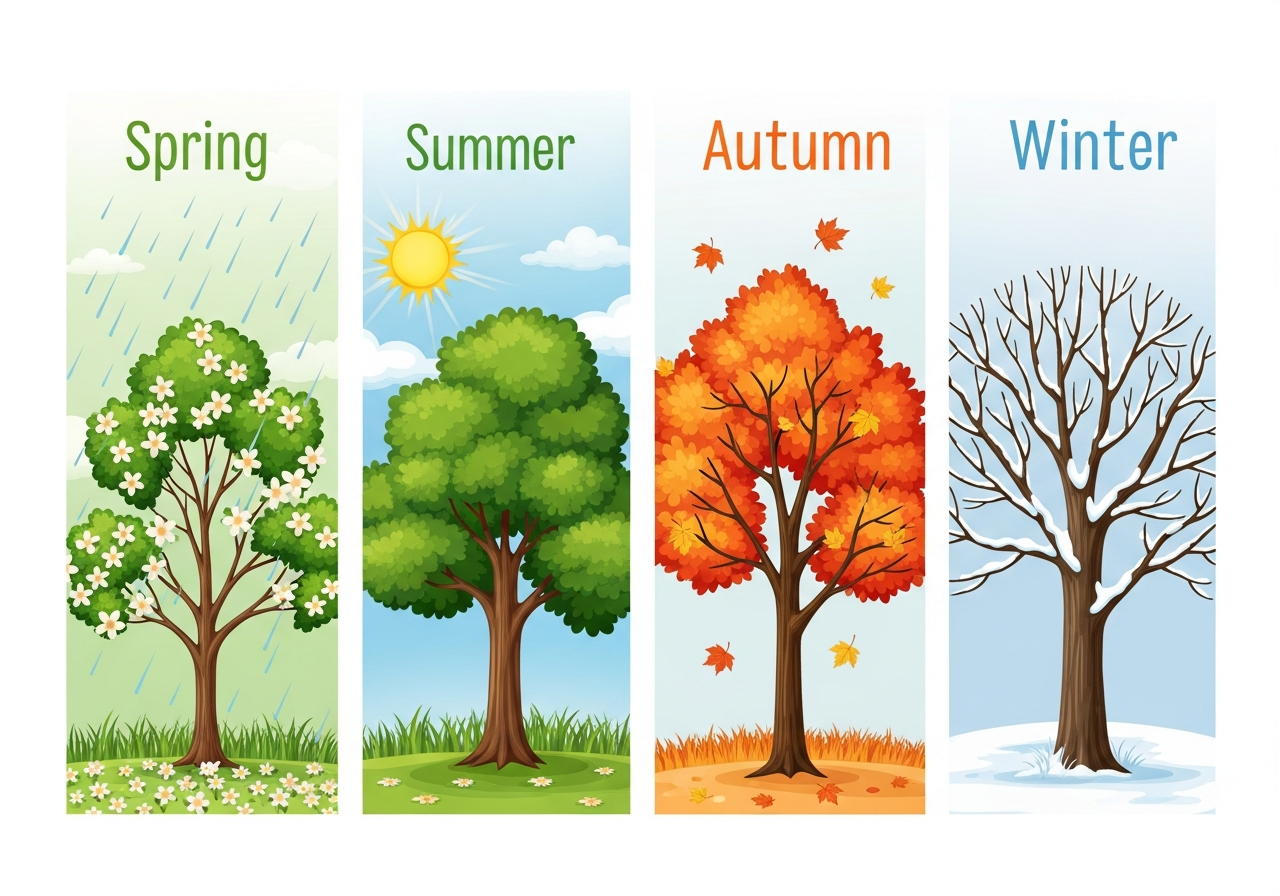
The Four Seasons
There are four seasons: spring, summer, fall, and winter. Each season has its own kind of weather.
In spring, the weather gets warmer. Flowers start to bloom. You might see lots of rain!
In summer, the weather is hot. You can wear shorts and sandals outside.
In fall (also called autumn), the weather gets cooler. Leaves turn orange, red, and yellow. You need a sweater to stay warm.
In winter, the weather is cold. Snow can fall from the sky. You need a warm coat!
How You Can Observe Weather
You can look outside and observe the weather every day. You can watch the sky and feel the air.
You can look at clouds. Clouds can look fluffy and white, or dark and gray. Dark clouds often mean rain is coming!
You can also watch trees. In autumn, tree leaves change color. In winter, trees may lose all their leaves.
Weather Tools You Can Use
You can use special tools to learn more about weather. These tools help you measure and record what you see.
- A thermometer measures how hot or cold it is outside. It shows you the temperature.
- A rain gauge collects rain. It shows you how much rain fell.
- A ruler or yardstick can measure how deep snow is on the ground.
- A notebook or journal helps you write or draw what you see each day.
- A camera helps you take pictures of clouds and trees in each season.
- Crayons help you draw and color the things you observe, like colorful fall leaves.
How You Can Record Weather
Recording weather means writing down or drawing what you see. You can do this every day!
You can use a weather chart. On your chart, you draw a symbol for the weather. A snowflake means it is snowing. A sun means it is sunny.
You can also use a weather journal. You can draw pictures or write notes about what you see. You can track how puddles get bigger in spring or how snow gets deep in winter.
Key Terms and Definitions
Weather: Weather is what the air and sky feel like outside. It can be sunny, rainy, cloudy, or snowy.
Season: A season is a time of year with its own kind of weather. The four seasons are spring, summer, fall, and winter.
Spring: Spring is the season after winter. The weather gets warmer and flowers start to bloom. You may see lots of rain in spring.
Summer: Summer is the hottest season. You can wear shorts and sandals. You can use a thermometer to track how hot it gets.
Fall (Autumn): Fall is the season after summer. The weather gets cooler. Leaves on trees turn orange, red, and yellow and then fall off.
Winter: Winter is the coldest season. Snow can fall. You need a warm coat to stay comfortable outside.
Thermometer: A thermometer is a tool that measures temperature. It shows you how hot or cold it is outside.
Temperature: Temperature tells you how hot or cold the air is. A thermometer measures temperature.
Rain Gauge: A rain gauge is a tool you put outside to collect rain. It shows you how much rain fell.
Weather Chart: A weather chart is a paper where you record the weather each day using pictures or symbols.
Weather Symbol: A weather symbol is a small picture that stands for a type of weather. A snowflake symbol means it is snowing.
Weather Journal: A weather journal is a notebook where you draw or write about the weather you observe each day.
Observe: To observe means to look carefully at something. You observe the weather when you look at the sky and feel the air.
Record: To record means to write down or draw what you see. You record weather in a chart or journal.
Snowfall: Snowfall is when snow falls from the sky in winter. You can measure snowfall with a ruler or yardstick.
Rainfall: Rainfall is when rain falls from the sky. You can measure rainfall with a rain gauge.
Clouds: Clouds are white or gray shapes in the sky made of tiny water drops. You can observe and draw clouds to track weather patterns.
Fun Weather Activities You Can Try
You can go outside and look at the sky. Draw what you see in a journal every day!
You can use crayons to color fall leaves as they change from green to yellow, orange, or red. This helps you track seasonal changes.
You can put a rain gauge outside on a rainy spring day. Check how much water collects inside it!
You can use a ruler to measure how deep snow is in winter. Push it into the snow and read the number!
What You Already Know
You already know about the world around you. You know what hot and cold feel like. You know what rain and sunshine look like.
This topic builds on what you already notice every day. Now you will learn to observe more carefully and record what you see!
Related Topics and Connections
This topic is all about weather patterns and seasonal changes. As you learn more about science, you will discover many exciting connected ideas.
Right now, you are learning how to observe and record weather in each season. This is a great first step in becoming a scientist! You notice changes in the sky, the trees, and the temperature around you.
Keep exploring the world outside. Every season brings something new for you to observe and record!