TOPIC
Energy Changes, Endothermic and exothermicMY PROGRESS
Pug Score
0%
Getting Started
"Let's build your foundation!"
Best Streak
0 in a row
Study Points
+0
Overview
Practice
Read
Quiz
Next Steps
Get Started
Get unlimited access to all videos, practice problems, and study tools.
BACK TO MENU
Topic Progress
Pug Score
0%
Getting Started
"Let's build your foundation!"
Best Practice
No score
Read
Not viewed
Best Quiz
No attempts
Best Streak
0 in a row
Study Points
+0
Overview
Practice
Read
Quiz
Next Steps
Read
Endothermic vs. Exothermic Reactions: Where Does the Energy Go?
This topic teaches students to distinguish between endothermic and exothermic reactions by examining how energy is absorbed or released during chemical processes, with real-world examples such as cold packs, hand warmers, photosynthesis, and combustion.
Understanding Energy Changes in Chemical Reactions
Every chemical reaction involves an energy change. When substances react, energy is either absorbed from the surroundings or released into them. These two categories endothermic and exothermic reactions are fundamental to understanding Reaction Categories and Basic Reaction Types in chemistry.
The direction of energy flow determines whether the surroundings feel warmer or cooler after a reaction occurs. This principle connects directly to the law of conservation of energy, which states that energy is never created or destroyed only transferred or transformed.
Exothermic Reactions: Releasing Energy
In an exothermic reaction, energy is released into the surroundings, causing the surrounding temperature to increase. The container or environment feels noticeably warmer. Common examples include burning wood in a campfire, cellular respiration in the body, hand warmers using iron oxidation, and water vapor condensing into liquid.
In an energy diagram for an exothermic reaction, the products have a lower energy level than the reactants. The difference represents the heat released. When the overall energy change (ΔH) is negative, the reaction is exothermic. At the molecular level, more energy is released forming new bonds in the products than is used breaking bonds in the reactants.
Endothermic Reactions: Absorbing Energy
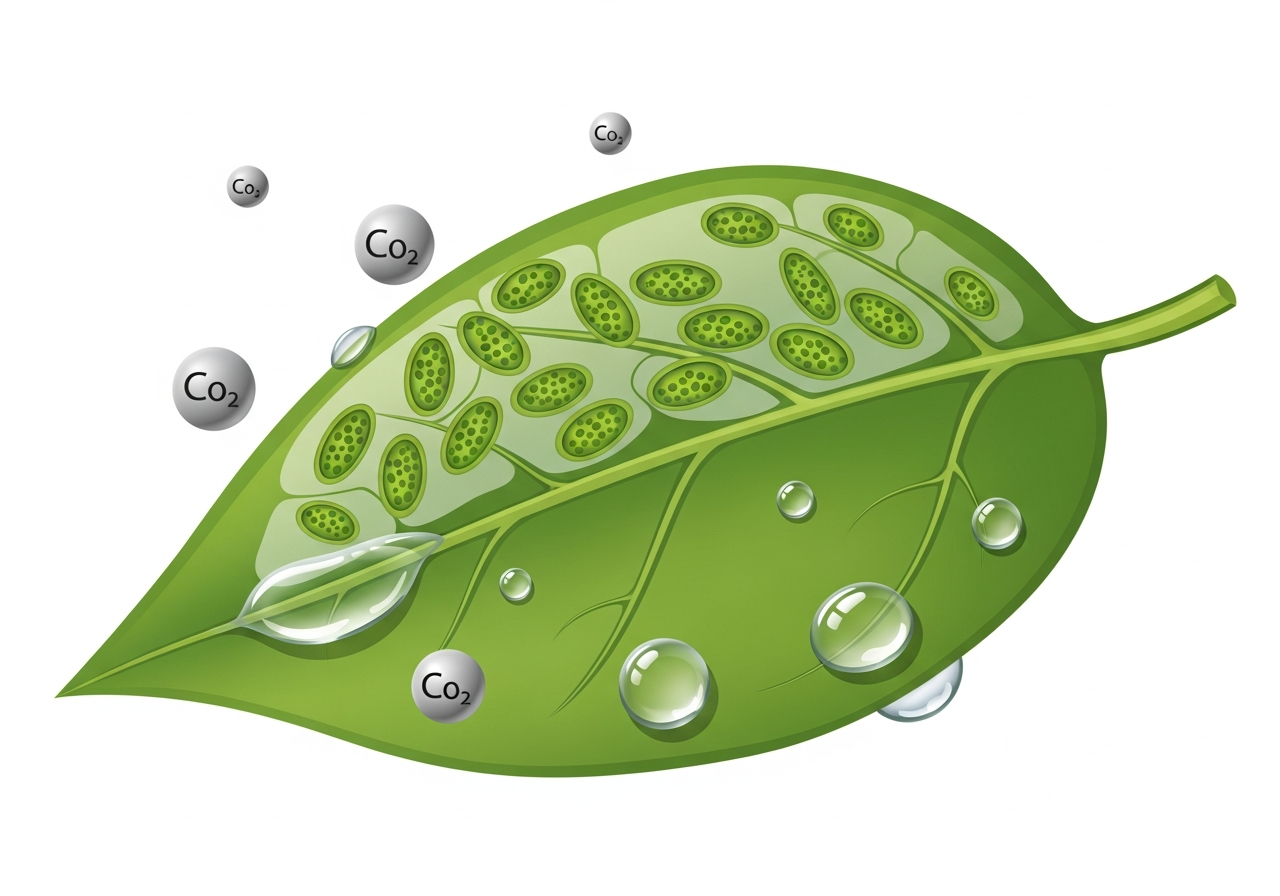
In an endothermic reaction, energy is absorbed from the surroundings, causing the surrounding temperature to decrease. The container or environment feels noticeably cooler. Common examples include photosynthesis in plants, dissolving ammonium nitrate in water (cold packs), melting ice, and the reaction between baking soda and vinegar.
In an energy diagram for an endothermic reaction, the products have a higher energy level than the reactants. When ΔH is positive, the reaction is endothermic. More energy is used breaking bonds in the reactants than is released forming new bonds in the products, so the extra energy must be absorbed from the surroundings. Learners can explore how Energy Processes such as Photosynthesis and Respiration demonstrate these contrasting energy patterns in living systems.
Real-World Applications
Instant cold packs use the endothermic dissolving of ammonium nitrate in water to absorb heat from an injured area, reducing swelling. Hand warmers use the exothermic oxidation of iron powder to release heat and warm the hands. These practical applications show how understanding energy changes has direct benefits in everyday life.
Cellular respiration is exothermic the body breaks down glucose and releases energy as heat and ATP to power biological functions. Photosynthesis is endothermic plants absorb light energy to convert carbon dioxide and water into glucose. Understanding these processes also connects to Work and Power and Energy Relationships in physical science.
Key Terms & Definitions
Endothermic Reaction: A chemical reaction that absorbs heat energy from the surroundings, causing the surrounding temperature to decrease. Example: dissolving ammonium nitrate in water makes a cold pack feel cold.
Exothermic Reaction: A chemical reaction that releases heat energy into the surroundings, causing the surrounding temperature to increase. Example: combustion of wood releases heat and light.
Activation Energy: The minimum amount of energy required to break the bonds in reactants and start a chemical reaction. Both endothermic and exothermic reactions require activation energy to begin for example, wood needs a spark to start burning even though combustion is exothermic.
Enthalpy (H): A measure of the total heat content stored in a chemical system. The change in enthalpy (ΔH) indicates whether a reaction is endothermic (positive ΔH) or exothermic (negative ΔH).
Surroundings: Everything outside the reaction system. Energy flows between the system and the surroundings in all thermal processes endothermic reactions draw energy in from the surroundings, while exothermic reactions release energy into them.
Calorimetry: The scientific method of measuring heat changes during chemical reactions using a device called a calorimeter. The temperature change of water in the calorimeter reveals how much energy was released or absorbed.
Bond Energy: The energy required to break a chemical bond, or the energy released when a bond forms. Breaking bonds always requires energy input (endothermic), while forming bonds always releases energy (exothermic). The net difference in bond energies determines whether the overall reaction is endo- or exothermic.
Heat of Combustion: The amount of heat energy released when a substance burns completely in oxygen. The heat of combustion is always exothermic and is used to compare the energy content of different fuels.
Specific Heat Capacity: The amount of energy needed to raise the temperature of one gram of a substance by one degree Celsius. Water has a high specific heat capacity (4.18 J/g°C), meaning it heats and cools more slowly than most metals.
Thermochemical Equation: A chemical equation that includes both the stoichiometry of the reaction and the energy change (ΔH), communicating in one expression how much energy is absorbed or released. This connects to the study of Chemical Equations and Balancing Equations.
Energy Diagram: A graph showing the energy levels of reactants and products during a reaction, including the activation energy hump. It visually shows whether a reaction is endothermic or exothermic based on the relative positions of reactants and products.
Applying the Concepts
Students can identify reaction types by observing temperature changes: a container that becomes cold indicates an endothermic reaction, while a container that becomes warm indicates an exothermic reaction. Learners can also analyze energy diagrams to determine ΔH and classify reactions. These skills connect to Reaction Rates and Influencing Factors, where activation energy plays a central role.
Comparing photosynthesis (endothermic) with cellular respiration (exothermic) illustrates how energy flows through ecosystems. Analyzing bond breaking and bond forming helps explain why products in endothermic reactions store more energy than the original reactants.
Building on Prior Knowledge
This topic builds on several foundational concepts. Understanding Atomic Structure including Protons, Neutrons, and Electrons and Chemical Bonding including Ionic and Covalent Bonds is essential, since bond breaking and forming are at the heart of energy changes. Knowledge of Energy Types including Potential and Kinetic Forms helps students understand how chemical potential energy is stored and released.
Familiarity with Chemical Changes and Types of Reactions and the Periodic Table and its Organization also supports understanding of why different substances behave differently in reactions.
Related Topics & Connections
This topic is closely connected to several areas of chemistry and physics. Reaction Categories and Basic Reaction Types provides the broader classification framework within which endothermic and exothermic reactions are organized. Reaction Rates and Influencing Factors extends the concept of activation energy introduced here, exploring how temperature, concentration, and catalysts affect how quickly reactions proceed.
Chemical Equations and Balancing Equations is directly related, as thermochemical equations combine stoichiometry with energy changes. Energy Processes including Photosynthesis and Respiration applies endothermic and exothermic principles to biological systems. Work and Power and Energy Relationships connects chemical energy changes to broader physical energy concepts.
Mastering this topic prepares students for subsequent studies including Types of Reactions, Classification and Patterns, Balancing Equations and Conservation of Mass, Balancing Chemical Equations, Energy Flow and System Dynamics, and Bond Types including Ionic and Covalent.